Meta Title: Blood Analyzer Hemoglobin Checks Before the Dental Chair | RunMei
Meta Description: Blood analyzer hemoglobin checks before the dental chair and minor surgery. Pre-procedure screening protects patients and practitioners alike.
URL: https://runmeihealth.com/blood-analyzer-dental-minor-surgery-screening
By Dr. Elena Marchetti · MD, MPH, Rural Health Diagnostics | Reviewed by Prof. Daniel Mwangi (PhD, MSc, Laboratory Systems Advisor) | Published: 2026-10-2
The dentist’s chair is the last place anyone expects a blood count, but the questions are the same as in any operating room: will this patient bleed more than we can handle, and is this patient healthy enough for the procedure? The practical questions around blood analyzer hemoglobin — which machine, how much per test, how fast a result arrives — are the subject of this article. The results are in the blood. The mobile blood analyzer catalog covers the instruments rural programs order most often.
The pages that follow cover what the sales brochure does not: what blood analyzer hemoglobin can and cannot deliver in Rural Dental And, what it costs to run rather than to buy, and the mistakes that turn useful instruments into idle furniture. About 3 billion people worldwide still cannot reach a health facility within one hour on foot, a figure the WHO has used to argue for diagnostics that travel to patients instead of the other way around. The aim is to give clinic managers and program planners a field-tested basis for decisions, not a list of product claims. FDA . Facilities weighing the options can browse the hospital biochemical analyzer range to compare configurations side by side.
Key Takeaways
- Rural dental and minor surgery units operate with little pre-procedure laboratory data.
- A blood analyzer at the clinic answers the hemoglobin question before the procedure.
- Pre-procedure screening protects the patient and the practitioner.
- The same instrument serves the clinic’s general medical workload between procedures.
The Procedure That Starts With an Unknown
Extractions, wound closures, and the small surgeries that rural clinics perform every day carry a quiet risk: the patient with undiagnosed anemia or a bleeding tendency arrives at the chair with none of it measured. Most procedures go fine; the ones that do not are the ones that start from an unknown.
The hemoglobin is the simplest screen in medicine: a low count flags the patient who will not tolerate blood loss, and the pattern of the count flags the patient who needs a referral before the procedure.
the blood analyzer hemoglobin is the seed; the program is the tree. Training, supervision, registers, quality checks and a supply line that outlasts the donor — these are what turn a machine into a service that keeps running. Programs that design for sustainability from the first installation meeting are the ones still running at the five-year review. And this is exactly where blood analyzer hemoglobin changes the decision. WHO . Programs that want a deeper differential can read the blood analyzer instruments page for the trade-offs.
The Anemic Patient at the Chair
A patient with a hemoglobin far below the safe threshold should not have an elective procedure without correction. The clinic that measures before the chair reschedules safely instead of discovering the problem during the procedure.

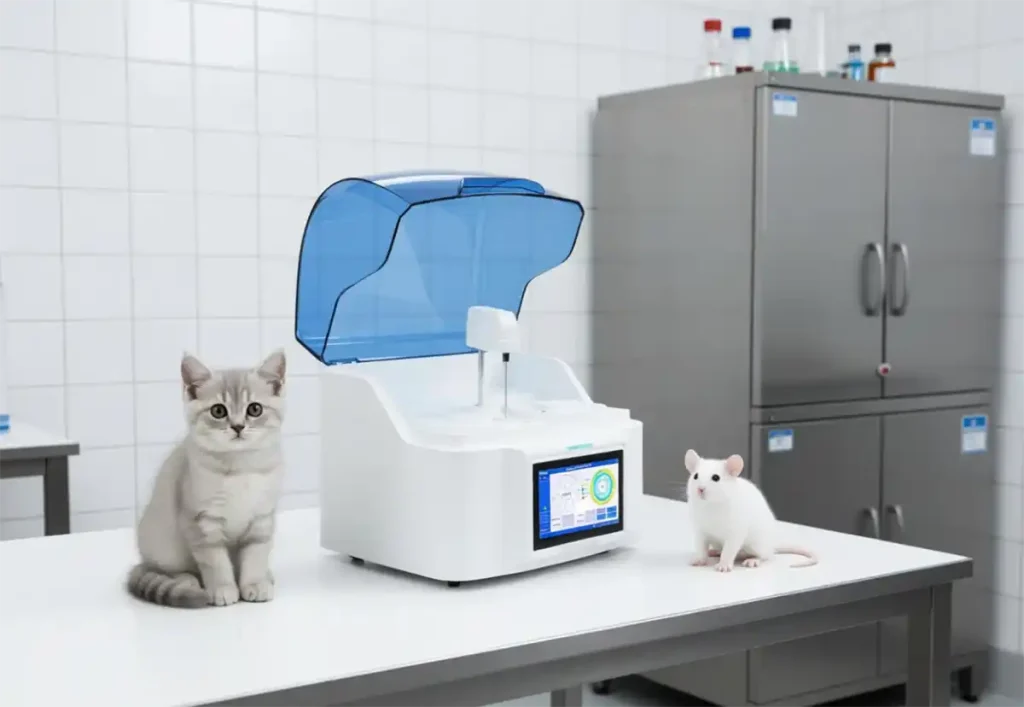
Fig. 1 — RunMei 5-part hematology analyzer in a rural clinic setting. Blood analyzer pre operative hemoglobin dental clinic screening. | Alt: blood analyzer pre operative hemoglobin dental clinic screening
What a Pre-Procedure Count Changes
The pre-procedure count changes the plan, not just the paperwork. The low count triggers a referral or a postponement; the normal count lets the procedure proceed with confidence; the suspicious pattern flags the patient who needs the district laboratory’s attention first.
The same analyzer covers the clinic’s daily load, so the pre-procedure screen is not an extra machine but an extra use of the one already on the bench.
The reagent line is where the real budget lives. A machine that costs little but drinks expensive consumables will be switched off by year two; a machine whose per-test cost fits the community’s wallet keeps running because the community can afford it. Buyers should ask one question before any other: what does each test actually cost delivered to this clinic, and can that cost be sustained after the donor’s project ends? Programs built around blood analyzer hemoglobin see the effect within the first month. Budget teams should see the 5-part hematology analyzer cost analysis before signing off on procurement.
The Consent That Is Informed
Informed consent is a conversation with numbers. The practitioner who can say ‘your count is normal, the risk is low’ has had a different conversation from the one who says ‘it should be fine’. The count makes the consent honest.
The Protocol for the Clinic That Cuts
Any facility that performs procedures needs a written pre-procedure rule: which patients get a count, what the threshold is, and what happens below it. The rule protects the patient, the practitioner and the clinic’s reputation, and it is enforceable only when the count can be produced on site.
The threshold conversation belongs to the local clinical leadership. the blood analyzer hemoglobin provides the number; the protocol decides what the number means.
the blood analyzer hemoglobin does not replace the referral system; it feeds it. The protocol should say which findings stay local, which trigger referral, and which require the result to travel with the patient. In Rural Dental And, the register and the referral slip are as important as the count itself — because a number that does not travel is a number that does not act. The same principle holds for blood analyzer hemoglobin: measure, record, act.
The Post-Procedure Recheck
The count is also a follow-up instrument. The patient who lost more than expected, or who returns pale after a procedure, is rechecked with the same machine that screened them before. The loop is complete and local.
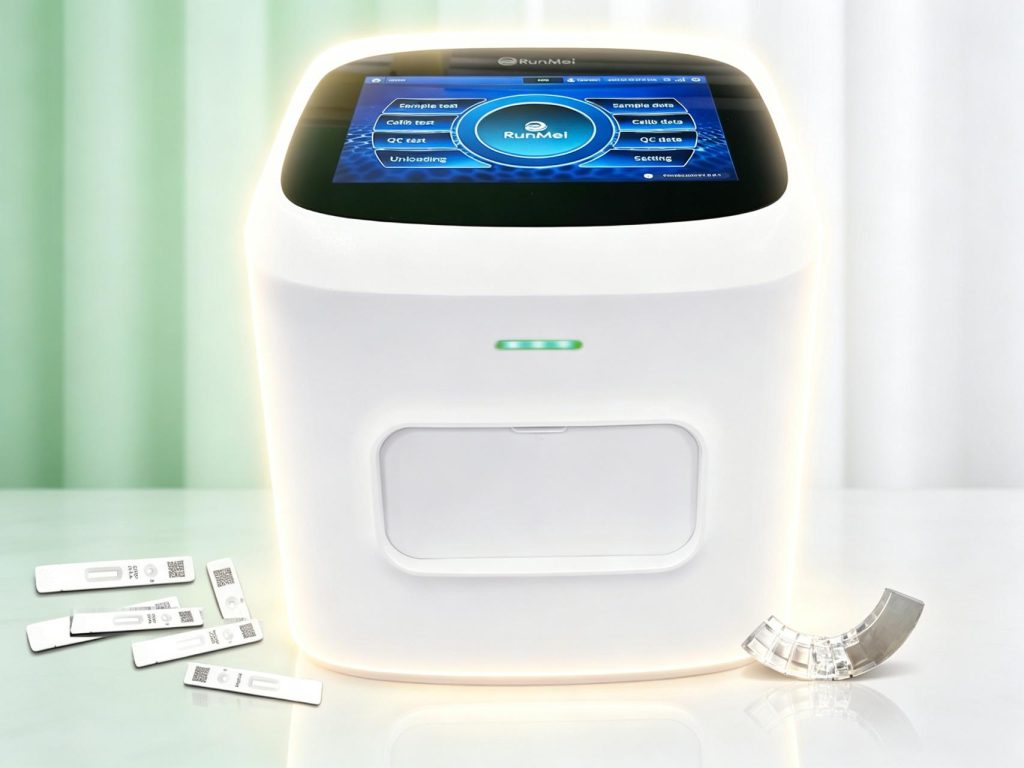
Fig. 2 — RunMei blood analyzer instruments during routine testing. Compact blood analyzer minor surgery pre procedure testing. | Alt: compact blood analyzer minor surgery pre procedure testing
The Supply Plan
The supply plan answers one question: what does this clinic need, in what quantity, and how long does resupply take? Reagents, controls and consumables each have their own buffer, sized to the longest plausible interruption — the rainy season, the border delay, the transport strike. The plan is written in months, not in orders. blood analyzer hemoglobin is the blood analyzer hemoglobin at the center of that workflow.
The same pattern repeats in facility after facility: the clinic that measures its own patients keeps them, and the clinic that sends them away loses them. That arithmetic changes inside the first year, not through gadget appeal, but through fewer referrals, fewer repeat visits and a patient list that finally trusts the results it is given.
The Buffer Discipline
The rule of thumb that works in practice: hold enough stock to run the clinic’s normal volume for the resupply period plus one month. Facilities that follow the rule ride out the interruptions; facilities that run to empty stop testing at the worst possible moment.
The Open-Channel Option
Analyzers that accept qualified third-party reagents turn the supply plan into a competitive market instead of a single dependency. The option matters most where a locked reagent line would make the per-test cost unsustainable — which is most of rural primary care.
For teams accountable for pre operative hemoglobin dental, the practical effect shows up within the first month. Decisions about minor surgery screening are usually made at district level — and the register feeds them. It also strengthens dental clinic blood testing, a benefit that rarely appears in the budget line.
الأسئلة المتداولة
Q1. Do dental and minor surgery patients need a blood count?
For procedures with bleeding risk, a hemoglobin check is a reasonable screen, especially in settings where anemia is common and unmeasured.
Q2. Which patients should be screened?
Elective procedures in adults, patients with known chronic disease, women with heavy periods, and anyone with unexplained fatigue or pallor.
Q3. How low is too low for a minor procedure?
The local protocol defines the threshold, usually in conversation with the referral facility. The analyzer produces the number the protocol needs.
Q4. Is a blood analyzer worth it for a dental clinic?
When the same instrument serves the general medical load, yes. The pre-procedure screen is one of several uses that justify the bench space.
Sources & References
- The U.S. Food and Drug Administration (FDA) grants CLIA waiver to certain automated hematology analyzers, allowing them to be operated outside the traditional laboratory by staff without advanced training; dual 510(k) and CLIA waiver submissions are documented under the Medical Device User Fee Amendments. Source: FDA — https://www.fda.gov/medical-devices/ivd-regulatory-assistance/clia-waivers
- World Health Organization data show that in lower-income countries a large share of the rural population still lives beyond the reach of a functioning laboratory; the WHO recommends primary care facilities be reachable within roughly 5 km, yet global estimates indicate about 3 billion people cannot reach a health facility within one hour on foot. Source: WHO — https://www.who.int/news-room/fact-sheets/detail/primary-health-care
About the Author & Reviewer
Author: Dr. Elena Marchetti, MD, MPH, Rural Health Diagnostics. Dr. Marchetti is a physician and diagnostics specialist who has spent the past fifteen years designing point-of-care programs for district hospitals and rural clinics in lower-resource settings. Her field work focuses on how laboratory devices survive daily use outside the laboratory, from staff training to reagent logistics.
Reviewer: Prof. Daniel Mwangi, PhD, MSc, Laboratory Systems Advisor. Prof. Mwangi directs laboratory quality programs for a network of rural health facilities and teaches clinical laboratory science. He has reviewed point-of-care device deployments across Africa and Southeast Asia, with a particular interest in quality control and operator competency outside the main laboratory.
Disclaimer
This article is for informational and marketing purposes only and does not constitute medical advice, a product claim, or a regulatory certification statement. Device availability, regulatory status (FDA 510(k)/CE/ISO 13485) and specifications vary by country and model; always verify current approvals with the manufacturer and consult local regulations before procurement or use.