Meta Title: Blood Count in Rural Chronic Kidney Disease Care | RunMei
Meta Description: Blood count in rural chronic kidney disease care: hemoglobin monitoring for renal anemia, infection risk and retention of farming-village patients.
URL: https://runmeihealth.com/blood-count-chronic-kidney-disease-rural
By Dr. Elena Marchetti · MD, MPH, Rural Health Diagnostics | Reviewed by Prof. Daniel Mwangi (PhD, MSc, Laboratory Systems Advisor) | Published: 2026-09-29
The farmer is fifty-two, hypertensive for a decade, and now tired in a way that rest cannot fix. The district hospital named the diagnosis: chronic kidney disease. The treatment plan lists medicines, a diet and a laboratory follow-up whose results require a four-hour round trip. The blood count sits at the center of that change, and the pages that follow show why. The 3-part vs 5-part blood analyzer catalog covers the instruments rural programs order most often.
Few purchases in rural health care invite as many opinions as chronic kidney disease. This article sets the opinions aside and works from what the data, the protocols and the field experience actually show about rural health care. The WHO reports that noncommunicable diseases now account for about 37% of deaths in the African Region, which makes the general-purpose blood count an increasingly central tool in rural primary care. What survives is a short set of principles that hold across budgets and geographies. WHO . Facilities weighing the options can browse the open channel CBC analyzer range to compare configurations side by side.
Key Takeaways
- Anemia of chronic kidney disease is common, measurable and treatable.
- A blood analyzer at the rural clinic monitors the hemoglobin that renal care depends on.
- The CBC also watches the infection risk and the general picture of a chronic patient.
- Local monitoring keeps chronic patients on treatment instead of lost to follow-up.
The Anemia That Follows the Kidneys
As kidney function declines, the hormone that drives red cell production declines with it, and anemia follows in a predictable way. The hemoglobin is the number that tracks this process, which is why every renal care plan is built around it. The problem is that the number lives in a laboratory a day away.
For the farming family, a four-hour journey for a hemoglobin check is not a minor inconvenience; it is the difference between monitoring and not monitoring. Patients default quietly, and the anemia that was treatable becomes the anemia that compounds the kidney failure.
the chronic kidney disease is the seed; the program is the tree. Training, supervision, registers, quality checks and a supply line that outlasts the donor — these are what turn a machine into a service that keeps running. Programs that design for sustainability from the first installation meeting are the ones still running at the five-year review. WHO . Programs that want a deeper differential can read the hospital biochemical analyzer page for the trade-offs.
The Treatment That Needs Its Own Number
Iron and erythropoiesis-stimulating treatment are adjusted by the hemoglobin trend. The clinic that can measure the trend at each visit keeps the treatment honest; the clinic that guesses abandons the protocol.

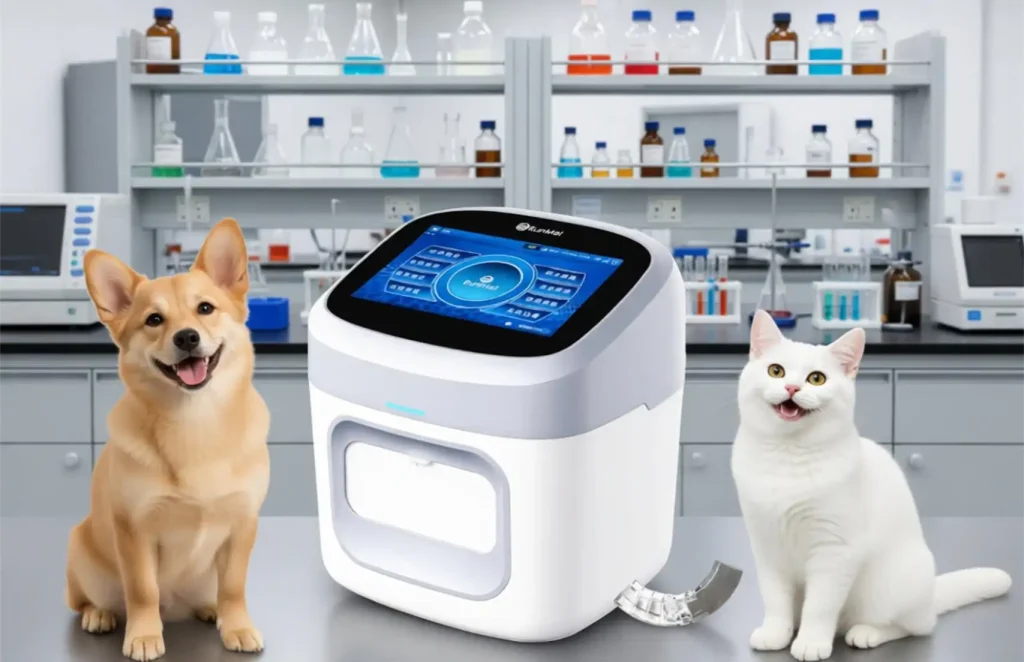
Fig. 1 — RunMei compact biochemistry analyzer in a rural clinic setting. Blood analyzer chronic kidney disease anemia hemoglobin monitoring. | Alt: blood analyzer chronic kidney disease anemia hemoglobin monitoring
What the Rural Analyzer Adds to Renal Care
The CBC answers the renal patient’s core monitoring questions in one run: the hemoglobin for anemia management, the white cell count for the infection risk that chronic disease carries, and the general picture at each review visit. The same instrument serves the other chronic patients on the register, so the renal program rides on a machine that never sits idle.
The value is continuity. The patient who can be tested and reviewed in one visit stays in the program; the patient who must travel to be tested drifts out. the chronic kidney disease is the retention tool that no follow-up letter can replace.
None of this happens without people. The clinic that treats the chronic kidney disease as a machine buys a machine; the clinic that treats it as a skill builds a capability. Operators need a hands-on competency pathway, a named backup for every shift, and refresher sessions that follow staff turnover — because in rural health care, the person trained last year may be the person who left, and the person answering for today’s results is the one who was never trained at all. Budget teams should see the mobile blood analyzer cost analysis before signing off on procurement.
The Visit That Answers Everything
The chronic patient’s ideal visit is a circle: blood drawn, count run, medicines adjusted, next date set, all before the transport home. The analyzer closes that circle inside the clinic.
Building the Chronic Care Register
The register is where chronic care succeeds or fails. Each patient has a line: diagnosis, treatment, and a hemoglobin column that fills at every visit. The trend across the column tells the clinician what to change before the patient feels it.
The district review asks for the register, and the register asks for the chronic kidney disease. The facility that produces a year of hemoglobin trends is the facility whose renal program is actually running.
Results become evidence only when they are recorded. A register — patient, date, count, action taken — turns a stream of tests into a picture of the community’s health, and that picture is what justifies the program’s continuation. Clinics that keep the register find it writes their own case for support.
The Trend That Precedes the Symptom
The hemoglobin falls before the fatigue arrives. A register with regular counts catches the fall early, when the treatment adjustment is small and the cost is low. That is the quiet work the analyzer enables.
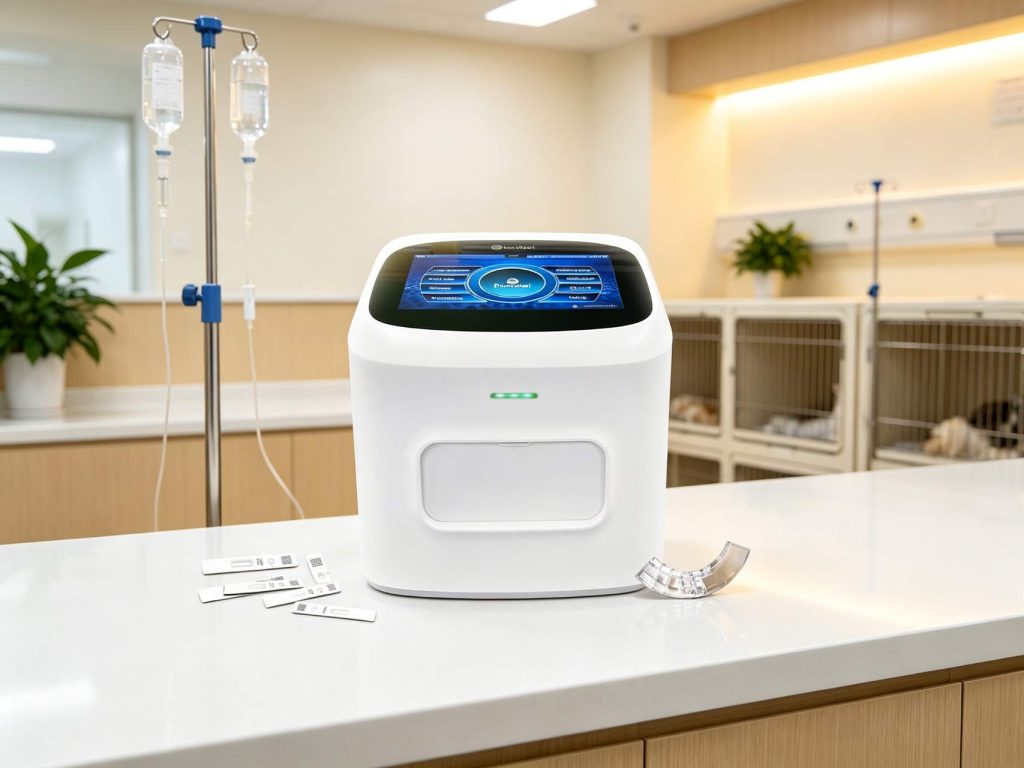
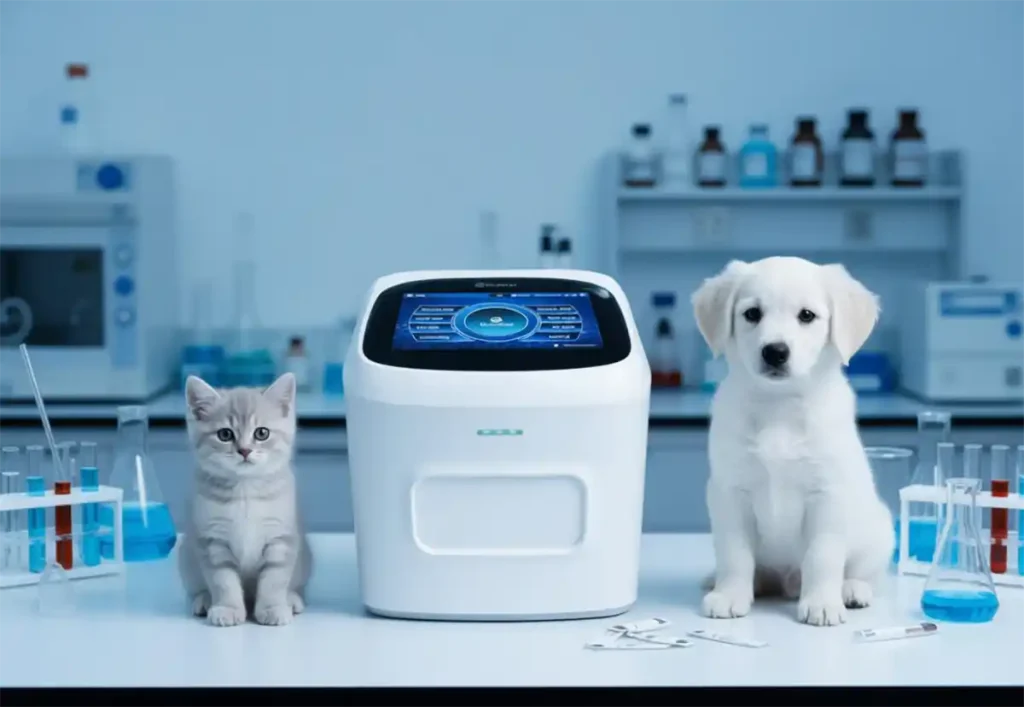
Fig. 2 — RunMei compact automatic hematology analyzer during routine testing. Compact blood analyzer rural renal care follow up testing. | Alt: compact blood analyzer rural renal care follow up testing
The Quality Case
A result is only as good as the system that produced it. The quality case for chronic kidney disease in rural health care rests on daily controls, calibration discipline and external assessment — the three layers that let a rural clinician act on a number with confidence. the chronic kidney disease matters; the habits around it matter more.
The same pattern repeats in facility after facility: the clinic that measures its own patients keeps them, and the clinic that sends them away loses them. That arithmetic changes inside the first year, not through gadget appeal, but through fewer referrals, fewer repeat visits and a patient list that finally trusts the results it is given.
The blood count is the chronic patient’s most repeated measurement. A blood count that trends downward across visits is the blood count that changes the treatment before the patient feels the change.
The Daily Evidence
The five-minute control run is the whole foundation. It detects drift before it reaches a patient, and the log it produces is the visible proof that today’s results can be trusted. Facilities that protect the morning control ritual protect everything downstream of it.
The External Check
External quality assessment — blind samples scored by a national or regional program — is the only true measure of accuracy, and it is now within reach of rural facilities in most countries. Enrollment costs little; the feedback it returns is the difference between assuming the machine is right and knowing it is.
Programs that pair chronic kidney disease with anemia of chronic kidney disease report the strongest results. The same logic applies to rural renal care monitoring, which clinics in the region often underestimate. For teams accountable for CBC kidney disease, the practical effect shows up within the first month.
الأسئلة المتداولة
Q1. Why do kidney patients need regular blood counts?
Anemia of chronic kidney disease is driven by the disease itself and must be monitored by hemoglobin to adjust iron and stimulation treatment.
Q2. How often should the hemoglobin be checked?
Guidelines commonly suggest every one to three months depending on stage and treatment. Local testing makes that schedule realistic for rural patients.
Q3. Can a rural clinic manage renal anemia?
It can monitor and adjust under the district protocol, and it can refer when the trend or the treatment demand exceeds its scope.
Q4. Does the CBC replace kidney function tests?
No. Creatinine and other renal panels remain essential. The CBC adds the anemia and infection monitoring that renal care also requires.
Sources & References
- The WHO Regional Office for Africa reports that noncommunicable diseases now account for about 37% of deaths in the African Region, and that shortages of trained specialists, diagnostics and clinical protocols continue to limit access to quality care. Source: WHO — https://www.who.int/news-room/fact-sheets/detail/noncommunicable-diseases
- World Health Organization data show that in lower-income countries a large share of the rural population still lives beyond the reach of a functioning laboratory; the WHO recommends primary care facilities be reachable within roughly 5 km, yet global estimates indicate about 3 billion people cannot reach a health facility within one hour on foot. Source: WHO — https://www.who.int/news-room/fact-sheets/detail/primary-health-care
- The U.S. Food and Drug Administration (FDA) grants CLIA waiver to certain automated hematology analyzers, allowing them to be operated outside the traditional laboratory by staff without advanced training; dual 510(k) and CLIA waiver submissions are documented under the Medical Device User Fee Amendments. Source: FDA — https://www.fda.gov/medical-devices/ivd-regulatory-assistance/clia-waivers
Disclaimer
This article is for informational and marketing purposes only and does not constitute medical advice, a product claim, or a regulatory certification statement. Device availability, regulatory status (FDA 510(k)/CE/ISO 13485) and specifications vary by country and model; always verify current approvals with the manufacturer and consult local regulations before procurement or use.