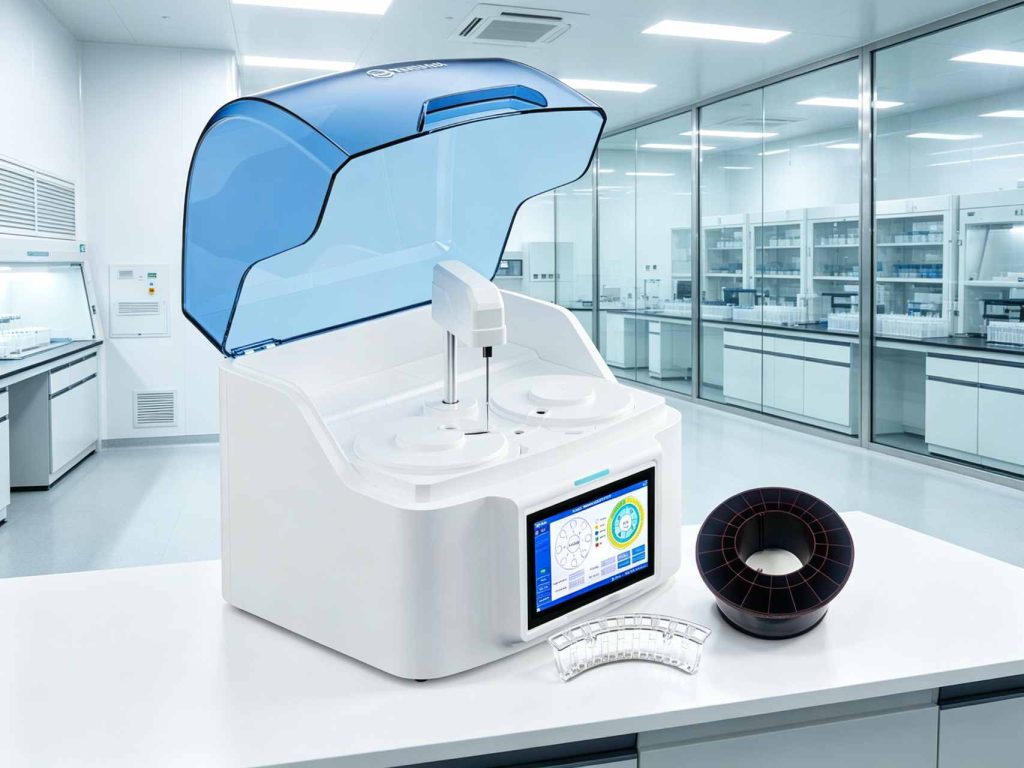
When selecting a hematology analyzer, understanding the differences between the RunMei BCA 330 and traditional liquid-based analyzers is crucial. This direct comparison highlights why the No Liquid System is a game-changer.
Technology comparison. The BCA 330 uses AI-powered direct cell morphology imaging. Traditional blood analyzers from brands A through I use impedance, fluorescence, or flow cytometry. The BCA 330 is the only automated analyzer that photographs every cell and classifies it with AI deep learning algorithms.
Reagent costs eliminated. Traditional hematology analyzers require $8,000 to $15,000 per year in liquid reagents, calibrators, and controls. The BCA 330 No Liquid System has zero reagent costs. This is the single largest cost savings in clinical lab operations.
Sample volume advantage. The BCA 330 requires 30 uL capillary blood or venous blood. Traditional analyzers require 200-500 uL venous samples. This 85-94% reduction in blood volume enables fingerstick testing and reduces patient discomfort.
Space and infrastructure. The BCA 330 occupies 41 x 39 cm and weighs 12.9 kg with no plumbing requirements. Traditional blood analyzers require 0.5-1.5 square meters, weigh 35-60 kg, and need dedicated plumbing and drainage.
Maintenance burden. The BCA 330 requires approximately 50 hours of user maintenance per year. Traditional analyzers require 200-400 hours plus scheduled service engineer visits. The No Liquid System eliminates the primary source of محلل أمراض الدم downtime.
Contact RunMei Health for a full comparative analysis.