Target keyword: “hematology analyzer cold start procedure daily startup”
A proper daily startup prevents errors and extends instrument life. Here is the hematology analyzer startup procedure — priming, background, QC, and the checks to run.
Every lab has a ‘quick start’ habit — the abbreviated version of startup that saves two minutes and occasionally loses a whole morning. The analyzer is a precision instrument cold and stiff from the night before; the first samples of the day deserve a machine that has been warmed, primed, verified, and told honestly what it is looking at. This is that routine.
Why Startup Matters
After idle time overnight, the fluidics contain settled reagents, air may have entered the lines, and optics need to stabilise. Skipping or abbreviating startup risks background contamination, wrong baselines, and the first samples of the day producing unreliable results — exactly when a lab is busiest and least able to redo work.
The Startup Sequence, Step by Step
Power on and let the instrument complete its boot and self-test. Run the prime/rinse cycle to purge settled reagents and clear air from the lines, and verify waste and diluent levels are adequate. Perform a background/blank count to confirm a clean baseline. Then run daily quality control at the appropriate levels before releasing patient results. Log each step with date and operator.
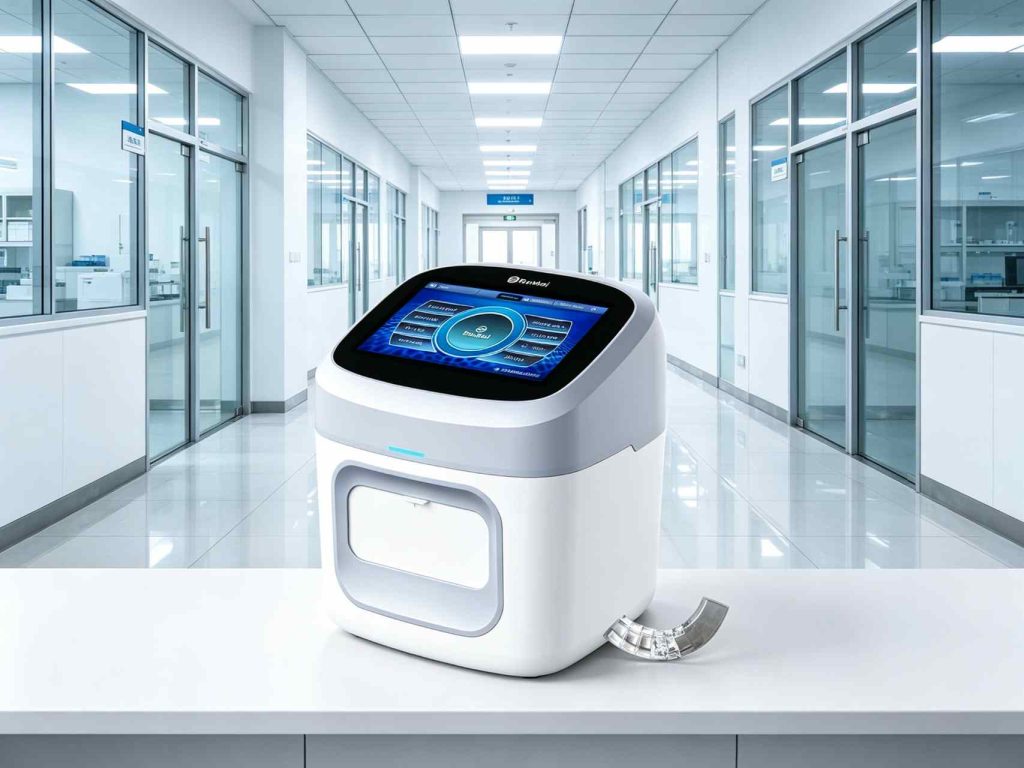
Looking for a reliable option? The 5-part differential hematology analyzer from RunMei Health is built for accurate, efficient blood analysis.
Background Checks and Baselines
The background check confirms the instrument reports zero or near-zero counts on clean reagent — a rising background is an early warning of contamination, occluded fluidics, or reagent problems. Establish your baseline background values during normal operation so you can spot drift. A machine with a dirty baseline will contaminate every result it prints until it is cleaned.
Startup Culture and Consistency
Make startup a two-person, checklist-driven ritual: one to run the procedure, one to verify. Never bypass QC ‘just this once’ to save time — that is precisely the day a drift creeps in unnoticed. A disciplined, repeatable startup is the cheapest insurance a haematology lab can buy, and it sets the tone for every result that follows that morning.
Troubleshooting a Failing Startup
When the background count will not come down or QC repeatedly fails on the first run, resist the urge to push patient samples anyway. Re-run the prime cycle, check reagent levels and expiry, inspect the waste and diluent paths for bubbles, and verify the QC material itself was handled correctly. If the blank still will not clear, the fluidics or optics likely need cleaning — resolve it before reporting results rather than after a morning’s worth of unreliable numbers.
Looking for a reliable option? The portable multi-function blood analyzer from RunMei Health is built for accurate, efficient blood analysis.
Keep a startup log that records background values, QC results, and any anomaly so trends are visible across days. A slow upward drift in background is far easier to catch in the log than in a single dramatic failure. Treat a problematic startup as a signal to investigate, not a hurdle to jump over — the ten minutes invested here protects every result of the session.
Keep contact details and escalation routes for the vendor engineer accessible so that when a start-up issue goes beyond routine, help is one call away rather than a scramble. Agree in advance on what counts as an operator-tier problem versus a service-tier one. This simple decision tree turns a stressful morning into a predictable procedure and keeps the day’s work moving with minimal disruption.
For a dependable solution, explore the 5-part veterinary blood analyzer from RunMei Health.
For a dependable solution, explore the RunMei diagnostic instruments from RunMei Health.
الأسئلة المتداولة
Q: How long does a hematology analyzer startup take?
A: Most modern analyzers complete startup in 10–20 minutes, including boot, prime, background check, and daily QC. Allow extra time after maintenance or reagent changes. The exact time depends on the instrument and how many QC levels you run. Never skip the prime and background steps to shorten it.