Meta Title: Blood Analyzer in Rural Blood Banks: Transfusion Safety | RunMei
Meta Description: Hemoglobin and transfusion safety in rural blood banks. How a blood analyzer screens donors and guides transfusion decisions at the bedside.
By Dr. Elena Marchetti · MD, MPH, Rural Health Diagnostics | Reviewed by Prof. Daniel Mwangi (PhD, MSc, Laboratory Systems Advisor) | Published: 2026-09-23
The blood bank has forty units in the fridge and a waiting list of patients who need them. The blood analyzer question — what it can do, what it costs to run and how a result earns trust — is answered in the pages that follow. The donor’s hemoglobin was never measured, because the screening device lives in the hospital laboratory. The blood is safe from disease. Whether it will help the recipient is another question. The differential blood analyzer catalog covers the instruments rural programs order most often.
This article looks at blood analyzer through the lens of Rural Blood Banks, where the stakes are ordinary and the constraints are real: budgets that do not stretch, staff who already wear several hats, and distances that punish delay. WHO analyses indicate that anemia affects roughly one in four people worldwide, with the highest prevalence in preschool children and pregnant women in low- and middle-income regions. The practical questions — which instrument, what training, how much per test, who maintains it — are answered in plain language, with the numbers a procurement committee can actually use. FDA . Facilities weighing the options can browse the low reagent cost blood analyzer range to compare configurations side by side.
Key Takeaways
- Donor hemoglobin screening protects both the donor and the quality of the unit collected.
- Transfusion decisions in rural facilities need a current hemoglobin result.
- An on-site analyzer turns the blood bank into a data-driven service.
- Under-collected units are as wasteful as over-collected ones.
The Donor the System Never Measures
Blood collection standards require donor hemoglobin screening before every donation, because the anemic donor should not give blood and the blood analyzer collected must actually carry red cell mass. In rural blood banks the screening is often skipped or approximated by appearance, and both failure modes are real: anemic donors are bled anyway, and healthy donors are turned away because no one can prove they qualify.
The compact analyzer changes this at the registration desk. A fingerstick sample, a minute, a number, and the donor either qualifies with evidence or is deferred with a reason and a treatment suggestion. The dignity of the interaction improves as much as the safety.
the blood analyzer is the seed; the program is the tree. Training, supervision, registers, quality checks and a supply line that outlasts the donor — these are what turn a machine into a service that keeps running. Programs that design for sustainability from the first installation meeting are the ones still running at the five-year review. blood analyzer is the instrument at the center of that workflow. WHO . Programs that want a deeper differential can read the blood biochemistry analyzer page for the trade-offs.
The Deferred Donor Is a Patient
The donor deferred for low hemoglobin is not a rejection; it is a diagnosis opportunity. The same device that screened the donor can check the count again after iron therapy, and the deferred donor who returns with a better number is a committed donor for life.

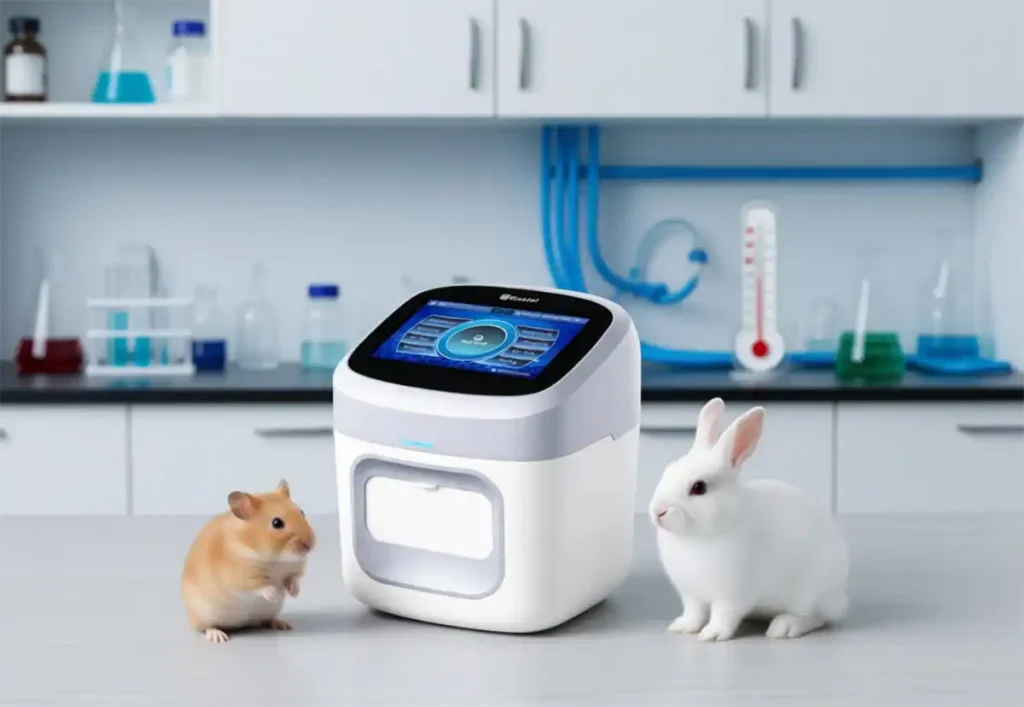
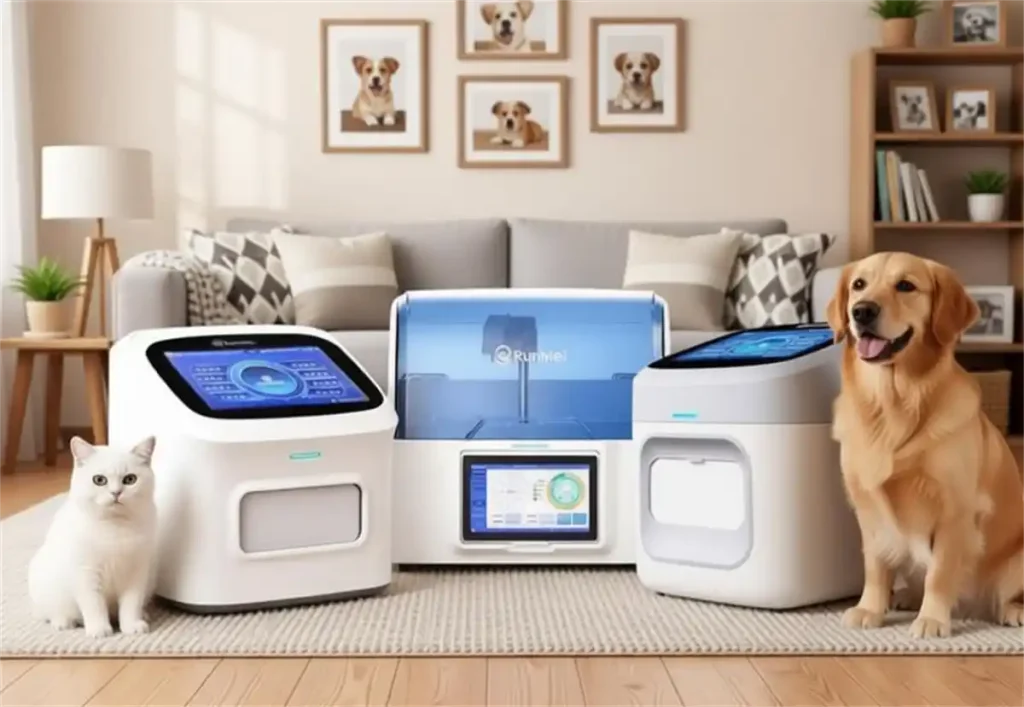
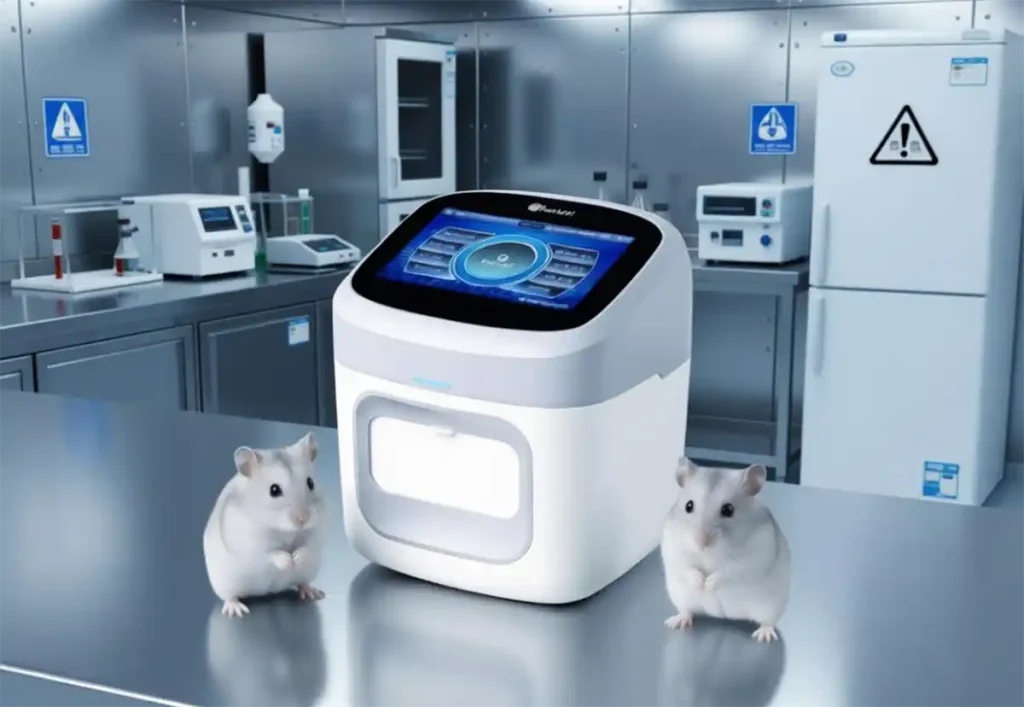
Fig. 1 — RunMei RUNMEI blood analyzer in a rural clinic setting. Blood analyzer donor hemoglobin screening blood bank. | Alt: blood analyzer donor hemoglobin screening blood bank
Transfusion Decisions at the Bedside
The other side of the blood bank is the request side. The clinician ordering a transfusion for an anemic patient needs the current hemoglobin to justify the blood analyzer, to dose it, and to judge the effect. A blood bank with its own analyzer can answer the pre-transfusion count, the post-transfusion count, and the question of whether the next unit is actually needed.
The measurement changes behaviour. Facilities that can measure report fewer discretionary transfusions, because the clinician sees the number and the threshold, and more appropriate ones, because the severe cases are identified by evidence instead of by the look of the patient.
the blood analyzer does not replace the referral system; it feeds it. The protocol should say which findings stay local, which trigger referral, and which require the result to travel with the patient. In Rural Blood Banks, the register and the referral slip are as important as the count itself — because a number that does not travel is a number that does not act. Facilities that already run blood analyzer report the same pattern. Budget teams should see the RUNMEI blood analyzer cost analysis before signing off on procurement.
Pre and Post in One Visit
The protocol that works: measure before transfusion, measure again after the unit, and record both. The delta tells the clinician whether the unit did its job and whether a second unit is warranted. The rural analyzer makes the two-measurement habit affordable.
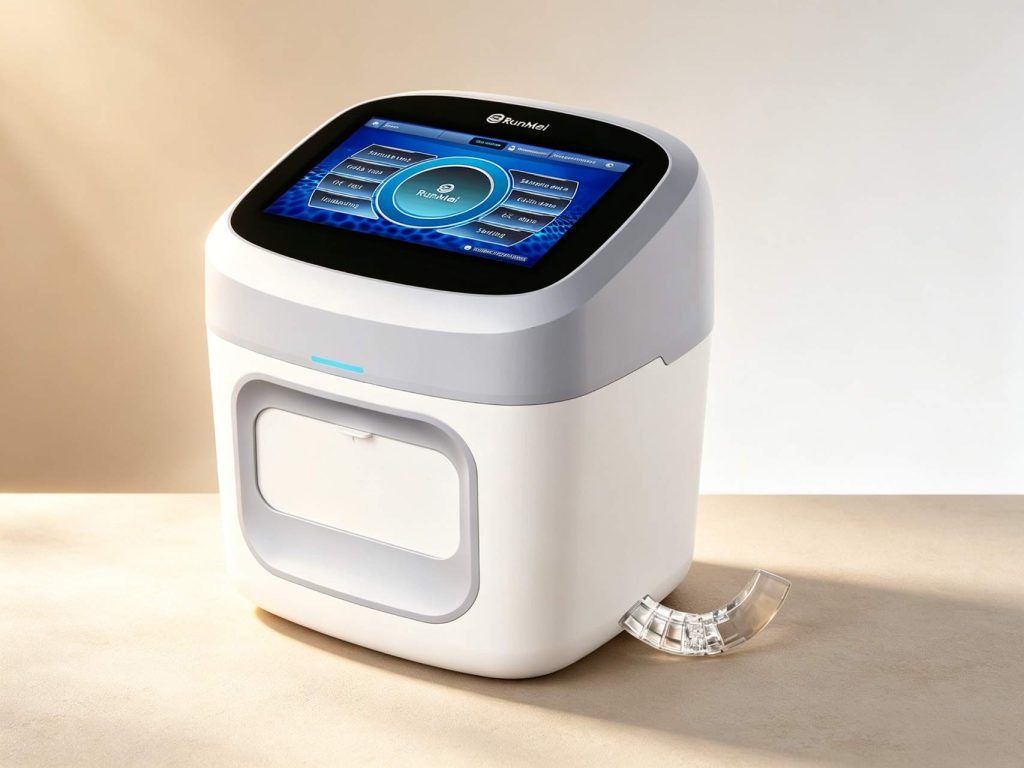
Fig. 2 — RunMei low reagent cost blood analyzer during routine testing. Hematology analyzer transfusion safety rural clinic. | Alt: hematology analyzer transfusion safety rural clinic
The Equipment the Blood Bank Should Own
The blood bank’s analyzer should be treated as part of the cold chain: essential, maintained and never borrowed for other duties. It needs the same quality control discipline as the hospital laboratory, because every number it produces feeds a clinical decision about a donor or a recipient.
Dedicated ownership matters. When the blood bank shares a machine with the outpatient clinic, donor screening gets postponed on busy days and the screening rate quietly falls. A machine that belongs to the blood bank, with its own operator and its own register, stays in service.
Results become evidence only when they are recorded. A register — patient, date, count, action taken — turns a stream of tests into a picture of the community’s health, and that picture is what justifies the program’s continuation. Clinics that keep the register find it writes their own case for support. That is the practical reality of blood analyzer in the field.
The Register of Every Unit
Log each donation with the donor’s screened hemoglobin and each issue with the recipient’s pre- and post-counts. The register converts the blood bank from a store of units into a quality service, and it is the evidence any accreditation visit will ask for.
The People Plan
The people plan comes before the blood analyzer plan. In Rural Blood Banks, the operators are likely to be nurses, laboratory assistants or community health workers rather than dedicated technicians — which changes everything about training design. The plan names the operators, the backup operators and the supervisor, and puts a date on each competency milestone before the machine arrives.
Training That Sticks
Competency is built in stages: observation, supervised practice, independent operation, certification. Each stage is checked, not assumed, and the certification is renewed annually. Programs that compress the stages to fit a schedule end up with operators who can switch the machine on and nothing more.
The Turnover Reserve
Staff turnover is a fact of rural health work, and the plan must budget for it: every shift carries two trained operators, and training slots are scheduled continuously rather than once at installation. The facility that trains continuously is the facility whose capability survives its staff changes.
None of this holds together without attention to transfusion safety. Programs that pair blood analyzer with donor hemoglobin screening report the strongest results. The same logic applies to blood bank rural, which clinics in the region often underestimate.
الأسئلة المتداولة
Q1. Why screen donor hemoglobin before every donation?
To protect the donor from losing red cell mass they cannot spare and to ensure the unit collected actually carries the red cells the recipient needs.
Q2. What hemoglobin level disqualifies a donor?
National standards vary, but most blood services use approximately 12.5 g/dL for women and 13.0 g/dL for men as minimum thresholds.
Q3. How does a blood bank use the analyzer for recipients?
It measures the pre-transfusion count to justify the unit, the post-transfusion count to judge effect, and serial counts to guide further transfusion decisions.
Q4. Can one analyzer serve both donor screening and recipient testing?
Technically yes, but programs are better served by a dedicated machine for the blood bank, with its own operator and quality control schedule.
Sources & References
- Under 21 CFR 864.5220, automated differential cell counters are Class II medical devices that require FDA 510(k) premarket clearance before they can be marketed in the United States. Source: FDA — https://www.ecfr.gov/current/title-21/chapter-I/subchapter-H/part-864/subpart-C/section-864.5220
- WHO analyses indicate that anemia affects roughly one in four people worldwide, with the highest prevalence in preschool children and pregnant women in low- and middle-income regions. Source: WHO — https://www.who.int/news-room/fact-sheets/detail/anaemia
About the Author & Reviewer
Author: Dr. Elena Marchetti, MD, MPH, Rural Health Diagnostics. Dr. Marchetti is a physician and diagnostics specialist who has spent the past fifteen years designing point-of-care programs for district hospitals and rural clinics in lower-resource settings. Her field work focuses on how laboratory devices survive daily use outside the laboratory, from staff training to reagent logistics.
Reviewer: Prof. Daniel Mwangi, PhD, MSc, Laboratory Systems Advisor. Prof. Mwangi directs laboratory quality programs for a network of rural health facilities and teaches clinical laboratory science. He has reviewed point-of-care device deployments across Africa and Southeast Asia, with a particular interest in quality control and operator competency outside the main laboratory.
Disclaimer
This article is for informational and marketing purposes only and does not constitute medical advice, a product claim, or a regulatory certification statement. Device availability, regulatory status (FDA 510(k)/CE/ISO 13485) and specifications vary by country and model; always verify current approvals with the manufacturer and consult local regulations before procurement or use.