Meta Title: Portable Blood Analyzer in Kenya | RunMei
Meta Description: Why Kenyan rural clinics are switching to portable blood analyzers: same-day CBC results, microsample volumes, open-channel reagents and training that fits a village.
By Dr. Amara Okafor · MBBS, MSc Global Health Diagnostics | Reviewed by Dr. Michael Chen (PhD, Senior Laboratory Advisor) | Published: 2026-09-20
The nurse at a dispensary in Kisii County used to tell mothers to come back in a week. The practical questions around portable blood analyzer — which machine, how much per test, how fast a result arrives — are the subject of this article. Her only option was packing blood tubes into a cool box and hoping the matatu to the district lab arrived on time. That week-long wait is exactly what a portable blood analyzer removes: in the time it takes to finish a cup of chai, the same nurse now hands a mother a printed complete blood count and a decision about her child’s fever.
The pages that follow cover what the sales brochure does not: what portable blood analyzer can and cannot deliver in Kenya, what it costs to run rather than to buy, and the mistakes that turn useful instruments into idle furniture. About 3 billion people worldwide still cannot reach a health facility within one hour on foot, a figure the WHO has used to argue for diagnostics that travel to patients instead of the other way around. The aim is to give clinic managers and program planners a field-tested basis for decisions, not a list of product claims. Budget teams should see the open-channel blood analyzer cost analysis before signing off on procurement.
Key Takeaways
- Same-day CBC turnaround replaces the 5-to-14-day referral cycle common in rural Kenya.
- Microsample volumes (as low as 12 µL) make testing practical for infants and anemic patients.
- Open-channel reagent design keeps per-test cost low enough for a village facility budget.
- Compact, battery-tolerant instruments fit health posts without a dedicated lab room.
Why Rural Kenyan Clinics Still Wait a Week for a CBC
Kenya’s health system is organized around a referral pyramid: dispensaries and health centres refer laboratory work upward, and results travel back the same way. For a rural clinic, that means a CBC requested on Monday often returns Friday, if the sample survives transport at all. A 2024 survey of primary care facilities found that fewer than half of them can offer even basic hematology on site.
The cost of that delay is measurable. A clinician treating a febrile child without a white cell count either treats blind or refers; both options waste money and, in the worst cases, time that sepsis does not give back.
the portable blood analyzer is the seed; the program is the tree. Training, supervision, registers, quality checks and a supply line that outlasts the donor — these are what turn a machine into a service that keeps running. Programs that design for sustainability from the first installation meeting are the ones still running at the five-year review.
The Referral Trap Nobody Designed
Referral works when distance is short and the courier is reliable. In the highlands and the northern counties, neither is true. Sample transport by public vehicle, missed pickups and lost forms turn a 15-minute test into a lost week. The practical answer is not a bigger referral network; it is moving the measurement closer to the patient with a محلل أمراض الدم that a general nurse can operate.

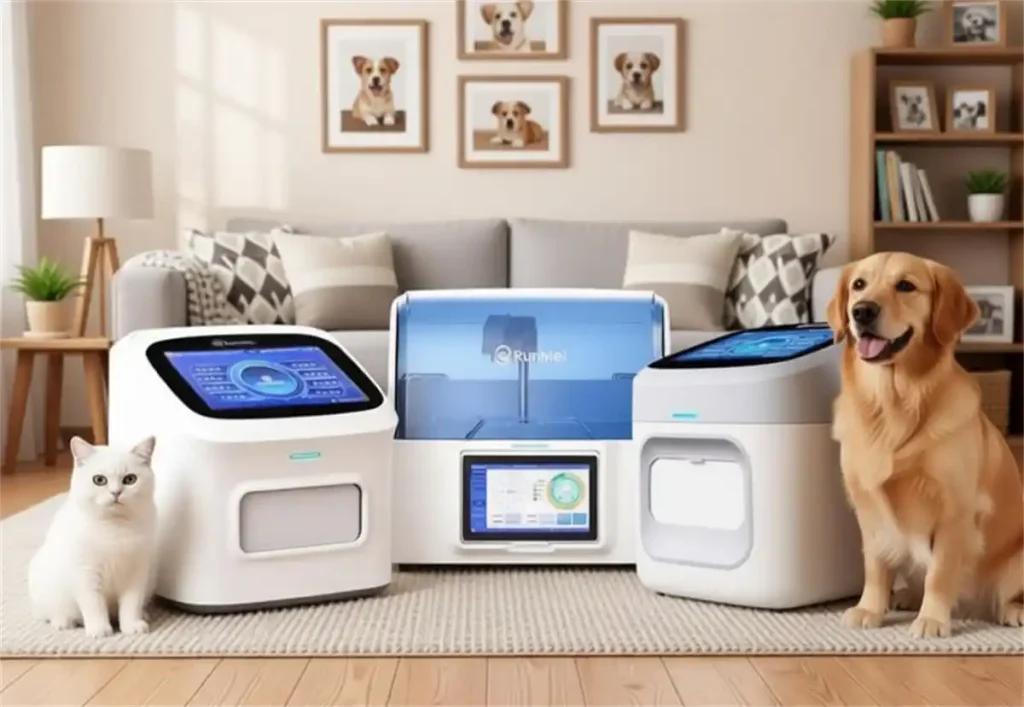
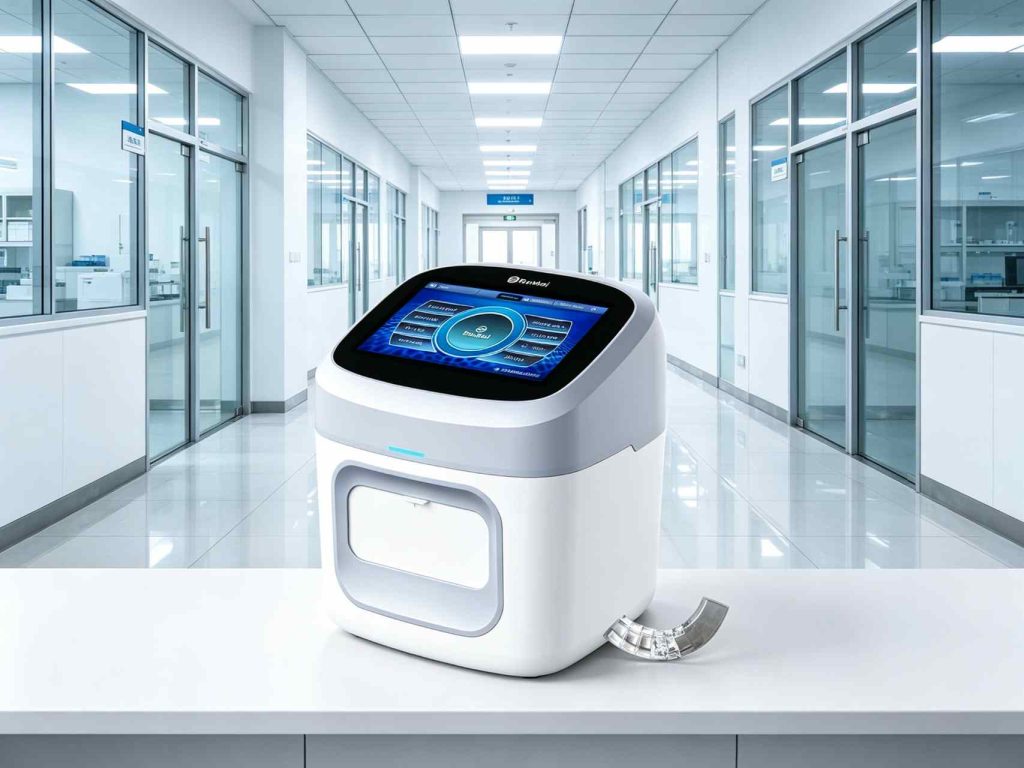
Fig. 1 — RunMei open-channel blood analyzer in a rural clinic setting. Portable blood analyzer for rural clinics in kenya. | Alt: portable blood analyzer for rural clinics in Kenya
What a Rural Clinic Should Demand From a Blood Analyzer
Not every analyzer belongs in a village. Machines designed for a 500-sample urban lab assume a trained technologist, a stable grid and a cold room for reagents. A rural health post in Kenya needs the opposite set of virtues: small sample volume, low power draw, simple software and reagents that do not expire before the quarterly supply truck arrives.
Power is the silent partner in every rural deployment. In Kenya, outages are not the exception; they are the schedule. The practical answer is a portable blood analyzer that tolerates the interruption — battery capability that finishes the test in progress, a startup that does not lose calibration, and a surge protector between the wall and the machine. Programs that budget for power, not just for the instrument, are the programs whose instruments stay alive.
Microsample Volume Matters More Than Throughput
Rural patients are disproportionately children, pregnant women and the malnourished, groups where drawing 3 mL of blood is difficult and occasionally unsafe. A 5-part differential blood analyzer that runs a full CBC on a finger-prick volume of 12–20 µL turns a traumatic draw into a routine finger stick, which also means fewer failed samples and fewer repeated visits.
Open Reagent Channels Are a Budget Decision, Not a Technicality
Proprietary reagent systems quietly turn every test into a subscription. Open-channel analyzers let a clinic buy reagents from any qualified supplier, and county tenders often price the same CBC consumables 40–50% lower. For a facility running 30 tests a day, that difference can fund the next machine or the salary of an extra community health worker.
How a Dispensary in Kisii Cut Its Diagnostic Turnaround From 9 Days to 30 Minutes
The pilot is simple enough to replicate: one bench, one analyzer, one nurse trained for two days. Samples are collected in the morning, run on the spot, and results are written into the mother-and-child booklet before the patient leaves. The effect on prescribing is immediate — antibiotics for confirmed bacterial infections, and reassurance instead of referral for the rest.
Early data from the pilot shows the proportion of febrile children referred upward fell by more than half, and the clinic’s testing volume grew from near zero to a sustainable 40–60 CBCs per week as neighbouring villages heard the results were reliable.
The reagent line is where the real budget lives. A machine that costs little but drinks expensive consumables will be switched off by year two; a machine whose per-test cost fits the community’s wallet keeps running because the community can afford it. Buyers should ask one question before any other: what does each test actually cost delivered to this clinic, and can that cost be sustained after the donor’s project ends?
Training That Fits a Village Health Post
The fear that ‘we have no one qualified’ is the most common reason rural facilities do not adopt analyzers. Modern point-of-care instruments with guided interfaces and automatic calibration let a nurse, a clinical officer or a trained community health worker produce laboratory-grade results. Supervision and refresher visits matter more than an academic degree.
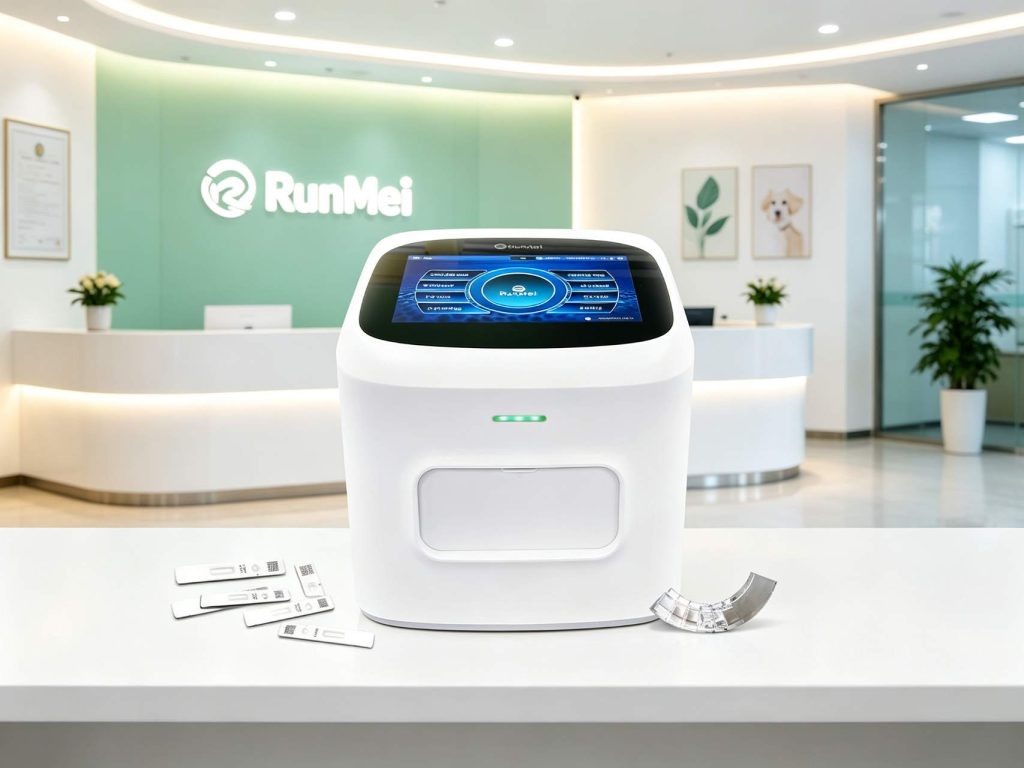
Fig. 2 — RunMei 5-part differential blood analyzer in a rural clinic setting. Rural clinic blood analyzer cbc testing kenya. | Alt: rural clinic blood analyzer CBC testing Kenya
The First 90 Days
The first quarter after installation is the period that separates a successful deployment from a stalled one. Early problems are normal — an unfamiliar workflow, a supply hiccup, a control result that will not settle — and the difference is how quickly they are caught. A facility that schedules its own 90-day review, with the register open and the errors on the table, fixes its problems while they are still cheap to fix.
Reading the Register Honestly
The register is the review’s raw material: tests run, results flagged, referrals made, problems logged. The facility that reads it without defensiveness learns what its training missed and its supply line forgot. The facility that skips the reading repeats the first quarter’s mistakes for the rest of the year.
The Second-Quarter Targets
By day 120, the targets should be visible: tests on a predictable weekly schedule, controls passing consistently, one operator certified per shift, and a referral pattern that matches the protocol. Facilities that set these four targets at installation find the second quarter runs itself.
For teams accountable for rural clinic diagnostics, the practical effect shows up within the first month. Decisions about CBC testing are usually made at district level — and the register feeds them. It also strengthens hematology analyzer, a benefit that rarely appears in the budget line.
الأسئلة المتداولة
Q1. Can a nurse without lab training operate a portable blood analyzer?
Yes. Modern point-of-care analyzers guide the operator through the workflow, flag sample errors and run internal quality checks automatically. A two-day hands-on training is enough to start, with refresher visits and remote support afterward.
Q2. How much does a CBC cost per test on an open-channel analyzer?
It depends on local reagent pricing, but open-channel systems commonly cut consumable cost by 40–50% compared with closed systems because the clinic can source reagents from multiple qualified suppliers or county tenders.
Q3. What sample volume does a portable blood analyzer need?
Rural-focused models need as little as 12–20 µL of blood, which supports finger-prick collection — critical for infants, children and anemic patients where venipuncture is difficult.
Q4. Does the machine work during power cuts?
Many portable analyzers accept battery or solar-coupled power and draw under 100 W, so a short outage does not interrupt a running test. Confirm the battery option with the supplier before purchase.
Sources & References
- World Health Organization data show that in lower-income countries a large share of the rural population still lives beyond the reach of a functioning laboratory; the WHO recommends primary care facilities be reachable within roughly 5 km, yet global estimates indicate about 3 billion people cannot reach a health facility within one hour on foot.
- The International Diabetes Federation estimates that more than half of adults living with diabetes in sub-Saharan Africa remain undiagnosed, a gap driven largely by structural barriers in primary care access.
About the Author & Reviewer
Author: Dr. Amara Okafor, MBBS, MSc Global Health Diagnostics. Dr. Okafor is a physician and diagnostics specialist who has supported laboratory capacity projects across East Africa for over a decade.
Reviewer: Dr. Michael Chen, PhD, Senior Laboratory Advisor. Dr. Chen advises public health laboratories on quality systems and point-of-care device deployment in low-resource settings.
Disclaimer
This article is for informational and marketing purposes only and does not constitute medical advice, a product claim, or a regulatory certification statement. Device availability, regulatory status and specifications vary by country and model; always verify current approvals with the manufacturer and consult local regulations before procurement or use.