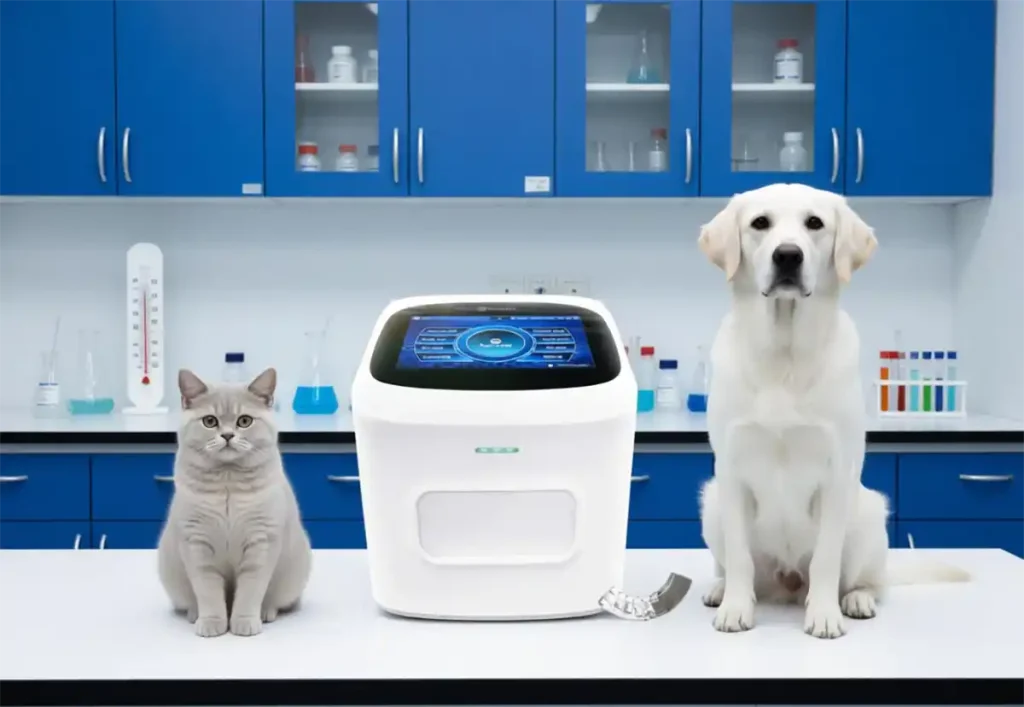
The river boat pushed away from the dock before dawn, its deck crowded with rice sacks, cooking gas cylinders and one padded white case holding a portable hematology analyzer bound for a clinic twelve hours upriver. The nurse traveling with it had spent three years watching patients arrive too late: anemic mothers, febrile children, men with months of fatigue nobody could explain. In communities where the road ends at the water’s edge, the blood test has to travel to the patient. That single logistical fact is quietly reshaping rural health across the Amazon basin and the Andean highlands.
This article looks at what it actually takes to run a complete blood count (CBC) in the hardest-to-reach corners of South America, from river outposts to 4,000-meter villages.
The Geography Problem: Why the Lab Never Comes to You
The distance problem is global, but South America expresses it in its own way. The Lancet Commission on Diagnostics (2021) found that 47 percent of the world’s population has little or no access to diagnostics, and that only 19 percent of people in low- and lower-middle-income countries can access even the simplest diagnostic tests at primary care level. In river and highland communities, a referral is not an inconvenience. It is a two-day round trip that many families cannot afford, so the test simply does not happen.
Sample transport makes it worse. Blood drawn in a river village and sent downriver degrades with time and heat, and a hemolyzed sample is useless on arrival. The clinical answer is not better boats. It is fewer reasons to send samples at all, which means bringing the hematology analyzer to the community.
The economics follow the geography. When a district laboratory serves a catchment the size of a European country, every sample competes with distance: the boat schedule, the fuel, the ice box, the heat. Laboratories centralize because centralization is efficient in dense populations. Spread the same population across a river network and the math inverts; the efficient configuration becomes the smallest possible instrument sitting where the patients actually live.
World Health Assembly Resolution WHA76.5 (2023) urges member states to strengthen diagnostic capacity at the primary care level. In South America, as in Africa and Asia, that commitment will be measured at the last mile, where boats and mountain tracks replace ambulances.
Amazon River Communities: Testing Where Roads End
The River Clinic Model
Along the tributaries, health care arrives by boat: scheduled visits, a nurse, a cooler of vaccines and, increasingly, diagnostic equipment. A portable hematology analyzer for river communities fits this model because it is built for it. Compact footprint, modest power draw, simple consumables, and a workflow a single nurse can run between consultations. In deployments across rural clinics, the pattern is consistent: the analyzer rides in a padded case, comes out on the consultation table, and produces a CBC in minutes for whoever is queued that day.
A typical river clinic day shows how little ceremony the process needs. The nurse opens the case, runs the morning’s quality check while the kettle boils, then fits CBC testing between antenatal consultations. A mother with pale conjunctiva gets her hemoglobin before she leaves; a febrile toddler gets platelets and white cells on the same printout. Nothing waits for a boat.
Outreach Visits That Leave Results Behind
Mobile outreach only works if results stay in the community record. The river model that succeeds pairs each visit with printed CBC results filed at the local post, so the next team can compare against last month’s values. Health ministries and NGOs planning this kind of circuit can draw on our field guide to mobile hematology analyzers for village outreach, which covers routing, consumable planning and record-keeping in detail.
Andean Highlands: Altitude, Cold and Thin Logistics
The highlands flip the challenges. Distances are shorter, but altitude changes the numbers. Baseline hemoglobin runs higher at 3,500 meters than at sea level, and staff trained on coastal reference ranges will misread healthy highland patients as abnormal. Local training and locally validated reference ranges are not optional; they are the difference between a useful test and a misleading one.
Cold, Storage and Reference Ranges
Cold is the second constraint. Reagents and control materials degrade in freezing nights and unheated rooms, so storage planning matters as much as instrument selection. For clinics with steadier power and higher daily volume, a benchtop blood analyzer for remote South American clinics handles the workload that outreach visits alone cannot cover, while portable units serve the satellite villages around it.
Referral logistics differ too. Highland roads close in the rainy season and passes ice over at night, so the clinic that can run its own blood counts avoids betting a patient’s care on a road condition. District teams that supply highland posts usually pair each benchtop instrument with a portable unit for exactly this reason.
Why a Portable Hematology Analyzer Changes Clinical Decisions
The clinical payoff is fastest in anemia and maternal care. The World Health Organization estimates that roughly 37 percent of pregnant women worldwide live with anemia (World Health Organization, 2023). In river communities where antenatal visits happen once a month at best, a same-visit hemoglobin result means iron therapy starts the same day, or a risky pregnancy is referred before delivery rather than during it.
Evidence supports the model. Researchers writing in the New England Journal of Medicine have described how point-of-care testing and task-shifting in remote low- and middle-income settings shorten time-to-treatment for anemia and febrile illness, precisely because the test, the result and the decision happen in the same room. Closing the diagnostic gap for six priority conditions could avert about 1.1 million premature deaths every year (The Lancet Commission on Diagnostics, 2021), and in South America many of those lives are in river and highland villages.
Fever work-ups benefit the same way. A CBC separates the viral fever that needs fluids and rest from the bacterial picture that needs antibiotics and referral, on the same visit the family walked in. Waiting a week for that answer means either unnecessary treatment or dangerous delay. The point-of-care model trades that risk for a printed result before the queue moves on.
Who Still Cannot Get a Complete Blood Count
It is worth stating plainly: millions of people in the Amazon basin and the Andes still live hours from any working laboratory, and the Lancet Commission’s finding that 47 percent of humanity has little or no diagnostic access applies to them with full force. Ministries and donors weighing investments can read more about who still cannot get a complete blood count and how primary-care CBC access changes that picture. WHA76.5 gave governments the mandate. Instruments on village benches are how the mandate becomes real.
Hematology Analyzer Operating Realities: Power, Reagents and Maintenance
A Realistic Maintenance Week
Equipment that reaches the last mile needs a maintenance plan that survives there. In practice, the weekly rhythm looks like this: daily cleaning after the last patient, control checks on scheduled days, reagent stock counted and reordered before it runs low, and a logbook entry every time the machine misbehaves. Programs comparing Brand A, Brand B and Brand C should weight supplier support as heavily as the datasheet. RUNMEI Health manufactures its 3-part and 5-part AI-powered hematology analyzers, including the BCA-320 portable multi-function analyzer and the BCA-330 automatic hematology analyzer, under ISO 13485-certified, CE and FDA-aligned processes, and backs them with 24/7 technical support and reagent supply programs plus OEM/ODM options for regional distributors.
- Power: solar charging with battery buffering covers river clinics; grid sites need surge protection
- Reagents: order against the visit calendar, not the calendar month, for outreach circuits
- Climate: humidity control and sealed storage protect both instrument and consumables
- People: at least two trained operators per site, so leave and turnover never idle the machine
None of this is glamorous, and all of it decides whether the analyzer on the boat is still running a year later.
الأسئلة المتداولة
Can a portable hematology analyzer run without mains electricity?
Yes, with power planning. Portable models such as the RUNMEI BCA-320 are designed for low-resource settings with modest power requirements and can be run from solar-charged battery systems. The clinic should size its battery bank to the daily test volume, protect the instrument from voltage surges where a grid exists, and test the whole power chain before the first patient.
How do river communities handle samples that still need a referral lab?
The point of local testing is to minimize referrals, not eliminate them. Run the CBC locally, print the result, and refer only patients whose condition genuinely needs higher-level care, sending the printed indices with them. That reduces boat journeys dramatically and makes each referral a documented, clinically justified one rather than a fishing expedition.
Does altitude affect CBC results in the Andes?
It does. Hemoglobin and hematocrit baselines rise with altitude, so a value that signals anemia at sea level may be normal at 3,500 meters. Programs should train staff on locally appropriate reference ranges and interpret trends for each patient over time rather than against coastal norms. Local control practices and district lab support help keep interpretation consistent.
What maintenance does an analyzer need in humid river climates?
Daily cleaning after the last sample, sealed storage with desiccant where needed, scheduled control runs, and a written logbook of every fault. Reagents need temperature-aware storage away from direct heat. Choose a supplier with responsive technical support, because in river communities a machine that waits weeks for a service visit is a machine the clinic quietly stops using.
Can one analyzer serve several villages?
Yes, and many programs do exactly that. A portable unit travels a circuit of villages on scheduled days, with the tracking sheet and printed results staying at each local post. The model works when consumables are stocked for the full circuit, two operators know the instrument, and each community knows its testing day. Consistency matters more than speed; a predictable schedule builds more use than a faster machine.
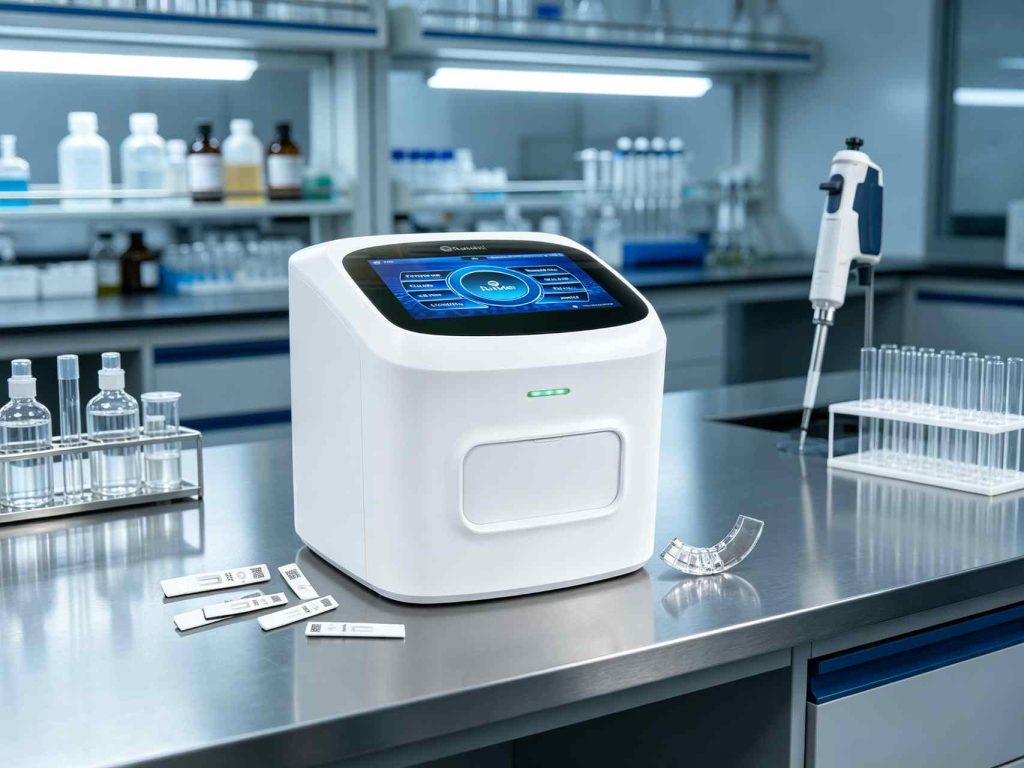
Figure: A portable hematology analyzer rides the same deck as rice sacks and gas cylinders, and at journey’s end it matters more than any of them.

Figure: Where a highland clinic has stable power, an automatic hematology analyzer handles the daily volume that outreach boat visits alone cannot cover.
Medical Disclaimer
This article is for informational purposes only and does not constitute medical advice. Complete blood count results must be interpreted by qualified health professionals with locally appropriate reference ranges and confirmed where clinically indicated by reference laboratory testing. Device regulatory status varies by country; RUNMEI Health products are manufactured under ISO 13485, CE and FDA-aligned processes, but local registration requirements apply. Consult your national health authority and current clinical guidelines.