Every day, thousands of rural blood samples die in transit — in heat, in potholes, in lost paperwork. The fix is not a better courier; it is a better location.
What happens to a blood sample between the village clinic and the district laboratory? Sometimes it rides a motorcycle for three hours in a box that was never designed for heat. Sometimes it waits on a counter for the courier who comes twice a week. Sometimes it arrives — clotted, hemolyzed or expired — and is rejected on sight. The quiet arithmetic of rural diagnostics is dominated by these losses: samples that never arrive, arrive too late, or arrive unusable. The Lancet Commission on Diagnostics found that 47 percent of the global population lacks access to diagnostics — and a meaningful share of that deficit is not an absence of laboratories, but a failure of transit.
The Fragile Journey of a Rural Sample
The journey of a referral sample is an obstacle course. Blood is a perishable specimen: temperature, time and agitation all degrade it, and rural transport offers generous helpings of all three. A sample drawn on Monday may not reach the analyzer until Thursday — by which point cell counts have shifted, and the result is at best unreliable. Even in well-organized systems, transport failures produce a steady drip of rejected samples, repeated draws and delayed diagnoses. The deeper problem is structural: the specimen travels, the patient waits, and neither journey is reliable. This is why the true cost of a CBC workflow in referral-dependent clinics is never fully captured by budgets — the biggest line item is unrecoverable time.
The Paradox of the Referral Model
Referral-based testing creates a strange inversion: the sample must travel at the speed of transport while the disease progresses at the speed of biology. For a febrile child with suspected severe infection, a three-day transport loop is not a delay; it is a different clinical outcome. The landmark Rivers study in the New England Journal of Medicine showed that early intervention in severe sepsis dramatically improves survival — and early intervention begins with early diagnosis. Every hour the sample spends on a motorcycle is an hour the treatment cannot start. The referral model asks rural patients to accept a diagnostic speed that urban patients would rightly consider malpractice.
Moving the Test, Not the Sample
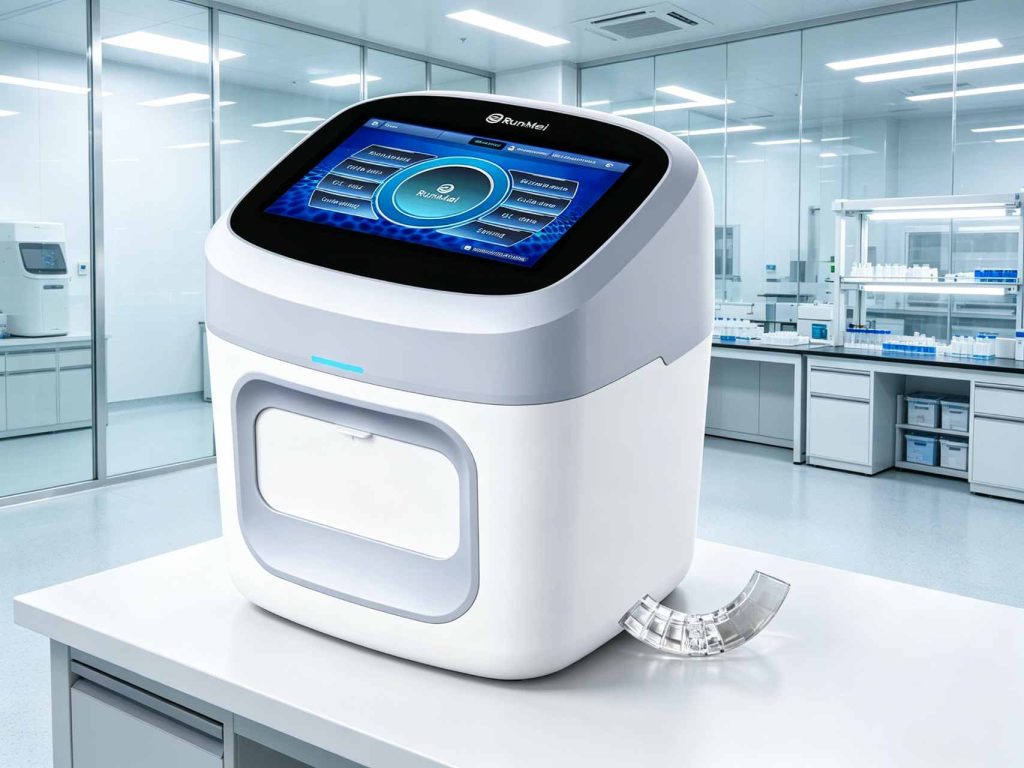
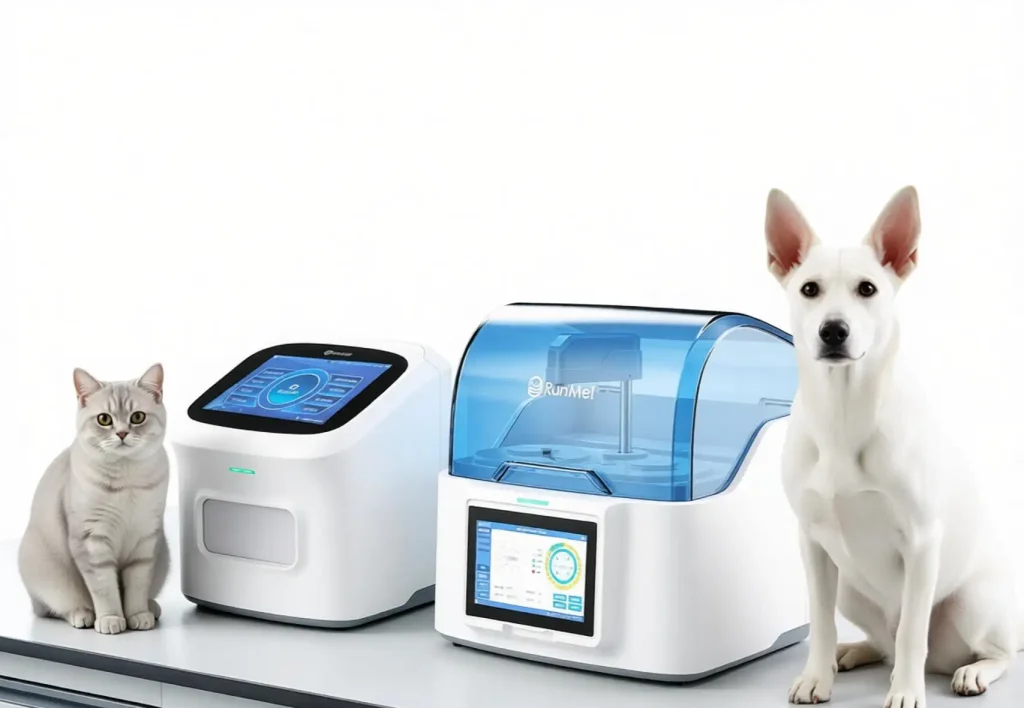
The elegant solution is to reverse the equation: instead of moving the sample to the instrument, move the instrument to the sample. A portable multi-function blood analyzer placed in the clinic eliminates the entire transport leg for the most common tests. The complete blood count — the workhorse of primary care — is produced at the point of collection, in minutes, with no courier, no cold chain and no rejection due to transit damage. The clinic that adopts this model stops asking “will the sample arrive?” and starts asking “what does the result say?” — a question with an answer the same day.
What Still Needs to Travel — and How to Protect It
Point-of-care testing does not end transport entirely; specialized tests and confirmatory panels still require referral. But the volume that travels can be dramatically reduced, and what remains can be handled better: proper collection tubes, temperature-controlled transport where feasible, and rapid processing. For facilities sending molecular tests — respiratory panels, for example — reliable specimen collection is the foundation; using quality universal transport media and sampling swabs protects the specimen for the journey that remains. The goal is not to eliminate the district laboratory; it is to reserve it for the tests that genuinely require it.
The Systems Answer to a Systems Problem
Transport delay is a systems failure, and it demands a systems response: analyze the actual distance and failure points in your referral chain, identify which tests dominate your workload, and deploy point-of-care capacity for those first. Review the analyzer accuracy and total-cost evidence to choose instruments that will survive the environment, and plan training so the machines are used from day one. Rural programs that have done this report the same transformation: the blood sample that never arrives has been replaced by the result that never leaves.
Conclusion
The blood sample that never arrives is the silent emblem of a broken assumption — that rural diagnostics must be a journey. The assumption has a cost measured in missed diagnoses, progressed diseases and families who watched conditions worsen while a specimen sat in a courier’s bag. The fix is not a better motorcycle. It is a better location for the test itself: at the patient’s side, in the village clinic, where the sample never has to travel at all.