Meta Title: Blood Counts in Mining Communities: The Local Analyzer | RunMei
Meta Description: Blood counts in mining communities: anemia, silicosis risk and the local analyzer. How on-site CBC testing supports worker health and occupational registers.
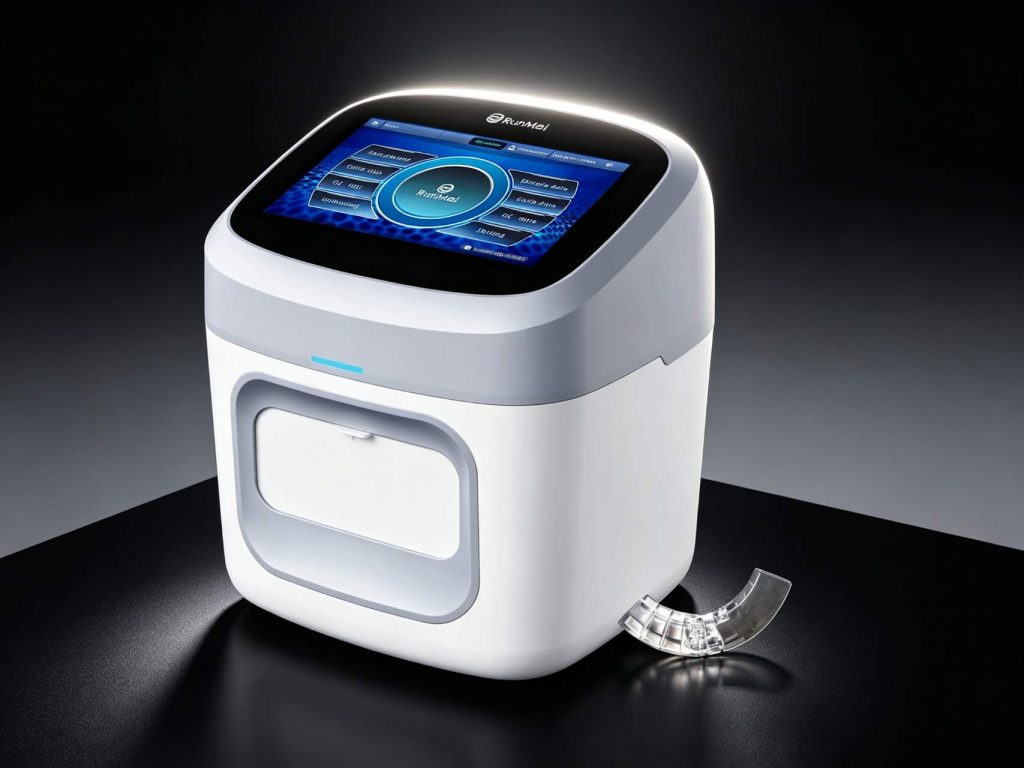
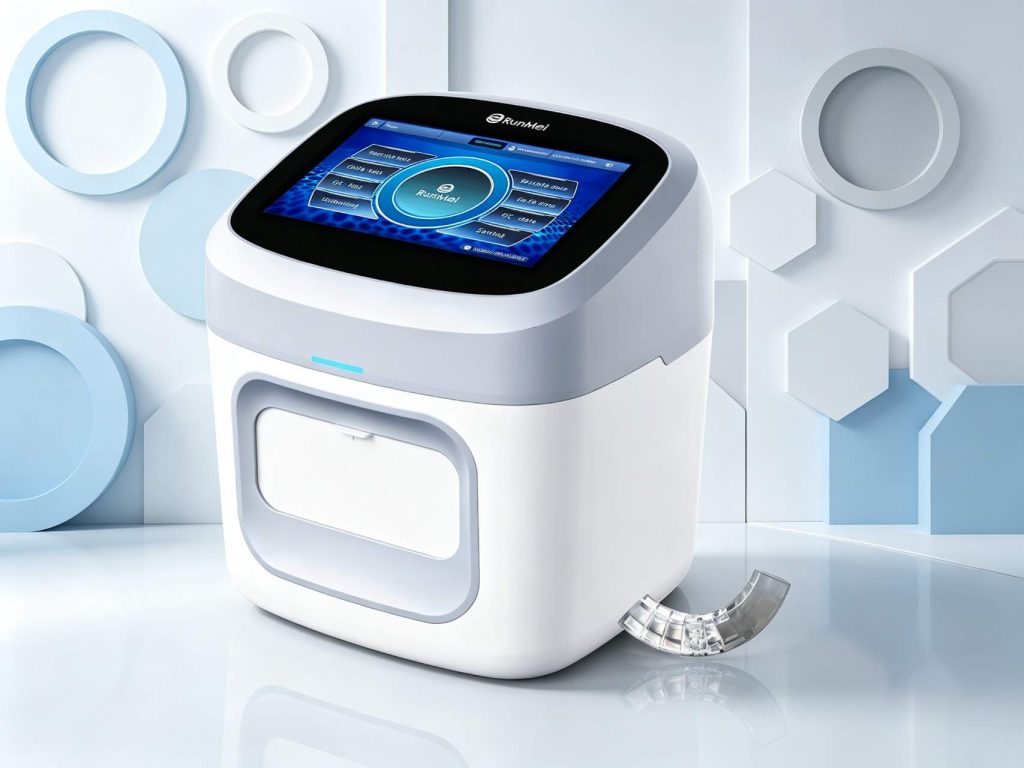
Ask a mine manager what the clinic measures, and the answer is usually the rock, not the blood. Ask the clinic sister, and the answer is different: shift workers who show up pale, cough for months, and leave the compound without a single blood count result on their record. The blood counts sits at the center of that change, and the pages that follow show why. The premium 5-part blood analyzer catalog covers the instruments rural programs order most often.
The pages that follow cover what the sales brochure does not: what blood count can and cannot deliver in rural health care, what it costs to run rather than to buy, and the mistakes that turn useful instruments into idle furniture. About 3 billion people worldwide still cannot reach a health facility within one hour on foot, a figure the WHO has used to argue for diagnostics that travel to patients instead of the other way around. The aim is to give clinic managers and program planners a field-tested basis for decisions, not a list of product claims. WHO . Facilities weighing the options can browse the medical blood analyzer range to compare configurations side by side.
Key Takeaways
- Mining communities carry a heavy load of anemia, infection and dust-related disease.
- A blood analyzer at the mine clinic turns a routine check into a screening program.
- The CBC supports tuberculosis and pneumonia triage in workers with chronic cough.
- Occupational health registers fed by local testing make the case for prevention.
The Health Profile of a Mining Workforce
The list of what mining does to a community is long and well documented: silica dust, heavy metals, long shifts, and a migrant workforce far from family clinics. The blood count sits at the intersection of nearly every item on that list, because it answers the questions that dust and distance create.
Anemia is common in mining regions for reasons that compound each other: hookworm in workers who came from endemic areas, malaria in seasonal workers, and nutrition that follows the pay cycle rather than the harvest.
The community decides whether the blood count lives or decorates. A machine that sits in a room patients do not enter is a machine without value; a machine that is explained, trusted and used is a service. Programs that involve community health workers, explain results in the local language and let the community see the benefit get the utilization that makes the whole investment real. And this is exactly where blood count changes the decision. NEJM . Programs that want a deeper differential can read the cost-effective blood analyzer page for the trade-offs.
The Chronic Cough That Hides Tuberculosis
A miner who coughs for three weeks is a public health event, not a clinic visit. The CBC supports the triage decision when microscopy is not immediately available, and it tracks the recovery of workers who start treatment. The analyzer does not replace the TB program; it gives the TB program a first signal.
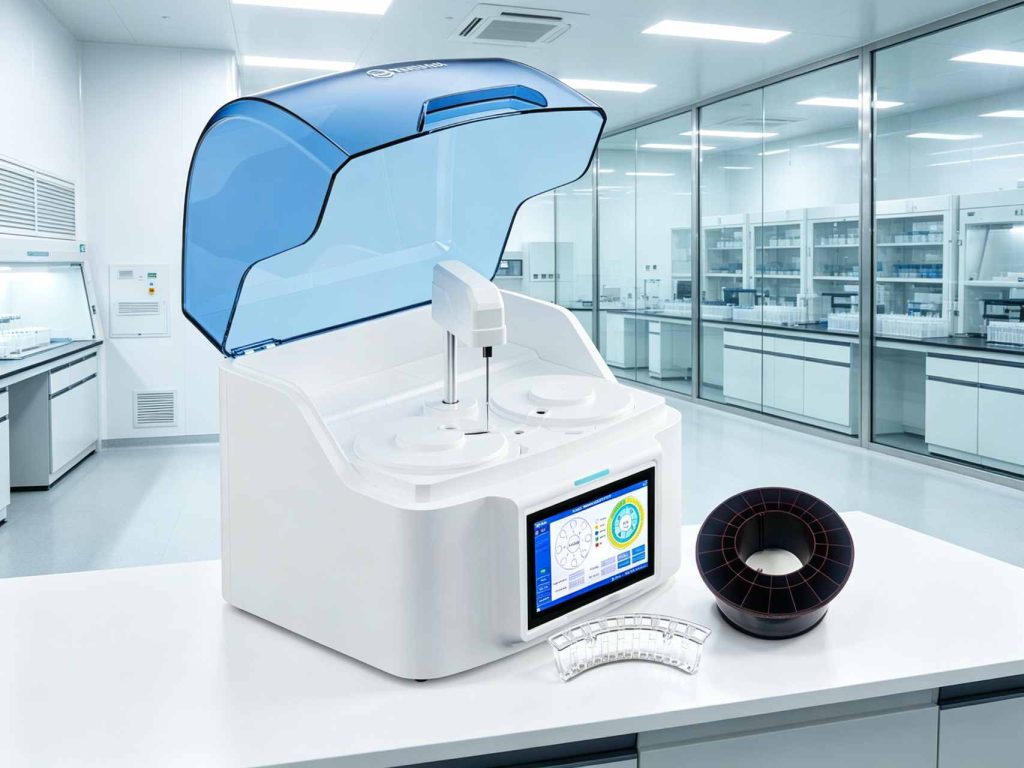
Fig. 1 — RunMei cost-effective blood analyzer in a rural clinic setting. Blood analyzer mining community clinic hemoglobin screening. | Alt: blood analyzer mining community clinic hemoglobin screening
Where the Blood Analyzer Earns Its Place
The mine clinic has an unusual advantage: a captive population with a schedule. Workers appear at predictable times, which means screening can be systematic rather than incidental. A hemoglobin check at the annual medical becomes a trend line across a workforce, and trend lines are what occupational health reports are built from.
The same instrument serves the dependents who live in the mining town. The wives, children and retired workers who use the clinic share the same anemia, fever and infection burden, and they benefit from the same local testing.
the blood count is the seed; the program is the tree. Training, supervision, registers, quality checks and a supply line that outlasts the donor — these are what turn a machine into a service that keeps running. Programs that design for sustainability from the first installation meeting are the ones still running at the five-year review. Programs built around blood count see the effect within the first month. Budget teams should see the low reagent cost blood analyzer cost analysis before signing off on procurement.
The Register That Makes Prevention Possible
An occupational health register is only as strong as its data source. When the counts are produced on site, the register fills itself; when they depend on a distant laboratory, the register has holes. The analyzer is the difference between a policy document and a measured program.
Making the Clinic the First Stop, Not the Last
Mining clinics often function as first-aid posts, sending everything else down the road. Adding on-site blood testing changes that posture. The worker with a positive malaria count starts treatment the same shift; the worker with a suspicious count is referred with data instead of a shrug.
The equipment choice matters less than the habit. A compact analyzer that survives the dust and the voltage swings of a mining town, with reagents that arrive on the supply truck, outlasts a more sophisticated instrument that needs a specialist to touch it.
Power is the silent partner in every rural deployment. In rural health care, outages are not the exception; they are the schedule. The practical answer is a blood count that tolerates the interruption — battery capability that finishes the test in progress, a startup that does not lose calibration, and a surge protector between the wall and the machine. Programs that budget for power, not just for the instrument, are the programs whose instruments stay alive. The same principle holds for blood count: measure, record, act.
The Shift-Handover Result
The result that arrives before the shift change is the result that shapes the handover: the night nurse knows who started treatment, who needs rechecking, and who is due for a referral tomorrow. Testing on site makes the handover a conversation about patients, not a conversation about lost samples.
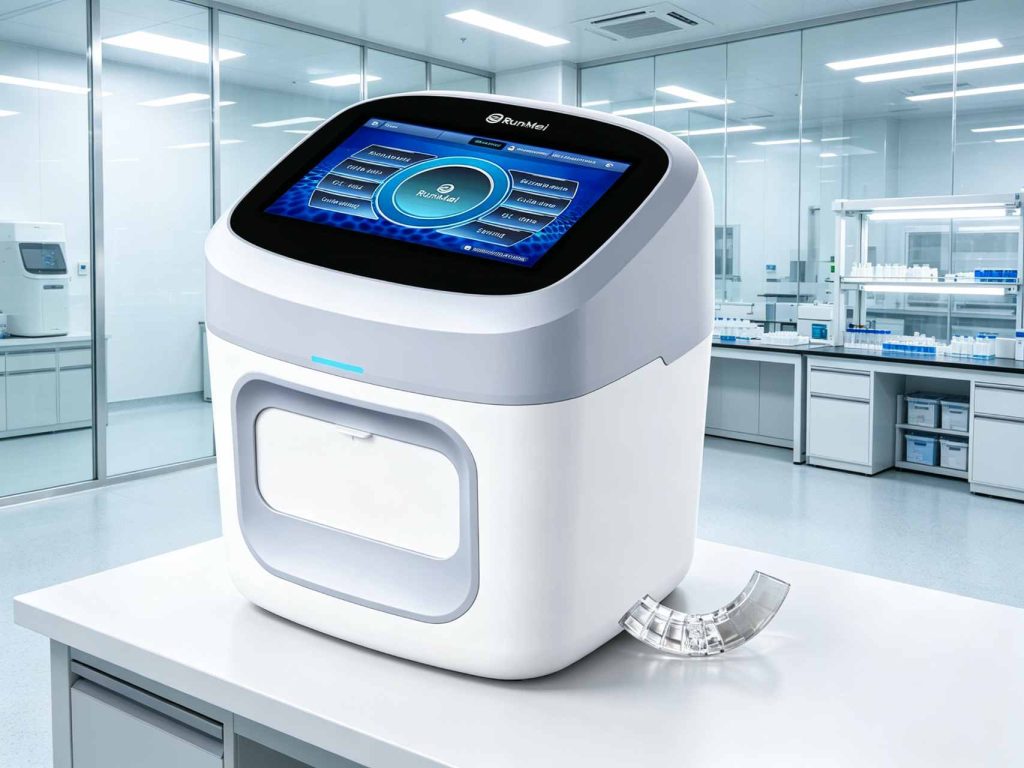
Fig. 2 — RunMei low reagent cost blood analyzer during routine testing. Compact blood analyzer occupational health testing dust resistant. | Alt: compact blood analyzer occupational health testing dust resistant
The First 90 Days
The first quarter after installation is the period that separates a successful deployment from a stalled one. Early problems are normal — an unfamiliar workflow, a supply hiccup, a control result that will not settle — and the difference is how quickly they are caught. A facility that schedules its own 90-day review, with the register open and the errors on the table, fixes its problems while they are still cheap to fix.
Serial blood counts across the workforce turn the occupational register into a measured document. The blood counts that begin at the pre-employment medical are the blood counts that end up in the district report.
Reading the Register Honestly
The register is the review’s raw material: tests run, results flagged, referrals made, problems logged. The facility that reads it without defensiveness learns what its training missed and its supply line forgot. The facility that skips the reading repeats the first quarter’s mistakes for the rest of the year.
The Second-Quarter Targets
By day 120, the targets should be visible: tests on a predictable weekly schedule, controls passing consistently, one operator certified per shift, and a referral pattern that matches the protocol. Facilities that set these four targets at installation find the second quarter runs itself.
For teams accountable for mining community health, the practical effect shows up within the first month. Decisions about occupational anemia screening are usually made at district level — and the register feeds them. It also strengthens silicosis risk monitoring, a benefit that rarely appears in the budget line.
Frequently Asked Questions
Q1. Which blood tests matter most in a mining community?
The CBC is the workhorse: hemoglobin for anemia, white cell counts for infection, and the pattern of results that supports tuberculosis and pneumonia triage.
Q2. Can a mine clinic run its own analyzer reliably?
Yes, when the analyzer tolerates dust and power fluctuation, reagents arrive on schedule, and one operator per shift is trained and backed up.
Q3. Does occupational health reporting really use CBC data?
Strong programs do. Serial hemoglobin and white cell counts across a workforce are the evidence base for housing, nutrition and dust-control investments.
Q4. What about workers who need tests the clinic cannot do?
They are referred with the CBC in hand. Local testing narrows the referral question and gives the district hospital a baseline to work from.
Sources & References
- World Health Organization data show that in lower-income countries a large share of the rural population still lives beyond the reach of a functioning laboratory; the WHO recommends primary care facilities be reachable within roughly 5 km, yet global estimates indicate about 3 billion people cannot reach a health facility within one hour on foot. Source: WHO — https://www.who.int/news-room/fact-sheets/detail/primary-health-care
- Reviews published in the New England Journal of Medicine have repeatedly underlined that the single most reliable way to improve outcomes in low-resource settings is to shorten the interval between clinical presentation and a correct laboratory diagnosis. Source: NEJM — https://www.nejm.org/
- WHO analyses indicate that anemia affects roughly one in four people worldwide, with the highest prevalence in preschool children and pregnant women in low- and middle-income regions. Source: WHO — https://www.who.int/news-room/fact-sheets/detail/anaemia
Disclaimer
This article is for informational and marketing purposes only and does not constitute medical advice, a product claim, or a regulatory certification statement. Device availability, regulatory status (FDA 510(k)/CE/ISO 13485) and specifications vary by country and model; always verify current approvals with the manufacturer and consult local regulations before procurement or use.