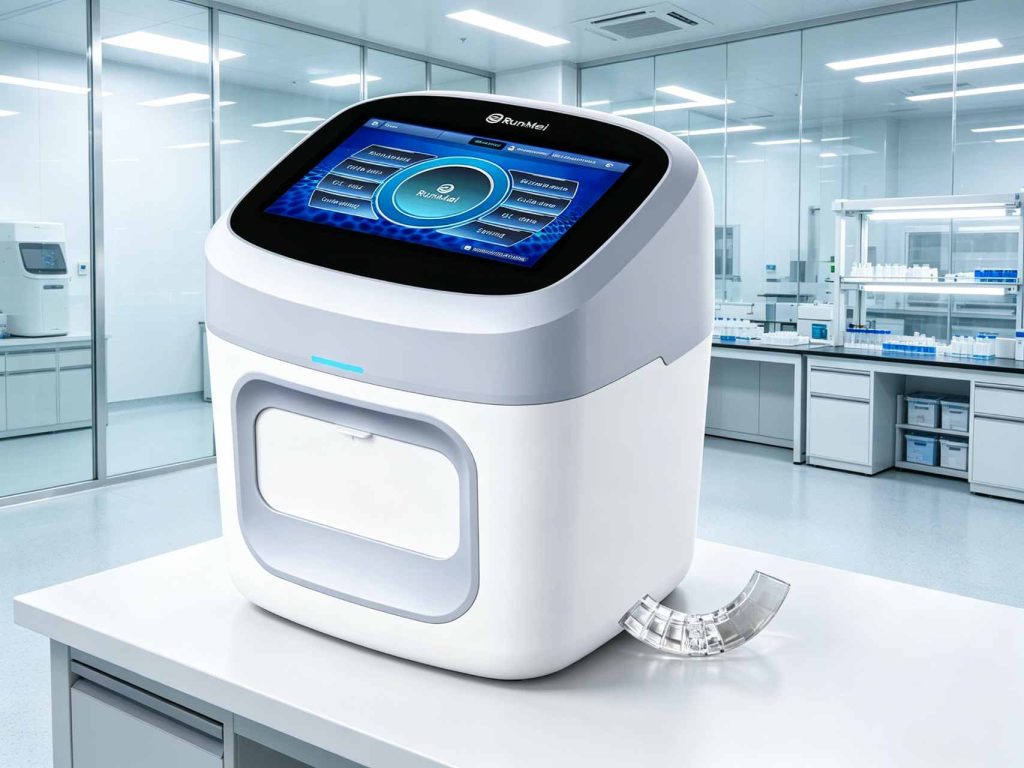
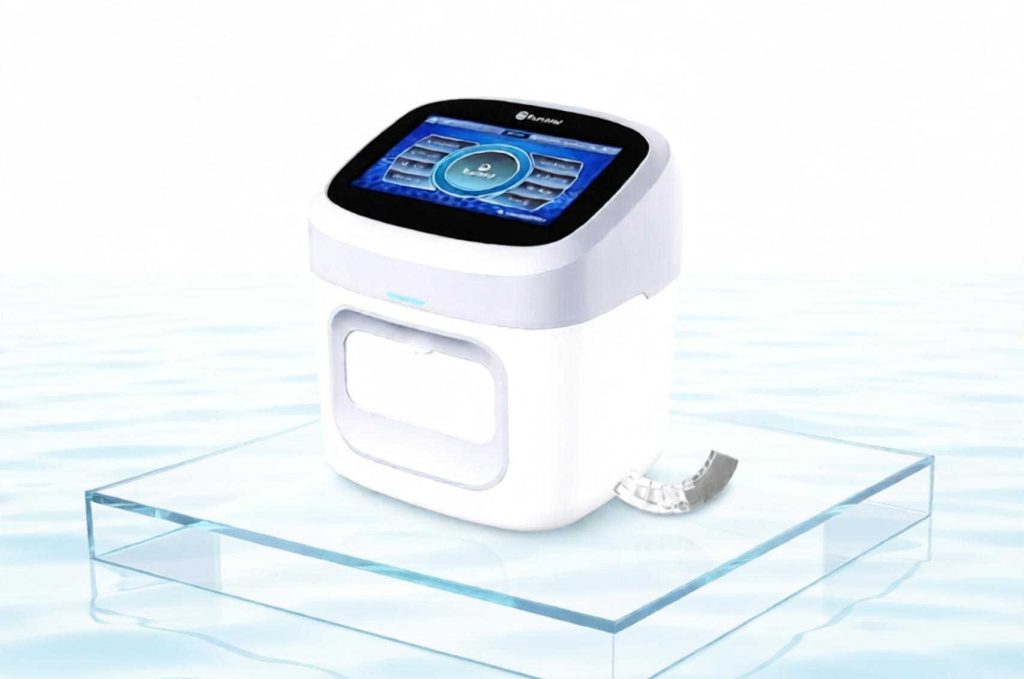
Two clinics, thirty kilometers apart, faced the same dengue outbreak in the same rainy season. At the first, a nurse sent every febrile child to the district hospital for blood tests. Families waited two days for results, and one boy arrived at the referral ward with warning signs nobody had tracked. At the second, the nurse ran a complete blood count (CBC) on her own compact CBC analyzer each morning. She watched one girl’s platelets fall across four days, recognized the pattern, referred early, and the child never needed intensive care. Same virus, same season, different outcomes.
The difference was not funding or luck. One clinic had a working blood analyzer and a daily platelet routine; the other did not. Dengue rewards that routine, because the test that matters most is also the simplest one to repeat.
Why Dengue Turns Dangerous So Fast
Dengue sweeps across Southeast Asia in predictable seasonal waves, filling village clinics with fevers that look identical for the first three days. The dangerous window frequently opens as the fever breaks, when plasma can leak from the bloodstream and platelet counts fall sharply. A child who seemed fine on Tuesday can be in shock by Thursday. Recovery, for those who get through it, is often as sudden as the decline.
The diagnostic context compounds the risk. The Lancet Commission on Diagnostics (2021) found that 47 percent of the world’s population has little or no access to diagnostics, and survey work with the WHO Global Diagnostics Coalition showed that 81 percent of basic primary-care services across 14 low- and middle-income countries lacked essential diagnostic tests. For a village clinic during dengue season, that statistic has a face: the febrile child whose platelet count nobody knows.
Timing shapes everything in dengue care. The febrile phase rarely frightens anyone; the critical phase arrives as the temperature falls, when families believe the worst is over. A clinic that can check platelets and hematocrit on day four, day five and day six is guarding exactly the window when the child looks better but may be leaking plasma. Without local testing, that window is guarded by guesswork, and the referral often comes after shock has set in.
What a CBC Reveals During a Dengue Fever
The Trend Beats Any Single Count
A single platelet number tells less than the direction it is moving. Daily complete blood counts show the fall through the febrile phase and the recovery afterward, and they pair with hematocrit readings that signal plasma leakage. Clinical dengue guidance emphasizes serial monitoring precisely because the trend guides decisions better than any threshold memorized in isolation.
With a hematology analyzer on site, the nurse collects a finger-prick sample each morning and prints the trend beside the patient’s chart. The whole cycle takes minutes, and the child is home before the queue forms. Researchers writing in the New England Journal of Medicine have documented how point-of-care diagnostics and task-shifting in rural Asian and African settings shorten time-to-decision for febrile illness; dengue monitoring fits that pattern exactly.
Who Runs the Morning Count
The daily count does not need a laboratory scientist. Nurses and community health workers run these instruments reliably across the region when training is structured, a point district teams sometimes doubt until they see it. The workflow is short enough to slot between consultations, and the operator’s judgment about warning signs, not the machine, remains the clinical heart of the program. Supervisor review of the tracking sheet once a week keeps quality honest without slowing the routine down.
Warning Signs That Travel With the Numbers
- Abdominal pain or persistent vomiting
- Lethargy or unusual restlessness between fever peaks
- Bleeding gums or spontaneous nosebleeds
- A rising hematocrit alongside falling platelets
- Cold, clammy skin after the fever drops
Numbers alone do not triage; the combination does. A falling platelet count in a child who is drinking, playful and stable is watched. The same count with two warning signs is referred. That judgment is teachable, and village nurses learn it quickly when the data is in front of them every morning.
Building a Daily Monitoring Routine at a Village Clinic
The routine matters more than the hardware. Same patient, same time each morning, recorded on the same tracking sheet, with referral thresholds drawn from the national dengue protocol. When results are tracked this way, referral becomes an obvious decision rather than a gamble. Our guide to dengue platelet monitoring with community CBC testing walks through the sheet design and escalation steps that district teams typically adapt to national guidelines.
On the equipment side, a compact hematology analyzer for dengue monitoring gives a village clinic the core indices dengue care depends on: platelets, hematocrit and white cell counts. It does not replace clinical judgment or national protocols, but it gives those protocols the data they were written for.
Fever Panels: What Else the Outbreak Demands
Dengue is never the only fever in the waiting room. Typhoid, leptospirosis, influenza and bacterial pneumonia share the same bench during the rainy months, and a CBC helps separate the patterns: the left-shifted white count that points to bacterial infection against the picture typical of dengue. When pneumonia enters the differential, a blood count is the first-line discriminator, as we explain in CBC-based pneumonia triage in children.
Chemistry adds another layer for sicker patients, where hydration status and organ function change management. A mini biochemistry analyzer for fever panels lets a district-level laboratory run those panels without sending samples on a half-day journey to the provincial capital.
Support from the district laboratory still matters. Confirmatory serology, blood cultures where available, and cross-checks of unusual CBC results all travel upward, and the analyzer’s printed indices make those referrals sharper. The village instrument and the district lab are not competitors; they are two halves of one surveillance system that works only when both ends function.
Anemia in the Waiting Room: The Other Reason a CBC Earns Its Place
The World Health Organization estimates that about 40 percent of children aged 6 to 59 months and roughly 37 percent of pregnant women worldwide live with anemia (World Health Organization, 2023). During an outbreak, that anemia is sitting in the same queue as the fevers. One instrument serves both: the same finger-prick that tracks a dengue patient’s platelets screens a pregnant woman’s hemoglobin the same morning. For a clinic director, this dual use is what justifies the budget line.
Choosing a CBC Analyzer That Survives the Season
Brand A, Brand B and Brand C all sell instruments that can count platelets. What separates them in a village setting is everything around the count: reagent logistics, service response, and how the machine behaves when the power flickers during an afternoon storm. RUNMEI Health builds 3-part and 5-part AI-powered hematology analyzers under ISO 13485-certified, CE and FDA-aligned manufacturing, with the BCA-330 automatic hematology analyzer for busier district labs and the BCA-320 portable multi-function analyzer for village posts and outreach teams. The company backs its instruments with 24/7 technical support, reagent supply programs and OEM/ODM options for distributors.
Supplier Questions Worth Asking in April
Ask suppliers hard questions before the season starts. What is the reagent shelf life in your climate? Who ships within 48 hours? What happens when the warranty ends? The answers decide whether your analyzer is counting platelets in September or collecting dust.
Plan for the Limits
- Power: afternoon outages are common in dengue season; battery buffering or solar backup keeps the morning routine intact
- Reagents: consumption spikes with daily monitoring, so stock planning must precede the outbreak
- Confirmation: a CBC monitors dengue, it does not diagnose it; serology stays with the referral lab
- Training: relief staff need the same competence as the nurse who attended the workshop
World Health Assembly Resolution WHA76.5 (2023) urges member states to strengthen diagnostic capacity at the primary care level. Dengue season is the most concrete test of that commitment, because for a few months every year the village clinic becomes the front line. A clinic with a working analyzer and a daily routine passes the test.
Foire Aux Questions
Can a CBC analyzer diagnose dengue?
No. Dengue diagnosis requires specific tests such as NS1 antigen or IgM/IgG antibody assays, usually run at a referral laboratory. A CBC analyzer’s role is monitoring: it tracks the platelet fall, hematocrit rise and white cell patterns that tell the clinical team when a suspected case is worsening and needs referral or fluid management.
How often should platelets be checked during dengue?
Most national dengue protocols call for daily counts during the critical phase, with more frequent checks when warning signs appear. A village-level analyzer makes daily monitoring practical, because families avoid repeated trips to distant labs. Always follow the local protocol, and remember that the trend across several days matters more than any single result.
What platelet count means danger in dengue?
There is no single magic number. Clinical guidance stresses the combination of the platelet trend, rising hematocrit and physical warning signs such as abdominal pain, persistent vomiting or bleeding. A moderately low count in a stable child may be watched, while a higher count with warning signs can still need referral. Protocols and clinical judgment decide, not one value.
Can a small village clinic afford dengue-season monitoring?
Usually yes, if the analyzer is chosen for the setting. A 3-part instrument covers the platelet, hematocrit and white cell indices dengue monitoring needs, and compact models such as the RUNMEI BCA-320 are built for low-resource posts with modest reagent consumption. Budget for consumables, power backup and support, and the clinic enters the season prepared rather than surprised.
Does a CBC replace dengue rapid tests?
No, and the two do different jobs. Rapid tests for NS1 antigen or antibodies establish whether dengue is the likely cause of the fever, while the CBC tracks how the illness is evolving day by day. Many clinics use both: the rapid test early in the fever, then daily blood counts through the critical phase. Neither substitutes for clinical assessment by a trained health worker.
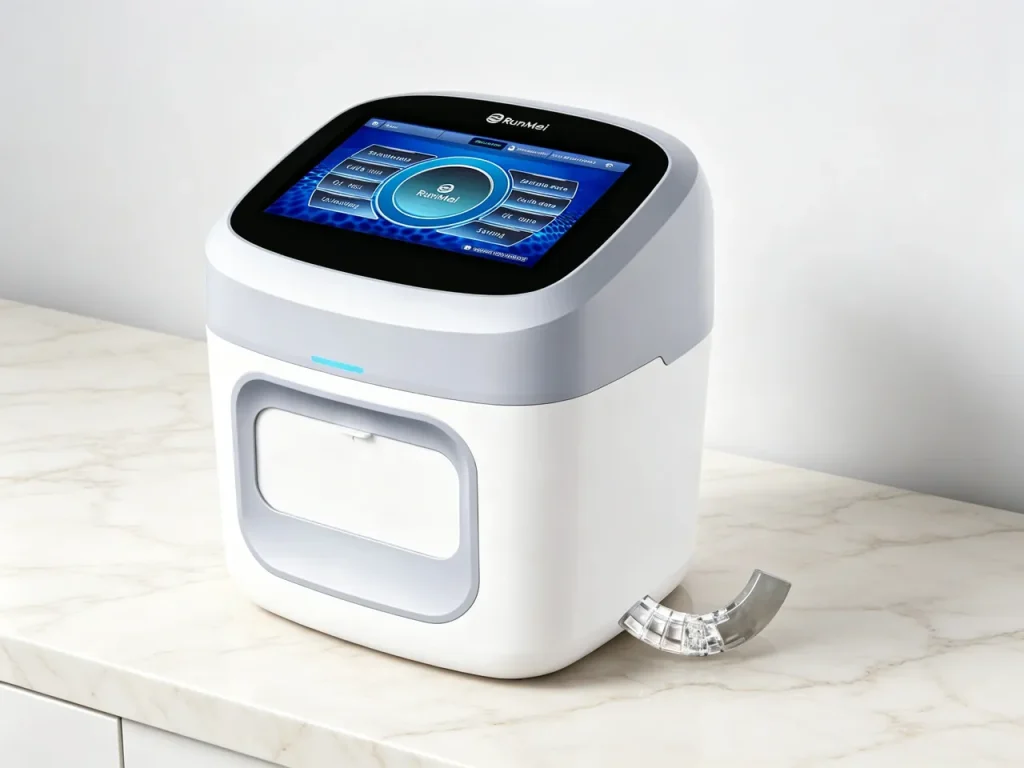
Figure: During dengue season, a compact analyzer like this one lets a village nurse track a child’s platelet trend every morning instead of guessing at the danger window.
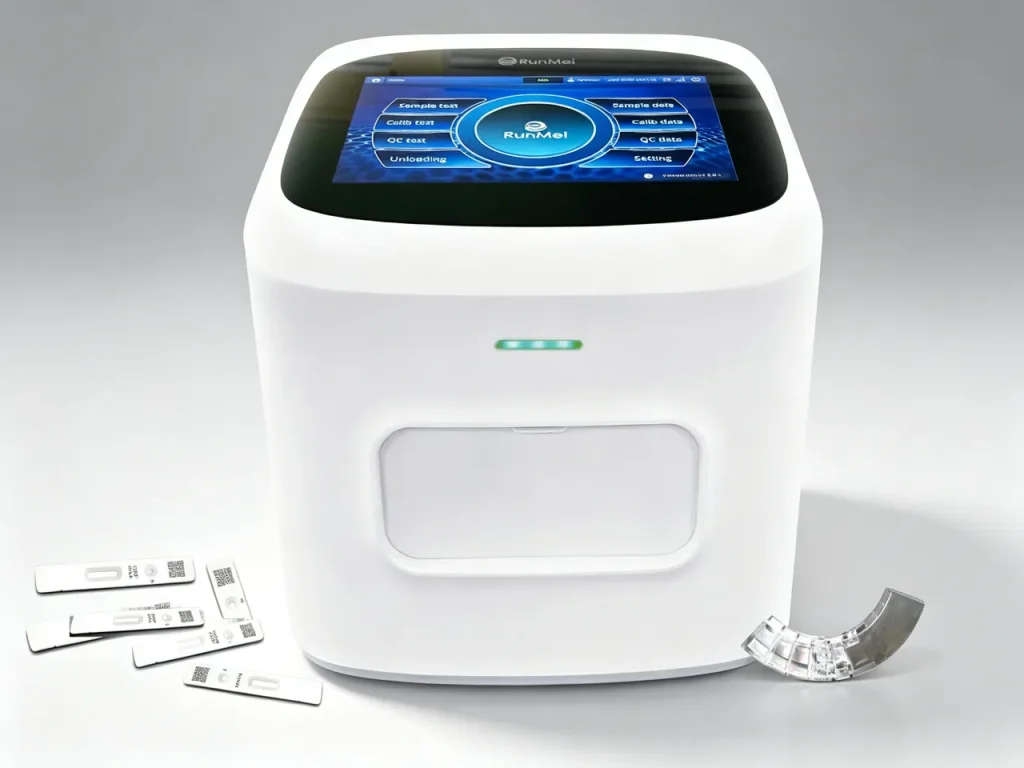
Figure: When village clinics refer suspected severe cases, an automatic hematology analyzer at the district lab confirms the trend and keeps surveillance data flowing.
Medical Disclaimer
This article is for informational purposes only and does not constitute medical advice. Complete blood count results must be interpreted by qualified health professionals alongside clinical assessment and approved dengue protocols, and suspected dengue requires confirmation with appropriate laboratory tests. Device regulatory status varies by country; RUNMEI Health products are manufactured under ISO 13485, CE and FDA-aligned processes, but local registration requirements apply. Consult your national health authority and current clinical guidelines.