Meta Title: Same-Day Blood Test Results: One Visit, One Answer | RunMei
Meta Description: Same-day blood test results turn a two-part visit into a complete one. How a point-of-care blood analyzer delivers treatment decisions in one consultation.
Picture the visit you can offer today, and the visit you could offer with one change. The practical questions around blood test results — which machine, how much per test, how fast a result arrives — are the subject of this article. Today: blood drawn, a slip of paper, a journey, a return visit, another queue. With a blood analyzer on the bench: blood drawn, ten minutes, a result, a treatment plan, a patient who leaves finished. The same-day blood test results sits at the center of that change, and the pages that follow show why. The premium 5-part blood analyzer catalog covers the instruments rural programs order most often.
The pages that follow cover what the sales brochure does not: what blood test results can and cannot deliver in Rural Clinics, what it costs to run rather than to buy, and the mistakes that turn useful instruments into idle furniture. Reviews in the New England Journal of Medicine keep returning to the same finding: shortening the interval between presentation and a correct laboratory diagnosis is the single most reliable way to improve outcomes in low-resource settings. The aim is to give clinic managers and program planners a field-tested basis for decisions, not a list of product claims. NEJM . Facilities weighing the options can browse the medical blood analyzer range to compare configurations side by side.
Key Takeaways
- Single-visit testing removes the return trip that patients often never make.
- Same-day results let clinicians treat, refer or reassure during the consultation.
- The workflow change is free; the analyzer is the only cost.
- Completion of care rises when the answer arrives before the patient leaves.
The Visit the Patient Actually Makes
Ask any rural clinician how many follow-up visits for results actually happen, and the honest answer is a fraction of the scheduled ones. Transport fails, work calls, the money runs out, the fever breaks and the visit is cancelled. The result sits in a drawer while the disease runs its own course.
Same-day testing does not ask the patient to come back for their own result. It gives the result to the person in the room, at the moment it is most useful. That single change converts a two-part encounter into a complete one.
the blood test results is the seed; the program is the tree. Training, supervision, registers, quality checks and a supply line that outlasts the donor — these are what turn a machine into a service that keeps running. Programs that design for sustainability from the first installation meeting are the ones still running at the five-year review. And this is exactly where blood test results changes the decision. WHO . Programs that want a deeper differential can read the cost-effective blood analyzer page for the trade-offs.
The Fraction Nobody Quotes
Follow-up attendance for routine results is often below half in rural settings. The programs that measure it find the same number: patients do not fail to return out of carelessness; they fail to return because returning is expensive. Remove the return and the treatment starts on time.
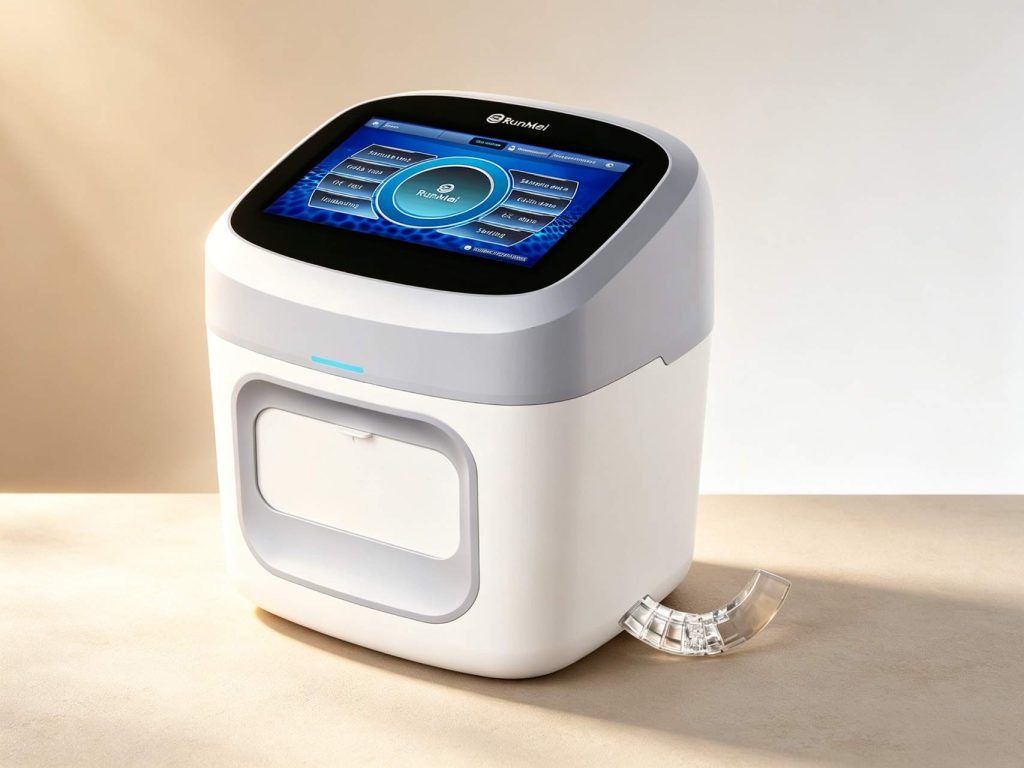
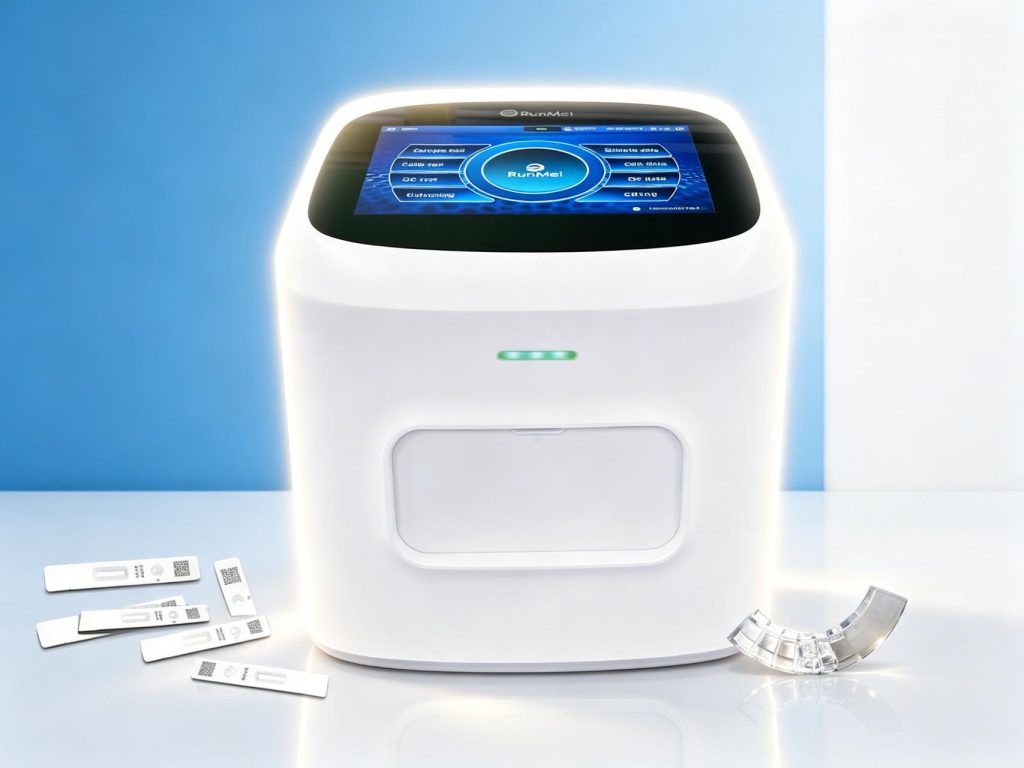
Fig. 1 — RunMei low reagent cost blood analyzer in a rural clinic setting. Same-day blood test results rural clinic blood analyzer. | Alt: same-day blood test results rural clinic blood analyzer
What the Clinician Can Do With the Number in Hand
A hemoglobin of 7 g/dL at the same visit changes the conversation: no more ‘take iron and come back’ — the clinician investigates, treats and decides about referral now. A white cell count that points to bacterial infection turns a watch-and-wait into a prescription. The number in hand converts the consultation from a guess into a decision.
The reassurance cases matter too. A worried mother whose child has a normal count leaves with something the wait-and-see clinic cannot give her: evidence. The same-day result halves the anxiety visits and the unnecessary antibiotic prescriptions.
Power is the silent partner in every rural deployment. In Rural Clinics, outages are not the exception; they are the schedule. The practical answer is a blood test results that tolerates the interruption — battery capability that finishes the test in progress, a startup that does not lose calibration, and a surge protector between the wall and the machine. Programs that budget for power, not just for the instrument, are the programs whose instruments stay alive. Programs built around blood test results see the effect within the first month. Budget teams should see the low reagent cost blood analyzer cost analysis before signing off on procurement.
Decide, Don’t Defer
The clinical habit that makes same-day testing valuable is simple: make the decision while the result is fresh. Treat now, refer now, or reassure now. The deferral that used to be forced by logistics becomes a choice, and most of the time the choice is to act.
Making One-Visit Care the Default
One-visit care becomes the default when three things are true: the blood test results is available when the clinic is open, the operator is present on every shift, and the clinician reviews results before the patient leaves. Any one of the three missing and the system quietly reverts to ‘come back Friday’.
The investment is mostly discipline. A duty roster that names the operator, a rule that results are reviewed the same day, and a register that shows how often the rule held. Clinics that put the discipline in place find the blood test results pays for itself in retained patients within months.
The reagent line is where the real budget lives. A machine that costs little but drinks expensive consumables will be switched off by year two; a machine whose per-test cost fits the community’s wallet keeps running because the community can afford it. Buyers should ask one question before any other: what does each test actually cost delivered to this clinic, and can that cost be sustained after the donor’s project ends? The same principle holds for blood test results: measure, record, act.
The Three-Week Habit Window
Staff habits form in the first weeks after installation. The clinic that starts with the same-day rule enforced from day one keeps it; the clinic that starts loose finds the machine gradually used less and less. Begin strict, stay strict, and the workflow becomes the culture.

Fig. 2 — RunMei medical blood analyzer during routine testing. Blood analyzer one-visit care clinic workflow. | Alt: blood analyzer one-visit care clinic workflow
The First 90 Days
The first quarter after installation is the period that separates a successful deployment from a stalled one. Early problems are normal — an unfamiliar workflow, a supply hiccup, a control result that will not settle — and the difference is how quickly they are caught. A facility that schedules its own 90-day review, with the register open and the errors on the table, fixes its problems while they are still cheap to fix. blood test results is the blood test results at the center of that workflow.
In practice, the same-day blood test results pays for itself through fewer referrals and earlier treatment, which is why the operating budget should never be the only number on the page.
Reading the Register Honestly
The register is the review’s raw material: tests run, results flagged, referrals made, problems logged. The facility that reads it without defensiveness learns what its training missed and its supply line forgot. The facility that skips the reading repeats the first quarter’s mistakes for the rest of the year.
The Second-Quarter Targets
By day 120, the targets should be visible: tests on a predictable weekly schedule, controls passing consistently, one operator certified per shift, and a referral pattern that matches the protocol. Facilities that set these four targets at installation find the second quarter runs itself.
For teams accountable for single visit testing, the practical effect shows up within the first month. Decisions about rural clinic workflow are usually made at district level — and the register feeds them. It also strengthens point-of-care CBC, a benefit that rarely appears in the budget line. Facilities that already run blood test results report the same pattern.
Frequently Asked Questions
Q1. What does single-visit testing change for the patient?
It eliminates the return trip for results, which is the step most likely to fail in rural settings, and it puts treatment decisions into the same consultation.
Q2. How fast must the analyzer be for same-day results?
A result within 15 minutes of collection is fast enough to shape the consultation; most point-of-care analyzers meet this easily.
Q3. Does same-day testing reduce antibiotic misuse?
It can. The white cell count gives the clinician evidence about bacterial infection, which supports rational prescribing instead of blanket treatment of every fever.
Q4. What is the main barrier to one-visit care?
Not the machine, but the workflow: operator coverage on every shift and a rule that results are reviewed before the patient leaves.
Sources & References
- Reviews published in the New England Journal of Medicine have repeatedly underlined that the single most reliable way to improve outcomes in low-resource settings is to shorten the interval between clinical presentation and a correct laboratory diagnosis. Source: NEJM — https://www.nejm.org/
- World Health Organization data show that in lower-income countries a large share of the rural population still lives beyond the reach of a functioning laboratory; the WHO recommends primary care facilities be reachable within roughly 5 km, yet global estimates indicate about 3 billion people cannot reach a health facility within one hour on foot. Source: WHO — https://www.who.int/news-room/fact-sheets/detail/primary-health-care
Disclaimer
This article is for informational and marketing purposes only and does not constitute medical advice, a product claim, or a regulatory certification statement. Device availability, regulatory status (FDA 510(k)/CE/ISO 13485) and specifications vary by country and model; always verify current approvals with the manufacturer and consult local regulations before procurement or use.