Meta Title: Delayed Blood Test Results in Rural Clinics | RunMei
Meta Description: Delayed blood test results push treatable illness into crisis. Learn how on-site CBC testing with a blood analyzer cuts the wait from days to minutes.
The mother brought her two-year-old to the clinic on Monday with a fever that would not break. The delayed blood test results question — what it can do, what it costs to run and how a result earns trust — is answered in the pages that follow. The blood was drawn, the tube was labelled, and the clinic nurse said the results would be ready by Friday. By Thursday the fever had climbed, and the family was on a bus to the district hospital with no number to show for the four-day wait. The medical blood analyzer catalog covers the instruments rural programs order most often.
This article looks at delayed blood test results through the lens of Rural Clinics, where the stakes are ordinary and the constraints are real: budgets that do not stretch, staff who already wear several hats, and distances that punish delay. About 3 billion people worldwide still cannot reach a health facility within one hour on foot, a figure the WHO has used to argue for diagnostics that travel to patients instead of the other way around. The practical questions — which instrument, what training, how much per test, who maintains it — are answered in plain language, with the numbers a procurement committee can actually use. WHO . Facilities weighing the options can browse the portable blood analyzer range to compare configurations side by side.
Key Takeaways
- Delayed laboratory results push treatable illness into referral and sometimes into crisis.
- On-site CBC testing compresses the wait from days to minutes.
- The same instrument answers anemia, infection and fever questions in one run.
- Result speed is a patient-safety issue, not a convenience feature.
What a Four-Day Wait Actually Costs
Every day a result is delayed, the clinical picture moves without its data. A fever that started as a routine malaria test becomes an emergency by the time the answer arrives. A hemoglobin that was mildly low on Monday is the reason for a transfusion on Saturday. The wait does not just postpone treatment; it changes what treatment is needed.
The economics of delay are just as clear. The family pays for transport, the lost workdays, and often a second consultation when the result finally returns. The health system pays in referrals that could have been avoided and in complications that are more expensive to treat than the test would have been.
The numbers have to close in the real world. Volume assumptions, fee structures, reagent costs and the hidden cost of the journey patients would otherwise make — each belongs in the model before the purchase, not after. Facilities that run the arithmetic honestly find the delayed blood test results is not an expense; it is the cheaper way to do what they were already doing. That is the practical reality of delayed blood test results in the field. NEJM . Programs that want a deeper differential can read the premium 5-part blood analyzer page for the trade-offs.
The Result That Arrives Too Late
A late result is worse than no result in one specific way: it creates the illusion of information. The clinician who acts on a four-day-old count is acting on a patient who has changed since the sample was drawn. On-site testing closes that gap because the number describes the person in the room.
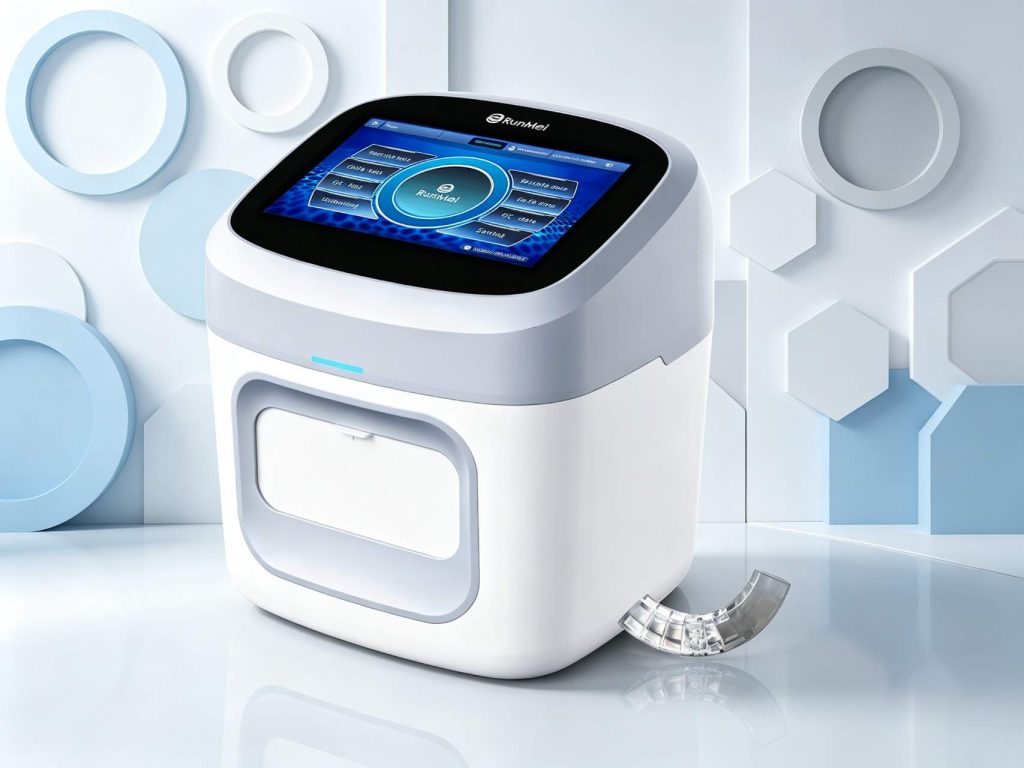
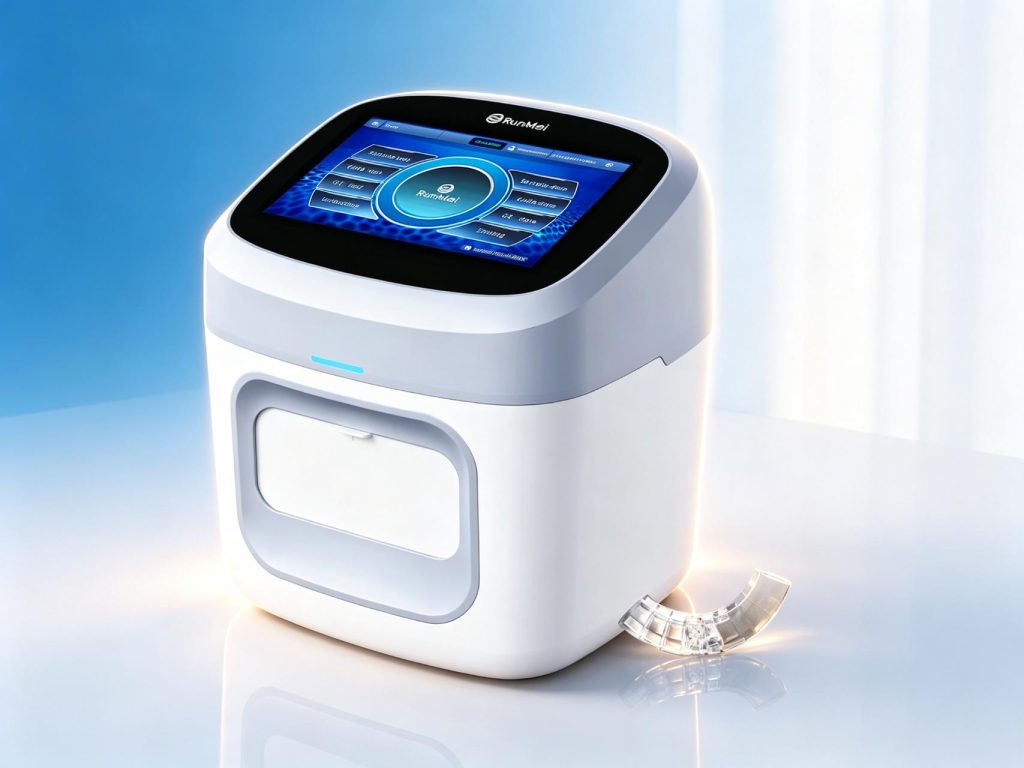
Fig. 1 — RunMei cost-effective blood analyzer in a rural clinic setting. Blood analyzer on-site cbc testing rural clinic. | Alt: blood analyzer on-site CBC testing rural clinic
Why the CBC Is the Right Test to Move Closer
The complete blood count is the most requested test in primary care, and it is also the most portable of the major laboratory tests. Modern analyzers run a full CBC from a small sample in minutes, tolerate imperfect power, and fit on a clinic bench. No other test delivers so much of the daily diagnostic load at such a low barrier to entry.
Moving the CBC on-site does not mean replacing the district laboratory. It means reserving the laboratory for what it does best: confirmatory testing, cultures, biochemistry panels and specialist work. The clinic takes the routine load; the laboratory takes the rest.
the delayed blood test results is the seed; the program is the tree. Training, supervision, registers, quality checks and a supply line that outlasts the donor — these are what turn a machine into a service that keeps running. Programs that design for sustainability from the first installation meeting are the ones still running at the five-year review. And this is exactly where delayed blood test results changes the decision. Budget teams should see the cost-effective blood analyzer cost analysis before signing off on procurement.
What Stays at the District Lab
The referral laboratory keeps its role for everything the clinic cannot answer: blood films for parasites, culture and sensitivity, hormone and biochemistry assays. The on-site analyzer changes which questions travel, not the existence of the referral path.
Building the Same-Day Workflow
Same-day results are not an automatic property of the delayed blood test results; they are a property of the workflow around it. The clinic needs a drawn-today-tested-today rule, an operator on every shift, and a clinician who reviews results before the patient leaves. Each piece is small; together they are the difference between a machine and a service.
Clinics that run this workflow report a second benefit no one budgets for: patients who trust the system. The family that leaves with a result and a treatment plan comes back. The family that leaves with a promise of Friday learns to stop coming.
None of this happens without people. The clinic that treats the delayed blood test results as a machine buys a machine; the clinic that treats it as a skill builds a capability. Operators need a hands-on competency pathway, a named backup for every shift, and refresher sessions that follow staff turnover — because in Rural Clinics, the person trained last year may be the person who left, and the person answering for today’s results is the one who was never trained at all. Programs built around delayed blood test results see the effect within the first month.
The Same-Visit Standard
Set the standard as a written rule: no sample leaves the compound for a CBC when the analyzer is available and the operator is present. The rule is simple, auditable, and it changes the patient experience from a wait to a visit.

Fig. 2 — RunMei cost-effective blood analyzer during routine testing. Same-day blood test results rural clinic analyzer. | Alt: same-day blood test results rural clinic analyzer
The Implementation Checklist
delayed blood test results pays off when the installation is treated as a project, not a delivery. The checklist has eight lines: site preparation (space, power, bench); operator selection and training dates; control materials ordered with the delayed blood test results; a named maintenance owner; a register designed before the first test; a referral protocol agreed with the district; a reagent supply line with buffer stock; and a review date at 90 days. Each line is a name and a date, not a good intention.
The 90-Day Review
The first three months decide the trajectory. The 90-day review should read the register: how many tests, what findings, which problems, what was fixed. Facilities that review honestly adjust — retraining where errors show, reagent reordering where supply slipped, protocols tightened where referrals misfired. The review is where a good installation becomes a good service.
Scaling From One Machine
One working instrument is the argument for the next. When the first clinic’s register shows the volume and the outcomes, the case writes itself: the same training package, the same quality framework, the same supply line extended to the next facility. Programs scale on demonstrated results rather than meetings — and the demonstrated results start at the first bench.
The same logic applies to on-site CBC testing, which clinics in the region often underestimate. For teams accountable for delayed diagnosis rural, the practical effect shows up within the first month. Decisions about same-day results are usually made at district level — and the register feeds them. delayed blood test results is the instrument at the center of that workflow.
Вопросы и ответы
Q1. How long does an on-site CBC actually take?
From sample collection to printed result, most point-of-care analyzers finish in under 15 minutes, which allows the result to shape the same consultation.
Q2. Is a same-day CBC as accurate as a laboratory result?
For the parameters that drive primary care decisions, yes, when the analyzer is quality controlled daily and operated by a trained staff member.
Q3. Will on-site testing make the district laboratory redundant?
No. It shifts the routine workload closer to the patient and frees the district laboratory for confirmatory and specialist testing it is better equipped to handle.
Q4. Which patients benefit most from faster CBC results?
Febrile children, pregnant women, chronic disease patients on monitoring schedules, and anyone whose alternative is a multi-day referral.
Sources & References
- World Health Organization data show that in lower-income countries a large share of the rural population still lives beyond the reach of a functioning laboratory; the WHO recommends primary care facilities be reachable within roughly 5 km, yet global estimates indicate about 3 billion people cannot reach a health facility within one hour on foot. Source: WHO — https://www.who.int/news-room/fact-sheets/detail/primary-health-care
- Reviews published in the New England Journal of Medicine have repeatedly underlined that the single most reliable way to improve outcomes in low-resource settings is to shorten the interval between clinical presentation and a correct laboratory diagnosis. Source: NEJM — https://www.nejm.org/
Disclaimer
This article is for informational and marketing purposes only and does not constitute medical advice, a product claim, or a regulatory certification statement. Device availability, regulatory status (FDA 510(k)/CE/ISO 13485) and specifications vary by country and model; always verify current approvals with the manufacturer and consult local regulations before procurement or use.