| Meta Title | Blood Analyzer for Rural Healthcare: Closing the Diagnostic Gap (2026 Evidence) |
| Meta Description | Rural clinics without a blood analyzer miss anemia, malaria, and infection. Review the evidence, the economics, and how CBC testing closes the rural diagnostic gap. |
| URL Slug | /blog/blood-analyzer-closes-rural-diagnostic-gap/ |
| Focus Keyword | blood analyzer for rural healthcare |
| Word Count (body) | 1215 words |
| Publish Date | 2026-09-17 |
A One-Sentence Answer
A blood analyzer in a rural clinic closes the diagnostic gap by delivering a complete blood count (CBC) on site, in minutes, for a fraction of the cost and travel burden of sending samples to a distant laboratory.
The numbers paint a stark picture. In Malawi, only 6 percent of health facilities surveyed had basic diagnostic capabilities such as hemoglobin measurement and blood glucose testing. In the Bhopal region of India, more than 97 percent of rural residents reported no diagnostic test of any kind in the previous three months, while nearly two-thirds said they would welcome doorstep testing. In Sierra Leone, none of the 40 community health centers assessed met standard World Health Organization (WHO) laboratory criteria, and only 22.5 percent had a designated laboratory space with a permanently employed technician. the World Health Organization’s Essential Diagnostics List exists precisely because this gap is now understood as one of the largest correctable failures in global health.
What the Rural Diagnostic Gap Actually Costs
When a rural clinic cannot run a CBC, every fever, every fatigue, every pregnancy becomes a guessing game. Clinicians treat empirically, refer patients to distant district hospitals, or send blood on a courier that may take three days to return a result. The consequences are measurable: delayed malaria diagnosis, undetected anemia in pregnancy, missed infections, and avoidable referrals that bankrupt families on transport.
The WHO has repeatedly highlighted that access to essential diagnostics is a prerequisite for universal health coverage. Its in vitro diagnostics prequalification program now covers point-of-care hemoglobin analyzers, a signal that regulators and ministries now treat decentralized blood testing as a priority, not a luxury.
The four barriers that keep CBC tests out of rural clinics
- Infrastructure: no laboratory space, unreliable power, and no water for reagent-grade operations.
- Workforce: too few trained laboratory technicians; community health workers can run analyzers but rarely receive certification.
- Supply chain: reagent stockouts and cold-chain failures that leave analyzers idle for weeks.
- Economics: procurement budgets favor visible assets like ambulances over diagnostics, and per-test cost recovery models are rarely designed for rural patient volumes.
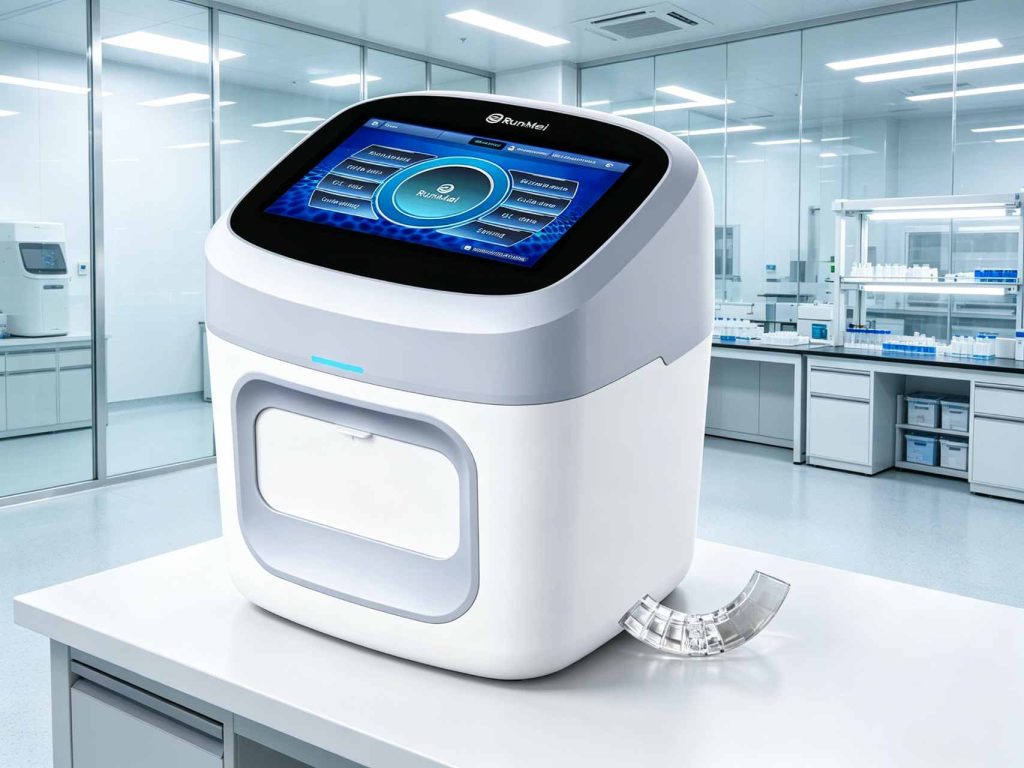
Figure 1. A compact automatic blood analyzer brings complete blood count testing to rural primary care settings, replacing multi-day referral loops with results in minutes.
The Evidence That On-Site CBC Testing Works
Decentralized testing is not a hopeful theory; it is an evidence-backed intervention. The WHO’s own guidance on prevention and diagnosis of anemia rests on hemoglobin measurement at the point of care, and integrated community case management programs in Tanzania have shown that bringing testing closer to villages raised community-level malaria testing by 96 percent.
At the device level, automated hematology analyzers have been cleared for clinical use through the U.S. Food and Drug Administration’s 510(k) pathway for decades. The FDA 510(k) summary for automated hematology analyzers documents how a complete blood count device is validated for accuracy and reproducibility before it reaches a clinic bench. That regulatory floor matters in rural settings, where a wrong white cell count can send a family on a useless 200-kilometer journey, or worse, send a septic child home.
What a single CBC can catch
- Anemia — the world’s most common blood disorder, affecting roughly a quarter of the global population, with the heaviest burden in rural, low-income communities.
- Malaria and other febrile infections — a low platelet count and anemia pattern can sharpen the decision to test and treat.
- Chronic disease signals — unexplained leukocytosis, thrombocytopenia, or abnormal indices in patients with diabetes, HIV, or kidney disease.
- Postpartum and surgical risk — hemoglobin thresholds that determine whether a patient can safely deliver or be operated on locally.
The clinical literature supports the economic case as well. Case reports in The New England Journal of Medicine repeatedly show how a single point-of-care laboratory value redirects an entire diagnostic workup. When that value is available at the village health post instead of the regional hospital, the savings are measured in lives, time, and household income.
The Economics of a Rural Blood Analyzer
For a clinic serving 10,000 people, the arithmetic is simple. Referral-based testing costs each patient a day of wages plus transport; on-site testing costs a few minutes and a modest fee. Even at low volumes, a durable automatic hematology analyzer pays for itself within 12 to 24 months when reagents are managed properly. Suppliers that package analyzers with reagent programs and training remove the two biggest hidden costs of ownership: idle time and operator error.
Procurement officers evaluating options should compare automatic hematology analyzers built for low-volume, high-reliability use against benchtop systems designed for busy urban labs. Rural facilities need closed-tube sampling, low reagent consumption, simple maintenance, and a clear path to consumables. The portable multi-function analyzer category has matured to the point where a single compact device can support CBC testing alongside other essential panels in the same footprint.
A Realistic Path Forward
Closing the rural diagnostic gap does not require a new invention. It requires the disciplined deployment of an existing one. Ministries should include CBC-capable analyzers in essential diagnostics lists, fund reagent supply contracts rather than one-off device purchases, and train community health workers to run, interpret, and quality-check the instrument. Clinics that cannot yet afford a full laboratory should start with one analyzer, one trained operator, and one reliable reagent channel — then scale.
The pattern is proven. Case studies from village clinics that adopted compact hematology analyzers show the same trajectory: more tests, fewer referrals, earlier diagnosis, and a community that begins to trust its local health post. Portable blood analyzers versus the city lab courier is not a close contest once distance, wages, and disease progression are priced in.

hematology analyzer touchscreen interface for point-of-care CBC testing in rural health center
Вопросы и ответы
Q: What is the most important blood test for a rural clinic?
The complete blood count (CBC) is widely considered the single most informative first-line blood test for primary care. It detects anemia, infection, bleeding risk, and several chronic disease signals from one small sample, which is why it anchors the WHO Essential Diagnostics List.
Q: How much does a blood analyzer cost for a rural clinic?
Entry-level automatic hematology analyzers range from roughly USD 2,000 to USD 15,000 depending on throughput, parameter count, and vendor support. The larger cost over time is reagents and consumables, so total cost of ownership, including supply contracts and training, should drive the decision.
Q: Can community health workers run a blood analyzer?
Yes. Modern analyzers with guided touchscreens and closed-tube sampling can be operated by trained community health workers. Programs in Tanzania, Malawi, and Ethiopia demonstrate that non-laboratorians achieve reliable results when training, quality control, and supervision are structured.
Q: How long does a CBC result take on a blood analyzer?
Automatic hematology analyzers typically return a complete blood count in 60 to 120 seconds. Including sample collection and quality checks, a patient can usually receive a result within 5 to 10 minutes of arrival at the clinic.
Q: Do rural clinics need a full laboratory to use a blood analyzer?
No. Compact analyzers require little more than a stable surface, a reliable power source (many support battery or solar operation), and basic temperature control for reagents. A dedicated laboratory room is helpful but not mandatory.
Q: What regulatory approvals should a rural blood analyzer have?
Buyers should look for devices cleared through a recognized pathway, such as FDA 510(k) clearance in the United States, CE marking in Europe, or WHO prequalification where applicable. These approvals document accuracy, reproducibility, and safety before clinical use.
Medical Disclaimer
This article is for educational and informational purposes only and is not a substitute for professional medical advice, diagnosis, or treatment. Always seek the advice of your physician or another qualified health provider with any questions you may have regarding a medical condition. Never disregard professional medical advice or delay in seeking it because of something you have read in this article. Product names, brand names, and trademarks mentioned are the property of their respective owners; other brands are referred to as Brand A, Brand B, and Brand C for comparative illustration. Device specifications, regulatory clearances, and pricing should be verified with the manufacturer and relevant regulatory authorities (including the U.S. FDA and WHO) before any procurement or clinical decision. This article may contain links to third-party websites, including references to the FDA, WHO, and peer-reviewed journals; RUNMEI Health is not responsible for the content of external sites.
References and Sources
- the World Health Organization’s Essential Diagnostics List — https://edl.who-healthtechnologies.org/
- in vitro diagnostics prequalification program now covers point-of-care hemoglobin analyzers — https://extranet.who.int/prequal/news/prequalification-ivds-scope-expanded-haemoglobin-poc-analysers
- prevention and diagnosis of anemia — https://www.who.int/news-room/fact-sheets/detail/anaemia
- FDA 510(k) summary for automated hematology analyzers — https://www.accessdata.fda.gov/scripts/cdrh/cfdocs/cfPMN/pmn.cfm
- The New England Journal of Medicine — https://www.nejm.org/doi/full/10.1056/NEJMcpc2004975