Meta Title: Blood Analyzer in Rural African Labs | RunMei
Meta Description: Blood Analyzer. Heat silently destroys analyzer reagents in rural Africa. This guide covers cold-chain logistics, fridge monitoring and supplier qualification for.
URL: https://runmeihealth.com/blood-analyzer
By Dr. Amara Okafor · MBBS, MSc Global Health Diagnostics | Reviewed by Dr. Michael Chen (PhD, Senior Laboratory Advisor) | Published: 2026-10–09
A CBC result is only as good as the reagents behind it, and in rural Africa those reagents have often crossed a border in the back of a truck, sat on a warehouse floor, and spent a week in a fridge that was unplugged at night. The blood analyzer question — what it can do, what it costs to run and how a result earns trust — is answered in the pages that follow. Heat damage does not announce itself: the analyzer still prints a number, the number is simply wrong. Cold chain is not logistics trivia — it is the accuracy of every test you run. The open-channel blood analyzer catalog covers the instruments rural programs order most often.
This article looks at blood analyzer through the lens of Rural African Labs, where the stakes are ordinary and the constraints are real: budgets that do not stretch, staff who already wear several hats, and distances that punish delay. According to the WHO, health facilities serving close to one billion people in low- and middle-income countries lack reliable electricity or have none at all — roughly 12% of facilities in South Asia and 15% in sub-Saharan Africa are completely unelectrified. The practical questions — which instrument, what training, how much per test, who maintains it — are answered in plain language, with the numbers a procurement committee can actually use. Facilities weighing the options can browse the محلل أمراض الدم range to compare configurations side by side.
Key Takeaways
- Heat exposure is the most common silent cause of inaccurate CBC results in hot climates.
- A functioning 2–8°C cold chain from supplier to clinic is non-negotiable for most analyzer reagents.
- Fridge temperature logging, lot tracking and first-expiry-first-out rotation prevent most reagent failures.
- Supplier qualification — batch certificates and delivery records — is part of lab quality, not purchasing paperwork.
How Heat Quietly Breaks Reagents
Most hematology reagents are aqueous solutions of salts, dyes and enzymes whose performance drifts when temperature climbs above 25–30°C for sustained periods. The drift is invisible: calibrators still pass, controls still print ‘in range,’ but the patient sample reads differently than it would have with fresh reagent. In clinics that cannot afford repeat testing, that silent drift becomes misdiagnosis.
The reagent line is where the real budget lives. A machine that costs little but drinks expensive consumables will be switched off by year two; a machine whose per-test cost fits the community’s wallet keeps running because the community can afford it. Buyers should ask one question before any other: what does each test actually cost delivered to this clinic, and can that cost be sustained after the donor’s project ends? Programs built around blood analyzer see the effect within the first month. Programs that want a deeper differential can read the cost-effective blood analyzer page for the trade-offs.
The 2–8°C Rule and Its Exceptions
The standard requirement for many analyzer reagents is storage at 2–8°C, with a tolerance window during transport. The exceptions matter: some reagents tolerate room temperature once opened, and some lyophilized products are more forgiving. Read the label, not the habit — a supplier that cannot document transport temperature should not win the tender.

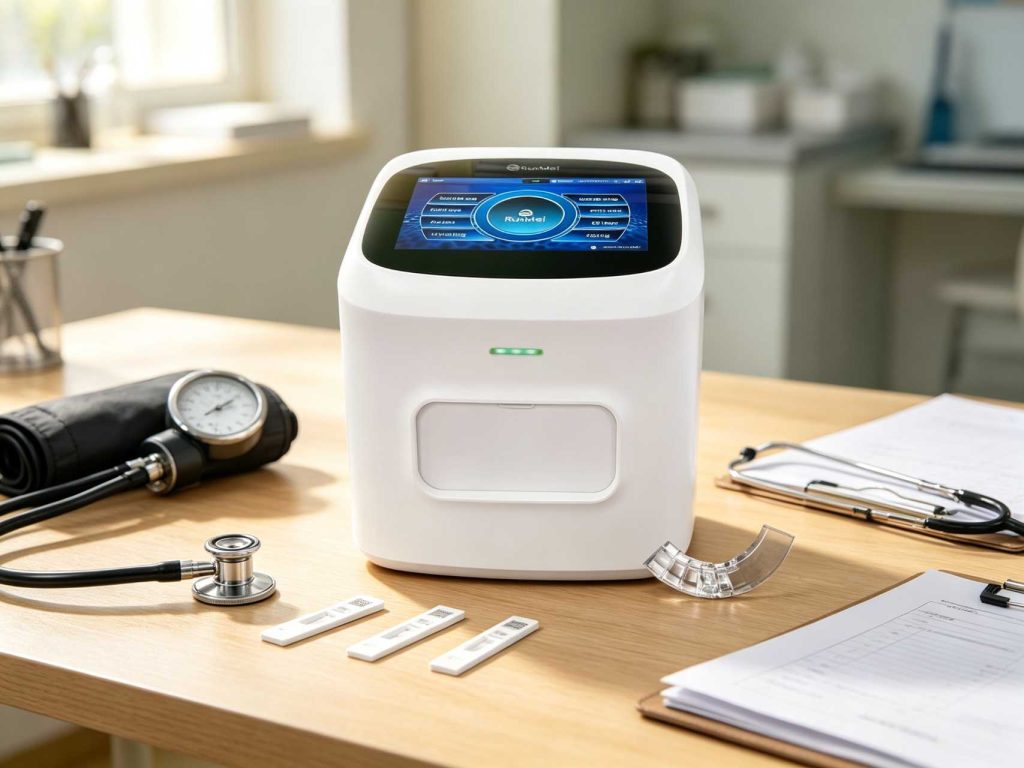
Fig. 1 — RunMei portable blood analyzer in a rural clinic setting. Blood analyzer reagents cold chain storage. | Alt: blood analyzer reagents cold chain storage
Building a Cold Chain That Survives Reality
A realistic rural cold chain has four links: the supplier’s cold room, the transport leg (cool boxes with frozen gel packs and a thermometer), the facility fridge (dedicated, monitored, never shared with food), and the bench (small quantities moved out only at use time). Each link needs a check, and the weakest link defines the chain.
the blood analyzer is the seed; the program is the tree. Training, supervision, registers, quality checks and a supply line that outlasts the donor — these are what turn a machine into a service that keeps running. Programs that design for sustainability from the first installation meeting are the ones still running at the five-year review. The same principle holds for blood analyzer: measure, record, act. Budget teams should see the portable blood analyzer cost analysis before signing off on procurement.
The Fridge Log That Saves Results
A maximum-minimum thermometer read and recorded twice daily is the cheapest quality control in the lab. In facilities with power cuts, a data-logging fridge thermometer with an alarm is worth the investment — it tells you, after the fact, whether the reagents suffered an overnight excursion and which lots were exposed.
Lot Tracking and First-Expiry-First-Out in Practice
When a result looks wrong, the first question is ‘which lot, which box, which day?’ A lab that logs lot numbers on arrival and records the lot used for each day’s testing can answer that question in minutes. The discipline is simple: log incoming lots and expiry dates, shelve oldest-first, and quarantine any lot with a documented temperature excursion until it can be re-qualified.
The numbers have to close in the real world. Volume assumptions, fee structures, reagent costs and the hidden cost of the journey patients would otherwise make — each belongs in the model before the purchase, not after. Facilities that run the arithmetic honestly find the blood analyzer is not an expense; it is the cheaper way to do what they were already doing. blood analyzer is the instrument at the center of that workflow.
Open-Channel Reagents and Supplier Qualification
Open-channel analyzers — which allow sourcing reagents from multiple qualified suppliers — make supplier qualification a real decision rather than a formality. The minimum evidence pack: batch certificate of analysis, transport temperature records, and a reference correlation study. A supplier that provides these is worth a slightly higher price; one that cannot is a false economy.
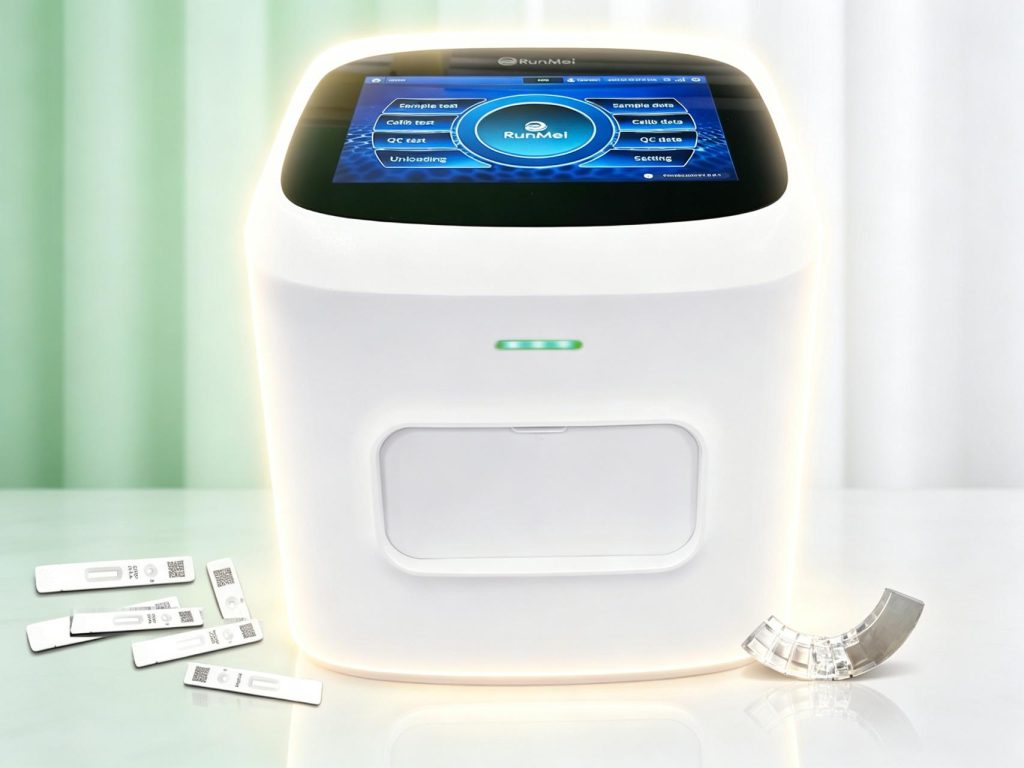
Fig. 2 — RunMei cost-effective blood analyze in a rural clinic setting. Blood analyzer cbc reagent fridge monitoring rural lab. | Alt: blood analyzer CBC reagent fridge monitoring rural lab
The Implementation Checklist
blood analyzer pays off when the installation is treated as a project, not a delivery. The checklist has eight lines: site preparation (space, power, bench); operator selection and training dates; control materials ordered with the blood analyzer; a named maintenance owner; a register designed before the first test; a referral protocol agreed with the district; a reagent supply line with buffer stock; and a review date at 90 days. Each line is a name and a date, not a good intention.
The 90-Day Review
The first three months decide the trajectory. The 90-day review should read the register: how many tests, what findings, which problems, what was fixed. Facilities that review honestly adjust — retraining where errors show, reagent reordering where supply slipped, protocols tightened where referrals misfired. The review is where a good installation becomes a good service.
Scaling From One Machine
One working instrument is the argument for the next. When the first clinic’s register shows the volume and the outcomes, the case writes itself: the same training package, the same quality framework, the same supply line extended to the next facility. Programs scale on demonstrated results rather than meetings — and the demonstrated results start at the first bench.
Decisions about reagent cold chain are usually made at district level — and the register feeds them. It also strengthens analyzer consumables logistics, a benefit that rarely appears in the budget line. None of this holds together without attention to CBC reagent storage. That is the practical reality of blood analyzer in the field.
الأسئلة المتداولة
Q1. What temperature should blood analyzer reagents be stored at?
Most require 2–8°C, though some tolerate room temperature once opened. Always follow the label; when in doubt, treat the reagent as requiring cold storage.
Q2. How can I tell if reagents were damaged by heat?
Damage is often invisible. Control results drifting, calibrator failures, and unusual analyzer flags can indicate reagent problems. Temperature logs and lot tracking help identify and quarantine affected lots.
Q3. Can open-channel reagents be trusted for quality?
Yes, if the supplier provides batch certificates, transport temperature records and correlation data. Supplier qualification is the lab’s responsibility and the key to safe open-channel operation.
Q4. What should I do if the fridge fails overnight?
Record the excursion, quarantine the affected lots, and contact the reagent supplier for guidance. Do not use reagents that may have been heat-damaged until they are re-qualified or replaced.
Sources & References
- According to the WHO, health facilities serving close to one billion people in low- and middle-income countries lack reliable electricity or have none at all, with roughly 12% of facilities in South Asia and 15% in sub-Saharan Africa completely unelectrified.
- World Health Organization data show that in lower-income countries a large share of the rural population still lives beyond the reach of a functioning laboratory; the WHO recommends primary care facilities be reachable within roughly 5 km, yet global estimates indicate about 3 billion people cannot reach a health facility within one hour on foot.
Disclaimer
This article is for informational and marketing purposes only and does not constitute medical advice, a product claim, or a regulatory certification statement. Device availability, regulatory status and specifications vary by country and model; always verify current approvals with the manufacturer and consult local regulations before procurement or use.