Meta Title: Blood Analyzer for Dengue Season: Platelet Monitoring | RunMei
Meta Description: Dengue season platelet monitoring with a rural blood analyzer. Serial counts, warning thresholds and the outbreak protocol.
URL: https://runmeihealth.com/blood-analyzer-dengue-platelet-monitoring
By Dr. Elena Marchetti · MD, MPH, Rural Health Diagnostics | Reviewed by Prof. Daniel Mwangi (PhD, MSc, Laboratory Systems Advisor) | Published: 2026-10–03
Every rainy season brings the same clinic calendar: the dengue beds fill, the referrals climb, and the families wait in the corridor for a number that decides whether their child goes home or to the city hospital. The practical questions around blood analyzer — which machine, how much per test, how fast a result arrives — are the subject of this article. That number is the platelet count, and this year the clinic can measure it. The affordable blood analyzer catalog covers the instruments rural programs order most often.
The pages that follow cover what the sales brochure does not: what blood analyzer can and cannot deliver in Rural Blood Analyzer, what it costs to run rather than to buy, and the mistakes that turn useful instruments into idle furniture. The WHO reports that noncommunicable diseases now account for about 37% of deaths in the African Region, which makes the general-purpose blood count an increasingly central tool in rural primary care. The aim is to give clinic managers and program planners a field-tested basis for decisions, not a list of product claims. WHO . Facilities weighing the options can browse the 5-part differential blood analyzer range to compare configurations side by side.
Key Takeaways
- Falling platelets are the central laboratory warning in dengue.
- Serial counts, not single counts, guide admission and referral decisions.
- A rural analyzer makes the daily repeat practical during outbreak months.
- The trend between visits is the signal that separates watchful from urgent.
Why the Platelet Count Carries the Dengue Decision
Dengue is the disease of the falling platelet count. The virus suppresses the marrow, the platelets drop, and the danger period arrives when the fever is leaving and the count is at its lowest. The clinician’s whole task during the season is to tell which patient is on the dangerous downward path before the bleeding starts.
The laboratory has the answer the exam cannot reach: the count, and more importantly the direction of the count. One number is a snapshot. Two numbers, a day apart, are a trajectory — and the trajectory is the diagnosis in motion.
the blood analyzer is the seed; the program is the tree. Training, supervision, registers, quality checks and a supply line that outlasts the donor — these are what turn a machine into a service that keeps running. Programs that design for sustainability from the first installation meeting are the ones still running at the five-year review. FDA . Programs that want a deeper differential can read the open channel CBC analyzer page for the trade-offs.
The Number Nobody Feels
The child may look well when the count is falling fastest. The exam reassures and the laboratory warns; the two disagree all season. The platelet count is the information that the clinical picture refuses to provide, which is why the clinic needs it locally, daily, and fast.

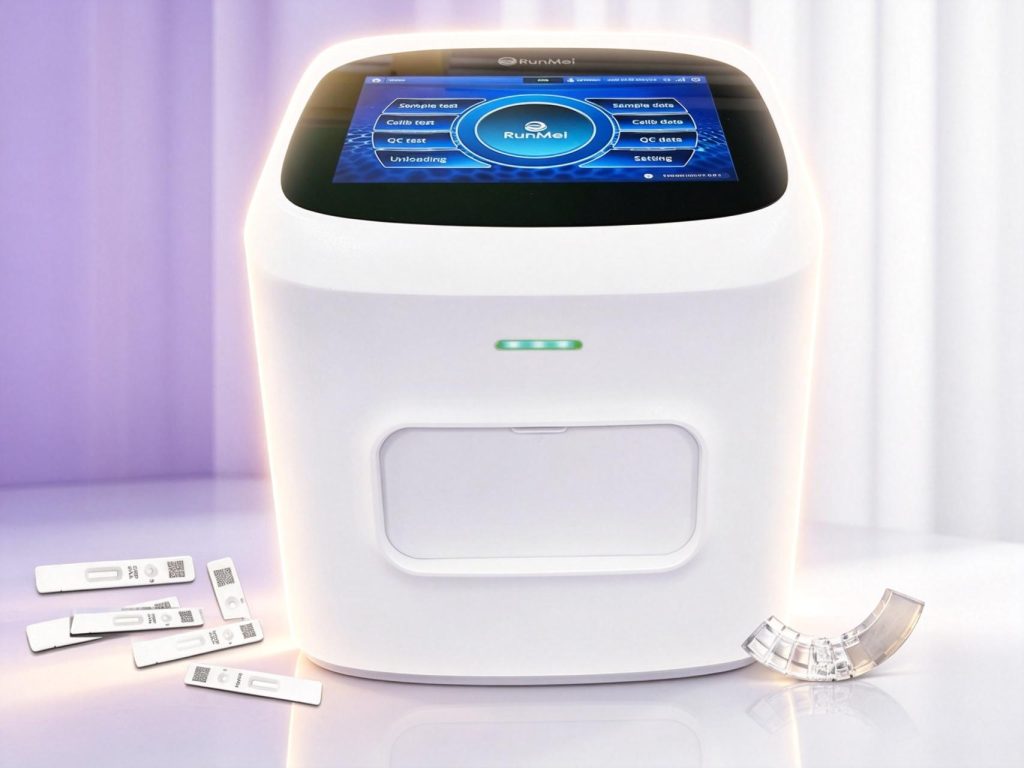
Fig. 1 — RunMei open channel CBC analyzer in a rural clinic setting. Blood analyzer platelet monitoring dengue season. | Alt: blood analyzer platelet monitoring dengue season
The Serial Count Protocol for Outbreak Months
The protocol that works in dengue season is simple and rigid: a count at first suspicion, a count every 24 hours during the fever-and-defervescence window, and a referral trigger at the defined threshold or on any warning sign. The clinic that runs the serial counts keeps its dengue deaths near zero; the clinic that tests once and sends the child home is flying blind.
The same protocol protects the referral system. The child whose count is stable and above the threshold stays home under observation; the child whose count is falling toward the threshold goes to the hospital with the trend documented. the blood analyzer converts the outbreak from a guessing game into a triage system.
The numbers have to close in the real world. Volume assumptions, fee structures, reagent costs and the hidden cost of the journey patients would otherwise make — each belongs in the model before the purchase, not after. Facilities that run the arithmetic honestly find the blood analyzer is not an expense; it is the cheaper way to do what they were already doing. Budget teams should see the 3-part vs 5-part blood analyzer cost analysis before signing off on procurement.
The 24-Hour Repeat
The daily repeat is the heart of the protocol. It is inconvenient, it fills the afternoon with returning patients, and it is precisely what keeps the dangerous cases out of the danger zone. Programs that schedule the repeats like a clinic session, not an afterthought, get the compliance that saves the season.
Preparing the Analyzer for the Season
Dengue season is a stress test for the clinic and the blood analyzer. Volumes triple, the operators work longer hours, and the machine runs more tests in a month than it ran all year. The preparation belongs before the first case: reagent stock for the season, a second trained operator, a posted protocol, and a control discipline that survives the rush.
The clinic that prepares finds the season manageable. The clinic that does not finds the blood analyzer failing at the moment of maximum dependence — out of reagents, out of trained hands, or out of calibration because the daily control was skipped during the busy weeks.
Geography writes the requirements. In Rural Blood Analyzer, transport, seasons and distance decide which analyzer survives: the one that travels, tolerates heat and dust, and holds its calibration on the rough road. the blood analyzer chosen in the office must be the machine that works at the end of the journey — not the one that impresses in the brochure.
The Pre-Season Checklist
Reagents for three months, controls ordered, backup operator certified, protocol printed and reviewed with the district, referral thresholds agreed. One afternoon before the rains; a season that runs instead of one that reacts.
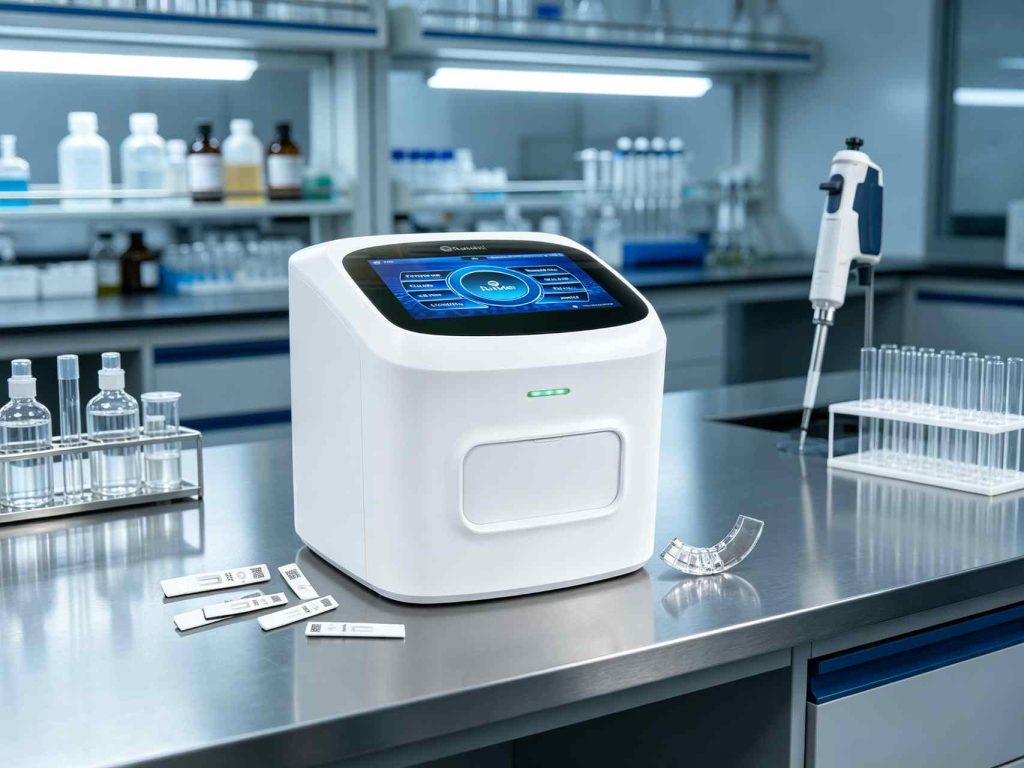
Fig. 2 — RunMei 3-part vs 5-part blood analyzer during routine testing. Hematology analyzer serial cbc dengue outbreak clinic. | Alt: hematology analyzer serial CBC dengue outbreak clinic
The First 90 Days
The first quarter after installation is the period that separates a successful deployment from a stalled one. Early problems are normal — an unfamiliar workflow, a supply hiccup, a control result that will not settle — and the difference is how quickly they are caught. A facility that schedules its own 90-day review, with the register open and the errors on the table, fixes its problems while they are still cheap to fix.
Reading the Register Honestly
The register is the review’s raw material: tests run, results flagged, referrals made, problems logged. The facility that reads it without defensiveness learns what its training missed and its supply line forgot. The facility that skips the reading repeats the first quarter’s mistakes for the rest of the year.
The Second-Quarter Targets
By day 120, the targets should be visible: tests on a predictable weekly schedule, controls passing consistently, one operator certified per shift, and a referral pattern that matches the protocol. Facilities that set these four targets at installation find the second quarter runs itself.
It also strengthens platelet monitoring dengue, a benefit that rarely appears in the budget line. None of this holds together without attention to dengue warning signs. Programs that pair blood analyzer with serial CBC dengue report the strongest results.
الأسئلة المتداولة
Q1. Why is the platelet count so important in dengue?
Dengue suppresses platelet production, and the falling count marks the dangerous phase. The trend decides who needs hospital care.
Q2. How often should the count be repeated?
Every 24 hours during the fever and defervescence window, with urgent repeats if warning signs appear.
Q3. At what platelet level is referral needed?
The threshold is set by local protocol, but counts falling toward the severe range, together with any warning sign, trigger referral.
Q4. Can one analyzer handle the outbreak workload?
Yes, with preparation: reagent stock, a backup operator, and a control discipline that is protected even on the busiest days.
Sources & References
- The WHO Regional Office for Africa reports that noncommunicable diseases now account for about 37% of deaths in the African Region, and that shortages of trained specialists, diagnostics and clinical protocols continue to limit access to quality care. Source: WHO — https://www.who.int/news-room/fact-sheets/detail/noncommunicable-diseases
- The U.S. Food and Drug Administration (FDA) grants CLIA waiver to certain automated hematology analyzers, allowing them to be operated outside the traditional laboratory by staff without advanced training; dual 510(k) and CLIA waiver submissions are documented under the Medical Device User Fee Amendments. Source: FDA — https://www.fda.gov/medical-devices/ivd-regulatory-assistance/clia-waivers
About the Author & Reviewer
Author: Dr. Elena Marchetti, MD, MPH, Rural Health Diagnostics. Dr. Marchetti is a physician and diagnostics specialist who has spent the past fifteen years designing point-of-care programs for district hospitals and rural clinics in lower-resource settings. Her field work focuses on how laboratory devices survive daily use outside the laboratory, from staff training to reagent logistics.
Reviewer: Prof. Daniel Mwangi, PhD, MSc, Laboratory Systems Advisor. Prof. Mwangi directs laboratory quality programs for a network of rural health facilities and teaches clinical laboratory science. He has reviewed point-of-care device deployments across Africa and Southeast Asia, with a particular interest in quality control and operator competency outside the main laboratory.
Disclaimer
This article is for informational and marketing purposes only and does not constitute medical advice, a product claim, or a regulatory certification statement. Device availability, regulatory status (FDA 510(k)/CE/ISO 13485) and specifications vary by country and model; always verify current approvals with the manufacturer and consult local regulations before procurement or use.