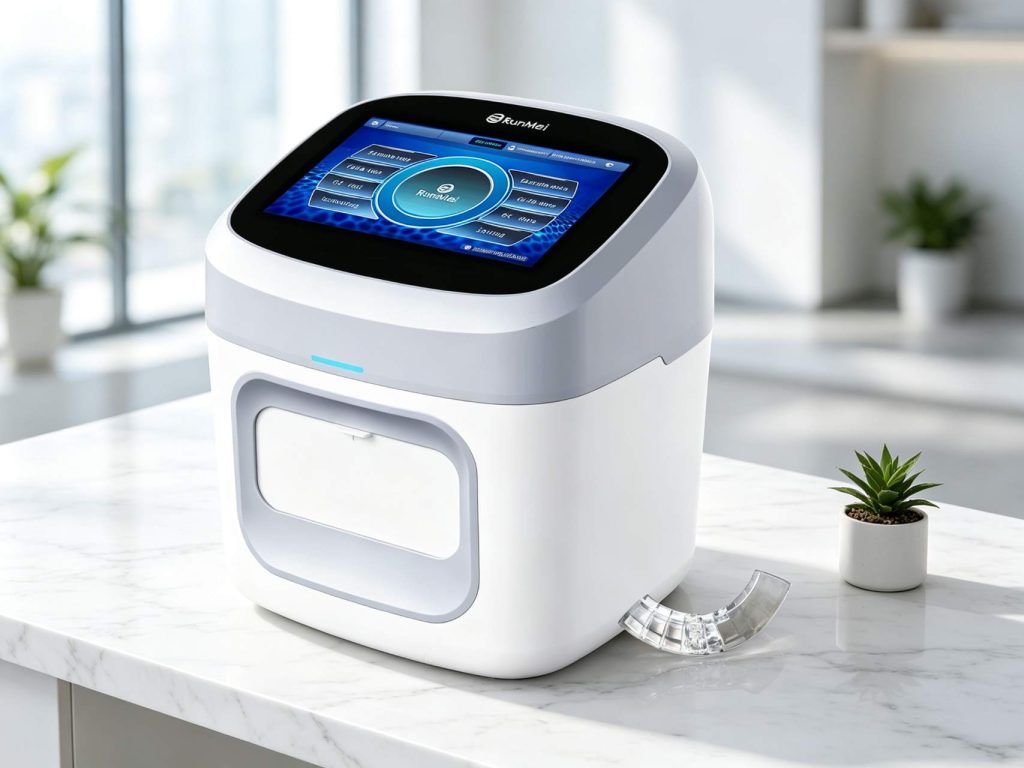
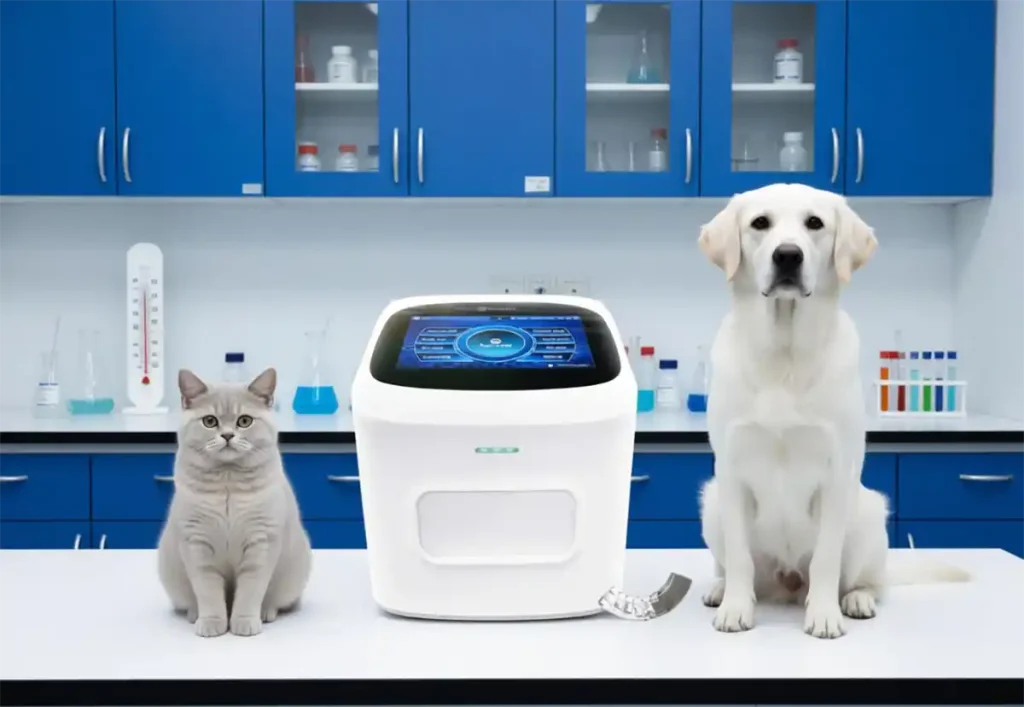
Meta Title: Blood Analyzer for Thalassemia Monitoring in Rural Clinics | RunMei
Meta Description: Thalassemia monitoring in rural clinics. CBC patterns, trait clues and pre-transfusion counts with a blood analyzer. A practical briefing for clinic teams, ministry planners and procurement committees.
URL: https://runmeihealth.com/blood-analyzer-thalassemia-monitoring
By Dr. Elena Marchetti · MD, MPH, Rural Health Diagnostics | Reviewed by Prof. Daniel Mwangi (PhD, MSc, Laboratory Systems Advisor) | Published: 2026-09-29
The family knows the word thalassemia from the hospital visit two years ago, but the hospital is far and the follow-up did not survive the distance. Everything below comes back to blood analyzer and the diagnosis decisions clinics actually make, from procurement to daily operation. Their daughter needs her count watched. Nobody has watched it since. The question is not whether she needs monitoring; it is whether the monitoring can reach her. The محلل أمراض الدم catalog covers the instruments rural programs order most often.
Few purchases in rural health care invite as many opinions as blood analyzer. This article sets the opinions aside and works from what the data, the protocols and the field experience actually show about Rural Clinics. The WHO reports that noncommunicable diseases now account for about 37% of deaths in the African Region, which makes the general-purpose blood count an increasingly central tool in rural primary care. What survives is a short set of principles that hold across budgets and geographies. WHO . Facilities weighing the options can browse the RUNMEI blood analyzer range to compare configurations side by side.
Key Takeaways
- Thalassemia traits present as mild microcytic anemia that CBC patterns can flag.
- Transfusion-dependent patients need serial counts to schedule and judge transfusions.
- The rural analyzer keeps the interval between specialist visits safe.
- Trait identification through routine CBCs informs family counselling.
The Microcytic Pattern and the Trait
The blood count is the first test that hints at thalassemia: a low hemoglobin with small red cells, in a pattern that does not respond to iron. The distinction between iron deficiency and thalassemia trait matters enormously in regions where both are common, because the treatments are opposite — iron for one, and nothing but information for the other.
A rural clinic with a blood analyzer can recognize the pattern, document it over time, and refer for the confirmatory study. The trait is often found this way: not by screening programs, but by the clinician who noticed the count that did not behave like iron deficiency.
the blood analyzer is the seed; the program is the tree. Training, supervision, registers, quality checks and a supply line that outlasts the donor — these are what turn a machine into a service that keeps running. Programs that design for sustainability from the first installation meeting are the ones still running at the five-year review. And this is exactly where blood analyzer changes the decision. WHO . Programs that want a deeper differential can read the 5-part differential blood analyzer page for the trade-offs.
The Count That Ignores Iron
The classic clue is the child given iron for months whose hemoglobin barely moves while the red cell size stays small. That non-response is the finding that separates the trait from deficiency — and it only appears if someone keeps measuring.
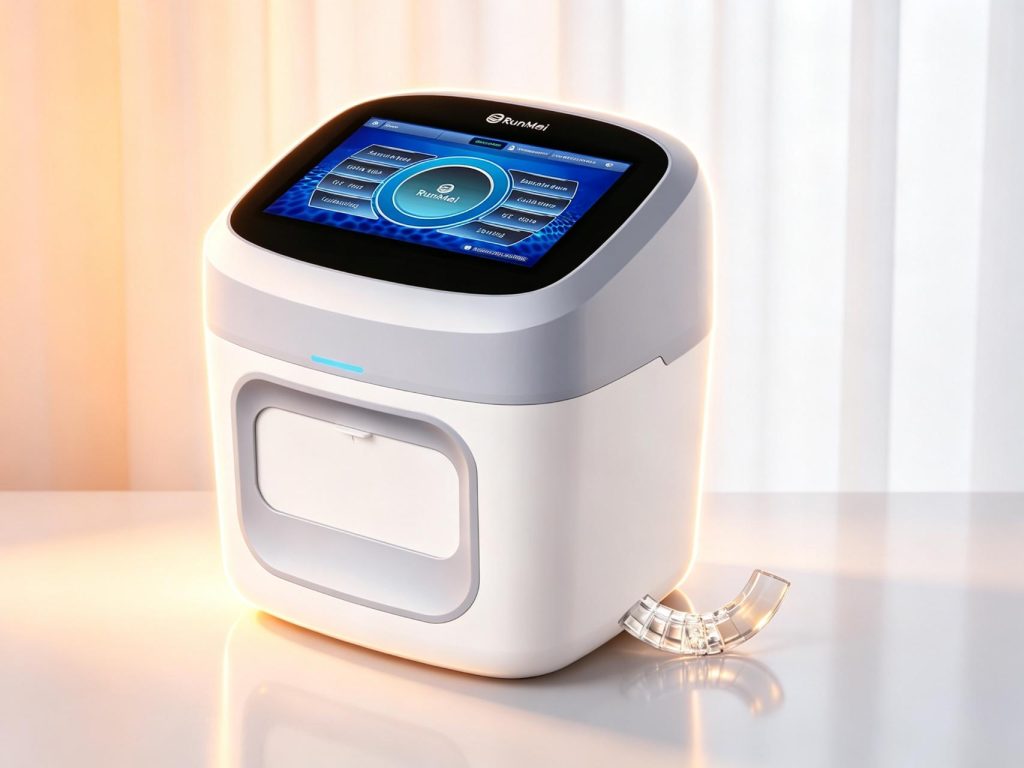
Fig. 1 — RunMei blood biochemistry analyzer in a rural clinic setting. Blood analyzer thalassemia trait microcytic anemia. | Alt: blood analyzer thalassemia trait microcytic anemia
Monitoring the Transfusion-Dependent Patient
The patient with severe thalassemia lives on a schedule: transfusion, count, wait, transfusion. The schedule is safest when the hemoglobin is measured before each transfusion, so the dose matches the deficit and the interval is evidence-based. A distant hospital cannot run that schedule; the local clinic can.
The rural analyzer also catches the complications: falling counts between transfusions that signal splenic sequestration or infection, rising white cells that demand attention. The specialist who sees the patient twice a year reads the register the local clinic has kept.
Procurement is where the future is decided. The scorecard should read: accuracy evidence, per-test reagent cost delivered to the clinic, training included, spares in-country, and a reference site you can call. Price matters; the total cost of five years matters more. The clinic that buys on the five-year number is the clinic that is still testing in year five. Programs built around blood analyzer see the effect within the first month. Budget teams should see the affordable blood analyzer cost analysis before signing off on procurement.
The Pre-Transfusion Count
Measure immediately before every transfusion and record the interval since the last one. The pair — count and interval — is the data that lets the team adjust the schedule and justify the units to the blood bank.
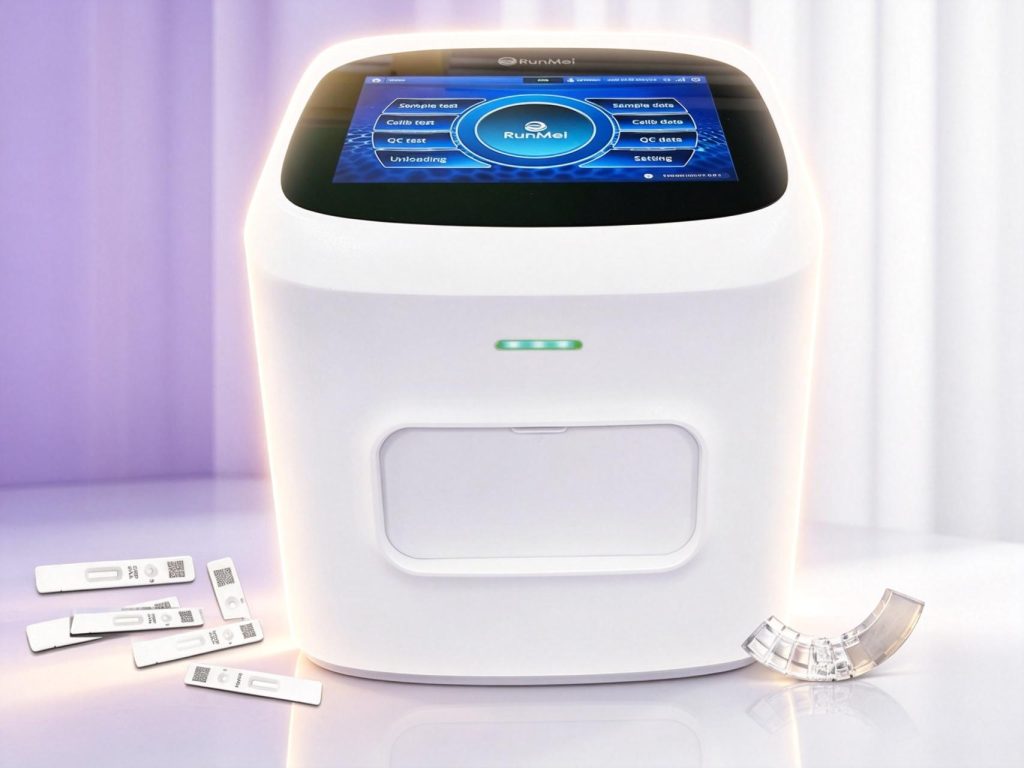
Fig. 2 — RunMei portable blood analyzer during routine testing. Hematology analyzer pre-transfusion hemoglobin monitoring. | Alt: hematology analyzer pre-transfusion hemoglobin monitoring
Counselling the Family With Data
Thalassemia is a family disease, and the CBC is how it walks into the room. When a child is diagnosed, the parents and siblings deserve testing too, and the trait questions follow naturally from the numbers. The rural clinic with a blood analyzer can offer the first step of that conversation on the spot.
The counselling is gentler with evidence. ‘Your child has a pattern we need to understand’ is different from a diagnosis delivered in a language the family cannot follow. The count opens the conversation; the referral continues it; the register keeps it alive.
Results become evidence only when they are recorded. A register — patient, date, count, action taken — turns a stream of tests into a picture of the community’s health, and that picture is what justifies the program’s continuation. Clinics that keep the register find it writes their own case for support. The same principle holds for blood analyzer: measure, record, act.
The Family Testing Day
When a child is diagnosed, offer counts for parents and siblings on the same day. One analyzer, one afternoon, and the family has the first map of its own inheritance — which is the basis of every prevention conversation that follows.
The Data Design
Every result is a data point, and the data design decides whether those points become evidence or disappear. The design is simple: a register with fixed fields, a standard format for reporting upward, and a quarterly feedback loop from the district. the blood analyzer produces the numbers; the design is what makes them mean something.
The same pattern repeats in facility after facility: the clinic that measures its own patients keeps them, and the clinic that sends them away loses them. A blood analyzer changes that arithmetic, because the investment is recovered inside the first year — not through gadget appeal, but through fewer referrals, fewer repeat visits and a patient list that finally trusts the results it is given.
The Register Fields
Six fields cover most programs: date, patient identifier, age, sex, the key counts, and the action taken. More fields than that and the register stops being kept; fewer and it stops being useful. The six-field register is the version that survives contact with a busy clinic.
The Feedback Loop
Clinics sustain reporting when the system reports back — a quarterly summary of what their catchment shows, compared with the district, acknowledged by name. The feedback loop is the difference between a register that grows and one that quietly stops.
For teams accountable for thalassemia trait screening, the practical effect shows up within the first month. Decisions about microcytic anemia are usually made at district level — and the register feeds them. It also strengthens CBC patterns, a benefit that rarely appears in the budget line.
الأسئلة المتداولة
Q1. Can a CBC identify thalassemia trait?
It flags the characteristic microcytic anemia pattern, which prompts confirmatory testing. The CBC alone does not confirm the diagnosis.
Q2. How is a transfusion-dependent patient monitored locally?
With a pre-transfusion count at every visit and serial counts between visits, recording counts and intervals for the specialist to review.
Q3. Why does the count matter between transfusions?
Falling counts between transfusions signal complications such as sequestration or infection, and the trend decides the next interval.
Q4. Should family members be tested when a child is diagnosed?
Yes. Parents and siblings benefit from trait testing, which the local clinic can begin the same day with a blood count.
Sources & References
- The WHO Regional Office for Africa reports that noncommunicable diseases now account for about 37% of deaths in the African Region, and that shortages of trained specialists, diagnostics and clinical protocols continue to limit access to quality care. Source: WHO — https://www.who.int/news-room/fact-sheets/detail/noncommunicable-diseases
- WHO analyses indicate that anemia affects roughly one in four people worldwide, with the highest prevalence in preschool children and pregnant women in low- and middle-income regions. Source: WHO — https://www.who.int/news-room/fact-sheets/detail/anaemia
Disclaimer
This article is for informational and marketing purposes only and does not constitute medical advice, a product claim, or a regulatory certification statement. Device availability, regulatory status (FDA 510(k)/CE/ISO 13485) and specifications vary by country and model; always verify current approvals with the manufacturer and consult local regulations before procurement or use.