| Meta Title | Blood Analyzers in Maternal and Child Health for Rural Care |
| Meta Description | Anemia in pregnancy and childhood illness are detectable in minutes. Learn how rural blood analyzers protect mothers and babies with on-site CBC testing. |
| URL Slug | /blood-analyzer-maternal-child-health-rural/ |
| Focus Keyword | maternal and child health blood testing |
| Secondary Keywords | anemia in pregnancy screening, pediatric CBC testing, rural maternal health diagnostics, blood analyzer newborn screening |
| Publish Date | 2026-09-22 |
| Author | Dr. Elena Marsh, MD, MPH |
| Reviewer | Dr. James Okafor, PhD, FACB |
The midwife at a district clinic in eastern Kenya remembers the morning she finally got an answer. A young mother — her third pregnancy, her second birth in this clinic — came in pale, exhausted, and nine months along. For two pregnancies the clinic had no way to check her blood. This time there was an analyzer on the bench. The hemoglobin result came back at 6.8 g/dL: severe anemia, delivery risk, a transfusion plan made before labor instead of during an emergency. The mother delivered safely. The midwife says the machine has changed how she sees every pregnant woman who walks through the door — no more guessing who is at risk; now she knows. That is what blood analyzers do in maternal and child health: they convert risk from a suspicion into a number, at the moment it can still change the outcome.
The Anemia of Pregnancy: A Burden We Can Measure and Treat
The WHO estimates that **37% of pregnant women worldwide are anaemic**, and the burden falls hardest exactly where testing is rarest: rural and low-resource settings. Anemia in pregnancy is not a cosmetic concern. It is associated with maternal fatigue, reduced work capacity, higher rates of hemorrhage at delivery, low birth weight, and impaired infant development. Iron deficiency — the most common cause — is treatable with supplements that cost pennies, but only if the clinic knows the hemoglobin level and can follow it.
Why Rural Maternal Care Misses Anemia
In a survey of rural health facilities in northern Ghana, hemoglobin testing was offered in fewer than half of facilities, rural and urban alike. When the test does not exist locally, the pregnant woman travels — often a day’s journey, often late in pregnancy, and often once. One hemoglobin at 36 weeks, if it happens at all, cannot do the work of serial monitoring. The result is that severe anemia in pregnancy is discovered at delivery, if ever, when the options are emergency transfusion and hope. An on-site blood analyzer changes the geometry of this problem: hemoglobin at booking, at each visit, and before delivery — every time the woman is already in the clinic.
What Maternal and Child Blood Testing Needs From an Analyzer

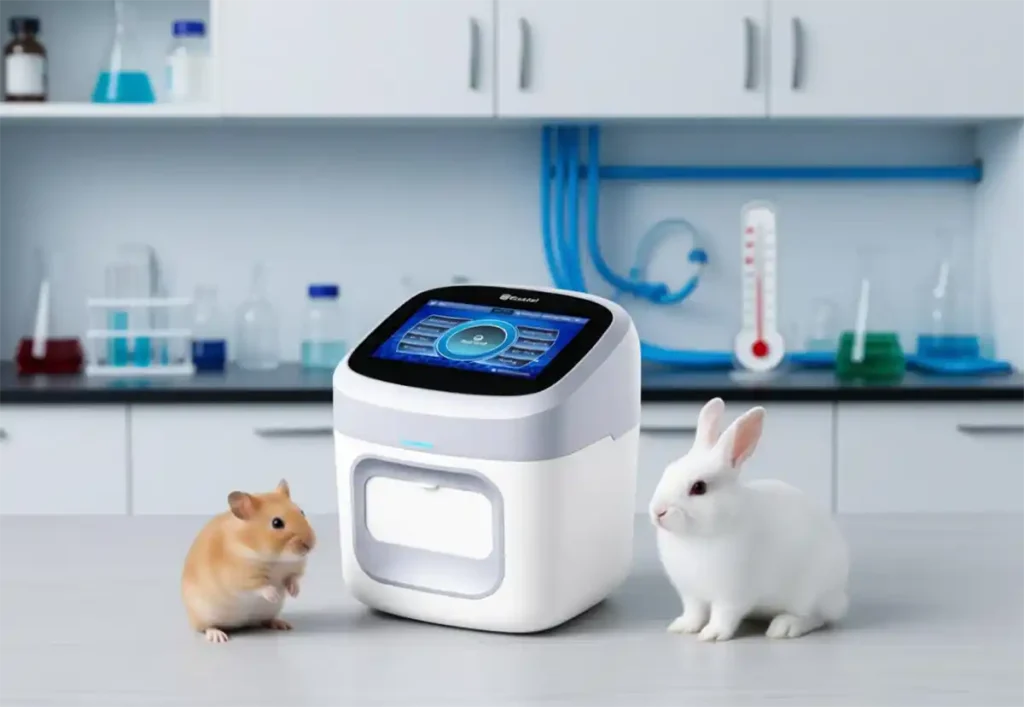
Figure: On-site hemoglobin testing in pregnancy can be the difference between a monitored pregnancy and a silent risk.
Small Sample Volumes
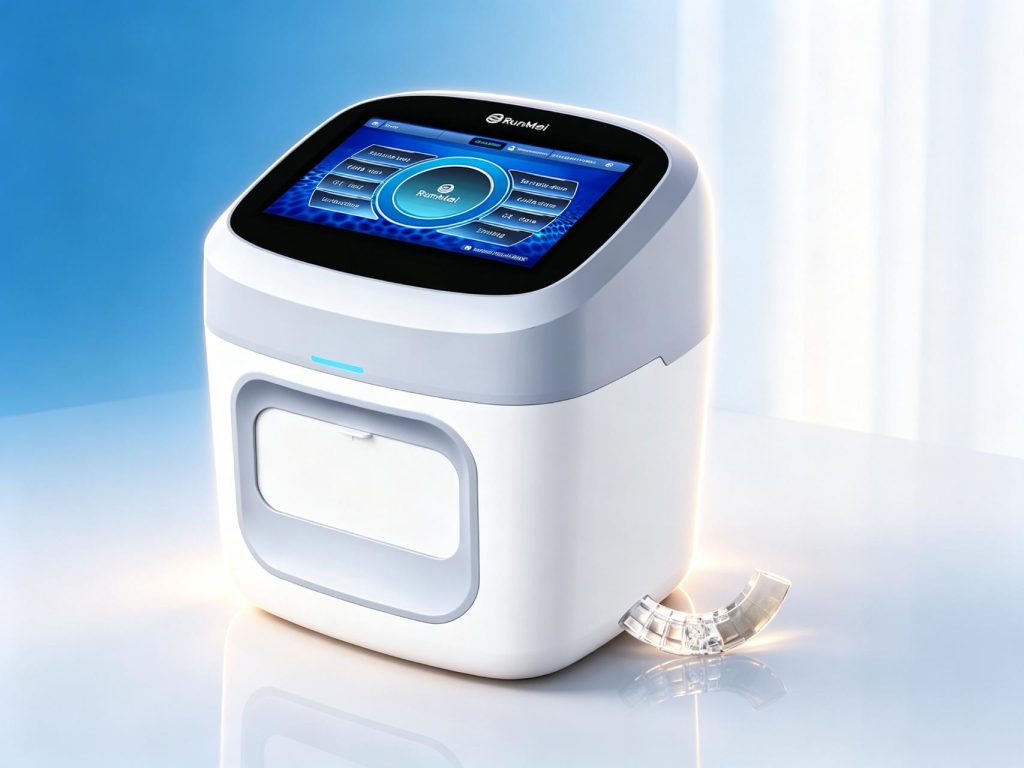
Pregnant women are frequently anemic and frequently venipuncture-challenging; infants are worse. Analyzers that run on 10–20 µL of blood, or a fingerstick in predilution mode, make testing feasible for the populations that need it most. The portable multi-function analyzer category was built around exactly this constraint — a fingerstick sample, a sealed cartridge, a result in minutes.
Serial Monitoring Built Into the Workflow
Maternal care is defined by repetition: booking labs, second-trimester follow-up, third-trimester checks, delivery screening. Instruments that store results, trend them, and export them to the patient record turn a single analyzer into a longitudinal monitoring system. The CBC menu must therefore be dependable across months — the same patient, the same instrument, comparable numbers — which is a quality-control discipline question as much as an equipment question.
Pediatric Panels Without Pediatric Trauma
Febrile infants and sick children present the highest-stakes triage in rural medicine: the child who looks well but is bacteremic, the child with malaria who needs urgent treatment, the dehydrated child with a borderline platelet count. A CBC with differential answers these questions in minutes. 5-part hematology analyzers add eosinophil and basophil detail that supports parasite and allergy workups common in child populations, while the full parameter list on a modern CBC analyzer covers the pediatric essentials — hemoglobin, WBC, platelets, and reticulocyte-relevant flags.
Screening Programs That Work: Antenatal and Under-Five Clinics
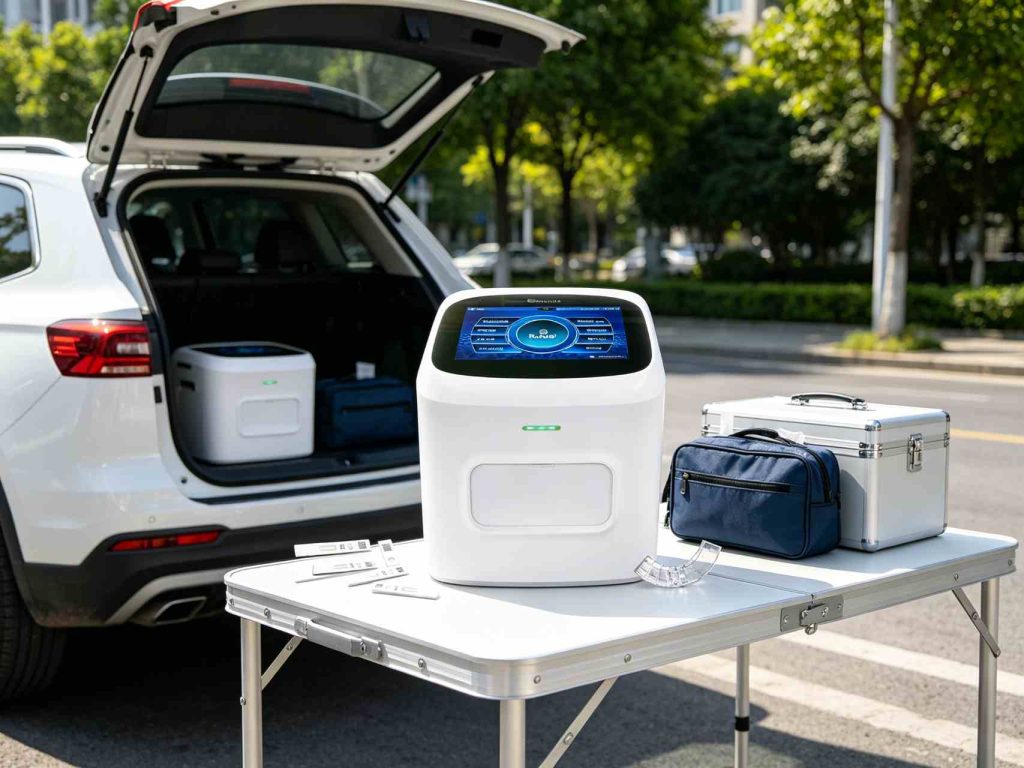
Figure: Small sample volumes make automated analyzers practical for testing infants and young children.
The most effective maternal-child interventions in rural settings are the ones already scheduled: antenatal visits, immunization days, and well-child clinics. An analyzer placed in this flow performs screening without adding a visit — every mother attending ANC gets a hemoglobin, every febrile child at the under-five clinic gets a CBC, and results are acted on in the same session.
A Practical Screening Menu
• At booking: hemoglobin, WBC, platelets; glucose where available.
• At 28–32 weeks: repeat hemoglobin; platelets where pre-eclampsia risk exists.
• At delivery: hemoglobin and blood grouping readiness where available.
• Under-five febrile illness: CBC with differential for malaria, bacterial infection, and dengue flags.
• Growth monitoring: hemoglobin for any child falling off the growth curve.
The Evidence That On-Site Testing Works in Maternal-Child Programs
Point-of-care devices in primary care have a documented record of strengthening exactly these services. A scoping review of point-of-care devices in primary healthcare settings concluded they are substantially promising in rural and underserved regions for facilitating timely diagnosis and reducing the burden on centralized laboratories — with the caveat that implementation needs training and supply continuity. In maternal terms, the value chain is short and measurable: hemoglobin measured → anemia diagnosed → iron prescribed → hemoglobin rechecked → severe anemia prevented before delivery. Every link in that chain requires the previous measurement to exist.
على CLIA-waived test framework recognized by the FDA exists in part to enable precisely this: reliable testing at the point of care by midwives and clinic nurses, without a full laboratory license. When a midwife’s hemoglobin result is accepted for clinical decision-making — as it should be, with daily controls — the rural clinic becomes a real maternal-care facility rather than a referral way station.
Practical Advice for Clinics Adding Maternal-Child Testing
1. Start with hemoglobin — it is the highest-yield test for pregnant women and children, and the easiest to run reliably.
2. Train every nurse and midwife — testing volume in maternal care clusters around scheduled visits; the instrument cannot depend on one operator.
3. Run daily controls — maternal results are used for transfusion decisions; they must be defensible.
4. Link results to the register — the national health management information system, a paper register, or the analyzer’s internal storage; monitoring is impossible without a trend.
5. Plan reagent supply around ANC seasonality — antenatal attendance peaks; stock accordingly.
For clinics evaluating instruments for maternal-child programs, the RunMei Health blood analyzer range is a practical starting point before you shortlist vendors.
أسئلة وأجوبة
- Q: Why is hemoglobin testing so important during pregnancy?
A: Anemia in pregnancy affects an estimated 37% of pregnant women worldwide and is linked to hemorrhage risk, low birth weight, and impaired infant development. It is treatable with inexpensive iron therapy — but only when the hemoglobin level is actually measured and followed.
- Q: Can a rural clinic test infants with a standard blood analyzer?
A: Yes. Modern analyzers require only 10–20 µL of blood and can run prediluted fingerstick samples, making CBC testing practical for infants and young children without difficult venous draws.
- Q: What tests matter most for children in rural areas?
A: The CBC with differential answers the highest-stakes questions in pediatric triage: anemia, bacterial versus viral infection, malaria, dengue, and bleeding risk. It is the essential first panel for febrile and failing-to-thrive children.
Disclaimer
This article is for general educational and informational purposes only and does not constitute medical advice, a product endorsement, or a guarantee of diagnostic performance. Clinical decisions for pregnant women and children must be made by qualified professionals. Laboratory equipment decisions should be made in consultation with qualified professionals, and all devices must be operated in accordance with the manufacturer’s instructions, local regulations, and applicable quality standards.
About the Author
Dr. Elena Marsh, MD, MPH is a board-certified clinical pathologist with 14 years of experience supporting primary care and rural health programs in North America, Africa, and Southeast Asia. She specializes in laboratory capacity building, point-of-care testing implementation, and diagnostic quality systems.