Meta Title: CBC Testing at Border Health Posts | RunMei
Meta Description: CBC Testing. CBC testing at border health posts serves patients who cannot wait a week. Same-hour counts shape fever, anemia and infection decisions across frontiers.
By Dr. Elena Marchetti · MD, MPH, Rural Health Diagnostics | Reviewed by Prof. Daniel Mwangi (PhD, MSc, Laboratory Systems Advisor) | Published: 2026-09-23
The clinic stands a hundred meters from the border post, and half its patients crossed it this morning. The practical questions around CBC testing — which machine, how much per test, how fast a result arrives — are the subject of this article. The nurse speaks two languages, the referral system speaks none, and the blood samples have an exit problem: a result that took a week to reach one side of the border is useless on the other. The blood biochemistry analyzer catalog covers the instruments rural programs order most often.
The pages that follow cover what the sales brochure does not: what CBC testing can and cannot deliver in rural health care, what it costs to run rather than to buy, and the mistakes that turn useful instruments into idle furniture. About 3 billion people worldwide still cannot reach a health facility within one hour on foot, a figure the WHO has used to argue for diagnostics that travel to patients instead of the other way around. The aim is to give clinic managers and program planners a field-tested basis for decisions, not a list of product claims. WHO . Facilities weighing the options can browse the differential blood analyzer range to compare configurations side by side.
Key Takeaways
- Border posts concentrate mobile populations with interrupted access to care.
- An on-site blood analyzer returns results before the traveler moves on.
- Cross-border data sharing starts with a result the patient can carry.
- The CBC answers the fever, anemia and infection questions that dominate border clinics.
The Patients Who Cannot Wait a Week
Border populations are built for movement: traders, seasonal workers, displaced families and truck drivers. A week is not a wait for them; it is a journey to another country. The testing system that assumes patients will be there when the result returns assumes a population that does not exist at a border post.
The clinical picture is equally mobile. Fevers cross borders faster than laboratory results, and the malaria or typhoid that starts on one side of the river is treated, or not, on the other.
the cbc testing is the seed; the program is the tree. Training, supervision, registers, quality checks and a supply line that outlasts the donor — these are what turn a machine into a service that keeps running. Programs that design for sustainability from the first installation meeting are the ones still running at the five-year review. Facilities that already run CBC testing report the same pattern. WHO . Programs that want a deeper differential can read the RUNMEI blood analyzer page for the trade-offs.
The Result That Crosses the Border in the Patient’s Hand
When the clinic tests on site, the patient carries the result across the border in their hand, and the receiving facility has a number to start from. That small act of data transfer is often the only cross-border health record that exists.
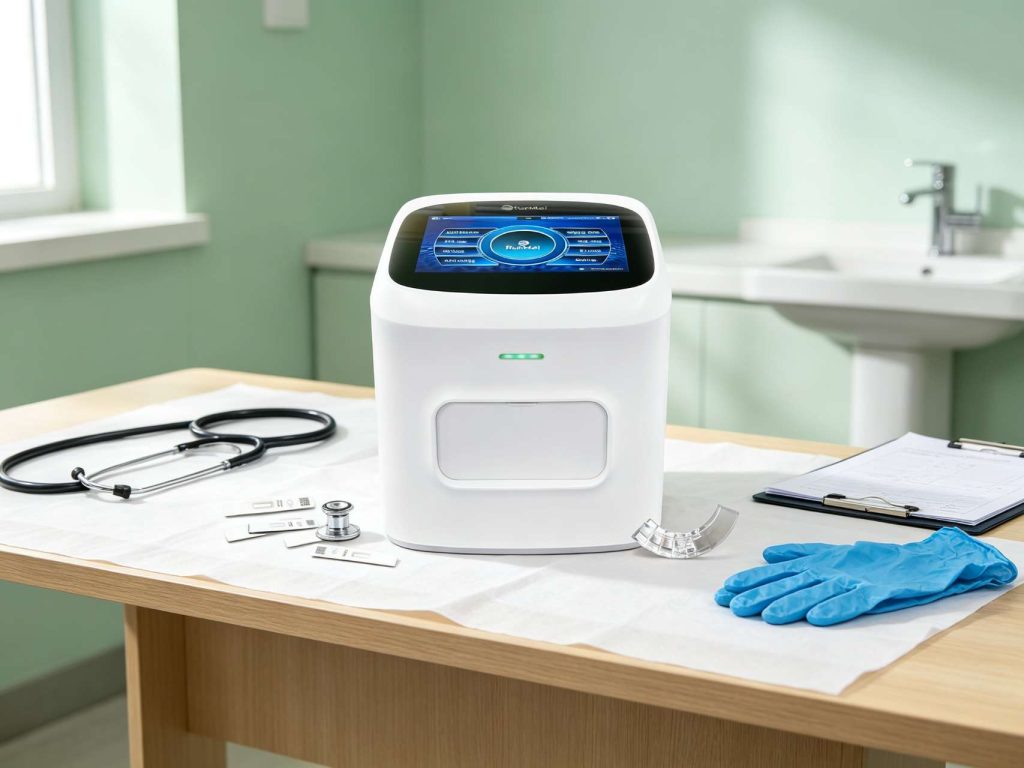
Fig. 1 — RunMei محلل أمراض الدم in a rural clinic setting. Blood analyzer border health post cross border testing. | Alt: blood analyzer border health post cross border testing
What a Border Blood Analyzer Handles Best
The workload at a border post is a parade of the CBC’s core questions. Children with fever whose parents are in transit; pregnant women who registered in one country and will deliver in another; workers with anemia who cannot afford to be sick. Each consultation benefits from a count taken the same hour.
the cbc testing must be forgiving, because the operators rotate and the power supply is whatever the border town offers. Simple interfaces, stable reagents and a clear quality-control routine matter more than an extended parameter list.
Results become evidence only when they are recorded. A register — patient, date, count, action taken — turns a stream of tests into a picture of the community’s health, and that picture is what justifies the program’s continuation. Clinics that keep the register find it writes their own case for support. Budget teams should see the محلل أمراض الدم cost analysis before signing off on procurement.
The Two-Language Result Sheet
The result sheet travels with the patient and should speak both languages. A printed result with clear units and a simple flag system outlasts any phone call, because the patient can hand it to a clinician who does not share the nurse’s language.
Building Trust Across a Line on the Map
Cross-border health work runs on trust, and trust runs on shared numbers. When both sides of the border use the same quality-control approach and the same units, a result produced at the post is accepted at the district hospital on either side. the cbc testing becomes a common language.
The long-term win is surveillance. Border posts are early warning points for outbreaks, because movement brings disease before the cases cluster anywhere long enough to be counted.
Trust is built one control run at a time. The daily control, the logged result, the outlier that gets acted on rather than explained away — these are the habits that make a rural result worth acting on. Facilities that document their controls report something else too: staff who believe their own numbers and clinicians who trust them. The logbook is not paperwork; it is the evidence that the cbc testing is telling the truth.
The Early Warning the Border Provides
A cluster of unexplained fever with low platelet counts at a border post is a signal that deserves a phone call. The clinic that runs its own counts can make that call with data, days before a surveillance system would notice.
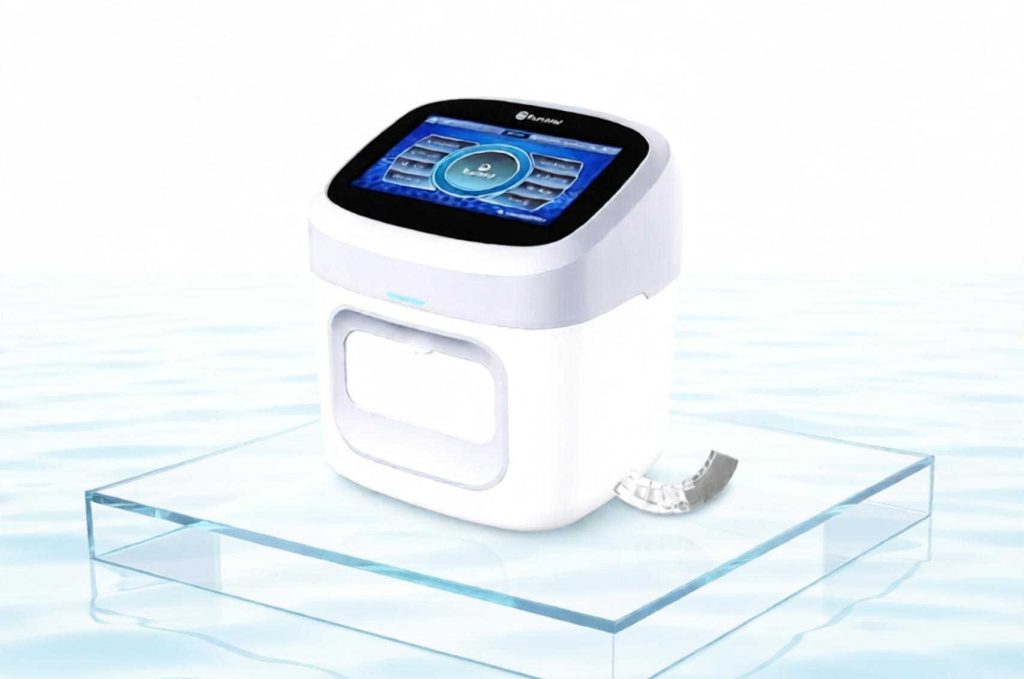
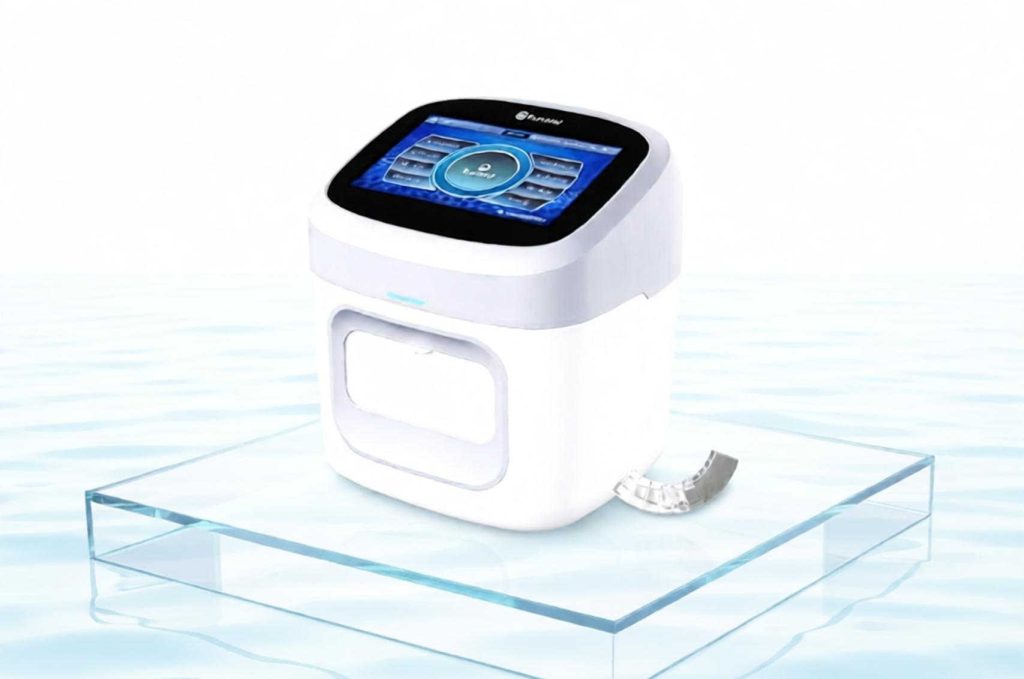
Fig. 2 — RunMei differential blood analyzer during routine testing. Compact blood analyzer migrant health clinic same day results. | Alt: compact blood analyzer migrant health clinic same day results
The Supply Plan
The supply plan answers one question: what does this clinic need, in what quantity, and how long does resupply take? Reagents, controls and consumables each have their own buffer, sized to the longest plausible interruption — the rainy season, the border delay, the transport strike. The plan is written in months, not in orders.
The same pattern repeats in facility after facility: the clinic that measures its own patients keeps them, and the clinic that sends them away loses them. That arithmetic changes inside the first year, not through gadget appeal, but through fewer referrals, fewer repeat visits and a patient list that finally trusts the results it is given.
The Buffer Discipline
The rule of thumb that works in practice: hold enough stock to run the clinic’s normal volume for the resupply period plus one month. Facilities that follow the rule ride out the interruptions; facilities that run to empty stop testing at the worst possible moment.
The Open-Channel Option
Analyzers that accept qualified third-party reagents turn the supply plan into a competitive market instead of a single dependency. The option matters most where a locked reagent line would make the per-test cost unsustainable — which is most of rural primary care.
Programs that pair CBC testing with border health post report the strongest results. The same logic applies to cross border blood testing, which clinics in the region often underestimate. For teams accountable for migrant health diagnostics, the practical effect shows up within the first month.
الأسئلة المتداولة
Q1. Why do border clinics need their own blood testing?
Their patients move quickly and may never return. On-site CBC testing is the only way to deliver results to a population that cannot wait for them.
Q2. Which tests matter most at a border post?
The CBC for fever, anemia and infection, plus whatever the local disease pattern adds. Same-hour counts shape treatment and referral decisions.
Q3. How are results shared across the border?
Primarily through the patient: a printed result sheet in both languages that travels with them and is accepted by facilities on either side.
Q4. Can one border clinic analyzer serve both countries?
In practice it often does, since patients come from both sides. Standardized units and quality control make the results usable everywhere.
Sources & References
- World Health Organization data show that in lower-income countries a large share of the rural population still lives beyond the reach of a functioning laboratory; the WHO recommends primary care facilities be reachable within roughly 5 km, yet global estimates indicate about 3 billion people cannot reach a health facility within one hour on foot. Source: WHO — https://www.who.int/news-room/fact-sheets/detail/primary-health-care
- According to the WHO, health facilities serving close to one billion people in low- and middle-income countries lack reliable electricity or have none at all, with roughly 12% of facilities in South Asia and 15% in sub-Saharan Africa completely unelectrified. Source: WHO — https://www.who.int/health-topics/electrification-of-health-facilities
- Reviews published in the New England Journal of Medicine have repeatedly underlined that the single most reliable way to improve outcomes in low-resource settings is to shorten the interval between clinical presentation and a correct laboratory diagnosis. Source: NEJM — https://www.nejm.org/
About the Author & Reviewer
Author: Dr. Elena Marchetti, MD, MPH, Rural Health Diagnostics. Dr. Marchetti is a physician and diagnostics specialist who has spent the past fifteen years designing point-of-care programs for district hospitals and rural clinics in lower-resource settings. Her field work focuses on how laboratory devices survive daily use outside the laboratory, from staff training to reagent logistics.
Reviewer: Prof. Daniel Mwangi, PhD, MSc, Laboratory Systems Advisor. Prof. Mwangi directs laboratory quality programs for a network of rural health facilities and teaches clinical laboratory science. He has reviewed point-of-care device deployments across Africa and Southeast Asia, with a particular interest in quality control and operator competency outside the main laboratory.
Disclaimer
This article is for informational and marketing purposes only and does not constitute medical advice, a product claim, or a regulatory certification statement. Device availability, regulatory status (FDA 510(k)/CE/ISO 13485) and specifications vary by country and model; always verify current approvals with the manufacturer and consult local regulations before procurement or use.