Meta Title: CBC Monitoring for HIV Patients on Antiretroviral Therapy | RunMei
Meta Description: CBC Monitoring. CBC monitoring for HIV patients on antiretroviral therapy. How scheduled blood counts catch regimen-related anemia and neutropenia.
URL: https://runmeihealth.com/cbc-monitoring-hiv-art-rural
By Dr. Elena Marchetti · MD, MPH, Rural Health Diagnostics | Reviewed by Prof. Daniel Mwangi (PhD, MSc, Laboratory Systems Advisor) | Published: 026-10-08
The patient has been on antiretroviral therapy for eleven months and is doing well, which is exactly when the blood count matters most. The CBC monitoring question — what it can do, what it costs to run and how a result earns trust — is answered in the pages that follow. Some ART regimens tax the marrow quietly, and the anemia or neutropenia arrives without symptoms. The drug is working; the question is what it is costing the blood. The hospital biochemical analyzer catalog covers the instruments rural programs order most often.
This article looks at CBC monitoring through the lens of Rural Clinics, where the stakes are ordinary and the constraints are real: budgets that do not stretch, staff who already wear several hats, and distances that punish delay. The WHO reports that noncommunicable diseases now account for about 37% of deaths in the African Region, which makes the general-purpose blood count an increasingly central tool in rural primary care. The practical questions — which instrument, what training, how much per test, who maintains it — are answered in plain language, with the numbers a procurement committee can actually use. WHO . Facilities weighing the options can browse the 3-part vs 5-part blood analyzer range to compare configurations side by side.
Key Takeaways
- CBC monitoring is a standard component of safe ART follow-up.
- Regimen-related anemia and neutropenia are caught by scheduled counts.
- The rural clinic is the natural home of ART follow-up, so the count must live there too.
- Trends guide regimen changes before complications become symptomatic.
Why ART Follow-Up Needs the Blood Count
Antiretroviral therapy has transformed HIV from a death sentence into a chronic condition, and chronic conditions run on monitoring. Several regimens are associated with marrow suppression: falling hemoglobin, falling neutrophils, occasionally falling platelets. The patient feels none of it until the count is dangerously low, which is why the count is scheduled rather than symptom-driven.
HIV infection itself also writes itself into the blood, and the count helps the clinician distinguish disease effects from drug effects. The anemic ART patient needs a different response depending on which of the two is driving the fall, and the serial count is the evidence that sorts it out.
the cbc monitoring is the seed; the program is the tree. Training, supervision, registers, quality checks and a supply line that outlasts the donor — these are what turn a machine into a service that keeps running. Programs that design for sustainability from the first installation meeting are the ones still running at the five-year review. That is the practical reality of CBC monitoring in the field. FDA . Programs that want a deeper differential can read the mobile blood analyzer page for the trade-offs.
The Count Before the Regimen Change
Before switching or starting any regimen with known marrow effects, a baseline count is the reference every later decision needs. The clinic that records the baseline on day one can interpret every later change; the clinic that starts measuring later is always guessing at the direction.
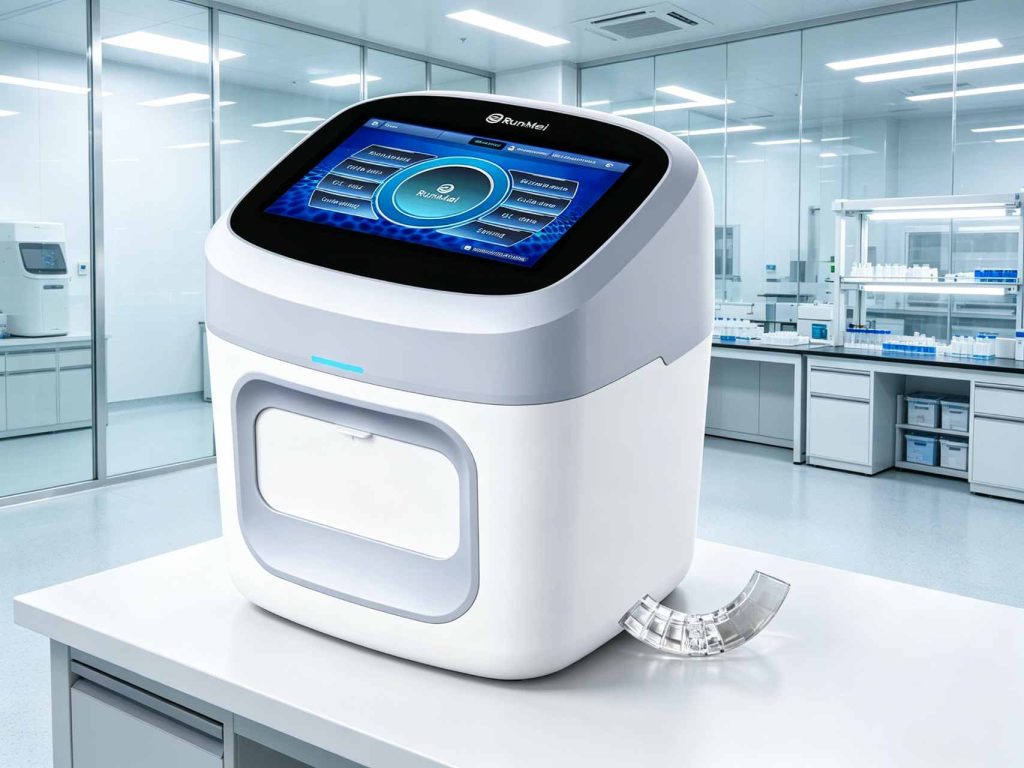
Fig. 1 — RunMei mobile blood analyzer in a rural clinic setting. Blood analyzer cbc monitoring hiv antiretroviral therapy. | Alt: blood analyzer CBC monitoring HIV antiretroviral therapy
The Monitoring Schedule in Practice
Practical schedules vary, but the pattern that works in rural programs is: a baseline count at ART initiation, a count at the first review, and scheduled counts every six months on stable therapy, with urgent counts whenever the patient reports symptoms or an intercurrent illness. The schedule is modest, affordable and catches the slow declines that matter.
The count belongs at the refill visit. ART patients already return monthly for medication; attaching the count to that visit costs the patient nothing extra and gives the program its trend line without building a new appointment system.
Power is the silent partner in every rural deployment. In Rural Clinics, outages are not the exception; they are the schedule. The practical answer is a cbc monitoring that tolerates the interruption — battery capability that finishes the test in progress, a startup that does not lose calibration, and a surge protector between the wall and the machine. Programs that budget for power, not just for the instrument, are the programs whose instruments stay alive. And this is exactly where CBC monitoring changes the decision. Budget teams should see the blood analyzer instruments cost analysis before signing off on procurement.
The Six-Month Check
Twice a year, the stable ART patient gets a CBC at the refill visit. The cost is small, the workload is predictable, and the trend catches the regimen’s slow effects years before they would otherwise surface.
When the Count Says Change the Plan
The falling count on ART triggers a protocol, not a panic. Mild anemia is managed with investigation and nutrition support; moderate suppression raises the question of the regimen and prompts a consult; severe suppression requires holding or switching the drug under guidance. Each step is written, so the local clinician knows exactly what each number means.
The same analyzer serves the rest of the HIV clinic: the pregnant woman starting prevention of transmission, the child on ART whose counts need watching, and the patient with a fever whose white cells and platelets need an immediate answer. One instrument, one training, one register — and the whole program benefits.
Trust is built one control run at a time. The daily control, the logged result, the outlier that gets acted on rather than explained away — these are the habits that make a rural result worth acting on. Facilities that document their controls report something else too: staff who believe their own numbers and clinicians who trust them. The logbook is not paperwork; it is the evidence that the cbc monitoring is telling the truth. Programs built around CBC monitoring see the effect within the first month.
The Fever Count in the HIV Clinic
The HIV patient with fever needs the count the same day: neutropenia changes the antibiotic question, thrombocytopenia changes the danger assessment, and the trend changes the admission decision. The on-site analyzer delivers all three within the visit.

Fig. 2 — RunMei blood analyzer instruments during routine testing. Hematology analyzer art follow-up rural clinic. | Alt: hematology analyzer ART follow-up rural clinic
The People Plan
The people plan comes before the cbc monitoring plan. In Rural Clinics, the operators are likely to be nurses, laboratory assistants or community health workers rather than dedicated technicians — which changes everything about training design. The plan names the operators, the backup operators and the supervisor, and puts a date on each competency milestone before the machine arrives. The same principle holds for CBC monitoring: measure, record, act.
Training That Sticks
Competency is built in stages: observation, supervised practice, independent operation, certification. Each stage is checked, not assumed, and the certification is renewed annually. Programs that compress the stages to fit a schedule end up with operators who can switch the machine on and nothing more.
The Turnover Reserve
Staff turnover is a fact of rural health work, and the plan must budget for it: every shift carries two trained operators, and training slots are scheduled continuously rather than once at installation. The facility that trains continuously is the facility whose capability survives its staff changes.
The same logic applies to HIV antiretroviral therapy, which clinics in the region often underestimate. For teams accountable for anemia in HIV, the practical effect shows up within the first month. Decisions about neutropenia drug monitoring are usually made at district level — and the register feeds them.
الأسئلة المتداولة
Q1. Why do HIV patients on ART need regular CBCs?
Some antiretroviral regimens suppress the marrow, and scheduled counts catch anemia or neutropenia before they become symptomatic.
Q2. How often should the count be done?
At baseline, at the first review, then every six months on stable therapy, with urgent counts for symptoms or intercurrent illness.
Q3. Can the count distinguish drug effects from disease effects?
The serial trend, together with the clinical picture and viral load where available, helps separate regimen-related suppression from HIV-related complications.
Q4. Does the rural clinic need a separate analyzer for HIV care?
No. The same instrument serves ART monitoring, antenatal testing and general outpatients, spreading the cost across the whole facility.
Sources & References
- The WHO Regional Office for Africa reports that noncommunicable diseases now account for about 37% of deaths in the African Region, and that shortages of trained specialists, diagnostics and clinical protocols continue to limit access to quality care. Source: WHO — https://www.who.int/news-room/fact-sheets/detail/noncommunicable-diseases
- Under 21 CFR 864.5220, automated differential cell counters are Class II medical devices that require FDA 510(k) premarket clearance before they can be marketed in the United States. Source: FDA — https://www.ecfr.gov/current/title-21/chapter-I/subchapter-H/part-864/subpart-C/section-864.5220
Disclaimer
This article is for informational and marketing purposes only and does not constitute medical advice, a product claim, or a regulatory certification statement. Device availability, regulatory status (FDA 510(k)/CE/ISO 13485) and specifications vary by country and model; always verify current approvals with the manufacturer and consult local regulations before procurement or use.