Meta Title: Differential Blood Analyzers | RunMei
Meta Description: Differential Blood Analyzers. Fever is Africa’s most common diagnostic puzzle. A 5-part differential blood analyzer separates malaria, bacterial infection and sepsis.
URL: https://runmeihealth.com/differential-blood-analyzers
By Dr. Amara Okafor · MBBS, MSc Global Health Diagnostics | Reviewed by Dr. Michael Chen (PhD, Senior Laboratory Advisor) | Published: 2026-10-1
Every malarial fever is not malaria, and every sepsis is not a ‘bad fever.’ The child on the table in rural Tanzania may carry one parasite, two infections, or none at all — and the treatment decision is being made with a thermometer and a prayer. Everything below comes back to differential blood analyzers and the diagnosis decisions clinics actually make, from procurement to daily operation. A blood cell analyzer is the instrument that replaces the prayer: five white cell populations counted in minutes, flagging the bacterial pattern that a blood film and clinical instinct routinely miss.
Few purchases in rural health care invite as many opinions as differential blood analyzers. This article sets the opinions aside and works from what the data, the protocols and the field experience actually show about rural health care. About 3 billion people worldwide still cannot reach a health facility within one hour on foot, a figure the WHO has used to argue for diagnostics that travel to patients instead of the other way around. What survives is a short set of principles that hold across budgets and geographies. The 5-part differential blood analyzer catalog covers the instruments rural programs order most often.
Key Takeaways
- Malaria, bacterial infection and sepsis look alike at the bedside but very different in a differential count.
- A 5-part differential analyzer flags bacterial infection patterns within minutes, at the point of care.
- Better triage means fewer unnecessary antimalarials and antibiotics, and faster referral for true sepsis.
- Rural facilities can now run laboratory-grade differentials without a microscopist on staff.
The Fever That Is Not Malaria
WHO treatment guidelines assume every febrile child in a malaria-endemic zone may have malaria, but they also insist on confirming before treating wherever testing is possible. The problem in rural Africa is that the only confirmatory tools are a blood film and a trained eye — and both are scarce. The result is a healthcare system that over-treats malaria and under-treats the bacterial pneumonia or sepsis hiding behind the same fever.
The instrument is the seed; the program is the tree. Training, supervision, registers, quality checks and a supply line that outlasts the donor — these are what turn a machine into a service that keeps running. Programs that design for sustainability from the first installation meeting are the ones still running at the five-year review. The same principle holds for differential blood analyzers: measure, record, act. Budget teams should see the cost-effective blood analyzer cost analysis before signing off on procurement.
What the White Cell Pattern Tells You
Bacterial infection typically drives up neutrophils; viral illness tends to spare or lower them while raising lymphocytes; malaria alters counts in characteristic, if variable, ways. A five-part differential — neutrophils, lymphocytes, monocytes, eosinophils and basophils — gives the clinician a quantitative picture in the same minutes a rapid test takes, at a fraction of the cost of a blood culture.
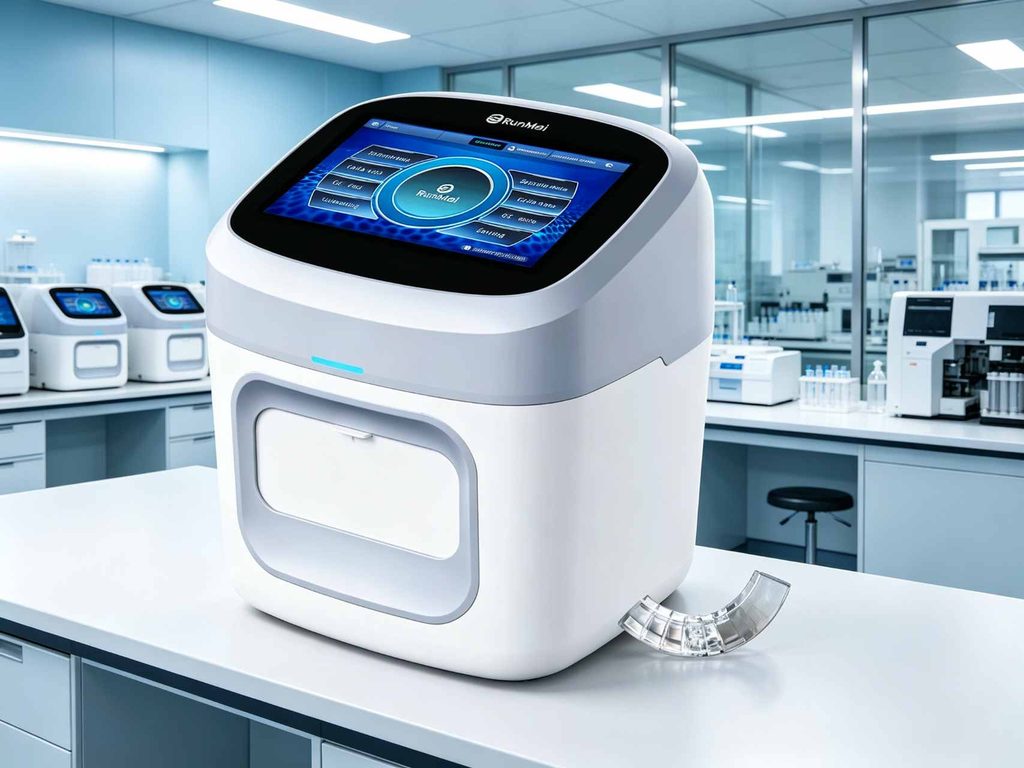
Fig. 1 — RunMei portable blood analyzer in a rural clinic setting. 5-part differential blood analyzer malaria diagnosis. | Alt: 5-part differential blood analyzer malaria diagnosis
Why a 5-Part Count Beats a 3-Part Count at the District Level
Three-part analyzers separate lymphocytes, granulocytes and mid-sized cells — useful, but they cannot distinguish the monocyte or eosinophil shifts that matter in malaria, helminth infection and allergic disease. A portable blood analyzer with five populations plus research-grade flags for abnormal cells gives a district hospital the discriminatory power of a much larger lab.
Trust is built one control run at a time. The daily control, the logged result, the outlier that gets acted on rather than explained away — these are the habits that make a rural result worth acting on. Facilities that document their controls report something else too: staff who believe their own numbers and clinicians who trust them. The logbook is not paperwork; it is the evidence that the machine is telling the truth. differential blood analyzers is the instrument at the center of that workflow.
Flags That Send the Right Patient to Referral
Modern analyzers flag blast cells, immature granulocytes and abnormal lymphocyte populations — signals that a busy clinical officer might otherwise attribute to malaria. In malaria-endemic areas, where every fever is assumed parasitic, these flags are the difference between treating the patient and treating the parasite.
The Cost Question: Is a 5-Part Analyzer Worth It for a Rural Hospital?
Five-part instruments have historically cost two to three times a basic 3-part machine, which is why many rural hospitals settled for the cheaper option. That equation has changed. New-generation analyzers deliver five-part differentials at prices a district hospital can actually budget, with open-channel reagents that keep running costs in line with 3-part systems.
The payoff is on the other side of the ledger: fewer unnecessary admissions, better-targeted antibiotics and antimalarials, and fewer missed sepses that end in the mortuary. In health-economic terms, the analyzer pays for itself several times over in the first year of operation.
The numbers have to close in the real world. Volume assumptions, fee structures, reagent costs and the hidden cost of the journey patients would otherwise make — each belongs in the model before the purchase, not after. Facilities that run the arithmetic honestly find the analyzer is not an expense; it is the cheaper way to do what they were already doing. Facilities that already run differential blood analyzers report the same pattern.
Comparing Vendors: What to Look For
When comparing brands (call them Brand A, Brand B and RunMei), look beyond the sticker price: cost per test with realistic reagent prices, the availability of a local distributor, training included in the contract, and the analyzer’s tolerance for heat, dust and power fluctuation. A machine that is down for a month because no spare part exists in the country is not cheaper at any price.

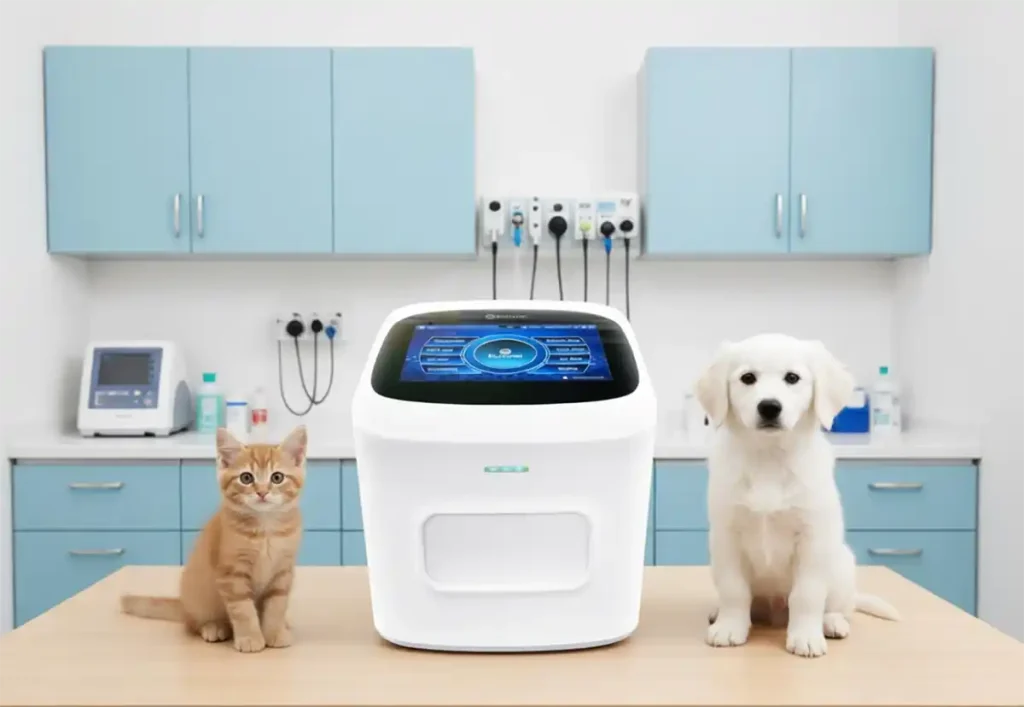
Fig. 2 — RunMei 3-part and 5-part differential analyzers in a rural clinic setting. 5-part blood analyzer rural hospital africa. | Alt: 5-part blood analyzer rural hospital Africa
The Quality Case
A result is only as good as the system that produced it. The quality case for differential blood analyzers in rural health care rests on daily controls, calibration discipline and external assessment — the three layers that let a rural clinician act on a number with confidence. The instrument matters; the habits around it matter more.
The Daily Evidence
The five-minute control run is the whole foundation. It detects drift before it reaches a patient, and the log it produces is the visible proof that today’s results can be trusted. Facilities that protect the morning control ritual protect everything downstream of it.
The External Check
External quality assessment — blind samples scored by a national or regional program — is the only true measure of accuracy, and it is now within reach of rural facilities in most countries. Enrollment costs little; the feedback it returns is the difference between assuming the machine is right and knowing it is.
It also strengthens fever diagnosis, a benefit that rarely appears in the budget line. None of this holds together without attention to malaria vs sepsis. Programs that pair differential blood analyzers with white blood cell differential report the strongest results.
الأسئلة المتداولة
Q1. Can a blood analyzer diagnose malaria?
A blood analyzer cannot replace a malaria rapid test or microscopy for confirming the parasite, but its differential count adds strong supporting evidence and helps detect the bacterial co-infection or sepsis that often accompanies or mimics malaria.
Q2. What is the difference between 3-part and 5-part differential analyzers?
A 3-part analyzer separates white cells into three groups; a 5-part analyzer reports neutrophils, lymphocytes, monocytes, eosinophils and basophils separately, giving a much clearer picture of bacterial, parasitic and allergic processes.
Q3. Do rural facilities need a microscopist to use a 5-part analyzer?
No. The analyzer performs the differential automatically. Staff need training to operate the instrument and interpret flags, not to count cells by eye.
Q4. Is the higher price of a 5-part analyzer justified?
In high-burden settings the clinical benefits — fewer missed bacterial infections, better antibiotic stewardship and fewer referrals — typically outweigh the price difference, especially with open-channel reagent options that reduce running costs.
Sources & References
- World Health Organization data show that in lower-income countries a large share of the rural population still lives beyond the reach of a functioning laboratory; the WHO recommends primary care facilities be reachable within roughly 5 km, yet global estimates indicate about 3 billion people cannot reach a health facility within one hour on foot.
- Reviews published in the New England Journal of Medicine have repeatedly underlined that the single most reliable way to improve outcomes in low-resource settings is to shorten the interval between clinical presentation and a correct laboratory diagnosis.
About the Author & Reviewer
Author: Dr. Amara Okafor, MBBS, MSc Global Health Diagnostics. Dr. Okafor is a physician and diagnostics specialist who has supported laboratory capacity projects across East Africa for over a decade.
Reviewer: Dr. Michael Chen, PhD, Senior Laboratory Advisor. Dr. Chen advises public health laboratories on quality systems and point-of-care device deployment in low-resource settings.
Disclaimer
This article is for informational and marketing purposes only and does not constitute medical advice, a product claim, or a regulatory certification statement. Device availability, regulatory status and specifications vary by country and model; always verify current approvals with the manufacturer and consult local regulations before procurement or use.