Meta Title: Blood Analyzer Hemoglobin Screening on Estates | RunMei
Meta Description: Blood Analyzer Hemoglobin Programs. Blood analyzer hemoglobin screening for plantation workers. Same-day counts for antenatal, pre-employment and annual checks on tea and.
By Dr. Elena Marchetti · MD, MPH, Rural Health Diagnostics | Reviewed by Prof. Daniel Mwangi (PhD, MSc, Laboratory Systems Advisor) | Published: 2026-09-23
The estate employs four thousand workers and employs one nurse. The blood analyzer hemoglobin programs question — what it can do, what it costs to run and how a result earns trust — is answered in the pages that follow. The clinic building is clean, the registers are neat, and the blood samples leave every Friday on the estate truck, returning as results the following Wednesday if the driver remembers to collect them. The differential blood analyzer catalog covers the instruments rural programs order most often.
This article looks at blood analyzer hemoglobin programs through the lens of rural health care, where the stakes are ordinary and the constraints are real: budgets that do not stretch, staff who already wear several hats, and distances that punish delay. WHO analyses indicate that anemia affects roughly one in four people worldwide, with the highest prevalence in preschool children and pregnant women in low- and middle-income regions. The practical questions — which instrument, what training, how much per test, who maintains it — are answered in plain language, with the numbers a procurement committee can actually use. WHO . Facilities weighing the options can browse the low reagent cost blood analyzer range to compare configurations side by side.
Key Takeaways
- Estate clinics serve large, stable workforces with predictable health needs.
- A blood analyzer converts the Friday collection round into same-day testing.
- Hemoglobin screening catches anemia that reduces productivity and complicates pregnancy.
- The estate clinic becomes a data point for nutrition and housing policy.
The Workforce the Health System Rarely Sees
Plantations concentrate people in numbers that look urban but sit far from urban services. Thousands of workers live on the estate, their families included, and the estate clinic is their only health facility. Yet the classic pattern persists: samples travel, results return late, and the clinic functions as a referral point rather than a diagnostic one.
The health profile is heavy and predictable: anemia in women of working age, malaria in lowland estates, and the chronic conditions of a workforce that ages in place.
the blood analyzer hemoglobin programs is the seed; the program is the tree. Training, supervision, registers, quality checks and a supply line that outlasts the donor — these are what turn a machine into a service that keeps running. Programs that design for sustainability from the first installation meeting are the ones still running at the five-year review. blood analyzer hemoglobin programs is the instrument at the center of that workflow. WHO . Programs that want a deeper differential can read the blood biochemistry analyzer page for the trade-offs.
The Friday Truck Problem
The weekly sample run concentrates every decision into one unreliable moment. If the truck is late, the results are late; if the laboratory is busy, they are later. The analyzer on the estate removes the single point of failure that the truck represents.
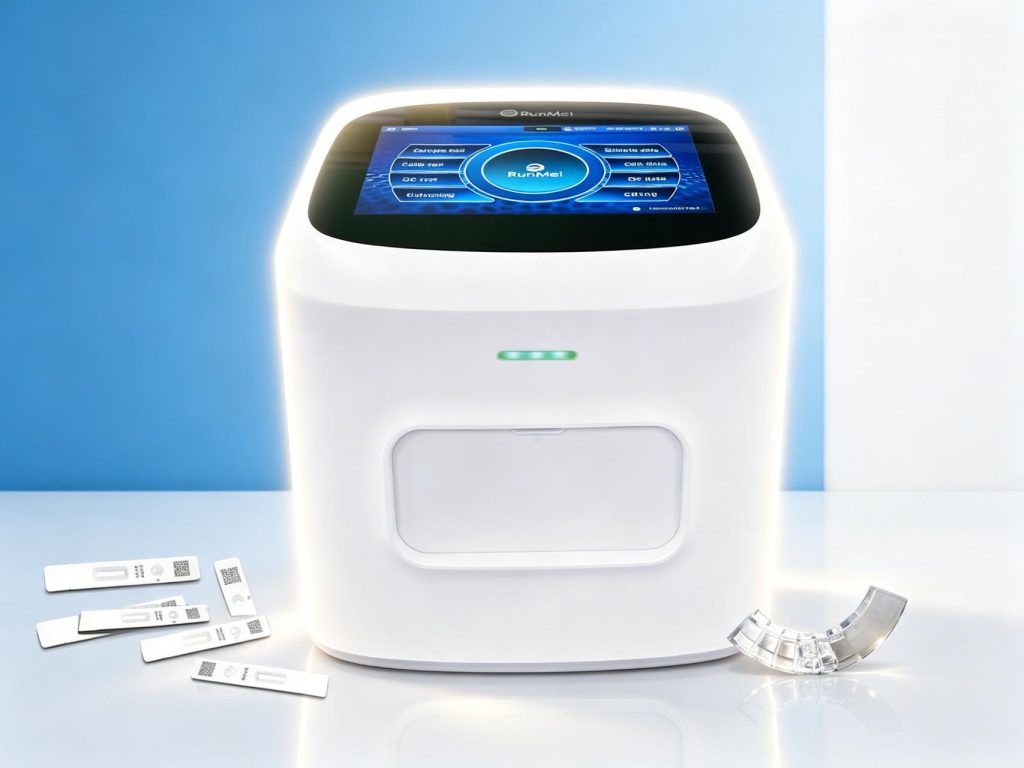
Fig. 1 — RunMei differential blood analyzer in a rural clinic setting. Blood analyzer plantation estate clinic hemoglobin screening. | Alt: blood analyzer plantation estate clinic hemoglobin screening
What a Same-Day Hemoglobin Program Delivers
A hemoglobin program needs a numerator that is actually measured. On-site testing delivers counts for every antenatal visit, every pre-employment medical, and every annual check. The estate manager gets a number; the clinic gets a trend; the worker gets a result in the same visit.
The productivity argument is not incidental. Anemic workers are tired workers, and tired workers have more accidents and more sick days. The clinic that measures and treats anemia is doing occupational health whether the label on the report says so or not.
the blood analyzer hemoglobin programs does not replace the referral system; it feeds it. The protocol should say which findings stay local, which trigger referral, and which require the result to travel with the patient. In rural health care, the register and the referral slip are as important as the count itself — because a number that does not travel is a number that does not act. Facilities that already run blood analyzer hemoglobin programs report the same pattern.
Anemia prevalence in many estate workforces runs above 30%, and every percentage point is a measurable planning target. Budget teams should see the RUNMEI blood analyzer cost analysis before signing off on procurement.
The Antenatal Visit That Answers
For the pregnant worker, the difference is concrete: the hemoglobin is known at the first visit, supplementation starts at the first visit, and the referral is made with a number instead of a worry. That is the difference a same-day analyzer makes to one woman and one pregnancy.
From Estate Clinic to Measured Program
The transition happens quietly. Week one, the blood analyzer hemoglobin programs sits on the bench and the nurse tests the antenatal queue. Month three, the register shows the anemia pattern by block and by season. Year one, the estate committee discusses the nutrition program using the clinic’s own data.
The estate pays for reagents and the clinic stays in control of its own results. It is a small loop, but it is a complete one, and completeness is what most rural diagnostics lack.
Results become evidence only when they are recorded. A register — patient, date, count, action taken — turns a stream of tests into a picture of the community’s health, and that picture is what justifies the program’s continuation. Clinics that keep the register find it writes their own case for support. That is the practical reality of blood analyzer hemoglobin programs in the field.
The Quarterly Review With a Denominator
A review meeting that opens with a denominator changes the conversation. ‘We tested 900 workers and found 180 anemic’ is a planning statement. ‘Workers get tested when the truck runs’ is an excuse. The analyzer provides the first sentence.
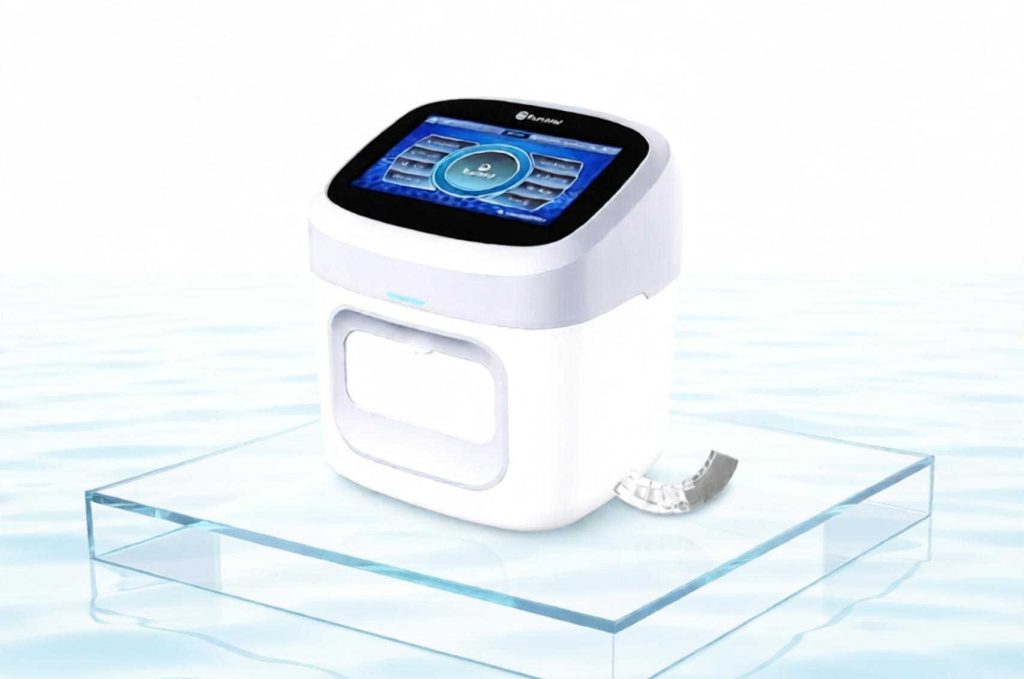
Fig. 2 — RunMei low reagent cost blood analyzer during routine testing. Compact blood analyzer worker health testing program. | Alt: compact blood analyzer worker health testing program
The People Plan
The people plan comes before the blood analyzer hemoglobin programs plan. In rural health care, the operators are likely to be nurses, laboratory assistants or community health workers rather than dedicated technicians — which changes everything about training design. The plan names the operators, the backup operators and the supervisor, and puts a date on each competency milestone before the machine arrives.
Training That Sticks
Competency is built in stages: observation, supervised practice, independent operation, certification. Each stage is checked, not assumed, and the certification is renewed annually. Programs that compress the stages to fit a schedule end up with operators who can switch the machine on and nothing more.
The Turnover Reserve
Staff turnover is a fact of rural health work, and the plan must budget for it: every shift carries two trained operators, and training slots are scheduled continuously rather than once at installation. The facility that trains continuously is the facility whose capability survives its staff changes.
None of this holds together without attention to plantation worker health. Programs that pair blood analyzer hemoglobin programs with hemoglobin screening program report the strongest results. The same logic applies to estate clinic blood testing, which clinics in the region often underestimate.
الأسئلة المتداولة
Q1. Why do plantation workers need hemoglobin screening?
Anemia is common in estate workforces, especially among women, and it affects both health and safety. Screening finds it before it causes harm.
Q2. Can one nurse run a blood analyzer?
With a single day of structured training and a written protocol, yes. One trained operator plus one backup keeps the service running across leave and seasons.
Q3. What about the tests the estate clinic cannot do?
They still travel on the truck, but the list is shorter. The on-site analyzer filters the routine load and reserves the journey for genuinely complex tests.
Q4. Who pays for reagents on an estate?
Many estates fold reagent costs into the worker health budget, which the productivity gains and reduced referrals usually justify within the first year.
Sources & References
- WHO analyses indicate that anemia affects roughly one in four people worldwide, with the highest prevalence in preschool children and pregnant women in low- and middle-income regions. Source: WHO — https://www.who.int/news-room/fact-sheets/detail/anaemia
- World Health Organization data show that in lower-income countries a large share of the rural population still lives beyond the reach of a functioning laboratory; the WHO recommends primary care facilities be reachable within roughly 5 km, yet global estimates indicate about 3 billion people cannot reach a health facility within one hour on foot. Source: WHO — https://www.who.int/news-room/fact-sheets/detail/primary-health-care
- The U.S. Food and Drug Administration (FDA) grants CLIA waiver to certain automated hematology analyzers, allowing them to be operated outside the traditional laboratory by staff without advanced training; dual 510(k) and CLIA waiver submissions are documented under the Medical Device User Fee Amendments. Source: FDA — https://www.fda.gov/medical-devices/ivd-regulatory-assistance/clia-waivers
About the Author & Reviewer
Author: Dr. Elena Marchetti, MD, MPH, Rural Health Diagnostics. Dr. Marchetti is a physician and diagnostics specialist who has spent the past fifteen years designing point-of-care programs for district hospitals and rural clinics in lower-resource settings. Her field work focuses on how laboratory devices survive daily use outside the laboratory, from staff training to reagent logistics.
Reviewer: Prof. Daniel Mwangi, PhD, MSc, Laboratory Systems Advisor. Prof. Mwangi directs laboratory quality programs for a network of rural health facilities and teaches clinical laboratory science. He has reviewed point-of-care device deployments across Africa and Southeast Asia, with a particular interest in quality control and operator competency outside the main laboratory.
Disclaimer
This article is for informational and marketing purposes only and does not constitute medical advice, a product claim, or a regulatory certification statement. Device availability, regulatory status (FDA 510(k)/CE/ISO 13485) and specifications vary by country and model; always verify current approvals with the manufacturer and consult local regulations before procurement or use.