| Meta Title | CBC Testing for Infectious Disease Detection in Rural Areas |
| Meta Description | Malaria, typhoid, and bacterial infections hide behind common fevers. Learn how CBC testing with a blood analyzer speeds infectious disease detection in rural areas. |
| URL Slug | /cbc-infectious-disease-detection-rural/ |
| Focus Keyword | CBC infectious disease detection |
| Secondary Keywords | malaria diagnosis CBC, typhoid blood test, fever workup rural clinic, complete blood count infection marker |
| Publish Date | 2026-09-29 |
| Author | Dr. Elena Marsh, MD, MPH |
| Reviewer | Dr. James Okafor, PhD, FACB |
“In a fever case, the first question is not ‘what is it?’ — it is ‘can I even find out?'” The district medical officer said it without drama, the way people state facts they have learned the hard way. In her region, a febrile child arrives at the clinic with one of the world’s most common problems: a temperature, a tired parent, and no way to know whether this is a viral cold that resolves, malaria that kills within days, or typhoid that needs an antibiotic a village pharmacy cannot supply. Before her clinic received a blood analyzer, the answer was empirical: paracetamol, observation, and a referral that most families could not afford to follow. The CBC changed that arithmetic. This article explains how complete blood count testing with a modern blood analyzer has become the backbone of infectious disease detection in rural medicine — and why it belongs in every fever workup.
Why the CBC Is the First Test for Fever
The complete blood count is not a specific test for any single infection — that is precisely its strength. It is a broad biomarker screen that responds to almost every category of illness a rural clinician faces: anemia from malaria’s hemolysis, leukocytosis from bacterial infection, leukopenia and thrombocytopenia from dengue and typhoid, eosinophilia from parasitic infection. A CBC with differential converts “fever of unknown origin” into a short, prioritized differential in about a minute.
The Malaria Case
Malaria remains one of the great diagnostic challenges of rural medicine. The WHO continues to call for diagnostic confirmation before antimalarial treatment — the era of treating every fever as malaria has passed, both for patient safety and for drug resistance. A CBC supports malaria diagnosis through anemia flags, platelet consumption, and the leukocyte pattern, and it is the essential companion to rapid diagnostic tests: it identifies the complications (severe anemia, thrombocytopenia) that determine whether a patient can be managed at home or needs urgent referral.
The Bacterial-Viral Divide
The single most valuable question in pediatric and adult fever management is whether the illness is bacterial — because only bacterial illness needs antibiotics. The white blood cell count and differential provide the classic discriminant: elevated neutrophils and a left shift point toward bacterial infection; lymphocytosis leans viral. No test is perfect, and clinical judgment remains paramount — but a rural clinician with a CBC and an on-site blood analyzer is making an informed call, not a blind one. 3-part differential analyzers deliver the lymphocyte-monocyte-granulocyte split needed for this decision at the lowest cost; 5-part instruments add the eosinophil and basophil detail that refines parasite and allergy workups.
Dengue, Typhoid, and Other Endemic Threats
Platelet counts are the sentinel of dengue — thrombocytopenia typically appears before clinical deterioration — and serial platelet monitoring is the standard of care in dengue-endemic regions. Typhoid presents with characteristic leukopenia and anemia patterns. Leptospirosis, rickettsial illness, and viral hemorrhagic fevers all leave fingerprints on the CBC. In regions where several of these circulate, a fever panel that includes CBC and platelet count is the cheapest insurance policy a clinic can buy.
The Gap That Early Detection Closes
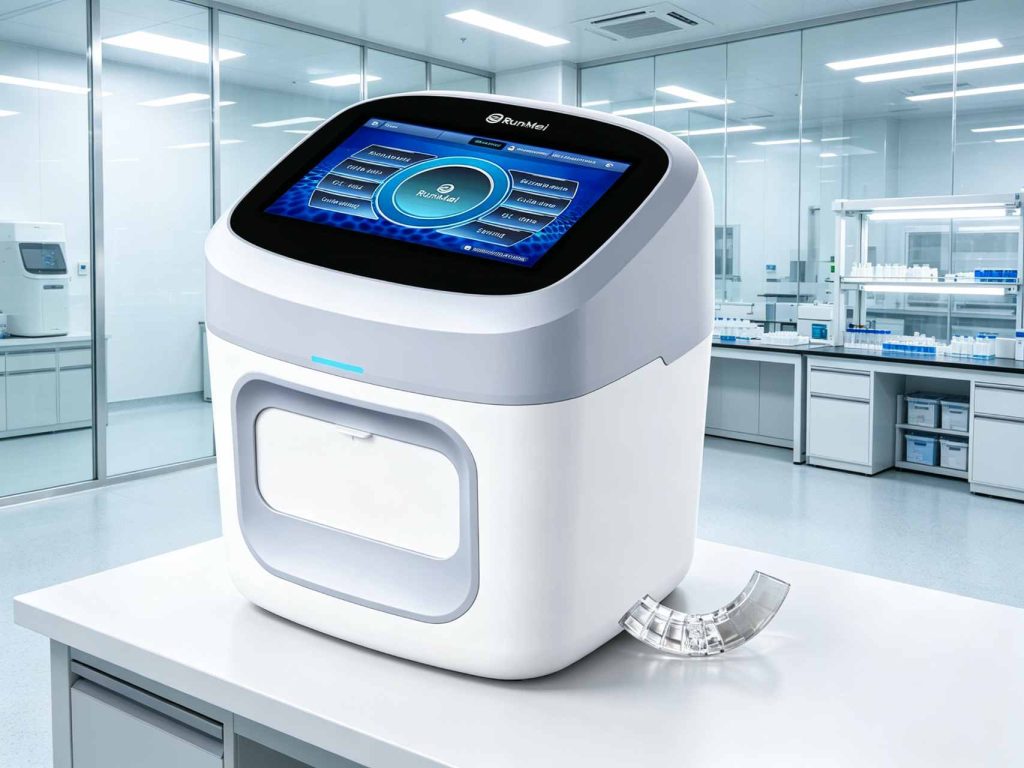
Figure: A CBC with differential turns a nonspecific fever into a differential diagnosis within minutes.
The tragedy of rural infectious disease is not that infections are undiagnosable — it is that the tests exist and are out of reach. A cross-national survey found that **median availability of essential diagnostics in basic primary care facilities in ten low- and middle-income countries was just 19.1%**, with malaria tests at 76.7% availability but complete blood counts far lower. When the CBC is unavailable, the clinician faces a choice between overtreating (every fever gets an antibiotic and an antimalarial) and undertreating (the dangerous minority goes home untreated). Both choices are costly: overtreatment drives resistance and side effects; undertreatment kills.
The Outbreak Early-Warning Function
Beyond individual patients, on-site CBC testing gives rural health systems an early-warning instrument. Unexplained clusters of thrombocytopenia, unusual leukocyte patterns, or a rise in febrile presentations with abnormal counts are exactly the signals surveillance programs need — and they are visible only when testing happens at the community level rather than at a distant reference lab. Near-point-of-care diagnostics have been shown in recent trials to expand timely diagnosis in peripheral health centers that previously had no testing at all, a pattern documented in the New England Journal of Medicine’s evaluation of near-point-of-care nucleic acid amplification for tuberculosis detection — the same logic applies to the humble CBC.
Building a Fever Workup Protocol Around a Blood Analyzer
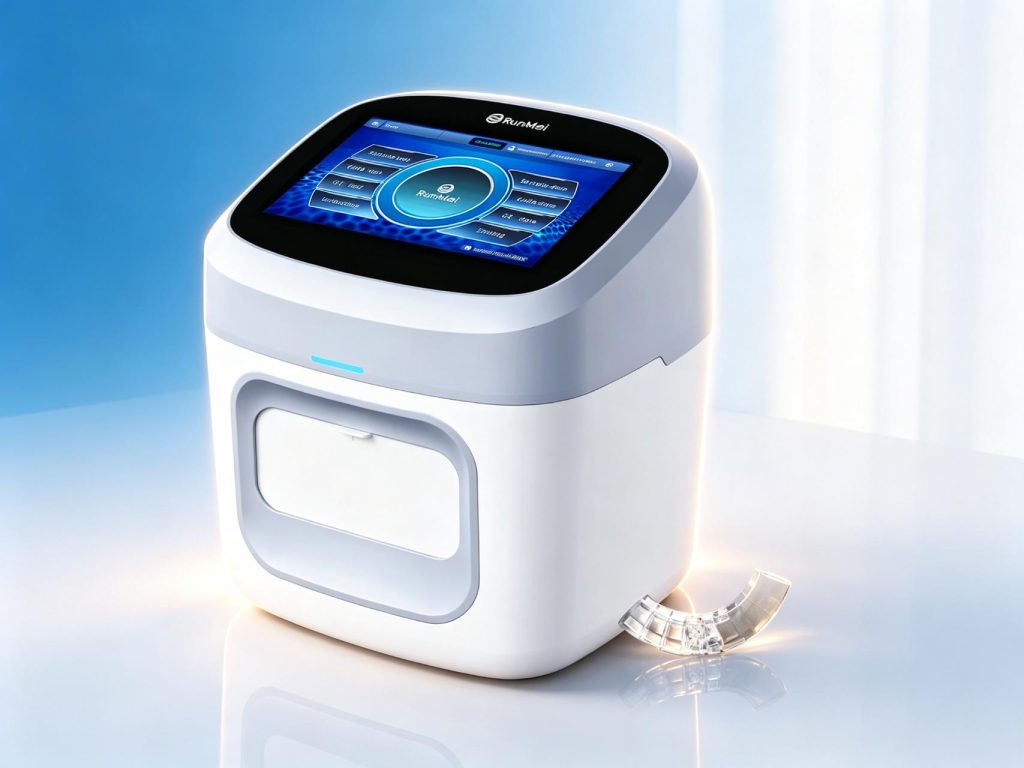
Figure: White cell and platelet flags guide malaria, typhoid, and bacterial infection decisions at the point of care.
The instrument matters less than the protocol, but the hematology analyzer must be dependable under fever-season volume. The clinics that detect infectious disease early share a standard operating procedure:
A Practical Fever Algorithm
1. History and exam — duration, focus, vaccination, season, malaria exposure.
2. CBC with differential — within minutes, while the patient waits.
3. Rapid tests where indicated — malaria RDT, dengue NS1, typhoid serology, paired with the CBC.
4. Severity triage — severe anemia, thrombocytopenia, or leukocytosis with clinical instability → urgent referral.
5. Same-day management — antibiotics or supportive care decided with laboratory information in hand, using portable fingerstick analyzers where venous draws are impractical.
The Quality Conditions
Early detection is only trustworthy if the results are trustworthy. Daily quality control, calibrated instruments, and staff who understand reference ranges for children (they differ from adults) are the non-negotiables. The FDA’s CLIA-waived test framework provides the regulatory pathway that lets clinic staff run these tests reliably outside the central laboratory — a pathway designed precisely for settings like rural clinics where the alternative is no testing at all.
Choosing the Right Instrument for Infection Work
Volume and case mix decide the instrument. A clinic seeing 30–50 febrile patients a day needs throughput and a reliable differential: a modern CBC analyzer with 19–27 parameters, barcode sample ID to prevent mix-ups in busy seasons, and 100,000+ result storage for surveillance trending. A low-volume clinic might prefer a fingerstick-based portable system that removes phlebotomy bottlenecks. What should not vary is the menu: hemoglobin, WBC, differential, and platelets, run every day, controlled every morning.
أسئلة وأجوبة
- Q: Can a complete blood count diagnose malaria?
A: A CBC cannot replace a malaria rapid test or blood film, but it detects the complications that decide management — anemia, thrombocytopenia, and leukocyte patterns — and it is the essential companion test in malaria-endemic areas.
- Q: What CBC findings suggest a bacterial infection?
A: An elevated total white cell count with a neutrophilic predominance (and often a left shift) is the classic pattern of bacterial infection, while lymphocytic predominance leans viral. The pattern must always be interpreted with clinical judgment.
- Q: Why is platelet count important in dengue season?
A: Thrombocytopenia typically appears early in dengue and may precede clinical deterioration. Serial platelet monitoring is the standard of care in dengue-endemic regions and is only possible when testing is available locally.
Disclaimer
This article is for general educational and informational purposes only and does not constitute medical advice, a product endorsement, or a guarantee of diagnostic performance. Fever management and treatment decisions must be made by qualified professionals. Laboratory equipment decisions should be made in consultation with qualified professionals, and all devices must be operated in accordance with the manufacturer’s instructions, local regulations, and applicable quality standards.