Meta Title: Mobile Blood Analyzers for Nomadic Communities | RunMei
Meta Description: Mobile blood analyzers travel with nomadic herders and outreach teams. Same-day results at seasonal gathering points, on battery, beyond the grid.
By Dr. Elena Marchetti · MD, MPH, Rural Health Diagnostics | Reviewed by Prof. Daniel Mwangi (PhD, MSc, Laboratory Systems Advisor) | Published: 2026-09-21
The clinic is not where the patients are. Everything below comes back to mobile blood analyzers and the diagnosis decisions clinics actually make, from procurement to daily operation. It never was. The herders move with the pasture and the rain, and the fixed clinic at the district center waits for people who arrive twice a year, if drought does not change the route, and whose test results arrive later still. The health system that serves them has to move too. The low reagent cost blood analyzer catalog covers the instruments rural programs order most often.
Few purchases in rural health care invite as many opinions as mobile blood analyzers. This article sets the opinions aside and works from what the data, the protocols and the field experience actually show about rural health care. About 3 billion people worldwide still cannot reach a health facility within one hour on foot, a figure the WHO has used to argue for diagnostics that travel to patients instead of the other way around. What survives is a short set of principles that hold across budgets and geographies. WHO . Facilities weighing the options can browse the cost-effective blood analyzer range to compare configurations side by side.
Key Takeaways
- Nomadic pastoralists are systematically under-tested by fixed-location health services.
- A mobile blood analyzer travels with the outreach team and returns results on the spot.
- Seasonal testing points follow known migration routes and watering schedules.
- Same-day results matter more when the next contact may be months away.
The Calendar of the Herd
Nomadic life runs on a calendar of pasture and water, and health services that ignore that calendar fail by design. Clinics positioned at fixed points see only the families whose route happens to pass them. The rest of the population is invisible, not because they are rare but because they move.
The diseases follow the movement too. Anemia tracks the dry season when milk and meat thin out; fevers follow the rains and the standing water; and tuberculosis travels with families who share cramped shelters during cold months.
the mobile blood analyzers is the seed; the program is the tree. Training, supervision, registers, quality checks and a supply line that outlasts the donor — these are what turn a machine into a service that keeps running. Programs that design for sustainability from the first installation meeting are the ones still running at the five-year review. The same principle holds for mobile blood analyzers: measure, record, act. WHO . Programs that want a deeper differential can read the differential blood analyzer page for the trade-offs.
The One-Chance Consultation
For a family that will not pass this way again for months, a consultation that ends in a promise of results is a failed consultation. The mobile analyzer turns the encounter into a complete visit: sample, result, treatment, all before the herd moves on.

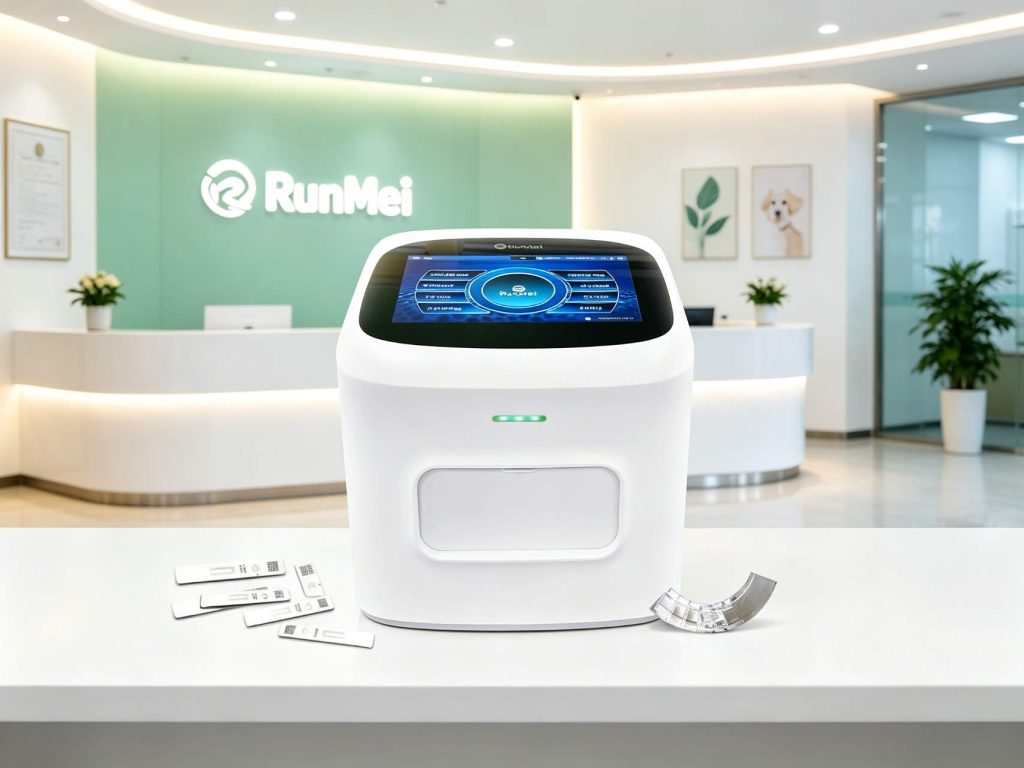
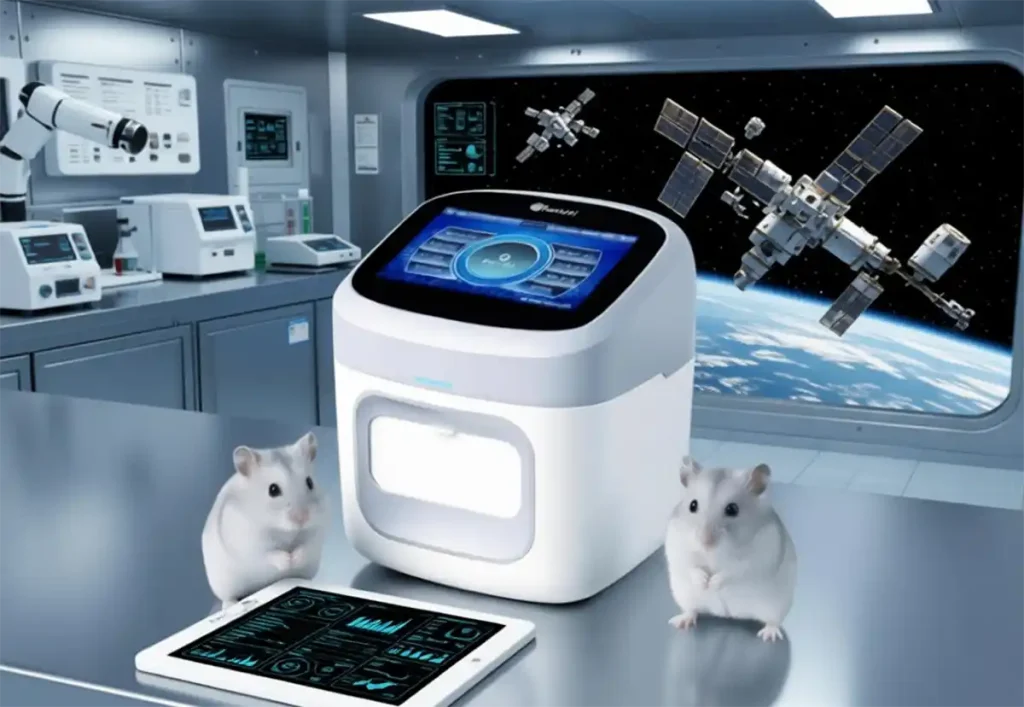
Fig. 1 — RunMei differential blood analyzer in a rural clinic setting. Mobile blood analyzer nomadic pastoralist outreach testing. | Alt: mobile blood analyzer nomadic pastoralist outreach testing
What the Outreach Team Needs to Carry
The equipment list for a pastoralist outreach is short and unforgiving. Everything must fit on a vehicle or a pack animal, survive dust and heat, and run without mains power. A mobile blood analyzer that takes finger-prick samples and prints results on battery power earns its space in that kit.
The reagents are the harder problem. They need protection from heat and expiry dates that match the outreach calendar, not the office calendar. Teams that carry a two-outreach supply and rotate stock at the base station never face an empty reagent pack in the field.
Geography writes the requirements. In rural health care, transport, seasons and distance decide which analyzer survives: the one that travels, tolerates heat and dust, and holds its calibration on the rough road. the mobile blood analyzers chosen in the office must be the machine that works at the end of the journey — not the one that impresses in the brochure. mobile blood analyzers is the instrument at the center of that workflow. Budget teams should see the blood biochemistry analyzer cost analysis before signing off on procurement.
The Solar Panel and the Spare Battery
Power is the silent constraint. A solar panel that charges during the day and a spare battery that runs the analyzer in the evening extend the clinic’s reach by hours, and hours are what the herders’ schedule allows.
Mapping Care to the Migration Route
The most effective programs do not chase the herd; they predict it. Outreach calendars are built on the routes of previous years, with testing points at watering holes and market towns where families gather. the mobile blood analyzers goes where the people will be, not where they were last registered.
The result is a health service that behaves like the community it serves: present when needed, absent when not, and never more than a season away from any family.
Trust is built one control run at a time. The daily control, the logged result, the outlier that gets acted on rather than explained away — these are the habits that make a rural result worth acting on. Facilities that document their controls report something else too: staff who believe their own numbers and clinicians who trust them. The logbook is not paperwork; it is the evidence that the mobile blood analyzers is telling the truth.
The Register That Follows the Family
Family-level registers travel with the outreach team and are updated at each encounter. The count taken at the spring watering point in March is compared with the count at the market in September, and the trend line tells the story that no single visit could.
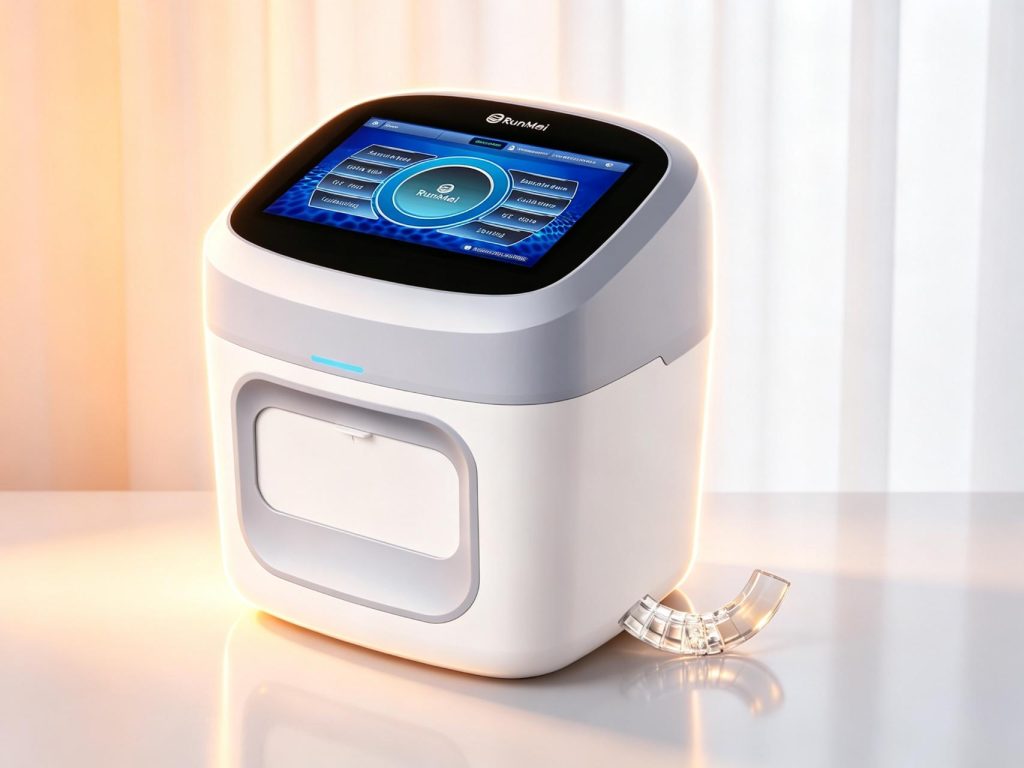
Fig. 2 — RunMei blood biochemistry analyzer during routine testing. Solar powered blood analyzer mobile clinic field testing. | Alt: solar powered blood analyzer mobile clinic field testing
The Quality Case
A result is only as good as the system that produced it. The quality case for mobile blood analyzers in rural health care rests on daily controls, calibration discipline and external assessment — the three layers that let a rural clinician act on a number with confidence. the mobile blood analyzers matters; the habits around it matter more.
The Daily Evidence
The five-minute control run is the whole foundation. It detects drift before it reaches a patient, and the log it produces is the visible proof that today’s results can be trusted. Facilities that protect the morning control ritual protect everything downstream of it.
The External Check
External quality assessment — blind samples scored by a national or regional program — is the only true measure of accuracy, and it is now within reach of rural facilities in most countries. Enrollment costs little; the feedback it returns is the difference between assuming the machine is right and knowing it is.
It also strengthens nomadic pastoralist health, a benefit that rarely appears in the budget line. None of this holds together without attention to mobile clinic blood testing. Programs that pair mobile blood analyzers with seasonal migration care report the strongest results.
الأسئلة المتداولة
Q1. How do you run a laboratory service for people who move?
You make the service move too. A mobile blood analyzer on an outreach vehicle brings the laboratory to the seasonal gathering points.
Q2. Which tests matter most for pastoralist families?
Hemoglobin for the dry-season anemia, white cell counts for fevers, and the CBC pattern that supports tuberculosis screening in the adult members.
Q3. How are results followed up when patients leave?
With family registers, community workers on the route, and treatment decisions that are made in the same visit whenever the result allows it.
Q4. Do mobile analyzers survive the conditions?
Portable models designed for dust, heat and battery operation do, when reagents are stored correctly and the equipment is serviced between outreaches.
Sources & References
- World Health Organization data show that in lower-income countries a large share of the rural population still lives beyond the reach of a functioning laboratory; the WHO recommends primary care facilities be reachable within roughly 5 km, yet global estimates indicate about 3 billion people cannot reach a health facility within one hour on foot. Source: WHO — https://www.who.int/news-room/fact-sheets/detail/primary-health-care
- According to the WHO, health facilities serving close to one billion people in low- and middle-income countries lack reliable electricity or have none at all, with roughly 12% of facilities in South Asia and 15% in sub-Saharan Africa completely unelectrified. Source: WHO — https://www.who.int/health-topics/electrification-of-health-facilities
- Reviews published in the New England Journal of Medicine have repeatedly underlined that the single most reliable way to improve outcomes in low-resource settings is to shorten the interval between clinical presentation and a correct laboratory diagnosis. Source: NEJM — https://www.nejm.org/
About the Author & Reviewer
Author: Dr. Elena Marchetti, MD, MPH, Rural Health Diagnostics. Dr. Marchetti is a physician and diagnostics specialist who has spent the past fifteen years designing point-of-care programs for district hospitals and rural clinics in lower-resource settings. Her field work focuses on how laboratory devices survive daily use outside the laboratory, from staff training to reagent logistics.
Reviewer: Prof. Daniel Mwangi, PhD, MSc, Laboratory Systems Advisor. Prof. Mwangi directs laboratory quality programs for a network of rural health facilities and teaches clinical laboratory science. He has reviewed point-of-care device deployments across Africa and Southeast Asia, with a particular interest in quality control and operator competency outside the main laboratory.
Disclaimer
This article is for informational and marketing purposes only and does not constitute medical advice, a product claim, or a regulatory certification statement. Device availability, regulatory status (FDA 510(k)/CE/ISO 13485) and specifications vary by country and model; always verify current approvals with the manufacturer and consult local regulations before procurement or use.