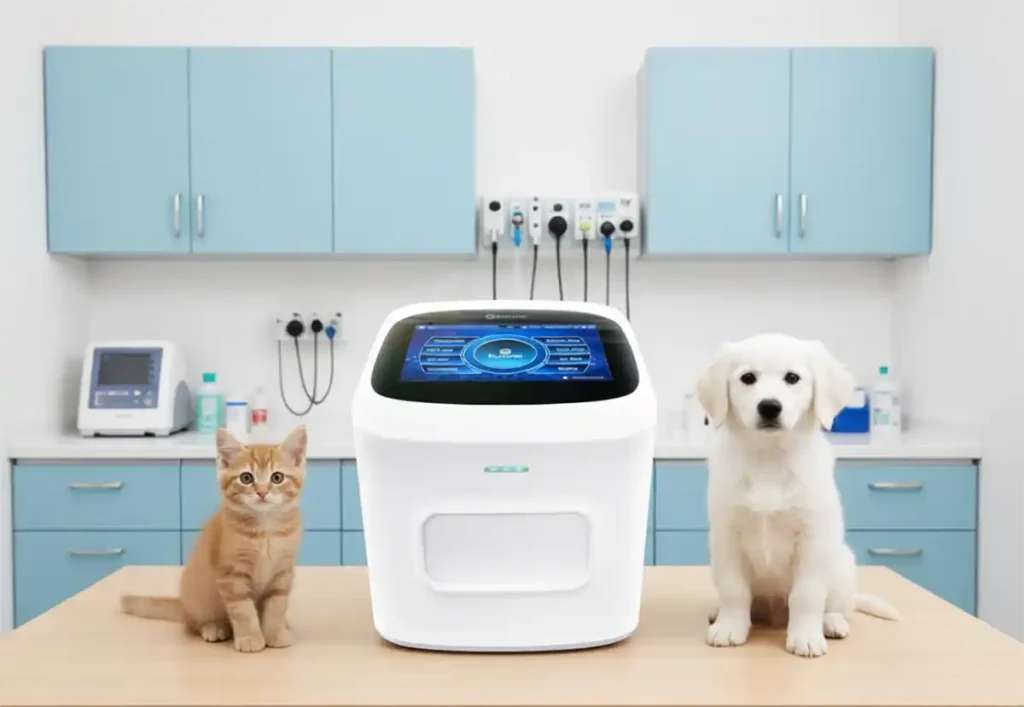
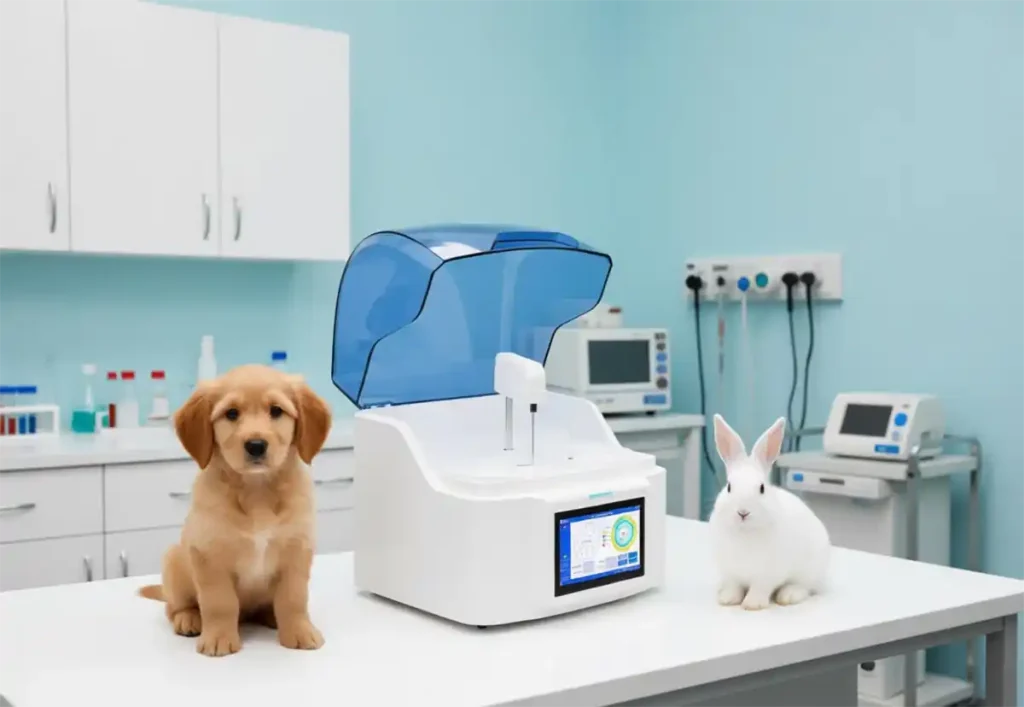
In medical diagnostics, the محلل أمراض الدم — also known as a blood analysis machine — is a cornerstone instrument. It replaces slow, error-prone manual counting with fast, accurate, and automated blood testing, whether in a busy hospital laboratory, a community clinic, or a research facility. This article explains what hematology analyzers are, how they work, their main types, and how to choose the right one for your needs.
1. What Is a Hematology Analyzer?
A blood analysis machine is a specialized medical instrument that quantifies and characterizes the cellular components of blood, including red blood cells (RBCs), white blood cells (WBCs), platelets, and related parameters such as hemoglobin concentration and hematocrit. Unlike traditional manual counting, which depended on microscopes and human judgment, the modern analyzer automates the entire process for consistent, precise results.
Working from a small sample of anticoagulated blood — often just a few microliters — the instrument detects, counts, and classifies cells using advanced technologies, then generates a complete blood count (CBC), one of the most frequently ordered diagnostic tests worldwide. The CBC helps clinicians identify conditions such as anemia, infections, leukemia, and clotting disorders, making the hematology analyzer indispensable in preventive care, diagnosis, and treatment monitoring.
2. How Does a Hematology Analyzer Work?
Most hematology analyzers follow a standardized workflow that combines sample processing, detection, and data analysis. Here is how a typical blood analysis machine operates:
2.1 Sample preparation
The user loads a blood sample — usually collected in a tube containing an anticoagulant such as EDTA to prevent clotting — into the analyzer. Many modern models offer automatic sample loading, which minimizes human contact and contamination risk. The instrument then aspirates a precise volume of blood, often less than 10 microliters, to ensure accurate results.
2.2 Sample dilution and mixing
The blood is diluted with a buffer solution so the cells are evenly distributed at a concentration suitable for detection. This step matters because undiluted blood contains too many cells, which would overlap and cause counting errors. Mechanical mixing keeps the diluted sample homogeneous before detection begins.
2.3 Cell detection and counting
This is the core step, where the analyzer uses one or more detection technologies to identify and count cells. For example, in electrical impedance technology, the diluted sample passes through a small aperture surrounded by electrodes. Each cell disrupts the electrical current and creates a voltage pulse; the pulse size reflects the cell’s volume, and the number of pulses reflects the cell count.
2.4 Data processing and result generation
The instrument’s software converts raw detection signals into meaningful data, calculating parameters such as RBC count, WBC count, platelet count, hemoglobin level, and mean corpuscular volume (MCV). For differential counts, the analyzer classifies WBCs into subtypes based on size or chemical properties. Results are displayed on screen, printed, or sent to a laboratory information system (LIS) for storage and review.
3. What Is a Hematology Analyzer Used For?
The hematology analyzer is a versatile tool whose primary job is performing complete blood counts, but its utility extends well beyond basic counting:
3.1 Diagnosing diseases
A CBC provides critical clues for a wide range of conditions. Low RBC counts or hemoglobin indicate anemia; high WBC counts suggest infection or inflammation; abnormal platelet counts point to clotting disorders. In oncology, abnormal WBC counts or immature cell types detected by advanced analyzers can signal leukemia and other blood cancers.
3.2 Monitoring treatment
Clinicians use analyzer results to track response to therapy. Chemotherapy often reduces blood cell counts, so regular CBCs help adjust dosages and avoid dangerous side effects. Patients with chronic conditions such as kidney disease or autoimmune disorders also rely on frequent blood testing to manage their health.
3.3 Preventive care and routine screenings
Annual physical exams commonly include a CBC because a blood analysis machine can flag early signs of disease before symptoms appear — for example, subtle cell count changes that hint at thyroid issues, iron or vitamin B12 deficiency, or chronic conditions.
3.4 Research and veterinary medicine
Beyond human health, hematology analyzers support biomedical research into blood disorders and new treatments. Veterinary clinics use specialized blood analysis machines to evaluate animal health, since blood cell parameters are just as important for diagnosing diseases in pets and livestock.
4. Types of Hematology Analyzer
Hematology analyzers are not one-size-fits-all. They differ by automation level, detection technology, and functionality, and each type serves a specific laboratory need.
4.1 By level of automation
Fully automated hematology analyzers handle every step from sample loading to result output without manual assistance, processing dozens to hundreds of samples per hour. They are the workhorse of large hospitals and high-volume laboratories, and advanced models can automatically rerun abnormal samples to confirm accuracy.
Semi-automated analyzers automate core steps like cell counting and data processing but require manual sample preparation. They are slower — roughly 5–15 samples per hour — yet more affordable and easier to maintain, making them practical for small clinics, rural hospitals, and veterinary practices.
4.2 By detection technology
Electrical impedance: the most widely used method in basic analyzers. Blood cells are poor conductors, so each cell passing through an aperture displaces electrolyte and creates a voltage pulse. This method is fast and cost-effective, though limited in its ability to classify WBC subtypes.
Flow cytometry with fluorescence staining: advanced blood analysis machines stain cells with fluorescent dyes — for example, dyes that bind to DNA in WBC nuclei — then pass them through a laser beam one by one. Flow cytometry classifies WBCs into five or more subtypes with high accuracy, making it essential for oncology and hematology laboratories.
Light scattering: often combined with impedance, it measures forward scatter for cell size and side scatter for granularity, enabling three or more WBC subtypes in mid-range analyzers.
Spectrophotometry: used to measure hemoglobin concentration by converting hemoglobin into a colored compound and measuring light absorption.
Centrifugation layering: an older method that separates blood into plasma, buffy coat, and RBC layers to estimate parameters like hematocrit; still found in some low-resource settings.
4.3 By parameters and functions
3-part differential analyzers classify WBCs into three groups — granulocytes, lymphocytes, and monocytes — using impedance or basic light scattering. They are ideal for routine screening in clinics and small hospitals.
5-part differential analyzers are the standard in most hospital laboratories, separating neutrophils, lymphocytes, monocytes, eosinophils, and basophils. This detail is critical for diagnosing bacterial versus viral infections (high neutrophils versus high lymphocytes) and allergic reactions (high eosinophils).
High-end full-featured analyzers serve hematology-oncology and research laboratories, adding reticulocyte counts, platelet function analysis, and detection of abnormal cells such as blast cells. They use multi-fluorophore flow cytometry, process samples at very high speed, and integrate seamlessly with LIS systems.
5. Key Parameters to Be Measured
A hematology analyzer reports a complete picture of blood health, grouped into three categories:
- Red blood cell parameters: RBC count, hemoglobin (HGB), hematocrit (HCT), mean corpuscular volume (MCV), mean corpuscular hemoglobin (MCH), and MCHC. These diagnose anemia and help identify its cause — low MCV suggests iron deficiency, while high MCV points to vitamin B12 deficiency.
- White blood cell parameters: total WBC count and differential counts. High counts indicate infection or inflammation, and subtype patterns help pinpoint the cause.
- Platelet parameters: platelet count, mean platelet volume (MPV), and platelet distribution width (PDW), which together assess clotting function.
Together these form the complete blood count (CBC), the foundation of routine hematologic assessment.
6. How to Use a Hematology Analyzer
Operating a blood analysis machine requires basic training, but the workflow itself is straightforward:
- Prepare the instrument. Turn the analyzer on and allow it to warm up (typically 10–30 minutes). Run daily quality control (QC) with standard reference materials to confirm calibration; if QC fails, check reagents or clean the aperture before proceeding.
- Prepare the sample. Collect blood in an anticoagulated tube (EDTA is standard for CBCs) and invert it gently 5–10 times to mix — never shake, as this can damage cells. Semi-automated models require manual dilution; fully automatic models handle it internally.
- Load the sample. Use a pipette for manual loading, or place the tube into the sample rack on automatic models. Enter patient information into the analyzer or LIS so results are linked to the correct patient.
- Run the test. Start the analysis from the touchscreen. Results typically appear within 1–5 minutes, and most analyzers flag abnormal values with symbols such as “H” (high) or “L” (low).
- Clean the instrument. Follow the manufacturer’s instructions to flush the system and prevent contamination, and perform scheduled maintenance such as filter replacement and laser calibration.
7. How to Choose the Most Suitable Blood Analyzer
Choosing the right hematology analyzer machine requires weighing your laboratory’s testing volume, testing needs, and operational and financial goals:
7.1 Laboratory size and patient volume
Low-volume settings such as doctors’ offices and small clinics can rely on semi-automatic models or compact fully automated analyzers that process 10–30 samples per hour — affordable and easy to maintain. Medium- and high-throughput laboratories, including hospitals and core labs, should adopt a five-part differential or higher-throughput fully automated system that processes 50+ samples per hour.
7.2 Testing requirements
If you only run routine CBCs, a 3-part differential analyzer is sufficient. Hospital and specialty laboratories need a 5-part differential model, while hematology-oncology labs require high-end analyzers with reticulocyte counting and abnormal cell detection.
7.3 Budget
Cost is a crucial factor. Balance the initial purchase price with long-term value: factor in ongoing expenses such as reagents, maintenance, and calibration. Some analyzers do not require proprietary reagents — a higher upfront price can still deliver flexibility and long-term savings, so align the budget with the capabilities you will actually use.
7.4 Ease of use and maintenance
Look for a user-friendly interface that minimizes training time, accessible parts, and clear maintenance instructions. Prioritize manufacturers with comprehensive after-sales service, and understand what the service contract covers before you buy. A documented record of reliability is as important as the spec sheet.
7.5 Connectivity
Modern blood analysis machines should integrate with LIS systems for automatic result transfer, reducing manual data entry and transcription errors. Advanced models also offer cloud connectivity for remote monitoring and data sharing.
7.6 Regulatory compliance and quality standards
Depending on your region and laboratory accreditation requirements, ensure the analyzer complies with CLIA, CAP, FDA (510(k)), CE, or ISO standards, and that it supports quality control and external quality assessment (EQA) programs.
7.7 Space and infrastructure requirements
Before purchasing, confirm that the analyzer’s dimensions fit your reserved bench or floor space, and verify electrical requirements, operating temperature range, and waste-disposal procedures for safe, compliant installation.
Pro Tip: Always request a demonstration or trial period before purchase, and benchmark performance against case studies from laboratories of similar size.
8. Summary
The hematology analyzer — or blood analysis machine — is an essential tool in modern medicine, combining speed, accuracy, and automation. From compact 3-part differential models for routine screenings to high-end flow cytometry analyzers for complex diagnoses, there is a hematology analyzer machine for every laboratory. Understanding how these instruments work — from sample processing to detection and data analysis — helps you get the most from their capabilities, while weighing test volume, requirements, budget, and connectivity ensures you choose a device that improves diagnostic efficiency and patient care.
الأسئلة المتداولة
What does a hematology analyzer do?
A hematology analyzer automates the counting and classification of blood cells. It measures red blood cells, white blood cells, and platelets, and reports parameters such as hemoglobin, hematocrit, MCV, and platelet volume in a complete blood count (CBC).
What is the difference between a 3-part and a 5-part hematology analyzer?
A 3-part differential analyzer classifies white blood cells into three groups (granulocytes, lymphocytes, monocytes), while a 5-part analyzer separates them into neutrophils, lymphocytes, monocytes, eosinophils, and basophils for more detailed diagnosis.
Which detection methods do modern blood analyzers use?
Modern blood analysis machines typically combine electrical impedance, flow cytometry with fluorescence staining, and light scattering, plus spectrophotometry for hemoglobin measurement.
How do I choose the right hematology analyzer for my clinic?
Match the analyzer to your sample volume, required test parameters, budget, space, and connectivity needs. Low-volume clinics often choose a compact 3-part analyzer, while hospitals usually need a 5-part or fully automated system with LIS integration.