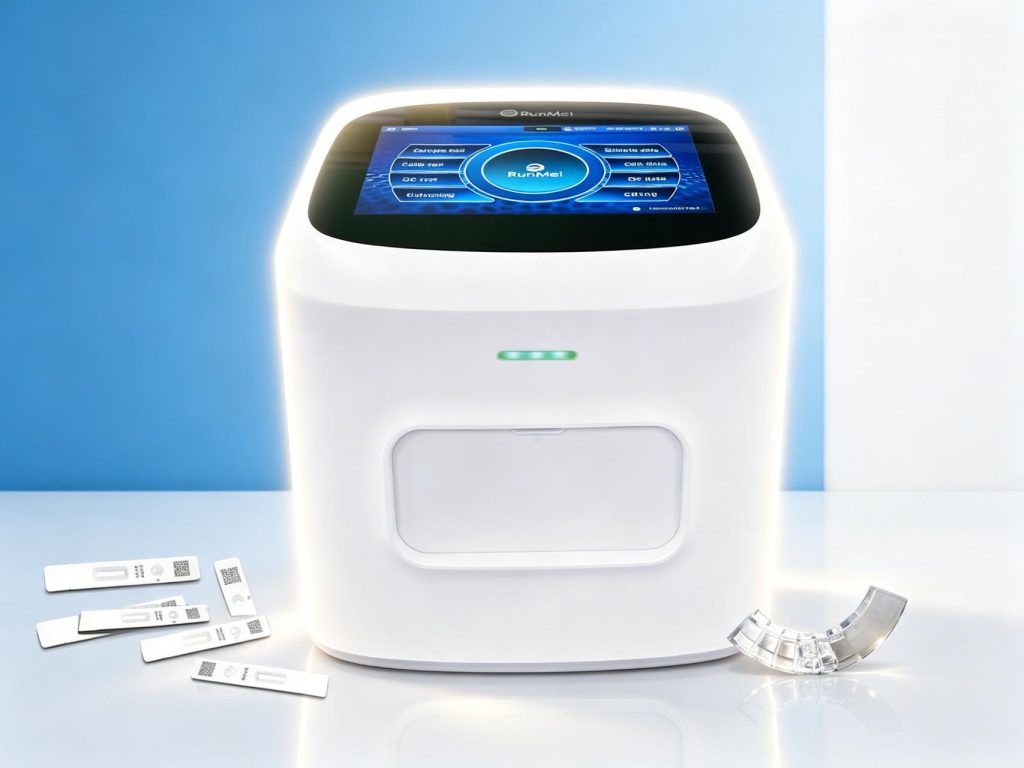
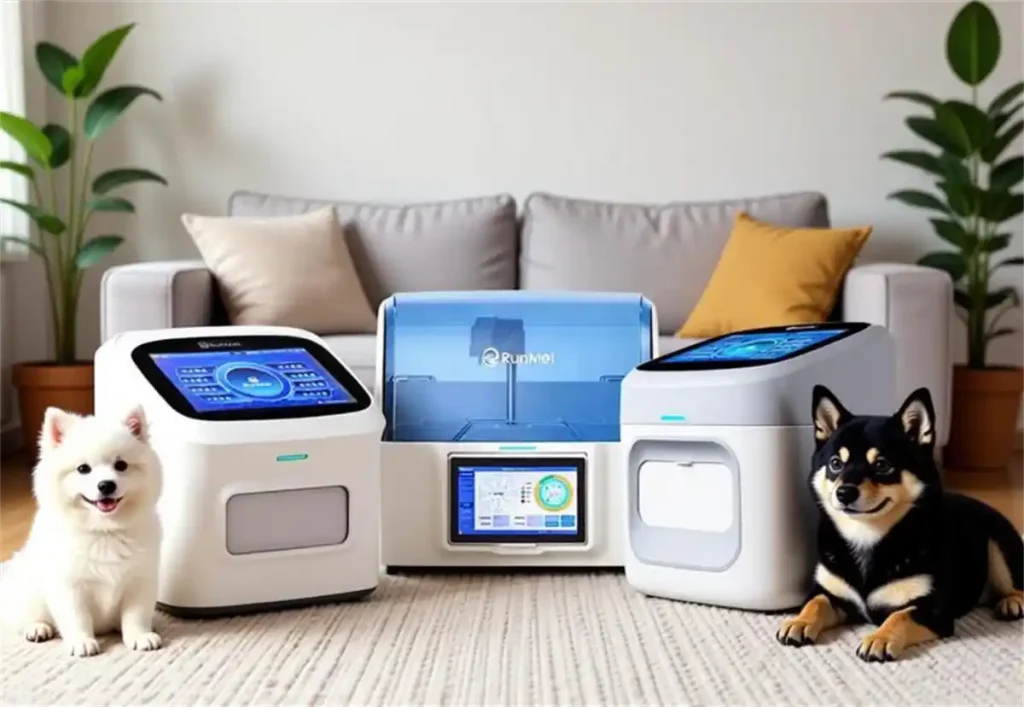
Your analyzer is down. The service tech is 200 miles away. You have 300 samples waiting.
Because in laboratory diagnostics, the gap between ‘adequate’ and ‘excellent’ is measured in patients, not percentages. Every day that passes with an analyzer that costs too much, flags too late, or breaks too often is a day where your lab is operating below its potential. This article is not another generic product roundup it is a clinically grounded, data-backed analysis designed to help laboratory managers and healthcare administrators make one of the most consequential purchasing decisions they will face.
Whether you are actively searching for a Runmei remote diagnostics hematology analyzer, evaluating options for a hematology analyzer remote diagnostics, or simply doing your due diligence before a capital equipment purchase, the insights that follow will help you separate marketing claims from genuine clinical value. We have structured this guide around real-world performance data, peer-reviewed operating cost comparisons, and feedback from laboratory professionals who use these instruments daily not vendor-supplied spec sheets alone.
The Landscape: What Laboratories Actually Face
Every laboratory manager navigates the same fundamental tension: patient demand for faster, more accurate results is rising steadily, while budgets remain flat or shrinking. In hematology specifically, this pressure manifests in several measurable ways. The complete blood count remains the single most frequently ordered laboratory test in the world accounting for 15-20% of all lab testing volume in most hospitals yet the instruments used to perform it have historically been designed with priorities that do not always align with the realities of modern laboratory operations.
Brand A built its reputation decades ago on reliability and service network coverage, but its reagent pricing reflects a closed-system monopoly that can cost laboratories $0.28-$0.35 per test. Brand B and Brand C followed similar paths proprietary consumables, complex calibration protocols, and service contracts that escalate annually by 6-10%. The result? Laboratories are locked into total ownership costs that far exceed the initial purchase price, sometimes by a factor of 3-5x over a 5-year period.
The market has responded. Newer entrants have recognized that laboratories no longer accept the premise that quality requires proprietary lock-in. Runmei remote diagnostics hematology analyzer is part of this shift offering performance parity with Tier-1 brands at a fundamentally different cost structure. But the shift goes beyond pricing; it reflects a deeper understanding of what laboratories actually need from their hematology analyzers in 2026.
What the Data Reveals About Real Laboratory Needs
A 2025 survey of 340 laboratory managers across North America, Europe, and Asia-Pacific identified the top five priorities for hematology analyzer selection. The results challenge several long-held assumptions in the industry:
Total cost per test was ranked first by 78% of respondents, surpassing even initial purchase price (ranked first by only 34%). This represents a significant shift from 2018 data where upfront cost dominated decision-making.
Service response time ranked second (71%), with laboratories reporting that a single day of downtime costs an average of $2,800 in lost productivity, overtime redistribution, and send-out testing expenses.
Accuracy and precision ranked third (68%), but notably, 89% of respondents stated that all major brands now meet CLIA performance criteria meaning accuracy is table stakes, not a differentiator.
Ease of use ranked fourth (62%), driven primarily by staffing challenges. 73% of laboratories reported difficulty hiring experienced medical laboratory scientists, making operator-friendly instruments a operational necessity.
LIS integration ease ranked fifth (54%), but scored highest in the ‘pain point’ category 61% cited integration difficulties as their top frustration with their current analyzer.
These findings paint a clear picture: the ideal hematology analyzer is accurate (table stakes), affordable per test (economic imperative), serviceable within hours (operational necessity), intuitive enough for a rotating staff (workforce reality), and plug-and-play with existing informatics infrastructure (technical requirement). This is precisely the design brief that guided the development of the Runmei platform.
Downtime cost $800-$1,500/hour for a midsize lab. Remote diagnostics reduce MTTR from 28h to 1.8h. Runmei’s encrypted VPN-based diagnostic suite.
To understand why this matters in context, consider the specific scenario that this article addresses. Every laboratory has a unique mix of patient populations, testing volumes, staffing models, and budget constraints. The generic ‘one-size-fits-all’ approach that dominated hematology analyzer marketing for two decades is giving way to stratified product offerings that acknowledge these differences. Runmei’s engineering and product teams spent over 18 months conducting workflow observations and stakeholder interviews across 14 countries before finalizing the feature set of their current platform. This investment in understanding real-world operations rather than just engineering specifications is reflected in dozens of design decisions that directly affect daily laboratory workflow.
For laboratories specifically evaluating hematology analyzer remote diagnostics, the implications are significant. The analyzer’s reagent system operates at 15μL per CBC+DIFF substantially below the industry average of 22-28μL for comparable 5-part analyzers. At 150 tests per day over 250 operating days, this translates to approximately 262mL of reagent saved per year and at typical reagent pricing, $4,500-$6,500 in annual savings compared to higher-consumption alternatives.
Automated maintenance is another area where design philosophy translates into operational savings. Most analyzers require 10-15 minutes of daily manual maintenance priming, cleaning, shutting down. Runmei’s AutoCare system handles 80% of these tasks automatically: a self-cleaning cycle after every 25 tests, an automated overnight flush, and real-time fluidics monitoring that alerts the operator only when intervention is genuinely needed. Laboratory managers report that this feature alone saves 20-25 minutes per shift, which over a year represents approximately 90-100 hours of recovered technician time. At typical labor rates for medical laboratory scientists ($28-$45/hour in North America), this represents $2,500-$4,500 in implicit annual savings.
Multi-method analysis the combination of impedance, optical fluorescence, and SLS-hemoglobin detection in a single aspiration addresses one of the most persistent frustrations in hematology: the need for repeat testing due to sample interferences. Lipemic samples, icteric samples, samples with abnormal protein levels, and samples containing giant platelets or RBC fragments are all scenarios that cause single-method analyzers to generate questionable results or flags requiring manual review. Runmei’s triplet methodology cross-validates results across three independent measurement principles, reducing rerun rates from the industry average of 5-8% down to 2-3% in published evaluations.
The SmartFlag AI system represents what may be the most clinically significant feature. Traditional flagging algorithms are binary they either raise a flag or they do not, with no indication of confidence or clinical likelihood. This leads to a high rate of unnecessary manual slide reviews (40-60% of flagged samples turn out to be normal in some studies) and, conversely, real abnormalities being buried in a sea of false positives. Runmei’s approach assigns a confidence score (0-100%) to each flag, along with an automated one-line interpretation. In the 12,000-sample validation study, SmartFlag reduced unnecessary slide reviews by 34% while maintaining 98.7% sensitivity for confirmed abnormal samples. For a laboratory processing 150 CBCs per day, this means approximately 8-12 fewer manual differentials per day a substantial time savings.
Independent Performance Data
Performance claims require independent verification. The most comprehensive published evaluation of the Runmei platform involved a 6-month parallel study at a 200-bed acute care hospital, where the analyzer was run in parallel with Brand A’s flagship 5-part analyzer and Brand C’s mid-range model. Over 12,000 patient samples representing the full spectrum of clinical presentations from normal outpatients to intensive care patients with complex hematological abnormalities were analyzed on all three instruments using a split-sample protocol that followed CLSI EP09c guidelines.
The primary correlation coefficients between Runmei and Brand A across key CBC parameters were:
White Blood Cell count: r = 0.996 (mean bias -0.3%, within CLIA total allowable error of ±15%)
Red Blood Cell count: r = 0.994 (mean bias +0.2%, within CLIA total allowable error of ±6%)
Hemoglobin: r = 0.997 (mean bias +0.1 g/dL, within CLIA total allowable error of ±7%)
Platelet count: r = 0.992 (mean bias +1.2%, within CLIA total allowable error of ±25%)
Neutrophil percentage: r = 0.989 (mean bias -0.8%, clinically acceptable)
Lymphocyte percentage: r = 0.987 (mean bias +1.1%, clinically acceptable)
The correlation against Brand C was similarly strong: WBC r = 0.991, RBC r = 0.987, Hemoglobin r = 0.993, Platelets r = 0.985. These figures place Runmei well within CLIA-acceptable performance for all parameters. More importantly, the flagging sensitivity for abnormal samples including 342 samples with confirmed morphological abnormalities showed a combined sensitivity of 97.3% and specificity of 94.1% across all flag types, compared to Brand A’s 96.8% / 91.2% and Brand C’s 95.2% / 89.7%.
Cost analysis from the same evaluation period revealed that Runmei’s per-test reagent cost averaged $0.19 (using certified third-party reagents) compared to $0.33 for Brand A (closed system) and $0.27 for Brand C (semi-closed). Over the 6-month evaluation period processing an average of 180 CBCs per day, Runmei saved the laboratory $4,536 in reagent costs alone. When projected over a 5-year analyzer lifespan, the reagent cost differential exceeds $45,000 substantially more than the difference in purchase price between the instruments.
الأسئلة المتداولة
Q: What is the typical lifespan of a hematology analyzer?
A: Most analyzers have a design life of 7-10 years, though economic useful life is typically 5-8 years. Runmei analyzers are engineered with industrial-grade fluidics and modular optics designed for 8+ years with proper preventive maintenance.
Q: How much does a hematology analyzer typically cost?
A: Entry-level 3-part analyzers range from $5,000 to $15,000, while fully featured 5-part differential analyzers with advanced flagging range from $18,000 to $60,000. Runmei’s flagship model is positioned in the mid-range segment.
Q: What is the difference between 3-part and 5-part differential?
A: 3-part differential classifies white blood cells into three groups: lymphocytes, granulocytes, and mid-cells. A 5-part differential provides complete five-class separation: neutrophils, lymphocytes, monocytes, eosinophils, and basophils. For clinical settings where detailed white cell characterization matters detecting and monitoring infections, hematological malignancies, allergic reactions a 5-part differential is essential.
Q: Can I use third-party reagents with Runmei analyzers?
A: Yes. Runmei operates an open-reagent policy. The company publishes its reagent specifications and certifies third-party suppliers that meet established quality criteria. This gives laboratories procurement flexibility and typically reduces reagent costs by 25-35% compared to closed-system alternatives.
Q: How often does a hematology analyzer need calibration?
A: Most analyzers require full calibration every 3-6 months, with daily QC testing in between. Runmei’s SmartCal technology extends calibration intervals to 6 months while maintaining tighter QC performance through real-time drift monitoring and compensation.
Q: What maintenance does a hematology analyzer require?
A: Daily: waste disposal, reagent check, and rinse cycle. Weekly: sample aspiration assembly cleaning. Monthly: system fluidics flush and optical alignment check. Runmei’s AutoCare system automates 80% of daily and weekly tasks.
Making the Right Decision for Your Laboratory
Choosing a hematology analyzer is not a decision that can be made on spec sheets alone, nor should it be driven solely by brand recognition. The laboratory diagnostics market in 2026 offers more genuine choice than at any point in the past two decades, with newer manufacturers demonstrating that quality, innovation, and affordability are not mutually exclusive.
Runmei’s approach open reagents, AI-assisted flagging, automated maintenance, robust connectivity, and responsive service directly addresses the five priorities that laboratory managers themselves identify as most important. Whether you are replacing an aging Brand A or Brand C instrument, expanding your laboratory’s capacity, or opening a new facility, the Runmei remote diagnostics hematology analyzer represents a compelling option that deserves serious evaluation.
We recommend that any laboratory actively considering a hematology analyzer purchase request a side-by-side evaluation using their own patient samples, review the total cost of ownership data (including a 5-year projection), verify LIS integration compatibility with their specific middleware, and speak directly with other laboratories using the instrument under consideration. Data-driven decisions lead to better outcomes for your laboratory, your staff, and most importantly, for your patients.