Meta Title: Hematology Analyzers in Nigeria | RunMei
Meta Description: Hematology Analyzers. Anemia in pregnancy is a leading cause of maternal death in rural Nigeria. See how a hematology analyzer brings hemoglobin and CBC screening to.
URL: https://runmeihealth.com/hematology-analyzers
By Dr. Amara Okafor · MBBS, MSc Global Health Diagnostics | Reviewed by Dr. Michael Chen (PhD, Senior Laboratory Advisor) | Published: 2026-09-29
Ask any midwife in rural Kano what she fears most and she will not mention hemorrhage first. This guide answers the specific questions that surround hematology analyzers: what it delivers, what it cannot do, and what the true cost of ownership looks like. She will mention the woman who arrives for her first antenatal visit already severely anemic, because nothing in the system measured her hemoglobin until labor. Anemia complicates roughly four in ten pregnancies in Nigeria, and it is almost always detectable with a test that takes less than two minutes — if a محلل أمراض الدم is within reach.
This is written as a field briefing, not an advertisement. It deals in the realities of hematology analyzers in Nigeria: power, training, reagents, maintenance and trust. About 3 billion people worldwide still cannot reach a health facility within one hour on foot, a figure the WHO has used to argue for diagnostics that travel to patients instead of the other way around. If you are planning an installation — or defending an existing one — the checklists and protocols here will spare you lessons that other facilities have already paid for. Programs that want a deeper differential can read the cost-effective blood analyzer page for the trade-offs.
Key Takeaways
- Maternal anemia is a leading contributor to postpartum hemorrhage and maternal death in rural Nigeria.
- Point-of-care hemoglobin and CBC testing fits the antenatal visit schedule, not a distant lab.
- Early diagnosis changes outcomes: iron therapy, malaria treatment and delivery planning can begin at booking.
- Rural facilities can run screening on microsamples, making repeated visits practical.
The Quiet Epidemic: Anemia in Nigerian Pregnancy
The numbers are uncomfortable to repeat. National surveys consistently show that a large share of pregnant women in Nigeria are anemic at booking, with prevalence highest in the rural north where health facilities are thinnest. Anemia is not a footnote to maternal mortality; it is a direct contributor, because an anemic woman has less reserve when hemorrhage, sepsis or obstructed labor occurs.
the hematology analyzers is the seed; the program is the tree. Training, supervision, registers, quality checks and a supply line that outlasts the donor — these are what turn a machine into a service that keeps running. Programs that design for sustainability from the first installation meeting are the ones still running at the five-year review. Programs built around hematology analyzers see the effect within the first month.
Why Screening Fails Today
In most rural antenatal clinics, hemoglobin is estimated, not measured — sometimes by clinical pallor, sometimes not at all. Where testing exists, it is often a single-use color scale of doubtful accuracy. A portable blood analyzer gives the same clinic a real number, plus the full blood count that reveals the cause: iron deficiency, malaria-driven hemolysis or infection.

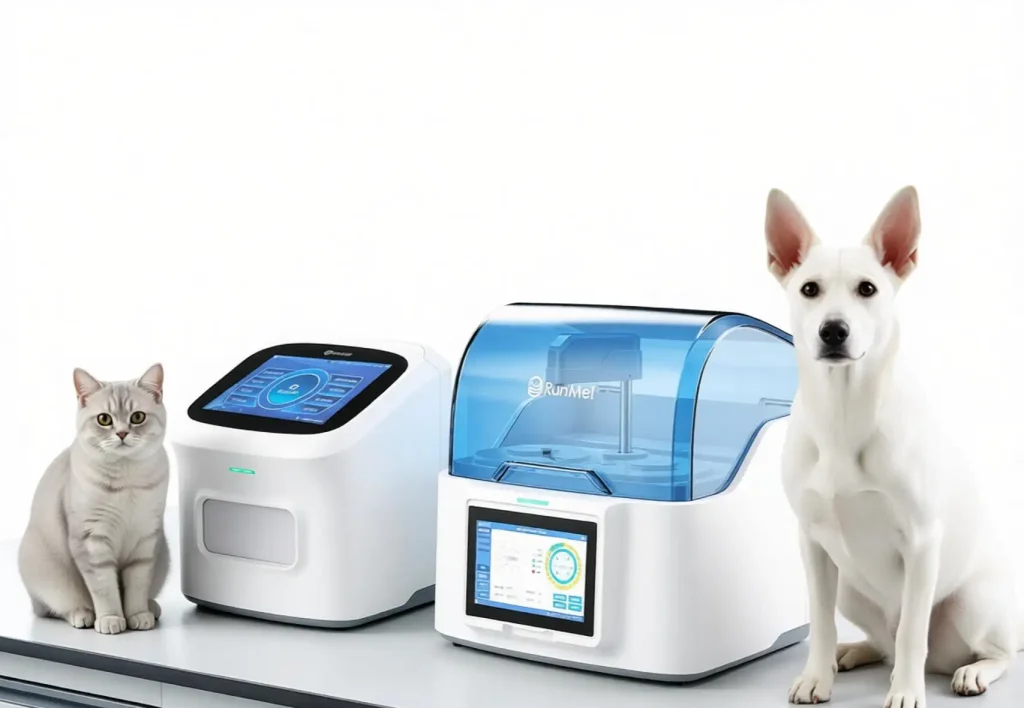
Fig. 1 — RunMei clinical biochemistry analyzer in a rural clinic setting. Hematology analyzer for anemia screening nigeria. | Alt: hematology analyzer for anemia screening Nigeria
What a CBC Adds Beyond the Hemoglobin Number
Hemoglobin alone tells you a woman is anemic; it does not tell you why. A complete blood count adds the red cell indices and a white cell count that separate iron deficiency from chronic infection and flag malaria. In malaria-endemic zones, that distinction decides between oral iron and antimalarial treatment — get it wrong and the anemia does not budge.
The reagent line is where the real budget lives. A machine that costs little but drinks expensive consumables will be switched off by year two; a machine whose per-test cost fits the community’s wallet keeps running because the community can afford it. Buyers should ask one question before any other: what does each test actually cost delivered to this clinic, and can that cost be sustained after the donor’s project ends? The same principle holds for hematology analyzers: measure, record, act.
Screening at Booking, Rechecking at 28 Weeks
The WHO recommends hemoglobin testing at the first antenatal visit and again in the third trimester. A clinic with its own open-channel blood analyzer can follow that schedule literally, because the test costs minutes and drops of blood. Repeating the test turns a single snapshot into a trend, which is what actually catches the woman sliding toward severe anemia.
From Test to Action: A Primary Health Centre Workflow
A practical workflow in a PHC with one analyzer: every booking visit includes a CBC; results are written in the woman’s record and acted on the same day — iron and folate for mild anemia, malaria testing and treatment for febrile anemia, and an earlier delivery plan for severe cases. Referral is reserved for the truly complex, not for every abnormal result.
The same instrument then pays for itself across the rest of the clinic: children with fever, men with chronic fatigue, and the growing number of patients with undiagnosed diabetes whose infections show up in the white count before anything else.
Trust is built one control run at a time. The daily control, the logged result, the outlier that gets acted on rather than explained away — these are the habits that make a rural result worth acting on. Facilities that document their controls report something else too: staff who believe their own numbers and clinicians who trust them. The logbook is not paperwork; it is the evidence that the hematology analyzers is telling the truth. hematology analyzers is the instrument at the center of that workflow.
The Business Case for the Facility
A rural PHC running 25–40 CBCs per day across antenatal, child welfare and outpatient services can recover an analyzer’s cost within months of operation when reagent costs are controlled. Government maternal health programs and NGO partners increasingly fund exactly this equipment class because the outcome data is easy to collect and hard to argue with.
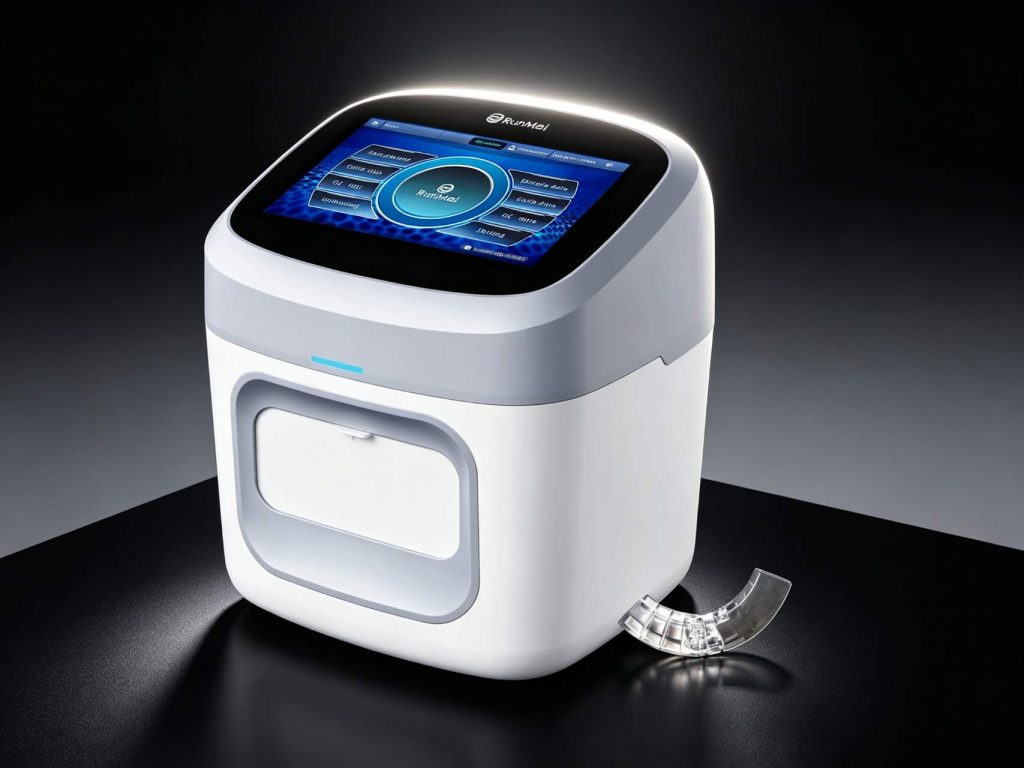
Fig. 2 — RunMei differential blood analyzer in a rural clinic setting. Antenatal anemia screening blood analyzer. | Alt: antenatal anemia screening blood analyzer
The Cost Case
The cost case for hematology analyzers rests on three lines: what the referral alternative actually costs the patient and the system, what the on-site test costs once volume is real, and what the hematology analyzers returns in retained patients and earlier treatment. The three lines are often argued separately; the honest analysis adds them, and the sum is what the ministry should see.
Counting the Journey
The referred test carries a published price and a real price. The real price adds transport, the lost day of work, and the arrangements a family makes to travel — typically several times the fee. Programs that count the journey find the on-site test is cheaper than the alternative even before it is faster.
The Utilization Multiplier
When the journey disappears, volume rises: antenatal bookings produce counts, chronic patients return on schedule, febrile visits are tested instead of observed. The utilization multiplier is the reason payback estimates built on old referral volumes underestimate the analyzer’s return.
Decisions about anemia screening are usually made at district level — and the register feeds them. It also strengthens antenatal care, a benefit that rarely appears in the budget line. None of this holds together without attention to hemoglobin testing. That is the practical reality of hematology analyzers in the field.
الأسئلة المتداولة
Q1. Why is anemia screening important in antenatal care?
Anemia reduces a woman’s reserve against postpartum hemorrhage and infection, two of the leading direct causes of maternal death. Detecting and treating it during pregnancy measurably improves birth outcomes.
Q2. What is the difference between hemoglobin testing and a full CBC?
A hemoglobin test gives a single number. A complete blood count also measures red cell indices, white cells and platelets, which helps identify the cause of the anemia — iron deficiency, malaria, infection or chronic disease.
Q3. Can a primary health centre in a rural area run these tests?
Yes. Compact analyzers with microsample collection, simple interfaces and battery support are designed for exactly this setting, and a two-day training is enough for midwives and community health officers to operate them.
Q4. What does the WHO recommend for anemia testing in pregnancy?
The WHO recommends hemoglobin measurement at the first antenatal visit and again in the third trimester so that anemia can be treated before it becomes severe.
Sources & References
- World Health Organization data show that in lower-income countries a large share of the rural population still lives beyond the reach of a functioning laboratory; the WHO recommends primary care facilities be reachable within roughly 5 km, yet global estimates indicate about 3 billion people cannot reach a health facility within one hour on foot.
- The International Diabetes Federation estimates that more than half of adults living with diabetes in sub-Saharan Africa remain undiagnosed, a gap driven largely by structural barriers in primary care access.
Disclaimer
This article is for informational and marketing purposes only and does not constitute medical advice, a product claim, or a regulatory certification statement. Device availability, regulatory status and specifications vary by country and model; always verify current approvals with the manufacturer and consult local regulations before procurement or use.