Focus keyword: normal white blood cell count by age
If your patient’s report came back flagged high, your first thought isn’t “what’s the value” — it’s “is this normal for someone their age?” That single question trips up more clinicians than any raw number, because a WBC count that reads alarming on paper can be perfectly routine for a newborn, while a value that looks reassuring in a child can signal real trouble in an adult. Here are the ranges by age, the biology behind them, and why the instrument doing the counting matters almost as much as the count itself.
The Broad Ranges, By Life Stage
Reference intervals vary by laboratory, but clinicians generally lean on ranges compiled from large healthy populations. For most healthy adults, the accepted window sits near 4,000 to 11,000 white blood cells per microliter (µL), though some labs cite a slightly wider 3,500 to 10,500 band. Children run higher: a toddler may sit comfortably in the 6,000 to 17,500 µL zone because the immune system is still ramping up its defenses against new exposures. Newborns top the chart entirely, frequently ranging from about 9,000 up to 30,000 µL in the first days of life, with a strong neutrophil predominance that shifts toward lymphocytes over the first few years. Pregnant patients also trend upward, reflecting the stress and immune modulation of gestation. The guiding rule is the one emphasized by the CDC and WHO: a “normal” WBC means the value falls within the reference interval your laboratory defines and validates — never a number borrowed from a different population.
Why Age Shifts the Differential, Not Just the Total
The total count is only half the story. A healthy infant moves steadily from neutrophil-dominant blood toward a lymphocyte-dominant pattern around age two to six, a normal phenomenon that repeatedly surprises parents and new residents. As puberty arrives the adult balance returns, with neutrophils forming the majority of circulating leukocytes. Automated analyzers that break the count into five parts — neutrophils, lymphocytes, monocytes, eosinophils, basophils — make these age-linked shifts visible in seconds rather than requiring a manual smear. CLSI H20-A2 offers the reference methods for validating this leukocyte differential — the kind of standard that underpins a trustworthy analyzer result.
Where Your Equipment Enters the Conversation
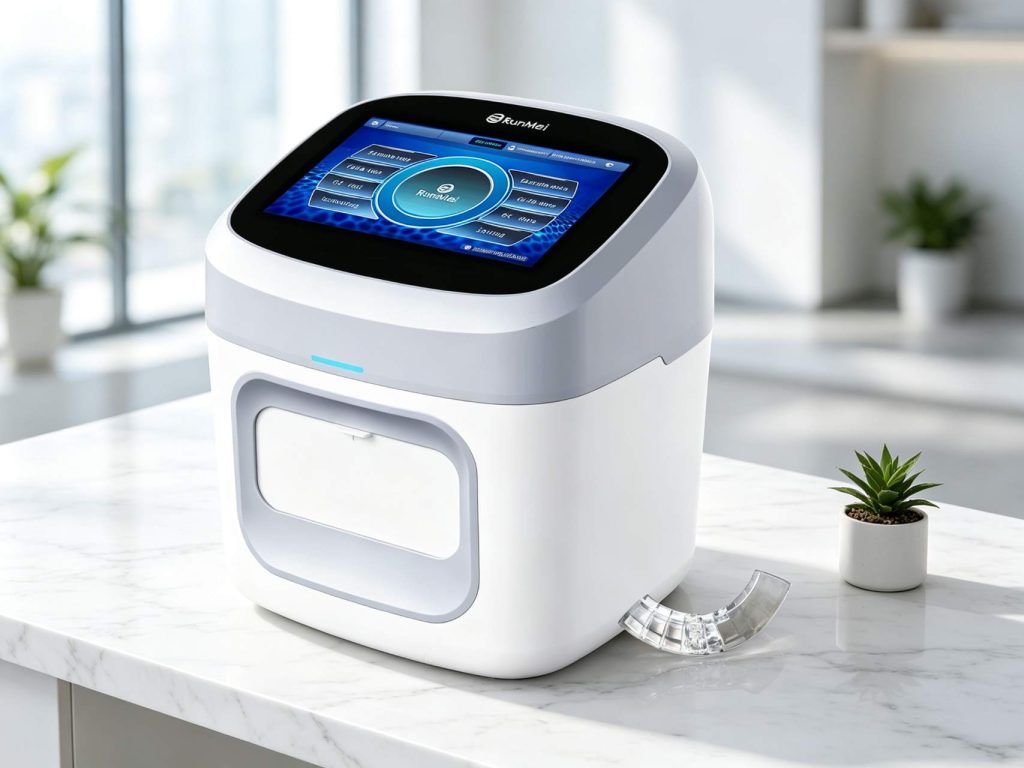
Range tables only help if the machine behind them reports accurately, and accuracy is not equal across every device on the market. An analyzer that undercounts at the low end or drifts between shifts will quietly corrupt your age-based interpretation — nobody wants to call a worried parent about an elevated WBC that only looks high because of a calibration artifact. That is why clinics increasingly select a full CBC analyzer validated against recognized reference methods, then confirm their own local reference intervals against CLSI guidance rather than carrying over a vendor’s generic table.
Build Your Own Pediatric Reference Data
The most defensible approach for a pediatric or mixed-age practice is not to memorize ranges but to verify them against your own analyzer’s output using a clean reference population. This is where an automatic hematology analyzer with stable reagents and documented precision earns its keep — day-to-day reproducibility is the foundation of an interval you can trust for years. When you need a refresher on the counting process, the walkthrough of how a CBC analyzer works explains the flow cytometric and impedance techniques behind every number.
Choosing the Right Tool for Age-Diverse Caseloads
If your patients range from newborns to seniors, consider whether your instrument handles pediatric micro-samples comfortably and whether it reports a full differential rather than just a three-part split. The differential depth changes how confidently you can read age-driven lymphocyte shifts. A 5-part differential blood-cell analyzer reveals more of the picture that an age-diverse population demands, separating lymphocyte and neutrophil trajectories that a coarse count can blur.
أسئلة وأجوبة
**Why is my child’s white blood cell count higher than an adult’s?**
Because infants and young children are building their immune defenses, their circulating WBC counts run naturally higher — children can reach roughly 6,000 to 17,500 µL, and newborns often exceed that — then taper toward adult levels through adolescence.
**At what age does the WBC count become “adult normal”?**
Most children approach the adult range of roughly 4,000 to 11,000 µL through the school years and early teens, though your laboratory’s own validated interval is the definitive benchmark.
**Does a high WBC always mean infection?**
No. Stress, exercise, pregnancy, certain medications and normal pediatric immune development can all raise the count. Interpreting any value requires pairing it with the differential and the patient’s clinical picture.