Target keyword: “fluorescence flow cytometry hematology analyzer principle”
Fluorescence flow cytometry powers the most accurate 5-part differentials. Understand the principle — lasers, scatter, fluorescence — and why it beats impedance alone.
Somewhere inside the newer analyzers, a diode barely wider than a human hair interrogates your blood cells tens of thousands of times a second — asking each one how big it is, how complex it is, and what chemical flags it carries on its surface. Fluorescence flow cytometry is not a black box; it is an interrogator, and once you see the physics, the reports stop being magic and start being math.
The Core Principle: Hydrodynamic Focusing and the Laser Beam
A sample is diluted and hydrodynamically focused so cells pass single-file through a narrow interrogation point, one at a time. A laser beam strikes each cell, generating forward scatter (FSC, proportional to cell size) and side scatter (SSC, proportional to internal complexity and granularity). These two optical signals alone classify basic populations — but fluorescence adds discrimination power that impedance-based counters lack.
What Fluorescence Adds: Nucleic Acid and Surface Staining
Dyes stain nucleic acids or cell-surface markers, and photodetectors read the emitted fluorescence at specific wavelengths. Immature cells and certain abnormal populations fluoresce differently from mature cells, letting the analyzer separate eosinophils from neutrophils, detect nucleated red cells and blasts, and flag reactive bands that impedance methods lump together. This is why fluorescence-based 5-part differentials achieve higher accuracy on abnormal and pathological samples.
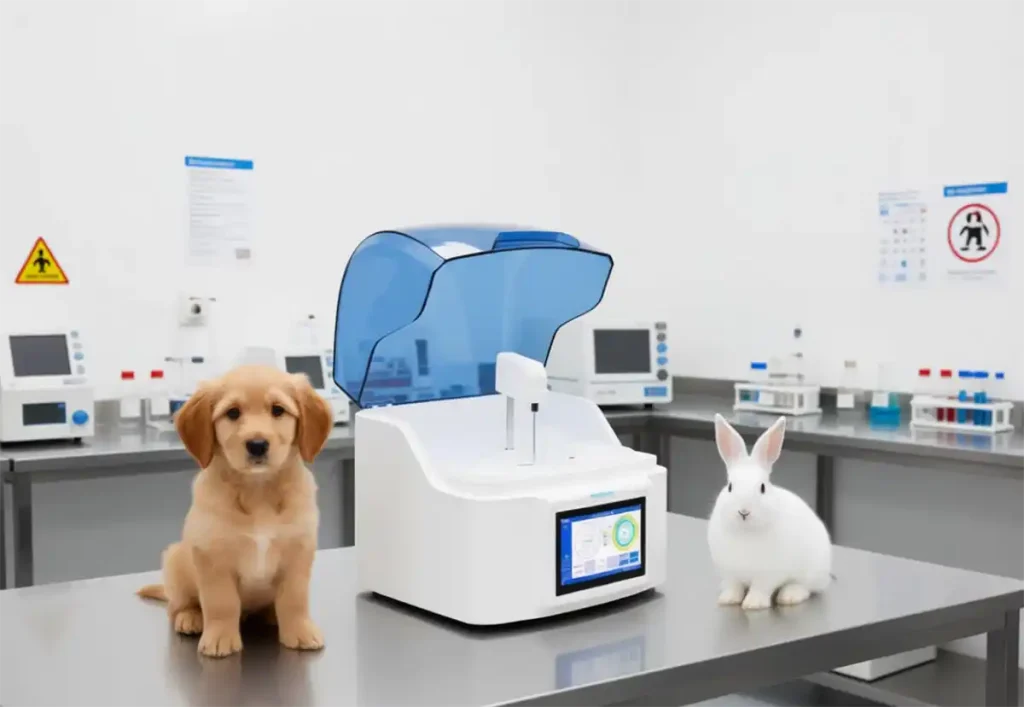
Looking for a reliable option? The 5-part differential hematology analyzer from RunMei Health is built for accurate, efficient blood analysis.
Impedance, Optical, or Fluorescence: Which Method Wins?
Impedance (the Coulter principle) measures cell volume by electrical resistance — robust, cheap, and sufficient for 3-part screening. Optical scatter adds granularity discrimination. Fluorescence delivers the full picture and the best abnormal-sample performance, at higher cost per test and greater maintenance complexity. Brands A, B, and C each combine these differently; choose based on whether your caseload demands pathological-classifying power or just reliable screening.
Why It Matters for Your Lab
A fluorescence-capable analyzer earns its premium when you handle oncology, chemotherapy monitoring, or complex inflammatory cases where subtle immature populations appear. For routine wellness panels, the added precision rarely changes clinical action. Match the method to the medicine you practise, not to the impressive sounding brochure.
A Real-World Example: Separating the Abnormals
Consider a chemotherapy patient whose impedance-based count shows a rising granulocyte band and an odd tail on the histogram. A fluorescence instrument stamps that tail with nucleic-acid staining, revealing immature precursor cells and returning a left-shift flag that changes the oncologist’s next decision. This is precisely where the method earns its keep: distinguishing a regenerative response from relapse, or flagging blasts that simple impedance would fold into the large-cell bucket.
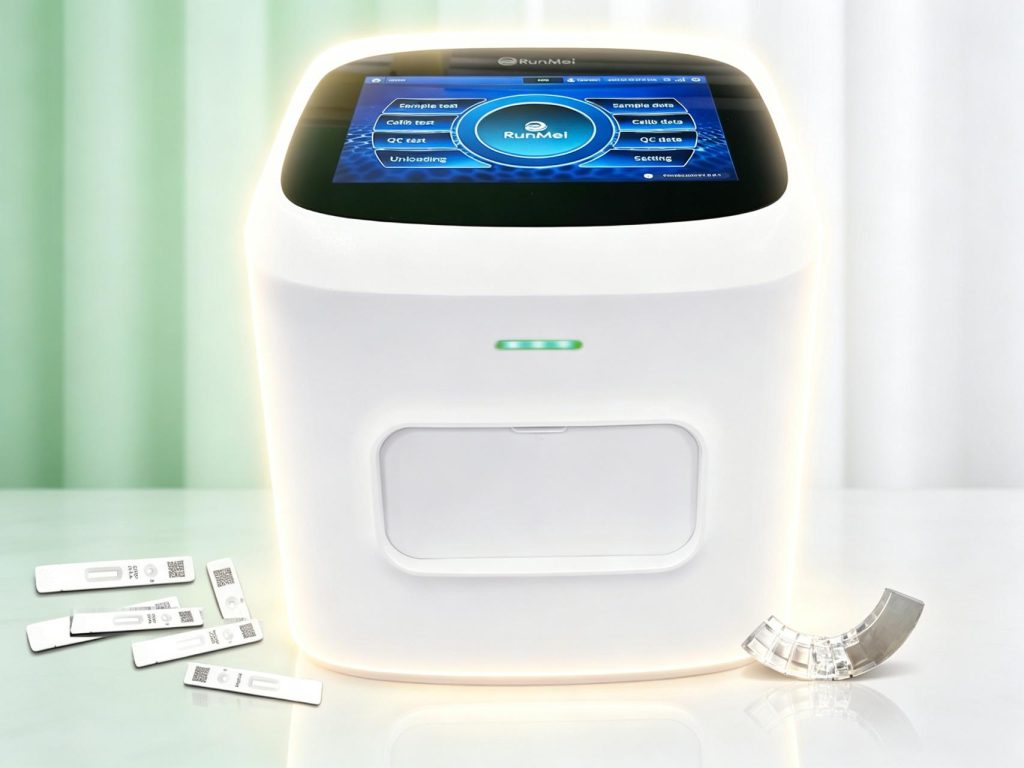
Looking for a reliable option? The portable multi-function blood analyzer from RunMei Health is built for accurate, efficient blood analysis.
Verifying Performance on Your Own Samples
No matter how impressive the datasheet, verify fluorescence performance under your own workload. Run paired comparisons against your reference instrument or manual differentials on abnormal samples, confirm the flags fire on the pathological cases you actually see, and review how the analyzer handles samples with target cells, nucleated red cells, or platelet clumps. A method is only as valuable as its accuracy on the cases that reach your bench. Keep a monthly correlation log and review it with your service application specialist, so drift between the fluorescence instrument and your reference is caught early rather than discovered during an inspection.
For a dependable solution, explore the 5-part veterinary blood analyzer from RunMei Health.
For a dependable solution, explore the RunMei diagnostic instruments from RunMei Health.
الأسئلة المتداولة
Q: Is a fluorescence analyzer worth the extra cost?
A: For routine screening in stable populations, impedance-based 3-part or basic 5-part analyzers deliver reliable, low-cost results. If you see oncology, leukaemia monitoring, or complex pathology where immature and abnormal populations must be separated, the precision and flagging power of fluorescence flow cytometry justifies the higher per-test cost.