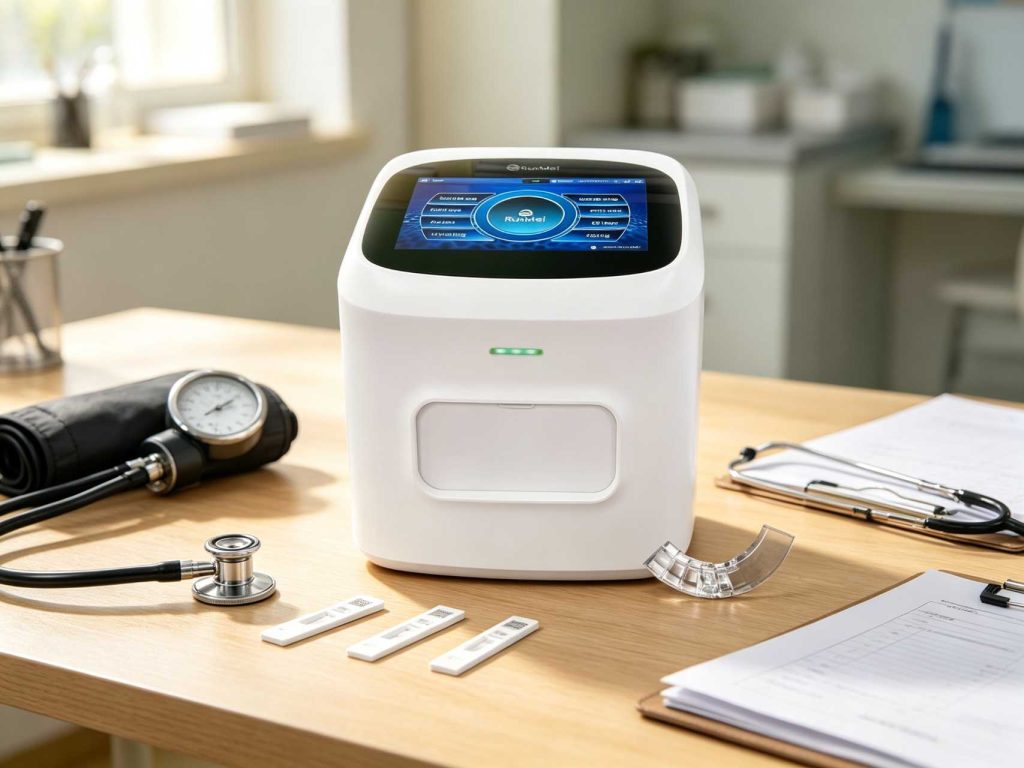
Here is the honest number nobody prints in a brochure: a conventional reagent-based hematology analyzer can quietly cost you more in consumables within two years than it cost to buy. Between reagents that must ship cold, calibration fluids that expire, waste cartridges, and service contracts, the true cost of ownership often runs several times the sticker price. Before you sign, it pays to run the math the way laboratories actually live it.
Strip Out Ongoing Reagent Costs
The single biggest line item in a blood testing budget is usually reagents. A proactive first step is to compare quotes line-by-line, asking what happens to cost per sample over three years. Platforms built on a no-liquid principle sidestep this entirely: an hematology analyzer for sale with no reagent requirement removes both the recurring spend and the cold-chain logistics that eat margins in remote clinics.
Match the Analyzer to Your Workload
Budgeting is not just about money—it is about matching capability to real volumes. A lab that already runs chemistry can drop a biochemistry analyzer beside its cell counter and consolidate workflows. For a small practice the priority shifts to a portable multi-function hematology analyzer that performs a 5-part differential while doubling as an immunoassay platform, reducing the number of instruments and the training burden that inflates operational budgets.
Think in Total Cost per Result
Seasoned buyers convert everything to cost-per-result. That means adding calibration labor, QC material, maintenance, downtime, and technologist training time on top of the purchase price. Reagent-free designs shorten training because there is no fluidics protocol to master, and AI-assisted cell imaging reduces the manual review that consumes senior staff time. When you compare numbers this way, a nominally higher-priced device can come out cheaper per reportable result.
Don’t Underprice Support and Compliance
Enough clinics unwind a deal because the service response is slow or the supplier cannot hold a CE mark and ISO 13485 certificate for tender review. Choose an AI blood cell analyzer backed by real support: 24/7 availability, low minimum order quantities from a single unit, five-language interface, and a supplier willing to offer regional protection. Those intangibles are what keep the cost-per-result honest after the first year.
Budgeting for a hematology analyzer is less about the headline price and more about disciplines: reagents, calibration, training, and support. Fix those, and the instrument pays for itself in diagnostic efficiency rather than draining the practice through hidden consumables.