Meta Description (≤155 chars): A result nobody trusts is a rumor with a stamp on it. How rural African laboratories keep CBC results accurate with simple quality programs.
Target Keywords: quality assurance blood analyzer, CBC accuracy rural lab, hematology analyzer quality control, external quality assessment Africa
By RunMei Health Team | Published: September 18, 2026 | Reading time: ~5 min
A result nobody trusts is a rumor with a stamp on it. Rural laboratories do not lose patients to expensive equipment failures; they lose them to quietly wrong numbers – a hemoglobin that reads high on a patient who is bleeding, a platelet count that reads normal during dengue season. The WHO’s message on laboratory quality is blunt: a test is only as good as the quality system around it. The good news is that a small rural lab can build that system with three habits, a notebook, and about an hour a week.
Why accuracy is a life-or-death issue at the periphery
In a city hospital, a suspicious result gets repeated on a second instrument or sent to a reference lab. A rural health post has one analyzer and one operator – there is no second opinion machine, so the single result must be right. Errors that a city lab absorbs become misdiagnoses, wrong transfusions, and missed emergencies in the village.
External quality assessment programs in Africa consistently show that rural laboratories can achieve excellent accuracy when they follow basic quality practices – and that the same instruments produce unreliable results when they do not. The machine is not the variable; the system is.
RunMei’s automatic hematology analyzer runs a CBC on fingertip blood, which matters when venipuncture is the real barrier.
The three habits that keep numbers honest
Controls, calibration, and the notebook
The first habit is running controls: a known sample at least daily, and with every new reagent lot, every calibration, and after any maintenance. The second is calibration on schedule, because analyzers drift. The third is the quality notebook – every control run, every error code, every service call, dated and signed.
These three habits cost little and catch most problems before they reach a patient. Clinics that skip them usually skip them for understandable reasons – workload, staffing, the feeling that ‘we have no time for paperwork’ – but the cost of a wrong transfusion dwarfs the cost of ten minutes of controls.
Making external quality assessment work from a village
External quality assessment (EQA) – sending split samples or receiving unknown specimens from a reference center – is the only honest check on a laboratory’s internal controls. Many African countries now run EQA schemes that accept results from rural facilities, often through simple paper or SMS reporting.
The participation rate is the challenge: rural labs either do not know the schemes exist, cannot afford the fees, or never hear back about their performance. Programs that close the feedback loop – the lab gets its report, sees its error, fixes it – turn EQA from an academic exercise into a genuine safety net.
A blood analyzer quality assurance changes the conversation from “send the sample somewhere” to “run it here, now.”
Choosing an analyzer that behaves in the field
Some analyzers are easier to keep accurate than others, and rural buyers should ask hard questions: How many reagents and steps does a daily control require? Does the device flag its own anomalies – clot detection, sample errors, abnormal scattergrams? Is calibration stable across temperature swings and power fluctuations?
Devices designed for point-of-care settings, like compact automatic hematology analyzers, build these answers into their design: fewer moving parts, guided workflows, and self-checks that tell the operator when to distrust a result. The alternative – a high-throughput city machine installed in a village – fails in ways that have nothing to do with the operator.
The chain that makes a result trustworthy
Trustworthy results come from a chain: trained operator, maintained device, daily controls, scheduled calibration, EQA participation, and a supervisor who reads the notebook. Break any link and the chain fails quietly – which is the worst kind of failure, because nobody knows it happened.
Ministries building national laboratory programs now publish exactly this chain as policy, and international standards like ISO 15189 describe it formally. A rural clinic does not need the full standard; it needs the habits. The analyzer produces the number; the habits make the number mean something.
What the city laboratory achieves with layers – a second instrument, a supervisor, a reference lab – the rural laboratory must achieve with habits. That asymmetry is not unfairness; it is the reality the quality system is built for, and it rewards exactly the disciplines that cost nothing. The operator’s final protection is humility: a result that does not fit the patient’s story should be questioned, repeated, and investigated, not printed and filed. Every experienced rural laboratorian has a story of the impossible number that turned out to be the true one, and the wise ones kept looking until they knew which. That curiosity, more than any checklist, is what separates a laboratory from a machine room.
على benchmarking blood analyzer performance in rural conditions range is designed so a rural facility can add one test at a time without re-engineering the clinic.
The supervisor’s walkthrough
The most effective quality tool in a small laboratory is a supervisor who visits and asks the right questions: where is the quality notebook, when did you last run controls, show me the calibration record, what happened with error code seven last week. The visit takes twenty minutes and teaches more than any training manual.
Programs that build this walkthrough into the routine – monthly, scheduled, with a simple checklist – see error rates fall and staff confidence rise. The supervisor is not inspecting; she is partnering, and the notebook is the shared language that makes the partnership concrete.
When the walkthrough becomes normal, quality stops being an event and becomes an identity. That is the quiet goal of every quality system: a laboratory where running controls is as automatic as wearing gloves – and where the number on the report is a number the whole community can trust.
Trust is the final link
The last link in the chain is the patient, and the patient’s trust is earned one honest result at a time. Every control run, every calibration, every external quality submission is a small act of that earning – invisible to the patient, essential to the result.
Rural laboratories will never have the redundancy of city institutions, but they can have something more important: discipline. A disciplined small laboratory with one good analyzer serves its community better than an undisciplined large one, and the discipline is free. That is the real lesson of quality control in the rural world – the number is only as good as the habits around it, and the habits are available to everyone.
A portable blood analyzer with a five-part differential gives the clinician the same language a city lab uses, on site.
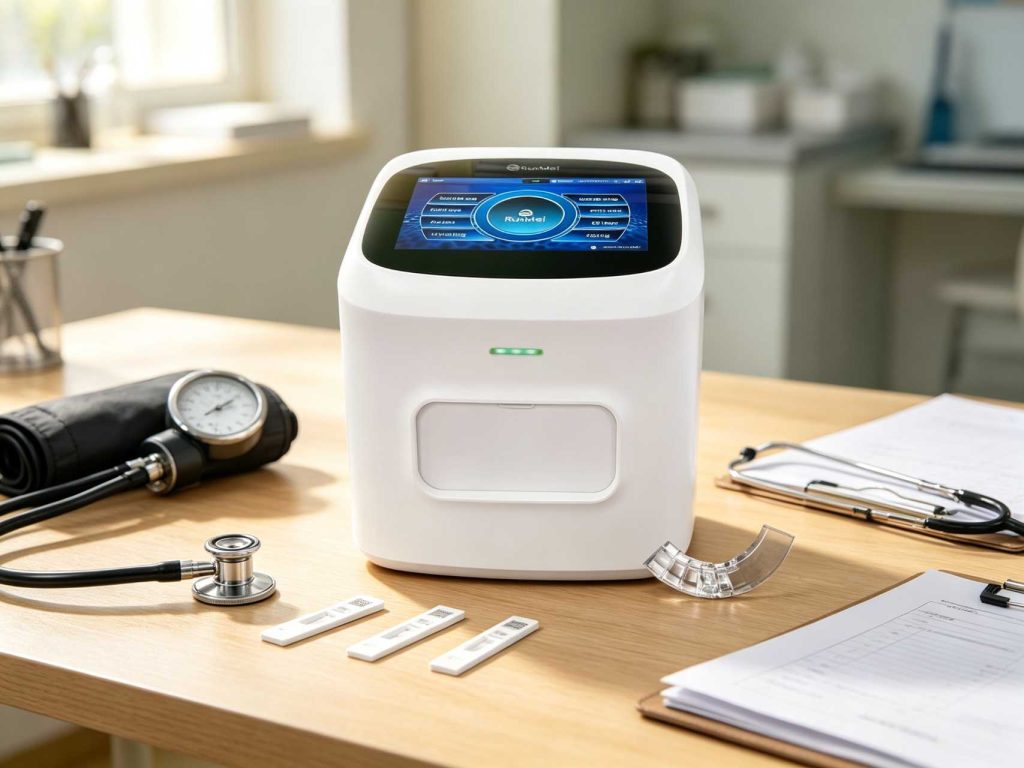
Figure 1: Daily quality controls on an automatic hematology analyzer keep CBC results trustworthy in rural laboratories.
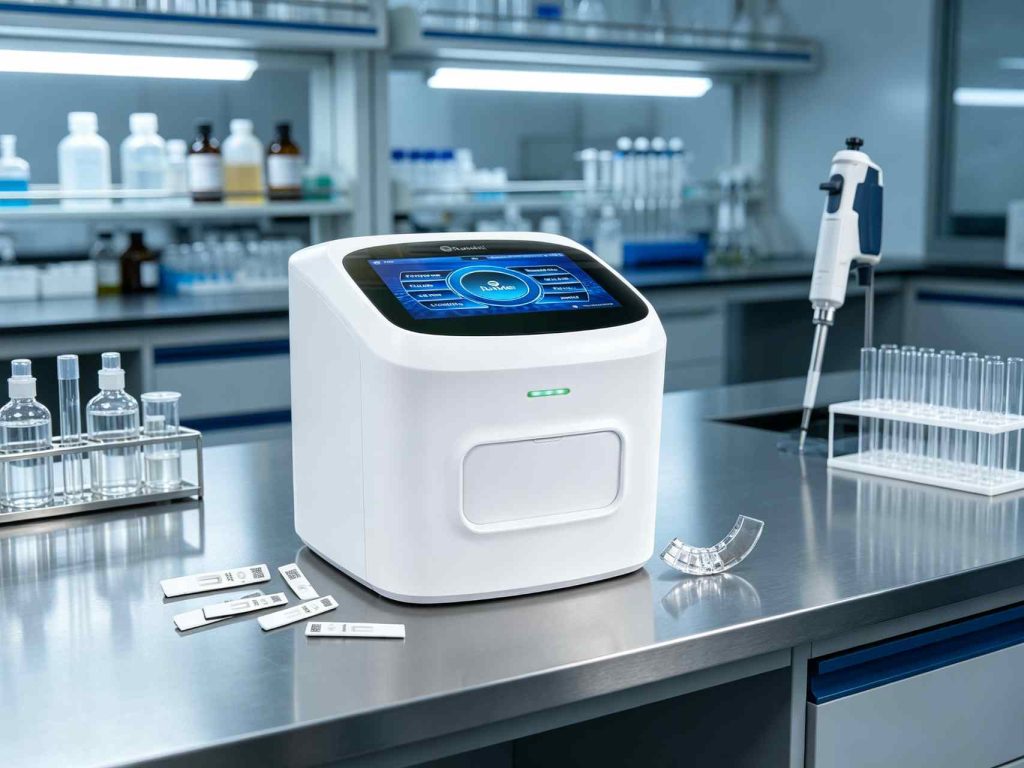
Figure 2: Quality habits – controls, calibration, records – apply to portable blood analyzers too.
الأسئلة المتداولة
How often should a rural lab run quality controls?
At minimum daily, plus with every new reagent lot, after calibration, and after maintenance. The exact frequency should follow the manufacturer’s instructions and any national EQA scheme rules.
What is external quality assessment?
A scheme where a reference center sends unknown samples or evaluates split samples, and the laboratory’s results are scored. It is the only independent check on whether internal controls are actually working.
Do small analyzers need less quality control?
No. Simpler devices have fewer error modes, but the quality habits – controls, calibration, records – apply identically. In fact, a single-instrument lab depends on them more, because there is no backup machine to catch errors.
References and Sources
Authoritative sources cited in this article:
- WHO, Laboratory Quality Management System training toolkit (LQMS)
- ISO 15189:2022, Medical laboratories – requirements for quality and competence
- PMC10623501, Ghana Bono region IVD availability study
- Jani IV, Peter TF. How Point-of-Care Testing Could Drive Innovation in Global Health. N Engl J Med 2013;368:2319-2324.
Related RunMei Health resources referenced in this article:
- [L1] automatic hematology analyzer — https://runmeihealth.com/product/automatic-hematology-analyzer/
- [L2] blood analyzer quality assurance — https://runmeihealth.com/the-number-nobody-trusts-is-worth-nothing-quality-assurance-for-rural-blood-analyzers/
- [L3] benchmarking blood analyzer performance in rural conditions — https://runmeihealth.com/benchmarking-blood-analyzer-performance-in-rural-conditions-a-field-testing-guide/
- [L4] portable blood analyzer — https://runmeihealth.com/product/bca-320-automatic-portable-multi-function-analyzer/
Disclaimer
This article is provided for informational and educational purposes only and does not constitute medical advice, diagnosis, or treatment. Always consult a qualified health professional for clinical decisions. RunMei Health devices are intended for use by trained operators in accordance with local regulations and the manufacturer’s instructions for use; product availability, regulatory clearance, and configurations may vary by country. Figures cited from third-party sources reflect the publications referenced at the time of writing.
Body word count: 1092 words (target range 1000–1500) | Total including FAQ: 1207 words