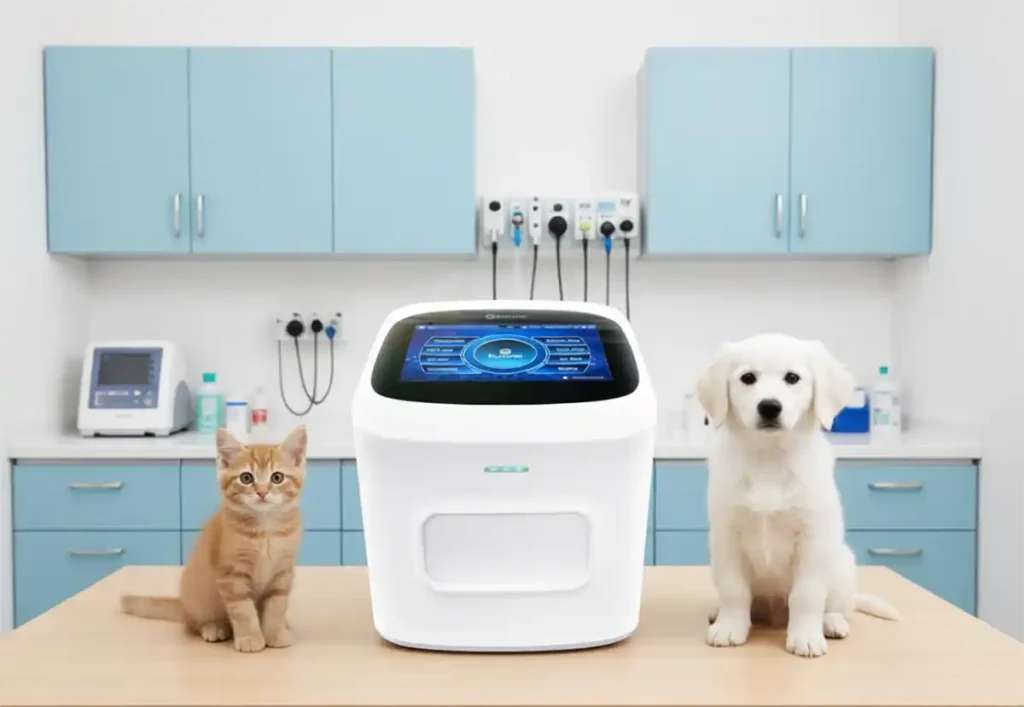
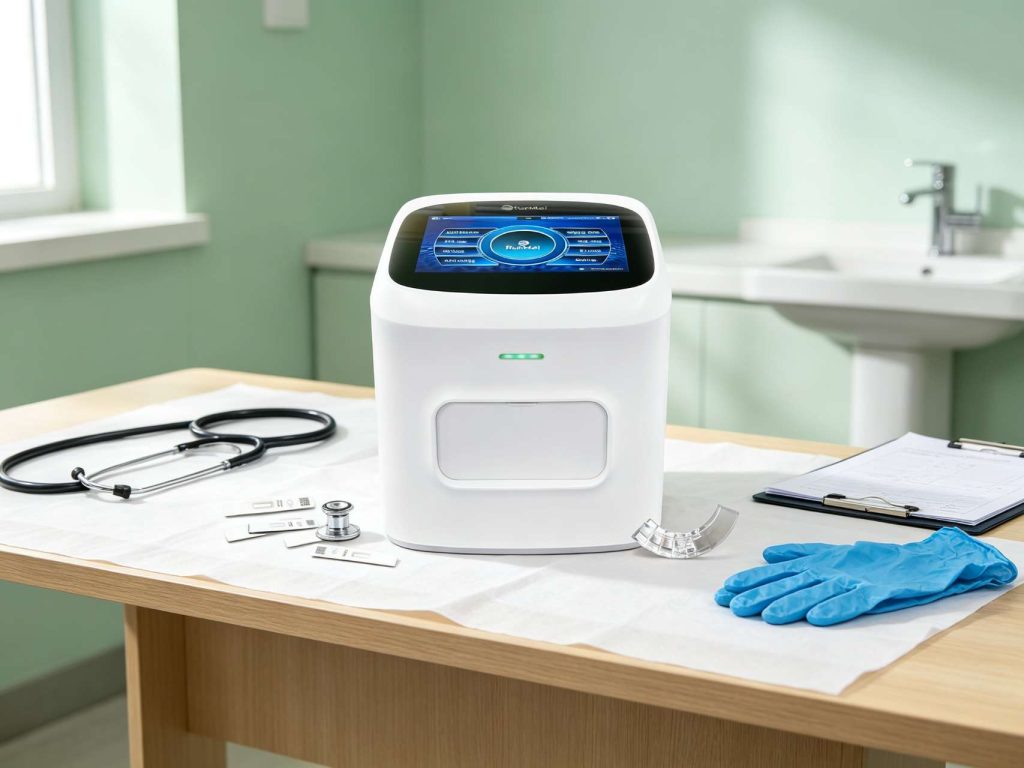
Modern hematology analysis has evolved far beyond the simple counting of blood cells. The Runmei 5-part differential hematology analyzer represents a technological leap by combining three complementary measurement principles: laser flow cytometry, fluorescence detection, and impedance counting. Understanding how these technologies work together helps laboratory professionals appreciate the accuracy and reliability of the results they obtain daily from this compact benchtop instrument.
Laser flow cytometry forms the foundation of the Runmei analyzer identification system. As individual blood cells pass through a precision-focused laser beam, they scatter light in multiple directions. Forward scatter correlates with cell size, while side scatter reveals internal granularity and nuclear complexity. These scatter patterns alone allow the instrument to distinguish between the five major leukocyte populations: neutrophils, lymphocytes, monocytes, eosinophils, and basophils. The 635 nm semiconductor laser used in the Runmei system provides exceptional stability and long operational life.
| Technology | Measurement Target | Clinical Value |
| Laser Flow Cytometry | Cell size and granularity | 5-part WBC differential |
| Fluorescence Detection | Nucleic acid content | NRBC detection and correction |
| Impedance Counting | Cell volume and count | RBC and platelet enumeration |
Fluorescence detection adds a second dimension to cell classification that impedance alone cannot achieve. The Runmei analyzer uses a fluorescent dye that binds specifically to nucleic acids within cells. As stained cells pass through the laser interrogation point, they emit fluorescent signals that correlate with their DNA and RNA content. This is particularly valuable for distinguishing between cells that might appear similar in size and granularity but differ in nucleic acid composition. Reticulocytes, for example, contain residual RNA that makes them fluoresce more brightly than mature red cells.
The impedance counting method, also known as the Coulter principle, provides the third pillar of the Runmei measurement system. As cells suspended in a conductive diluent pass through a small aperture, they displace an equal volume of liquid, causing a measurable change in electrical impedance. The magnitude of this impedance change is directly proportional to cell volume. This method is particularly robust for red blood cell and platelet counting, where accuracy at both high and low concentrations is essential for clinical decision making.
One of the key advantages of combining these three technologies is the ability to perform flag-free reporting in the majority of samples. When the laser and fluorescence data agree with the impedance measurements, the instrument reports results with high confidence. When discrepancies arise, the analyzer flags the sample for manual review. This multi-technology approach significantly reduces the need for peripheral blood smear review, saving technologist time and improving laboratory efficiency.
The Runmei system processes samples at 60 to 80 tests per hour, with each test consuming only 5 microliters of whole blood in micro mode. The optical and fluidic systems are designed for minimal carryover, rated at less than 0.05 percent, ensuring that results from one sample do not influence the next. This combination of throughput, sample economy, and accuracy makes the Runmei analyzer suitable for laboratories processing between 50 and 300 CBC samples daily.
For laboratories transitioning from 3-part to 5-part differential analyzers, the Runmei platform provides a smooth upgrade path. The 10-inch touch screen interface presents scattergrams and histograms in real time, allowing technologists to visualize cell populations as they are being analyzed. The built-in WiFi and HL7 connectivity ensures seamless integration with laboratory information systems, while the open reagent system gives laboratories flexibility in consumable sourcing. With a two-year warranty and robust technical support, the Runmei analyzer delivers lasting value for clinical laboratories worldwide.
The clinical utility of these three technologies working in concert cannot be overstated. When a blood sample contains abnormal cells such as blasts or atypical lymphocytes, each measurement technology contributes unique information about the cell characteristics. The laser provides size and granularity data, the fluorescence channel reveals nucleic acid content, and impedance confirms the cell volume measurement. By cross-referencing all three data sources, the Runmei analyzer achieves a level of diagnostic confidence that single-technology instruments cannot match. This multi-dimensional analysis is particularly valuable for samples from patients with hematologic malignancies, where accurate cell classification directly affects treatment decisions and patient outcomes.