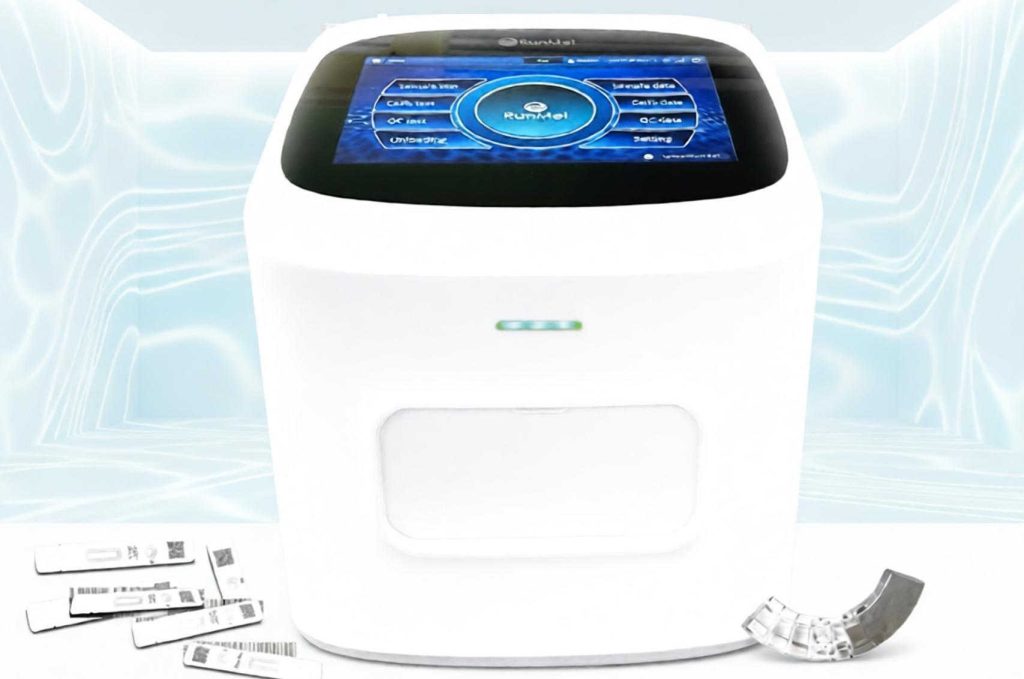
Meta Title: Blood Analyzer on the Rural Newborn Ward | RunMei
Meta Description: A blood analyzer on the rural newborn ward supports jaundice and sepsis decisions with microsample CBC testing that fits the smallest patients.
By Dr. Elena Marchetti · MD, MPH, Rural Health Diagnostics | Reviewed by Prof. Daniel Mwangi (PhD, MSc, Laboratory Systems Advisor) | Published: 2026-09-28
The newborn was two days old, yellow at the eyes, and the grandmother said every baby gets like this, give him sunlight. The practical questions around blood analyzer — which machine, how much per test, how fast a result arrives — are the subject of this article. The nurse wanted a bilirubin level, a blood count and a reason to stop worrying. The laboratory wanted a full tube of blood and two days to produce a result. The affordable blood analyzer catalog covers the instruments rural programs order most often.
The pages that follow cover what the sales brochure does not: what blood analyzer can and cannot deliver in Rural Newborn Ward, what it costs to run rather than to buy, and the mistakes that turn useful instruments into idle furniture. Reviews in the New England Journal of Medicine keep returning to the same finding: shortening the interval between presentation and a correct laboratory diagnosis is the single most reliable way to improve outcomes in low-resource settings. The aim is to give clinic managers and program planners a field-tested basis for decisions, not a list of product claims. NEJM . Facilities weighing the options can browse the 5-part differential blood analyzer range to compare configurations side by side.
Key Takeaways
- The jaundiced newborn needs laboratory answers in hours, not days.
- A microsample blood analyzer fits the tiny draws a neonate can safely give.
- The CBC supports the sepsis question that jaundice sometimes hides.
- The rural newborn ward becomes safer when counting is local and fast.
The Yellow Baby and the Two-Day Answer
Neonatal jaundice is common, mostly harmless and occasionally catastrophic, and the clinical eye cannot reliably tell the three apart. The laboratory distinguishes them, which makes the speed of laboratory access a safety issue in every newborn ward.
The problem at the rural facility is volume. A newborn gives a few drops of blood, and the tube that satisfies a distant laboratory may be more than the baby can spare. The collection itself becomes a risk.
the blood analyzer is the seed; the program is the tree. Training, supervision, registers, quality checks and a supply line that outlasts the donor — these are what turn a machine into a service that keeps running. Programs that design for sustainability from the first installation meeting are the ones still running at the five-year review. The same principle holds for blood analyzer: measure, record, act. WHO . Programs that want a deeper differential can read the open channel CBC analyzer page for the trade-offs.
The Sepsis Behind the Yellow
Jaundice in the first days can be a sign of infection, and the CBC is the first screen for that infection: white cell count and its pattern, platelet count, and hemoglobin. The analyzer answers the sepsis question with the same few drops used for the jaundice question.
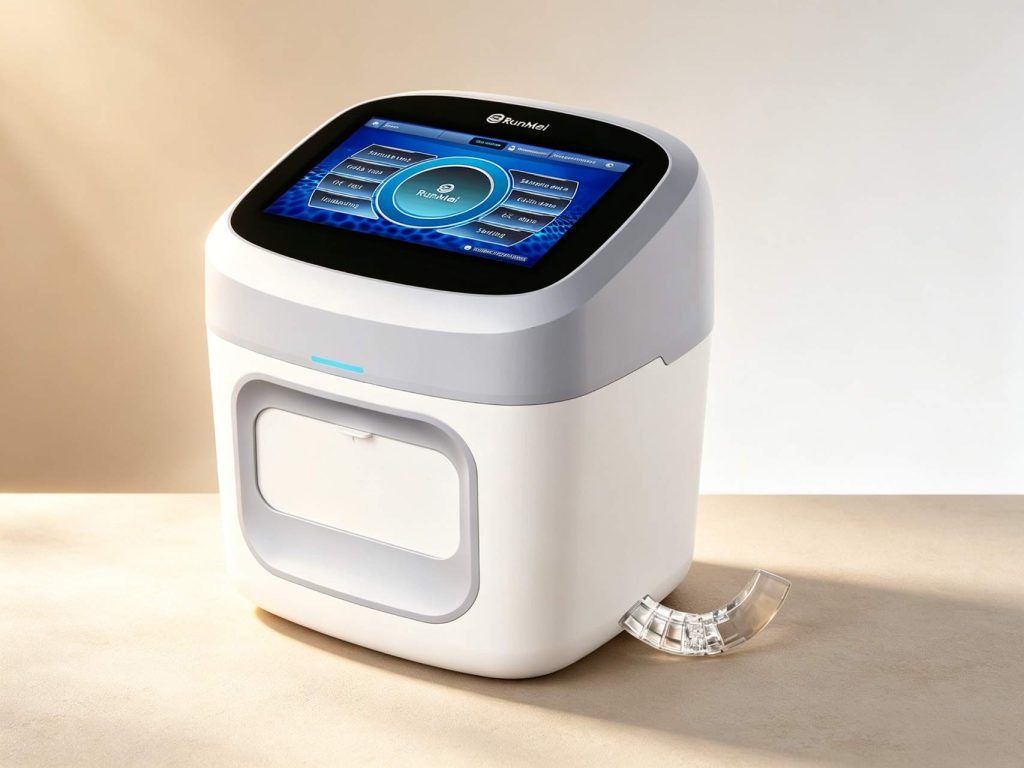
Fig. 1 — RunMei 3-part vs 5-part blood analyzer in a rural clinic setting. Blood analyzer neonatal jaundice cbc testing newborn ward. | Alt: blood analyzer neonatal jaundice CBC testing newborn ward
The Microsample Advantage
the blood analyzer that works in a newborn ward is the one that needs the least blood. Microsample analyzers run a full CBC on a heel-prick volume, which changes the equation for the smallest patients: testing is no longer an ordeal that requires a vein hunt and a full tube.
The same machine serves the rest of the pediatric ward, so the newborn investment is an investment in the whole children’s service.
The numbers have to close in the real world. Volume assumptions, fee structures, reagent costs and the hidden cost of the journey patients would otherwise make — each belongs in the model before the purchase, not after. Facilities that run the arithmetic honestly find the blood analyzer is not an expense; it is the cheaper way to do what they were already doing. blood analyzer is the instrument at the center of that workflow.
Bilirubin levels that cross the treatment threshold can appear within the first 48 hours, and jaundice affects up to 60% of newborns in some settings. Budget teams should see the 3-part vs 5-part blood analyzer cost analysis before signing off on procurement.
The Heel-Prick Protocol
A written protocol for heel-prick collection, warming, and the minimum volume required keeps the newborn safe and the result valid. The analyzer’s small sample need makes that protocol possible to honor.
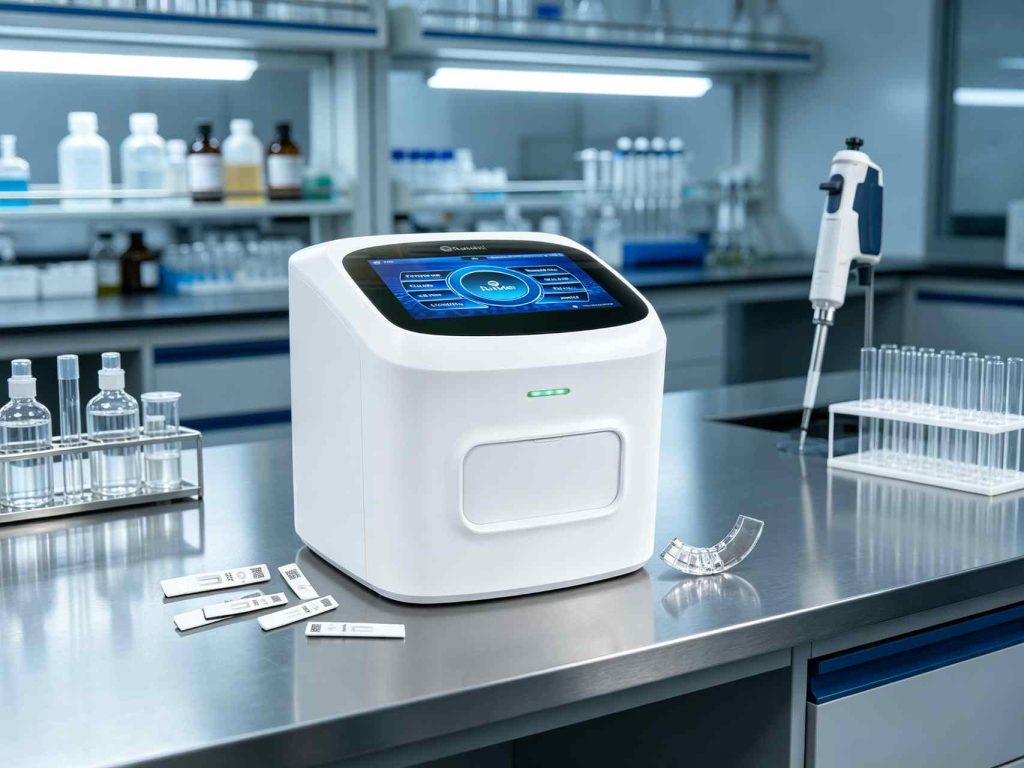
Fig. 2 — RunMei open channel CBC analyzer during routine testing. Microsample blood analyzer heel prick newborn testing small sample. | Alt: microsample blood analyzer heel prick newborn testing small sample
The Newborn Ward That Counts Locally
The newborn ward with its own analyzer runs a different rhythm. The jaundiced baby is tested on admission, rechecked at the interval the result demands, and referred with numbers when the treatment is beyond the facility. The grandmother’s sunlight advice is answered with a measured level instead of a shrug.
The register of newborn counts becomes the ward’s own dataset: how many babies were jaundiced, how many had infection markers, how many were referred and returned. That dataset is the foundation of every quality improvement the ward will attempt.
Geography writes the requirements. In Rural Newborn Ward, transport, seasons and distance decide which analyzer survives: the one that travels, tolerates heat and dust, and holds its calibration on the rough road. the blood analyzer chosen in the office must be the machine that works at the end of the journey — not the one that impresses in the brochure.
The Referral That Carries Numbers
The newborn who needs phototherapy or exchange transfusion travels with a complete record: the counts taken at the referring ward and the times they were taken. The receiving unit starts treating the baby, not re-investigating him.
The First 90 Days
The first quarter after installation is the period that separates a successful deployment from a stalled one. Early problems are normal — an unfamiliar workflow, a supply hiccup, a control result that will not settle — and the difference is how quickly they are caught. A facility that schedules its own 90-day review, with the register open and the errors on the table, fixes its problems while they are still cheap to fix.
The same pattern repeats in facility after facility: the clinic that measures its own patients keeps them, and the clinic that sends them away loses them. That arithmetic changes inside the first year, not through gadget appeal, but through fewer referrals, fewer repeat visits and a patient list that finally trusts the results it is given.
Reading the Register Honestly
The register is the review’s raw material: tests run, results flagged, referrals made, problems logged. The facility that reads it without defensiveness learns what its training missed and its supply line forgot. The facility that skips the reading repeats the first quarter’s mistakes for the rest of the year.
The Second-Quarter Targets
By day 120, the targets should be visible: tests on a predictable weekly schedule, controls passing consistently, one operator certified per shift, and a referral pattern that matches the protocol. Facilities that set these four targets at installation find the second quarter runs itself.
It also strengthens neonatal jaundice CBC, a benefit that rarely appears in the budget line. None of this holds together without attention to newborn sepsis testing. Programs that pair blood analyzer with microsample blood analyzer baby report the strongest results.
الأسئلة المتداولة
Q1. Which blood tests matter in neonatal jaundice?
The bilirubin level is central, and the CBC supports the infection question, since sepsis can present as jaundice. Hemoglobin and platelet counts guide the full picture.
Q2. How much blood does a newborn CBC need?
Modern microsample analyzers run a complete count on a heel-prick volume, typically far less than a full tube.
Q3. Can a rural ward run newborn testing reliably?
Yes, with microsample technology, a written heel-prick protocol, daily quality control and an operator trained for pediatric collection.
Q4. When should the jaundiced newborn be referred?
When the level crosses the treatment threshold for the facility, when the baby is clinically worsening, or when the CBC suggests sepsis beyond local capability.
Sources & References
- Reviews published in the New England Journal of Medicine have repeatedly underlined that the single most reliable way to improve outcomes in low-resource settings is to shorten the interval between clinical presentation and a correct laboratory diagnosis. Source: NEJM — https://www.nejm.org/
- World Health Organization data show that in lower-income countries a large share of the rural population still lives beyond the reach of a functioning laboratory; the WHO recommends primary care facilities be reachable within roughly 5 km, yet global estimates indicate about 3 billion people cannot reach a health facility within one hour on foot. Source: WHO — https://www.who.int/news-room/fact-sheets/detail/primary-health-care
- The U.S. Food and Drug Administration (FDA) grants CLIA waiver to certain automated hematology analyzers, allowing them to be operated outside the traditional laboratory by staff without advanced training; dual 510(k) and CLIA waiver submissions are documented under the Medical Device User Fee Amendments. Source: FDA — https://www.fda.gov/medical-devices/ivd-regulatory-assistance/clia-waivers
About the Author & Reviewer
Author: Dr. Elena Marchetti, MD, MPH, Rural Health Diagnostics. Dr. Marchetti is a physician and diagnostics specialist who has spent the past fifteen years designing point-of-care programs for district hospitals and rural clinics in lower-resource settings. Her field work focuses on how laboratory devices survive daily use outside the laboratory, from staff training to reagent logistics.
Reviewer: Prof. Daniel Mwangi, PhD, MSc, Laboratory Systems Advisor. Prof. Mwangi directs laboratory quality programs for a network of rural health facilities and teaches clinical laboratory science. He has reviewed point-of-care device deployments across Africa and Southeast Asia, with a particular interest in quality control and operator competency outside the main laboratory.
Disclaimer
This article is for informational and marketing purposes only and does not constitute medical advice, a product claim, or a regulatory certification statement. Device availability, regulatory status (FDA 510(k)/CE/ISO 13485) and specifications vary by country and model; always verify current approvals with the manufacturer and consult local regulations before procurement or use.