Focus keyword: iron deficiency anemia reticulocyte hemoglobin
Your ferritin is “fine,” your CBC looks reassuringly normal, and yet the patient is dragging through afternoon clinics exhausted for no obvious metabolic reason. Then one laboratory — using a parameter most clinicians skim past — quietly flags the truth: CHr, the reticulocyte hemoglobin content, was falling months before the classic anemia signatures ever appeared. Reticulocyte hemoglobin is the earliest, most sensitive window into functional iron deficit in the body, seeing the shortage as it first hits the youngest red cells rather than waiting until the entire circulating pool collapses. Reading CHr means upgrading from treating iron deficiency anemia to catching iron deficiency before it becomes anemia at all.
Why CHr Beats Ferritin as an Early Marker
Traditional iron testing leans hard on ferritin, but ferritin is an acute-phase reactant — inflammation inflates it and hides a true deficiency behind a normal-looking number. Reticulocyte hemoglobin sidesteps that trap because it measures iron actually delivered into newly formed red cells over roughly the past two to three days. When iron runs short, CHr falls within 48 to 72 hours — a real-time signal rather than a retrospective one. Higher-order analyzers derive CHr from dedicated reticulocyte channels, and CLSI-aligned verification (EP09 and EP15) underpins trusting a parameter this subtle. Laboratories place such panels on a full CBC analyzer with verified impedance and optical channels, because CHr is only as trustworthy as the reticulocyte optics that produce it.
The Functional Iron Screen That Dialysis and Oncology Rely On
Where CHr earns its keep is functional iron management — most famously in chronic kidney disease, where erythropoiesis-stimulating agents chew through marrow iron stores and patients risk functional deficiency even when serum ferritin and transferrin saturation look acceptable. In these patients a falling CHr precedes the hemoglobin plateau that tells you the ESA has stalled. Oncology, perioperative surgery, and pediatric populations with marginal iron intake carry the same pattern. The value of catching it early is adjusting supplementation before the patient ever registers microcytic, hypochromic anemia on standard CBC review. Reliable publication support for functional-iron monitoring appears across journals such as Blood and nephrology literature — always cited generally, never with invented volumes — and each argues the same underlying point: an early CHr signal changes outcomes.
Removing Friction Brings the Screen to the Patient
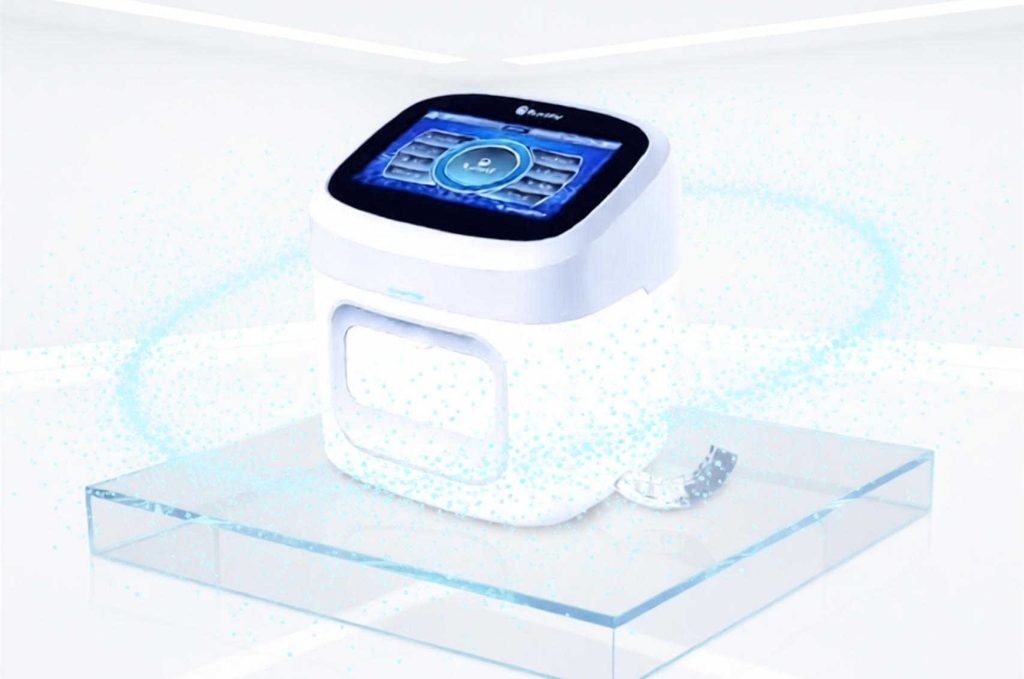
Here is the uncomfortable reality: clinics that screen iron status best are the ones that can run reticulocyte assays without scheduling headaches or long turnarounds. Iron deficiency does not announce itself on appointment-friendly days — it shows up in outreach vans, satellite clinics, and after-hours draws. A portable architecture changes the calculus, letting you measure functional iron where the patient actually is rather than shipping tubes to a core lab. The push for faster answers has driven real innovation in reagent-free blood counting, and laboratories exploring this route routinely ask how far liquid-free complete blood count technology has come. When your reticulocyte sequence can run on demand instead of waiting on reagent delivery schedules, early-iron screening becomes routine.
Choosing Hardware That Lets You Trust the Trend
Once you accept CHr as an early warning, the interpretation rules are simple. A CHr falling below roughly 28 to 29 picograms signals that newly produced red cells are under-filled — a functional or absolute iron deficit — regardless of what the mature RBC indices show that day. Trending matters more than a single value, so the analyzer’s repeatability across days (CLSI EP15 precision) decides whether your “trend” is biology or noise. Instruments with weak reticulocyte counting simply drift, and clinics that dismissed the parameter after one scattered analyzer usually find it behaves beautifully on better hardware. For sites weighing an open, transportable footprint, the portable multi-function blood analyzer is worth a deliberate trial — precisely the open-architecture reasoning sketched in an open letter on why your laboratory needs a portable analyzer. Each decision stacks toward one goal: catching iron deficiency anemia weeks earlier, when it is still cheap and easy to reverse.
أسئلة وأجوبة
**What is normal reticulocyte hemoglobin (CHr)?** Most analyzers report CHr values above roughly 28 to 29 picograms as consistent with adequate iron supply to new red cells; verify the clinical reference interval on your own instrument per CLSI practices.
**How is CHr different from ferritin?** Ferritin measures stored iron but rises with inflammation as an acute-phase reactant. CHr measures iron actually incorporated into reticulocytes over the past 2–3 days — a functional, real-time signal that inflammation does not mask.
**Can CHr be run on a standard CBC analyzer?** Only if the instrument includes a validated reticulocyte channel. Before relying on CHr, verify reproducible reticulocyte counting (CLSI EP15), because weak counting turns a powerful early marker into noise.