Here’s the mistake I watch clinics make over and over: they focus so hard on the purchase price that they ignore everything that happens the week after the box arrives. One facility I visited had a perfectly good analyzer sitting in a corner, untouched, because nobody had budgeted for the reagents it demanded. Another had bought a machine so complex that the only trained operator had quit — and there was no one left to run it. These aren’t exotic failures. They’re the predictable outcome of three common buying errors, and if you’re about to purchase a hematology analyzer, you should see yourself in one of them before it costs you.
Mistake One: Choosing a Reagent-Hungry Machine
The cheapest analyzer on the shelf is usually the most expensive to run. Traditional machines need bulky reagent packs — diluents, lysing agents, and cleaners — that aren’t just costly but often require cold-chain storage. In hot, remote clinics, that means refrigerators, power stability, and constant spoilage risk. If your reagents arrive spoiled, your results are worthless and your schedule is wrecked. The fix is a multi-function hematology analyzer built on a No-Liquid System: no reagents, no cold chain, almost no biohazard waste, and running costs that stay predictable instead of creeping up every quarter.
Mistake Two: Buying a Single-Purpose Box When You Need a Bench
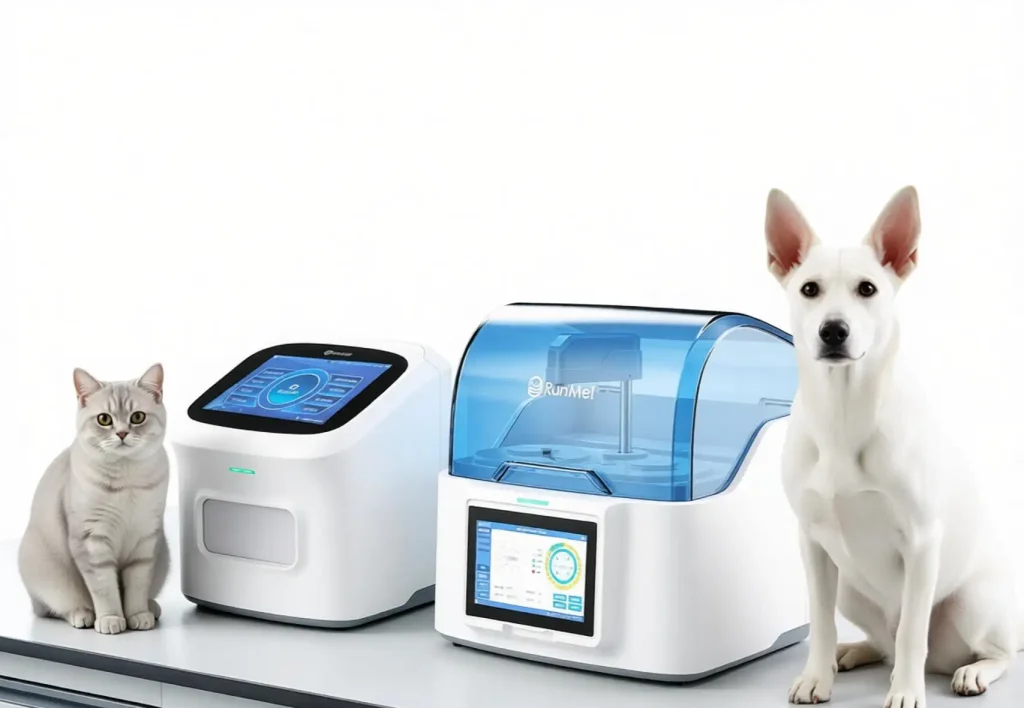
Many buyers purchase a hematology analyzer, then discover they also need chemistry and immunoassay testing — and buy three separate machines with three sets of consumables and three service contracts. A better approach consolidates. RunMei pairs its 5-part differential CBC analyzer with a clinical biochemistry analyzer for the full chemistry panel, and its veterinary model doubles as an animal hematology analyzer with immunoassay built in. One platform, one training curve, one maintenance burden — instead of a patchwork that drains your technicians’ time.
Mistake Three: Underestimating Training, Downtime, and Compliance
A complex interface isn’t just an inconvenience; it’s a recurring cost. Every new operator needs days of training, and every protocol update means retraining all over again. Meanwhile, downtime for calibration and service quietly eats your throughput. Finally, buyers who forget compliance find themselves stuck at customs or with a device their regulators won’t accept. The simplest safeguard is working directly with a credible medical device OEM that holds CE certification and ISO 13485 — the quality systems that give regulators and procurement teams confidence. RunMei backs this with a five-language UI that slashes training time, simple calibration, 24/7 multilingual support, low MOQ from a single unit, and regional protection for distributors.
The Takeaway
A hematology analyzer is only as good as the month-to-month reality of running it. Before you sign, ask: What does this cost to operate? How long does training take? What happens when it breaks? And is the compliance paperwork real? Answer those, and you’ll pick a machine that earns its place on your bench every day — not a paperweight you’re paying off for years. If you’re ready to compare options across the full diagnostic picture, an experienced OEM partner can show you a consolidated, reagent-free path that keeps your patients tested and your budget intact.