| Meta Title | Telehealth and Blood Analyzers: Remote Diagnostics Guide |
| Meta Description | Telehealth works best when data is local. See how connected blood analyzers give remote clinicians lab results to share with specialists instantly. |
| URL Slug | /telehealth-blood-analyzer-remote-diagnostics/ |
| Focus Keyword | telehealth remote diagnostics |
| Secondary Keywords | connected hematology analyzer, remote blood testing, telemedicine rural, digital health rural diagnostics |
| Publish Date | 2026-09-22 |
| Author | Dr. Elena Marsh, MD, MPH |
| Reviewer | Dr. James Okafor, PhD, FACB |
In ten years, the phrase “send the patient to a specialist” will sound as dated as “send the film to the radiologist” sounds today. The future of rural medicine is not moving people — it is moving information: the ultrasound image, the electrocardiogram, and above all the laboratory result. Telehealth has already proven that a specialist can manage a rural patient’s care from hundreds of kilometers away. What it cannot do — what no amount of bandwidth can do — is invent the data that the consultation depends on. That is where the blood analyzer comes in. The clinics that will lead the next decade of rural care are not the ones with the best cameras; they are the ones where the laboratory is local, digital, and connected. This guide explains how pairing telehealth with on-site blood analyzers creates remote diagnostics that actually work.
Why Telehealth Fails Without Local Laboratory Data
A telehealth consultation is only as good as the information available when the specialist logs in. The rural clinician can describe the patient, send a photo, even share an ultrasound clip — but the questions that dominate primary care are laboratory questions: Is the anemia severe or mild? Is the white count climbing? Are platelets dropping? Without a result, the remote specialist makes the same blind decision the local clinician would have made alone, and the telemedicine investment is wasted. Universal health coverage cannot be achieved without access to diagnostics — the WHO) has made this point repeatedly — and in rural areas, that access means local instruments feeding data to distant expertise.
The Data Layer That Makes Telehealth Work
What separates a telemedicine program that changes outcomes from one that merely changes workflows is the quality of its laboratory layer. That layer has four components: an on-site analyzer, structured result export (HL7, ASTM, or at minimum PDF), a patient identifier system, and a communication channel to the specialist. Modern hematology analyzers increasingly ship with all four built in — barcode sample identification, 100,000+ result storage, and connectivity that turns the analyzer into a node on the clinic’s digital network rather than an island.
How a Connected Blood Analyzer Transforms Remote Care

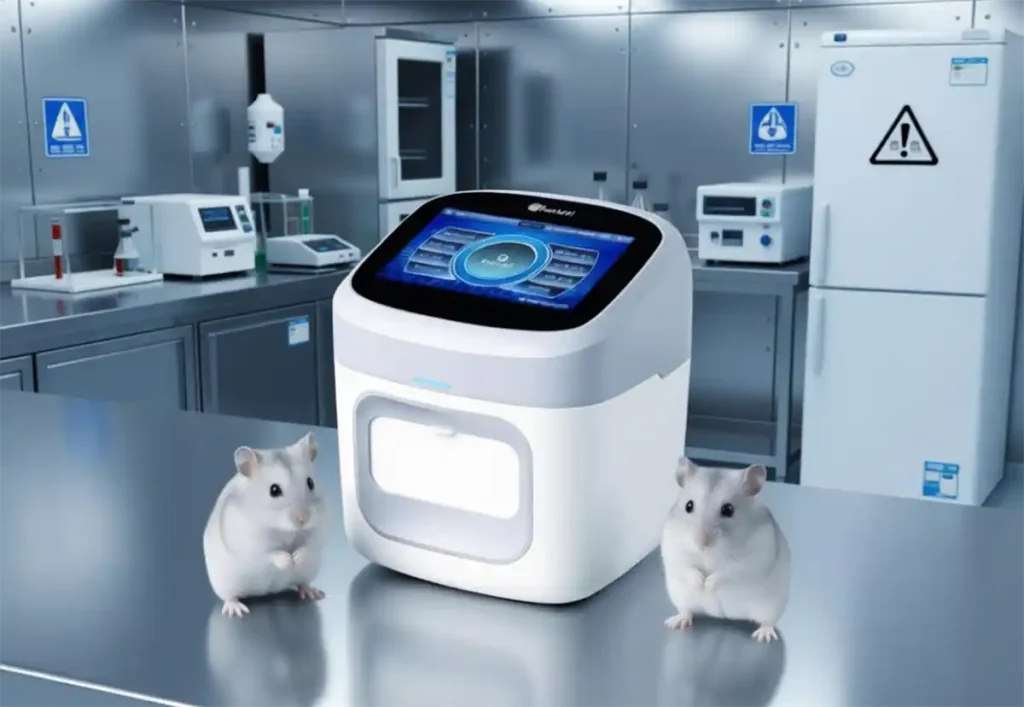
Figure: In telehealth networks, the blood analyzer produces the local data that makes the remote consult meaningful.
Same-Day Specialist Decisions
The classic rural problem: the local clinician suspects a blood disorder, the patient is referred to a specialist 400 kilometers away, and the specialist’s first act is to order the blood tests the referring clinic could not run. With a connected analyzer, the sequence inverts: CBC run locally in the morning, results transmitted with the referral, and the specialist’s first consultation is a treatment discussion instead of a test order. The patient travels once — for care, not for diagnosis. Near-point-of-care diagnostic approaches have been shown in recent clinical evaluations to expand timely diagnosis in peripheral health centers that previously had no testing capacity — the same principle applied to everyday hematology.
Chronic Disease Management at a Distance
Telehealth is at its strongest in chronic disease, where the specialist needs serial numbers: quarterly hemoglobin, monthly creatinine, glucose trends. A rural clinic with a connected analyzer can transmit those numbers to a remote specialist on schedule, turning a distant physician into a real primary-care partner. This is the model diabetes programs are already proving with point-of-care HbA1c devices — according to published program evaluations, more new diagnoses and more patients brought under control — and it scales to every chronic condition with a laboratory biomarker.
Outbreak Surveillance and Population Health
Connected analyzers quietly become public-health instruments. When results carry timestamps and location, a health district can watch anemia prevalence rise in a region, platelet counts fall during a dengue season, or white-cell patterns shift during an outbreak — in near real time, from primary care data rather than hospital records. This is the early-warning layer that central laboratories, physically remote from communities, can never provide.
The Technical Checklist for a Telehealth-Ready Analyzer

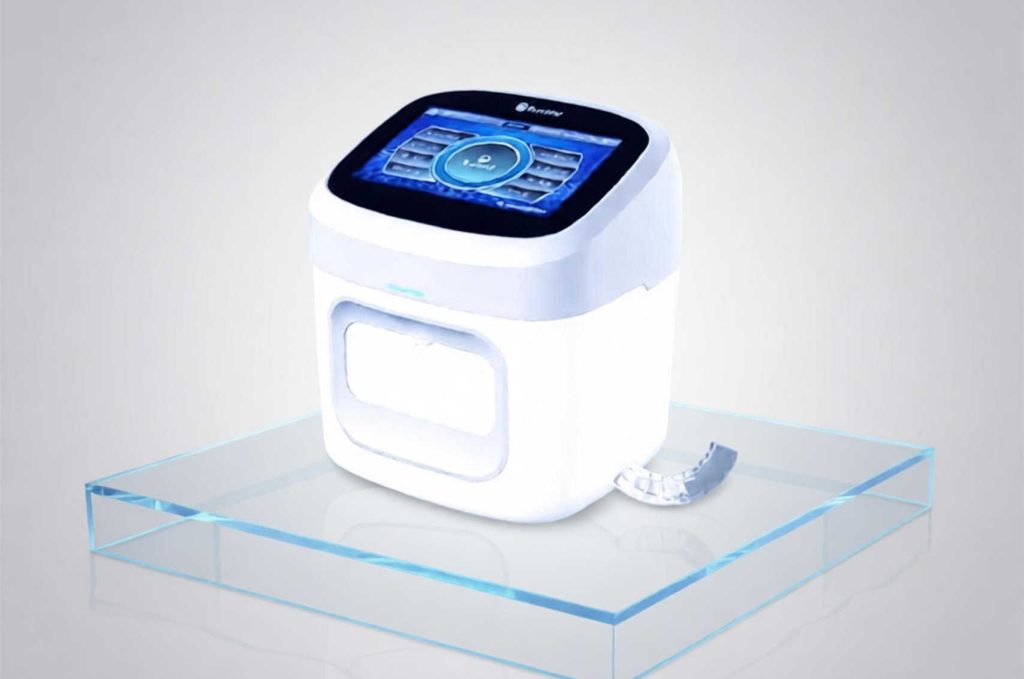
Figure: Result export, barcoding, and digital records are what connect a rural analyzer to a specialist a thousand kilometers away.
Not every analyzer can play in the connected-clinic model. Before you buy for a telehealth program, check these capabilities against your network:
1. Structured export — HL7 or ASTM output, not just a PDF; the result must flow into the electronic record without re-typing.
2. Barcode sample ID — eliminates the mix-ups that destroy trust in remote results.
3. Large onboard storage — 100,000+ results with search, so trends survive connectivity outages.
4. Simple connectivity — ethernet, Wi-Fi, or USB transfer; a machine that needs a technician to export data will not be exported from.
5. Multi-language interface — teams and referral partners may operate in different languages.
على compact point-of-care analyzers evaluated for central-laboratory replacement are a good starting reference for accuracy expectations, and the parameter and connectivity details are laid out in the clinical lab hematology analyzer guide. For the lowest-volume sites, a portable multi-function analyzer with cartridge-based results removes the sample-handling burden that otherwise blocks digital workflows.
Regulatory and Quality Foundations for Remote Results
Results that cross a network demand the same rigor as results that cross a bench. The quality-control discipline is unchanged — daily controls, calibrated instruments, documented performance — and the FDA’s CLIA-waived framework remains the reference for which tests can be run reliably by non-laboratory staff in clinic settings. Add the digital layer: secure transmission, patient privacy, and a clear policy on who interprets which results. Telehealth does not dilute responsibility; it distributes it, and the laboratory data must be trustworthy enough to carry clinical decisions made remotely.
Building the Connected Rural Clinic: A Practical Path
The mistake programs make is buying the camera before the laboratory. The practical sequence is the reverse:
1. Install the analyzer and master the quality system — connected care is built on trusted local data.
2. Digitize results — even a spreadsheet with dates and identifiers beats a paper drawer.
3. Establish the referral protocol — which results travel, to whom, and with what turnaround.
4. Open the telehealth channel — the specialist joins a system that already produces the data they need.
5. Close the loop — the specialist’s recommendations return to the clinic with the next testing interval attached.
The clinics I have watched succeed at remote diagnostics share one trait: they treat the analyzer as an information device, not a test machine. The RunMei Health diagnostic portfolio reflects that shift — instruments designed around automation, connectivity, and simplicity rather than laboratory exclusivity — and it is the direction the whole industry is moving. Telehealth is the future of rural medicine only if the data exists to make it work. Put the analyzer in place first, and the rest of the connected clinic follows naturally.
أسئلة وأجوبة
- Q: Do blood analyzers need special connectivity for telehealth?
A: Most modern analyzers export results via HL7, ASTM, USB, or PDF. For telehealth, structured export (HL7/ASTM) and barcode sample ID are the capabilities that matter most, so results flow into electronic records without error.
- Q: Can a remote specialist make treatment decisions from rural clinic lab results?
A: Yes, when the analyzer is quality-controlled and operated correctly. The FDA’s CLIA framework defines which tests are reliable when run by non-laboratory staff, and connected analyzers add the structured data that remote specialists need for confident decisions.
- Q: How does on-site testing improve telemedicine outcomes?
A: Telemedicine outcomes depend on the data available at the consultation. On-site blood analyzers produce the laboratory numbers — hemoglobin, WBC, platelets — that dominate primary-care decisions, so the remote specialist plans treatment rather than ordering more tests.
Disclaimer
This article is for general educational and informational purposes only and does not constitute medical advice, a product endorsement, or a guarantee of diagnostic performance. Telehealth practice is subject to local licensure, privacy, and security regulations. Laboratory equipment decisions should be made in consultation with qualified professionals, and all devices must be operated in accordance with the manufacturer’s instructions, local regulations, and applicable quality standards.
About the Author
Dr. Elena Marsh, MD, MPH is a board-certified clinical pathologist with 14 years of experience supporting primary care and rural health programs in North America, Africa, and Southeast Asia. She specializes in laboratory capacity building, point-of-care testing implementation, and diagnostic quality systems.
Reviewer
Dr. James Okafor, PhD, FACB is a clinical laboratory scientist and Fellow of the American College of Clinical Biochemistry, with 20 years of experience in laboratory quality assurance and regulatory compliance for in-vitro diagnostics.