Everything you’ve been told about blood analyzers is upside down. Reagents are supposed to be unavoidable. Calibration is supposed to be a monthly ritual. Cold storage is supposed to eat your lab space. And downtime is just the price of doing diagnostics. The clinic I want you to picture walked in believing all of it — and left the entire story in pieces.
The Opening Scene: A Bench Covered in Bottles
Dr. M’s small hospital had a serviceable old coulter-style instrument, the kind Brand A and Brand B have sold by the thousands. Every morning the technician ran a priming cycle, watched the fluidics, and juggled reagent packs that arrived in temperature-controlled boxes. When the machine flagged cells, nobody trusted it — so someone grabbed a microscope and re-checked by hand. Turnaround time crept up, and so did the budget. Dr. M figured that was simply the cost of doing medicine.
The Turning Point
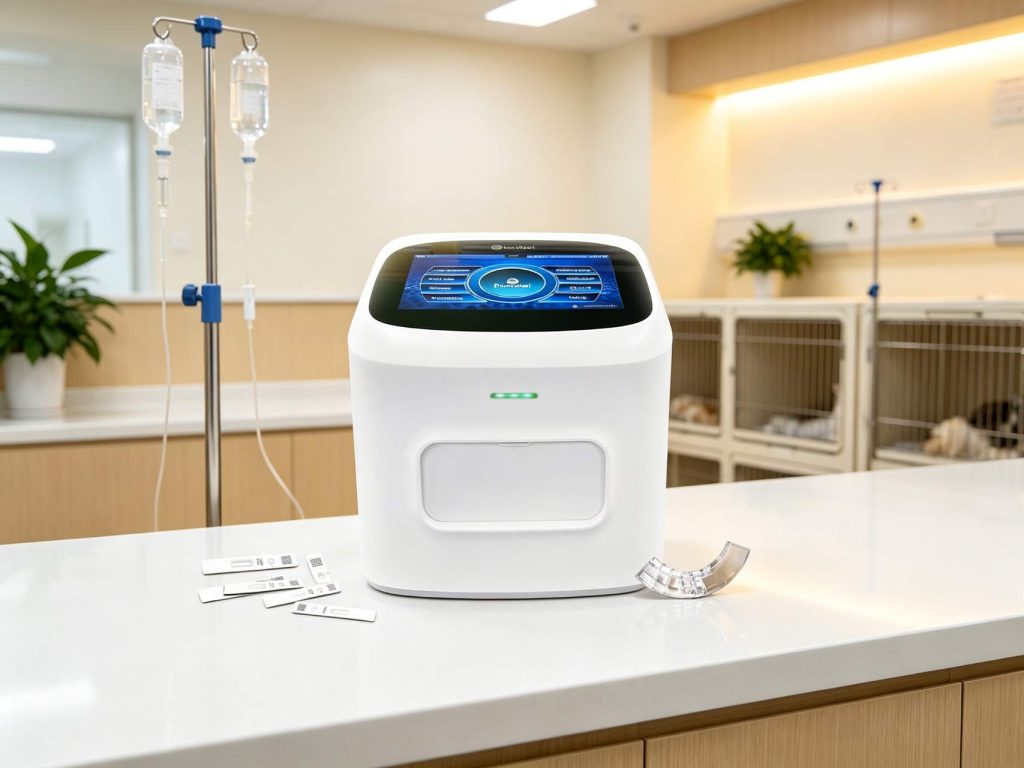
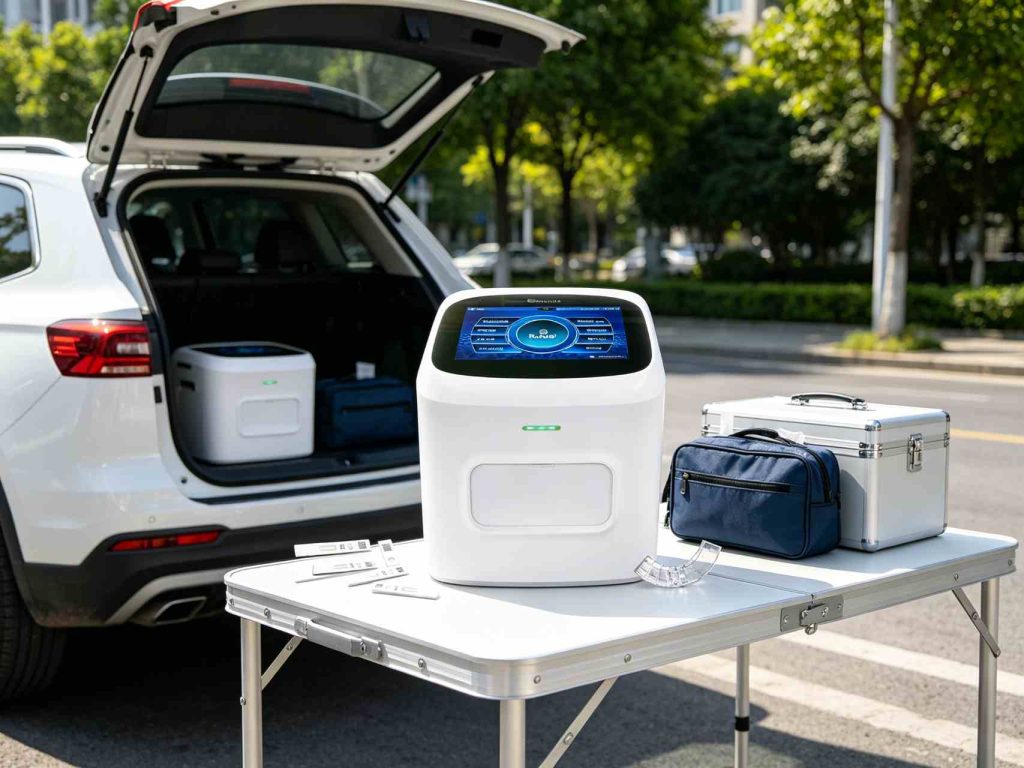
Then a colleague suggested he look at a portable unit built around a no-liquid architecture. No reagents. No cold chain. No priming ritual. Instead, a 5-part differential CBC delivered through AI cell imaging — direct visualization of the very cells being counted, right on screen. That single feature felt almost rebellious, because it did away with the “trust the readout, hope it’s right” anxiety that had become his baseline.
What Actually Happened Next
The machine arrived, sat on a small bench, and within a single shift the technician was running it solo — the training window measured in hours, not weeks. The cold-storage refrigerator went silent and free. The waste-disposal contract lapsed because there was nothing to dispose of. And because the same unit runs immunoassay alongside hematology, Dr. M consolidated what used to be two instruments into one footprint. It solved pain points he’d built an entire workflow around.
The Quiet Aftermath
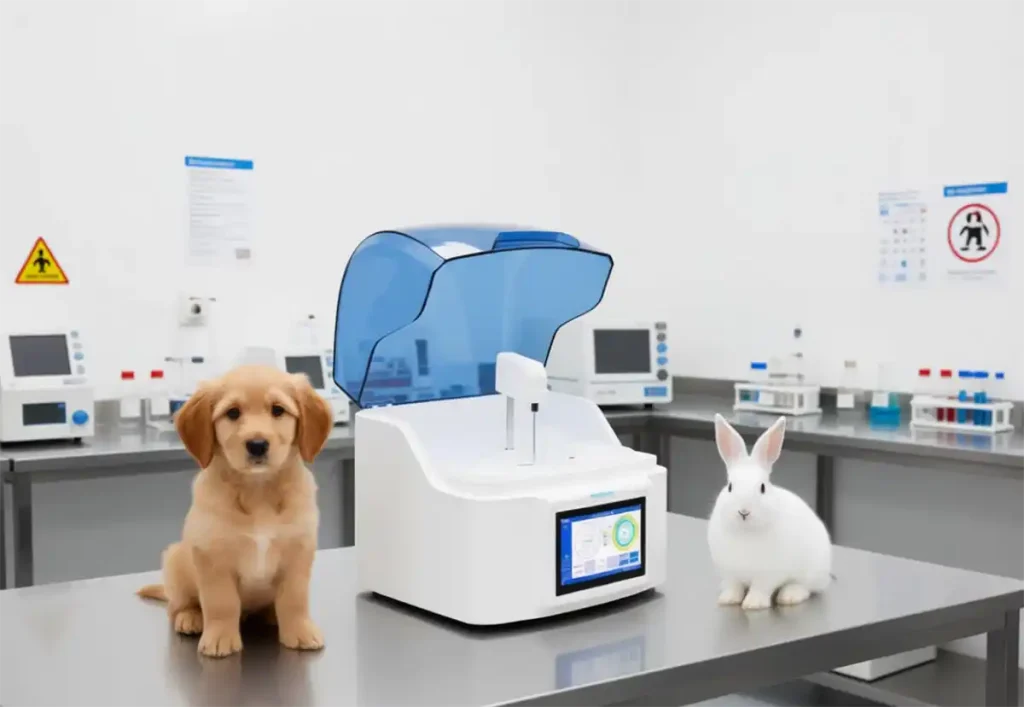
Follow-up visits showed the same unit still humming, reinforced by 24/7 support and the peace of mind of CE certification from an ISO 13485 factory. What started as a cautious trial with a single unit — thanks to a MOQ that begins at one piece — became the backbone of the lab. A point-of-care analyzer and a clinical biochemistry analyzer can share that bench; and anyone managing animal patients will find the animal hematology analyzer fills the same role. But the real story is simpler: the rules you think are fixed aren’t. Every hematology analyzer for sale isn’t created equal — and the one that breaks the reagent habit changes everything.