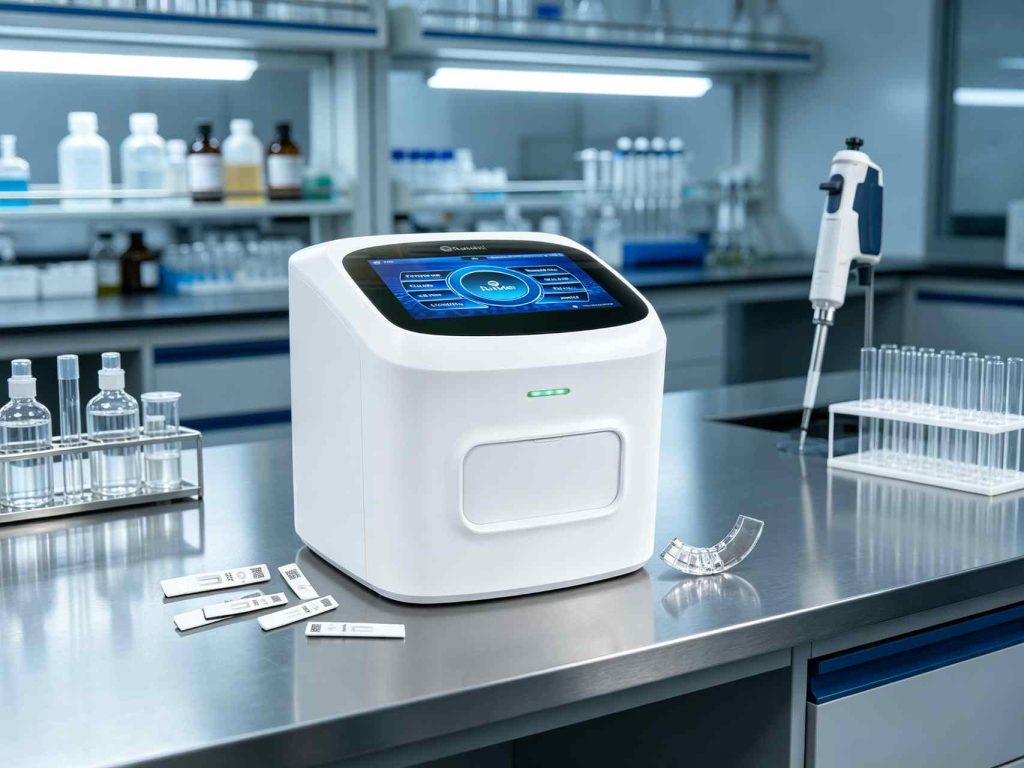
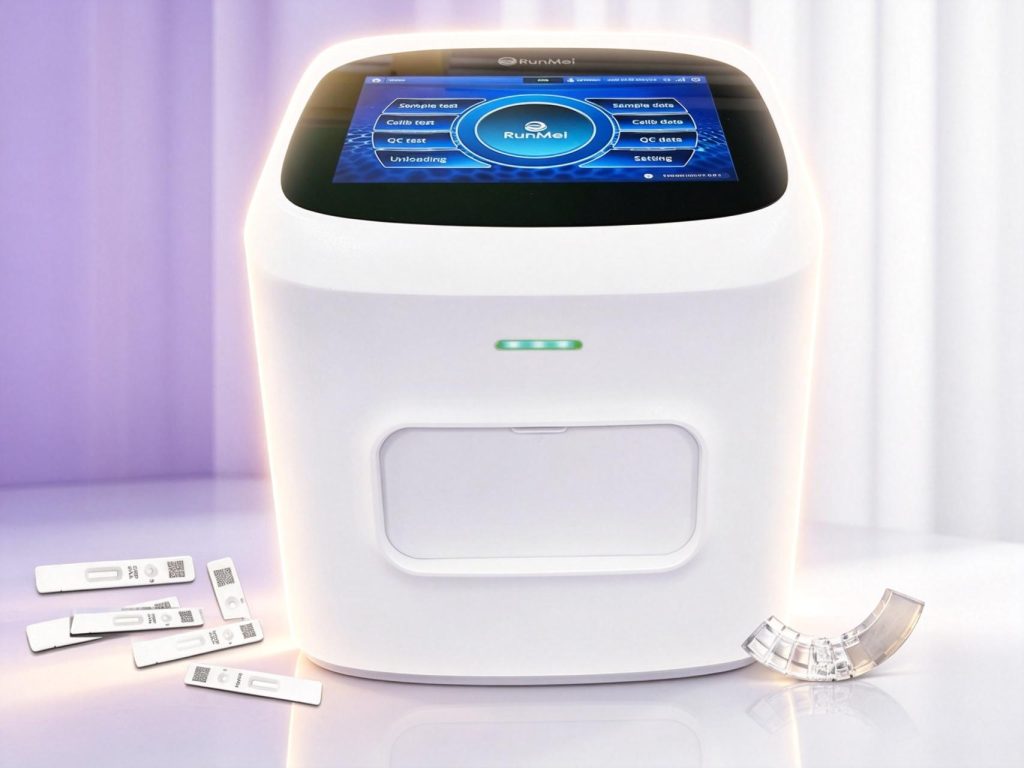
Here is a bold claim most lab managers won’t believe at first: the biggest barrier to reliable blood counting today is not the sample, and not the technician — it is the reagents sitting in your cold chain. That single fact explains more about laboratory downtime, hidden cost, and waste than any other. A modern hematology analyzer should remove that barrier, not rebuild it.
What a Hematology Analyzer Actually Does
A hematology analyzer counts and classifies the cells in a blood sample, reporting the red cells, white cells, and platelets that clinicians rely on for diagnosis. The most capable devices add a five-part differential, separating the white cell population into neutrophils, lymphocytes, monocytes, eosinophils, and basophils. In human medicine, this output feeds directly into workflows governed by FDA in-vitro diagnostics regulation under 21 CFR Part 809, and in Europe under CE and the In Vitro Diagnostic Regulation (IVDR), whose transition deadlines have been a running concern for manufacturers and labs alike.
Why Wet Chemistry Became a Burden
Traditional wet analyzers depend on liquid reagents that must be stored cold, monitored for expiry, and pipetted precisely. That model generates recurring procurement uncertainty, cold-chain logistics, and per-test consumable cost that quietly erodes margins. When reagents run out or spoil, the instrument sits idle, which means downtime, recalibration, and frustrated physicians waiting on a CBC. These are exactly the pain points that an AI blood cell analyzer built on a No-Liquid System is designed to solve.
The No-Liquid System: Fewer Reagents, Less Maintenance, Lower Waste
By eliminating liquid reagents, a no-liquid system removes cold-chain storage, cuts per-test consumable cost, reduces maintenance cycles, and shrinks waste — practical advantages for clinics and field labs that cannot guarantee refrigerated reagent supply. The same device also brings portability and a five-part differential CBC, so diagnostic power no longer requires a dedicated, expensive laboratory footprint.
Beyond Blood: A Multi-Function Workhorse
For clinics with limited bench space, a multi-function hematology analyzer that combines hematology and immunoassay in one compact unit is compelling. Fewer instruments mean fewer service contracts, less training, and a smaller footprint, while running on a 5-language interface that lowers the learning curve for diverse teams.
Hematology Beyond Human Patients
The same logic extends to veterinary practice. A البيطري محلل that delivers five-part differentials for animal patients — with portability for house calls and low maintenance — gives veterinarians reliable results where reagent logistics are often worse than in human labs.
Choosing a Hematology Analyzer With Confidence
Whichever route you take, prioritize instruments carrying CE marking and ISO 13485 certification, and review the manufacturer’s claims against peer-reviewed literature rather than marketing alone. Keep procurement risk low by looking for low minimum order quantities and responsive 24/7 support, and protect your market position through regional protection agreements. To stay current on equipment and regulatory trends, follow diagnostic equipment news from sources that actually track IVDR and FDA updates.