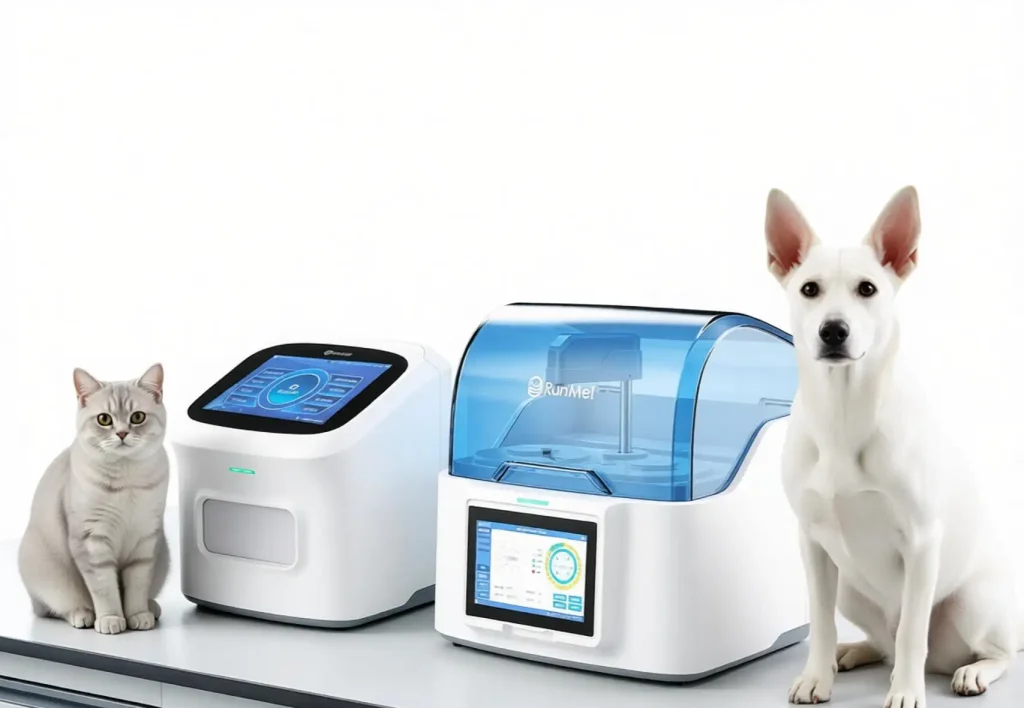
Be honest — how much did you spend on reagents last month? If that number makes you wince, you’re not alone. Most clinics I talk to are surprised the ongoing chemistry bill ends up costing several times what the machine itself did. The good news? There’s a smarter way to think about your veterinary hematology analyzer, and it doesn’t start with “how much does it cost” — it starts with “how much will it cost to run.”
That “Cheap” Analyzer Gets Expensive Fast
We’ve all done it. We compare sticker prices, pick the budget entry, and figure the consumables are a later problem. Then the later problem arrives with invoices. Brand A wants proprietary reagent packs with cold-chain shipping. Brand B locks you into service contracts. Brand C’s calibration disc runs out every other week. Before long, routine CBCs (complete blood counts) are a loss leader instead of a profit center.
What a No-Liquid System Actually Changes
Here’s the part that surprises people: you can run a full 5-part differential CBC without liquid reagents at all. No reagent cold storage, no waste disposal headaches, no daily priming to keep lines from clogging. That directly attacks the pain points labs complain about most — high reagent cost, maintenance downtime, and the constant fiddling. Pair that with direct AI cell imaging — the “golden standard” way to actually see the cells you’re counting — and you suddenly trust the numbers instead of cross-checking everything by eye.
One Machine, Fewer Moving Parts (and Less Headache)
Multi-function has become a buzzword, but it’s genuinely useful here. The BCA-320 handles hematology و immunoassay in one small unit, and it’s compact enough to sit on a bench instead of a dedicated table. When you work with an IVD manufacturer that also offers a mini biochemical analyzer, you can build a whole bench without juggling five vendors. That consolidation is where turnaround time starts to fall and staffing strain eases.
What to Check Before You Commit
Look beyond the brochure. Ask about consumable cost per test, calibration frequency, and whether training takes days or hours. Ask if you can start with a single unit — because a low MOQ (from just one piece) makes it painless to trial before you scale. And insist on CE certification and an ISO 13485 factory, not just a friendly sales rep. Most of all, stop renting reagents from your analyzer. A portable hematology analyzer that runs dry can repatriate that profit right back into your practice.