Meta Title: Task-Shifting Blood Testing to Community Health Workers | RunMei
Meta Description: Task-shifting blood testing to community health workers: portable analyzer screening at the village level, with thresholds, registers and supervision.
URL: https://runmeihealth.com/blood-testing-community-health-workers-village
By Dr. Elena Marchetti · MD, MPH, Rural Health Diagnostics | Reviewed by Prof. Daniel Mwangi (PhD, MSc, Laboratory Systems Advisor) | Published: 2026-10–09
The community health worker knows every household, every pregnancy and every fever in her village. Everything below comes back to task-shifting blood testing and the diagnosis decisions clinics actually make, from procurement to daily operation. What she does not have is a laboratory. Task shifting is the art of giving her the tools, and the portable blood analyzer is one of the tools that finally fits her hand and returns results at the doorstep. The 5-part hematology analyzer catalog covers the instruments rural programs order most often.
Few purchases in rural health care invite as many opinions as task-shifting blood testing. This article sets the opinions aside and works from what the data, the protocols and the field experience actually show about rural health care. About 3 billion people worldwide still cannot reach a health facility within one hour on foot, a figure the WHO has used to argue for diagnostics that travel to patients instead of the other way around. What survives is a short set of principles that hold across budgets and geographies. WHO . Facilities weighing the options can browse the blood analyzer instruments range to compare configurations side by side.
Key Takeaways
- Community health workers are the established first contact of rural primary care.
- A portable blood analyzer extends their role from referral to screening.
- Protocols, registers and supervision keep task-shifted testing safe.
- The village becomes a testing point instead of a referral dead end.
The Worker Who Already Knows the Village
Task shifting is built on an existing strength: the community health worker who is trusted, present and trained in the basics of care. Adding a blood test to her kit does not create a new provider; it completes the one who already exists. The referral she makes with a count in hand is more useful than the referral she makes on suspicion alone.
The diseases the worker screens for are the diseases of the village: anemia in women and children, fever that could be malaria, the pale child who needs more than advice.
The community decides whether the task-shifting blood testing lives or decorates. A machine that sits in a room patients do not enter is a machine without value; a machine that is explained, trusted and used is a service. Programs that involve community health workers, explain results in the local language and let the community see the benefit get the utilization that makes the whole investment real. The same principle holds for task-shifting blood testing: measure, record, act. FDA . Programs that want a deeper differential can read the best value hematology analyzer page for the trade-offs.
The Screening Point at the Household Door
The worker does not wait for the village to come to her; she walks the route of her register. The portable analyzer turns each visit into a possible screening encounter, and the count travels with the referral when one is needed.

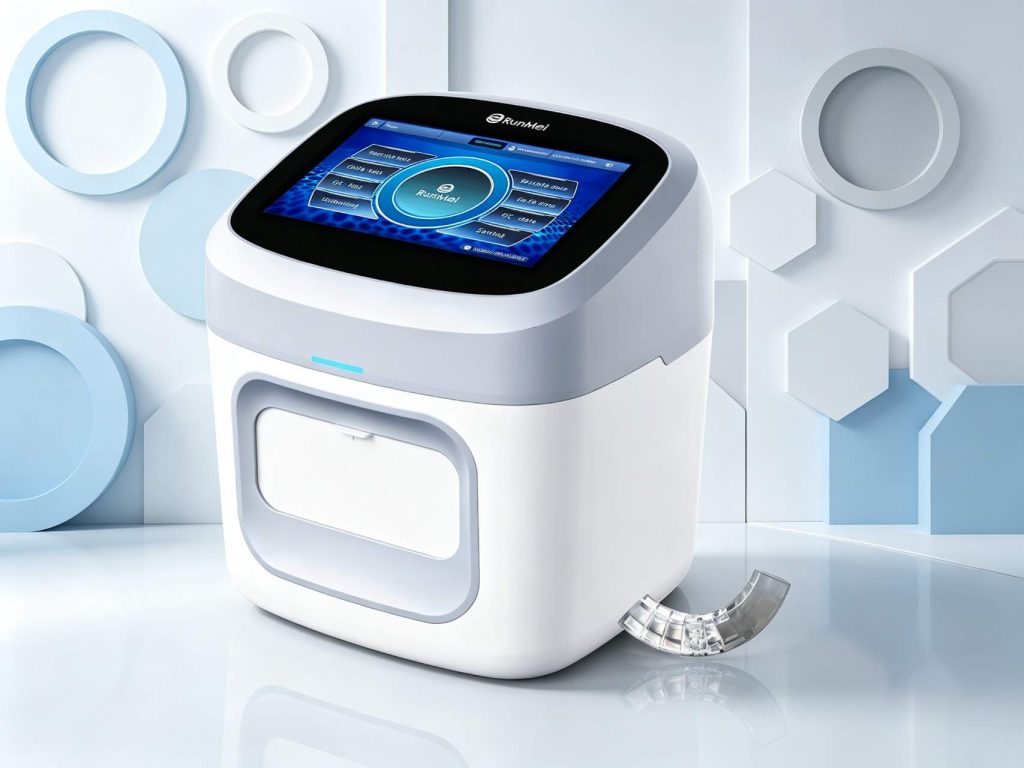
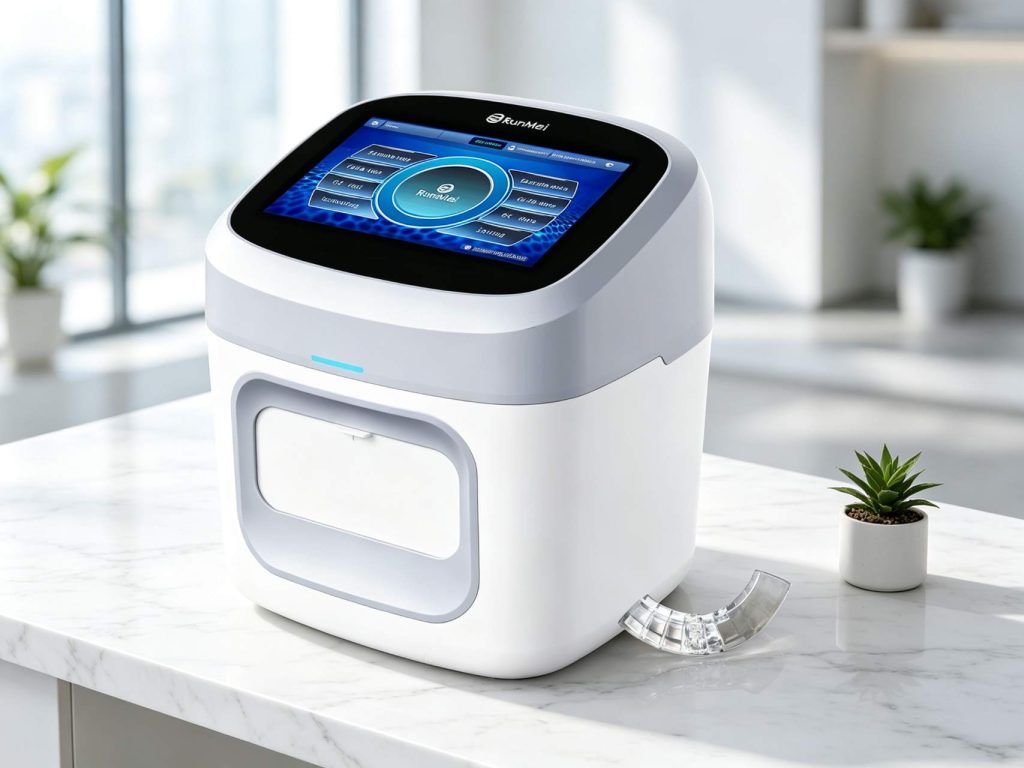
Fig. 1 — RunMei open-channel blood analyzer in a rural clinic setting. Portable blood analyzer community health worker village testing. | Alt: portable blood analyzer community health worker village testing
The Rules That Keep Task Shifting Safe
The safety of task-shifted testing lives in the written rules: which patients are tested, what the thresholds are, who interprets, and who audits. The worker follows the protocol; the clinic does the interpretation; the supervisor reviews the register monthly. Each role is narrow, and the system is safe because it is narrow.
The equipment must match the model. A portable analyzer with a simple interface, battery operation and a small sample requirement fits the worker’s bag, the household visit and the training budget.
the task-shifting blood testing is the seed; the program is the tree. Training, supervision, registers, quality checks and a supply line that outlasts the donor — these are what turn a machine into a service that keeps running. Programs that design for sustainability from the first installation meeting are the ones still running at the five-year review. task-shifting blood testing is the instrument at the center of that workflow. Budget teams should see the open-channel blood analyzer cost analysis before signing off on procurement.
The Threshold the Worker Memorizes
The protocol gives the worker two numbers to act on: the normal range and the referral threshold. She does not interpret disease; she recognizes the out-of-range result, refers with the number, and documents. That is the whole of her task, and it is enough to change outcomes.
The Village Register as the Program’s Memory
The register the worker keeps is the program’s memory and the supervisor’s evidence. Every count, every referral and every outcome is a line, and the lines add up to a picture of the village’s health that no distant survey can match.
The review meeting reads the register with the worker, not about her. The questions are practical: which households were missed, which referrals came back, which thresholds need adjusting. the task-shifting blood testing’s data makes the meeting a planning session.
Results become evidence only when they are recorded. A register — patient, date, count, action taken — turns a stream of tests into a picture of the community’s health, and that picture is what justifies the program’s continuation. Clinics that keep the register find it writes their own case for support. Facilities that already run task-shifting blood testing report the same pattern.
The Monthly Supervision Visit
The supervisor carries control material, checks the analyzer’s performance, and reviews a sample of results against the clinic’s own testing. The monthly visit is the quality assurance that keeps the village result trustworthy.
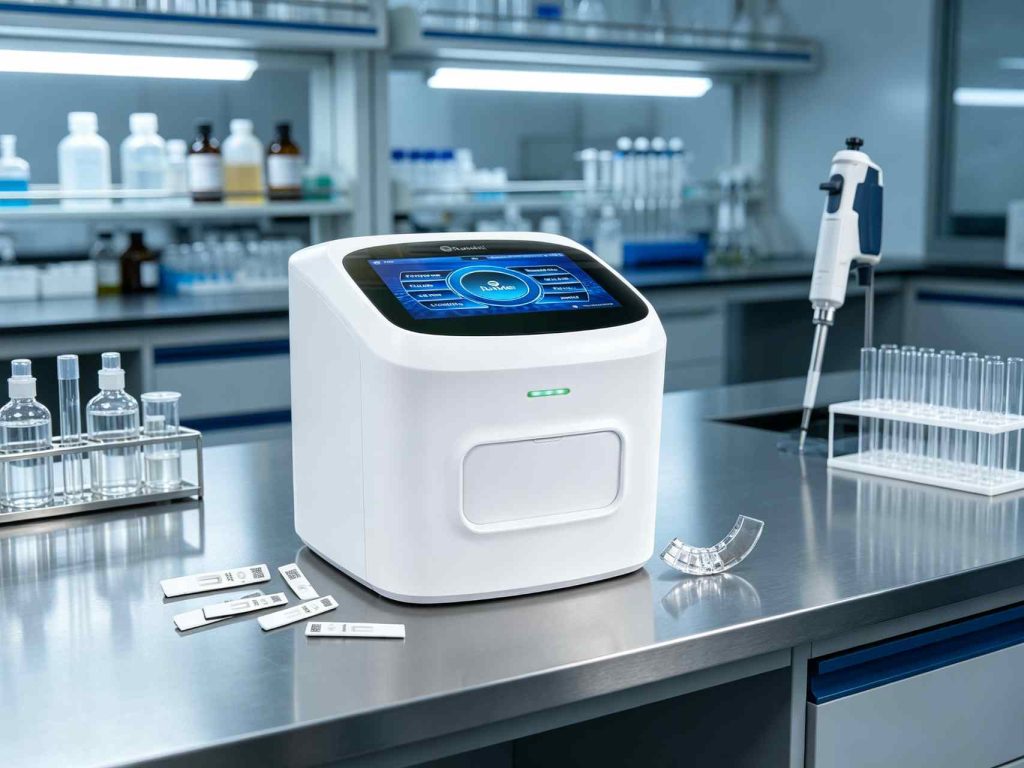
Fig. 2 — RunMei best value hematology analyzer during routine testing. Battery powered blood analyzer task shifting household screening. | Alt: battery powered blood analyzer task shifting household screening
The Data Design
Every result is a data point, and the data design decides whether those points become evidence or disappear. The design is simple: a register with fixed fields, a standard format for reporting upward, and a quarterly feedback loop from the district. the task-shifting blood testing produces the numbers; the design is what makes them mean something.
The same pattern repeats in facility after facility: the clinic that measures its own patients keeps them, and the clinic that sends them away loses them. That arithmetic changes inside the first year, not through gadget appeal, but through fewer referrals, fewer repeat visits and a patient list that finally trusts the results it is given.
The Register Fields
Six fields cover most programs: date, patient identifier, age, sex, the key counts, and the action taken. More fields than that and the register stops being kept; fewer and it stops being useful. The six-field register is the version that survives contact with a busy clinic.
The Feedback Loop
Clinics sustain reporting when the system reports back — a quarterly summary of what their catchment shows, compared with the district, acknowledged by name. The feedback loop is the difference between a register that grows and one that quietly stops.
It also strengthens community health worker testing, a benefit that rarely appears in the budget line. None of this holds together without attention to task shifting diagnostics. Programs that pair task-shifting blood testing with village level blood testing report the strongest results.
الأسئلة المتداولة
Q1. Can a community health worker run a blood analyzer?
Yes, when the model is narrow: a simple protocol, a portable analyzer, and supervision that checks quality and reviews the register.
Q2. Which tests are appropriate at the village level?
The CBC’s core parameters, especially hemoglobin for anemia screening and white cell counts for fever triage, under the clinic’s interpretation.
Q3. Who interprets the results?
The clinician. The worker follows thresholds and refers; interpretation and treatment stay with the trained health professional.
Q4. How is quality controlled in the village?
Monthly supervision with control material, a written register, and regular comparison of village results against the clinic’s own analyzer.
Sources & References
- World Health Organization data show that in lower-income countries a large share of the rural population still lives beyond the reach of a functioning laboratory; the WHO recommends primary care facilities be reachable within roughly 5 km, yet global estimates indicate about 3 billion people cannot reach a health facility within one hour on foot. Source: WHO — https://www.who.int/news-room/fact-sheets/detail/primary-health-care
- Under 21 CFR 864.5220, automated differential cell counters are Class II medical devices that require FDA 510(k) premarket clearance before they can be marketed in the United States. Source: FDA — https://www.ecfr.gov/current/title-21/chapter-I/subchapter-H/part-864/subpart-C/section-864.5220
- Reviews published in the New England Journal of Medicine have repeatedly underlined that the single most reliable way to improve outcomes in low-resource settings is to shorten the interval between clinical presentation and a correct laboratory diagnosis. Source: NEJM — https://www.nejm.org/
Disclaimer
This article is for informational and marketing purposes only and does not constitute medical advice, a product claim, or a regulatory certification statement. Device availability, regulatory status (FDA 510(k)/CE/ISO 13485) and specifications vary by country and model; always verify current approvals with the manufacturer and consult local regulations before procurement or use.