Meta Title: Blood Analyzer for Sickle Cell Screening in Rural Clinics | RunMei
Meta Description: Sickle cell screening in rural clinics. What a blood analyzer adds to case finding, crisis monitoring and the referral decision.
By Dr. Elena Marchetti · MD, MPH, Rural Health Diagnostics | Reviewed by Prof. Daniel Mwangi (PhD, MSc, Laboratory Systems Advisor) | Published: 2026-09-28
The child is six, small for her age, and in the clinic for the third time this year with pain that moves around her body. This guide answers the specific questions that surround blood analyzer: what it delivers, what it cannot do, and what the true cost of ownership looks like. The clinic has no sickle cell test, so the family hears the same word twice: ‘observe’. The blood count cannot diagnose sickle cell disease, but it can point to it hard enough to change the child’s entire care path. The RUNMEI blood analyzer catalog covers the instruments rural programs order most often.
This is written as a field briefing, not an advertisement. It deals in the realities of blood analyzer in Rural Clinics: power, training, reagents, maintenance and trust. The WHO reports that noncommunicable diseases now account for about 37% of deaths in the African Region, which makes the general-purpose blood count an increasingly central tool in rural primary care. If you are planning an installation — or defending an existing one — the checklists and protocols here will spare you lessons that other facilities have already paid for. WHO . Facilities weighing the options can browse the blood biochemistry analyzer range to compare configurations side by side.
Key Takeaways
- A CBC is not a sickle cell test, but its pattern flags patients who need one.
- Chronic anemia and its crises are followed with serial blood counts.
- Routine screening through existing CBC workflows finds children earlier.
- Early identification changes outcomes through vaccination, prophylaxis and education.
The Pattern That Points to Sickle Cell Disease
Sickle cell disease announces itself in the blood count before it is ever named: a chronic normocytic anemia, a high reticulocyte demand, a white cell count that rises during pain crises, and platelets that vary with the disease’s activity. None of these is diagnostic alone, but together they create the suspicion that justifies the confirmatory test.
In regions where sickle cell disease is common and screening programs are thin, that suspicion is the difference between a child observed for years and a child diagnosed and managed. The confirmatory test may still live at the district hospital, but the CBC that raised the question can happen at the village clinic.
the blood analyzer is the seed; the program is the tree. Training, supervision, registers, quality checks and a supply line that outlasts the donor — these are what turn a machine into a service that keeps running. Programs that design for sustainability from the first installation meeting are the ones still running at the five-year review. That is the practical reality of blood analyzer in the field. FDA . Programs that want a deeper differential can read the محلل أمراض الدم page for the trade-offs.
The Child Who Keeps Coming Back
The child with repeated painful episodes, recurrent infections and a low hemoglobin is the classic case that screening catches. A blood analyzer on site lets the clinician document the pattern over visits instead of guessing, and documented patterns get referred.
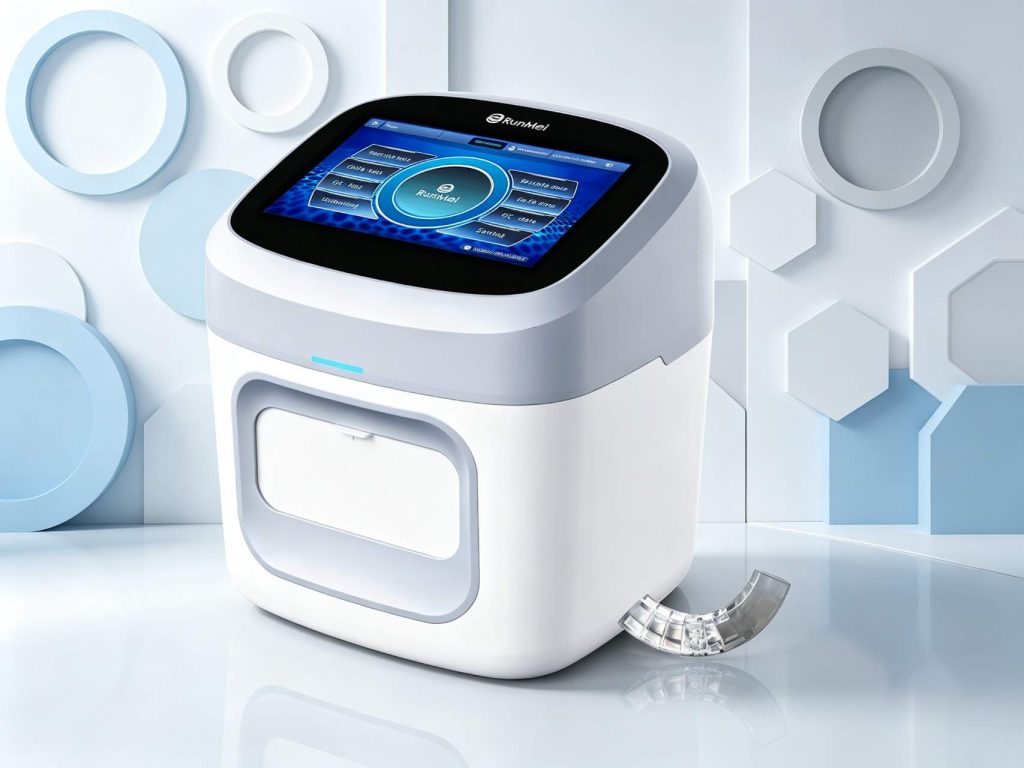
Fig. 1 — RunMei 5-part differential blood analyzer in a rural clinic setting. Blood analyzer sickle cell screening rural clinic. | Alt: blood analyzer sickle cell screening rural clinic
Monitoring the Diagnosed Patient
Once the child is diagnosed, the blood count becomes the monitoring instrument. Serial hemoglobin tracks the severity of the chronic anemia; white cell counts rise with crisis and infection; and the trend tells the local clinician when the disease is quiet and when it is turning. The rural clinic with a blood analyzer can follow the disease between specialist visits, which are rare and expensive.
The protocol is simple: a scheduled count at every review, an urgent count at every episode of pain or fever, and a referral line that triggers on defined thresholds. The specialist sees a documented history instead of a blank page.
The maintenance calendar is short, posted and owned: daily checks, weekly cleaning, quarterly deep service, with a name on every line. In facilities without a biomedical engineer, these routines are the entire maintenance system — and they are enough, when someone owns them. the blood analyzer that is cleaned on schedule is the machine that does not fail on the day it matters. And this is exactly where blood analyzer changes the decision. Budget teams should see the 5-part differential blood analyzer cost analysis before signing off on procurement.
The Crisis Visit Count
The count taken during a painful episode is the most informative one of the year: it captures the white cell surge and the hemoglobin dip that define the crisis. Facilities that test every crisis visit build the trend line that guides the whole management plan.
Fig. 2 — RunMei blood biochemistry analyzer during routine testing. Hematology analyzer chronic anemia monitoring sickle cell. | Alt: hematology analyzer chronic anemia monitoring sickle cell
Building Screening Into Existing Workflows
Screening does not need a separate program; it needs an alert eye on an existing test. Every CBC run in the child health clinic is a screening opportunity. The clinician who asks ‘why is this count low and why does it stay low’ at the second abnormal result has turned routine testing into case finding.
The same logic applies to antenatal screening, where identifying parents with the trait informs counselling, and to newborn follow-up in high-prevalence regions. the blood analyzer does not carry the whole program, but it is the instrument through which the program meets the patient.
Procurement is where the future is decided. The scorecard should read: accuracy evidence, per-test reagent cost delivered to the clinic, training included, spares in-country, and a reference site you can call. Price matters; the total cost of five years matters more. The clinic that buys on the five-year number is the clinic that is still testing in year five.
The Two-Strike Rule
A practical rule for the busy clinic: any child with two abnormal CBCs in six months, or one abnormal CBC with a suggestive clinical picture, is referred for confirmatory testing. The rule is simple enough to survive the workload and sharp enough to find the cases.
The Referral Design
the blood analyzer changes where the referral line is drawn. With blood analyzer in place, routine monitoring stays local and referral reserves itself for what the clinic cannot do: confirmatory testing, specialist review, severe or complicated cases. The design work is agreeing the line — in writing, with the district — before the machine goes live.
What Stays Local
Routine counts, serial monitoring and treatment follow-up stay local once the results are trustworthy. The clinic that can show its controls and its register earns the right to keep these cases — and the district earns back its referral capacity for the cases that genuinely need it.
What Travels With the Patient
When referral is needed, the result travels: the count, the date, the trend if there is one, the treatment already given. A referral with the numbers attached changes what the receiving clinician can do on arrival — and the register is what makes the attachment routine.
The same logic applies to sickle cell screening, which clinics in the region often underestimate. For teams accountable for hemoglobin variants, the practical effect shows up within the first month. Decisions about chronic anemia monitoring are usually made at district level — and the register feeds them.
الأسئلة المتداولة
Q1. Can a blood analyzer diagnose sickle cell disease?
No. The CBC raises the suspicion through anemia patterns, while confirmatory testing — hemoglobin electrophoresis or similar — is needed for the diagnosis.
Q2. What CBC findings suggest sickle cell disease?
Chronic normocytic anemia, elevated white cells during crises, and fluctuating platelet counts in a child with recurrent pain or infection.
Q3. How is the diagnosed patient monitored at the rural clinic?
With scheduled counts at reviews and urgent counts during pain or fever episodes, following hemoglobin and white cell trends between specialist visits.
Q4. Does screening require a separate program?
No. Watching for abnormal patterns in routine CBCs and applying a simple referral rule turns existing testing into effective case finding.
Sources & References
- The WHO Regional Office for Africa reports that noncommunicable diseases now account for about 37% of deaths in the African Region, and that shortages of trained specialists, diagnostics and clinical protocols continue to limit access to quality care. Source: WHO — https://www.who.int/news-room/fact-sheets/detail/noncommunicable-diseases
- Under 21 CFR 864.5220, automated differential cell counters are Class II medical devices that require FDA 510(k) premarket clearance before they can be marketed in the United States. Source: FDA — https://www.ecfr.gov/current/title-21/chapter-I/subchapter-H/part-864/subpart-C/section-864.5220
About the Author & Reviewer
Author: Dr. Elena Marchetti, MD, MPH, Rural Health Diagnostics. Dr. Marchetti is a physician and diagnostics specialist who has spent the past fifteen years designing point-of-care programs for district hospitals and rural clinics in lower-resource settings. Her field work focuses on how laboratory devices survive daily use outside the laboratory, from staff training to reagent logistics.
Reviewer: Prof. Daniel Mwangi, PhD, MSc, Laboratory Systems Advisor. Prof. Mwangi directs laboratory quality programs for a network of rural health facilities and teaches clinical laboratory science. He has reviewed point-of-care device deployments across Africa and Southeast Asia, with a particular interest in quality control and operator competency outside the main laboratory.
Disclaimer
This article is for informational and marketing purposes only and does not constitute medical advice, a product claim, or a regulatory certification statement. Device availability, regulatory status (FDA 510(k)/CE/ISO 13485) and specifications vary by country and model; always verify current approvals with the manufacturer and consult local regulations before procurement or use.