Meta Title: Compact Blood Analyzer in Ghana | RunMei
Meta Description: Sickle cell disease affects millions in West Africa. Learn how compact blood analyzers support screening and monitoring in rural Ghanaian clinics, and where they fit.
URL: https://runmeihealth.com/compact-blood-analyzer
By Dr. Amara Okafor · MBBS, MSc Global Health Diagnostics | Reviewed by Dr. Michael Chen (PhD, Senior Laboratory Advisor) | Published: 2026-10–07
In Ghana, the words ‘sickle cell’ are spoken softly, often after a child has already been hospitalized once or twice. The practical questions around compact blood analyzer — which machine, how much per test, how fast a result arrives — are the subject of this article. Roughly 15,000 babies are born with sickle cell disease in the country every year, and many rural families learn the diagnosis the hard way — in a crisis. A blood cell analyzer cannot tell you a child’s genotype, but it can do something almost as valuable: give every rural clinic the CBC that makes crisis care, steady monitoring and early referral possible.
The pages that follow cover what the sales brochure does not: what compact blood analyzer can and cannot deliver in Ghana, what it costs to run rather than to buy, and the mistakes that turn useful instruments into idle furniture. About 3 billion people worldwide still cannot reach a health facility within one hour on foot, a figure the WHO has used to argue for diagnostics that travel to patients instead of the other way around. The aim is to give clinic managers and program planners a field-tested basis for decisions, not a list of product claims. The محلل أمراض الدم catalog covers the instruments rural programs order most often.
Key Takeaways
- Sickle cell disease affects a large share of newborns in Ghana; early detection changes the disease course.
- Genotype confirmation needs electrophoresis or PCR, but a CBC is the essential monitoring tool for crisis and steady state.
- Compact analyzers let rural clinics track hemoglobin, reticulocyte-related indices and infection signals between hospital visits.
- Microsample analyzers suit pediatric patients, who need frequent testing without big blood draws.
Sickle Cell in Ghana: The Screening Landscape
Newborn screening for sickle cell disease is expanding in Ghana through public health programs, but coverage remains uneven in rural districts. Where screening is not yet available, children are diagnosed symptomatically — at the first dactylitis, the first severe anemia, the first crisis. Each of those firsts is also an opportunity to begin the monitoring that keeps children alive.
The instrument is the seed; the program is the tree. Training, supervision, registers, quality checks and a supply line that outlasts the donor — these are what turn a machine into a service that keeps running. Programs that design for sustainability from the first installation meeting are the ones still running at the five-year review. Facilities that already run compact blood analyzer report the same pattern. Budget teams should see the cost-effective blood analyzer cost analysis before signing off on procurement.
Genotype Testing vs. the Daily CBC
It is important to be precise about what a blood analyzer does and does not do. Determining whether a child has SS, SC or the trait requires hemoglobin electrophoresis or molecular testing. But once the genotype is known, day-to-day management runs on the CBC: hemoglobin level, white cell count for infection, and the red cell indices that help clinicians judge how the disease is behaving.

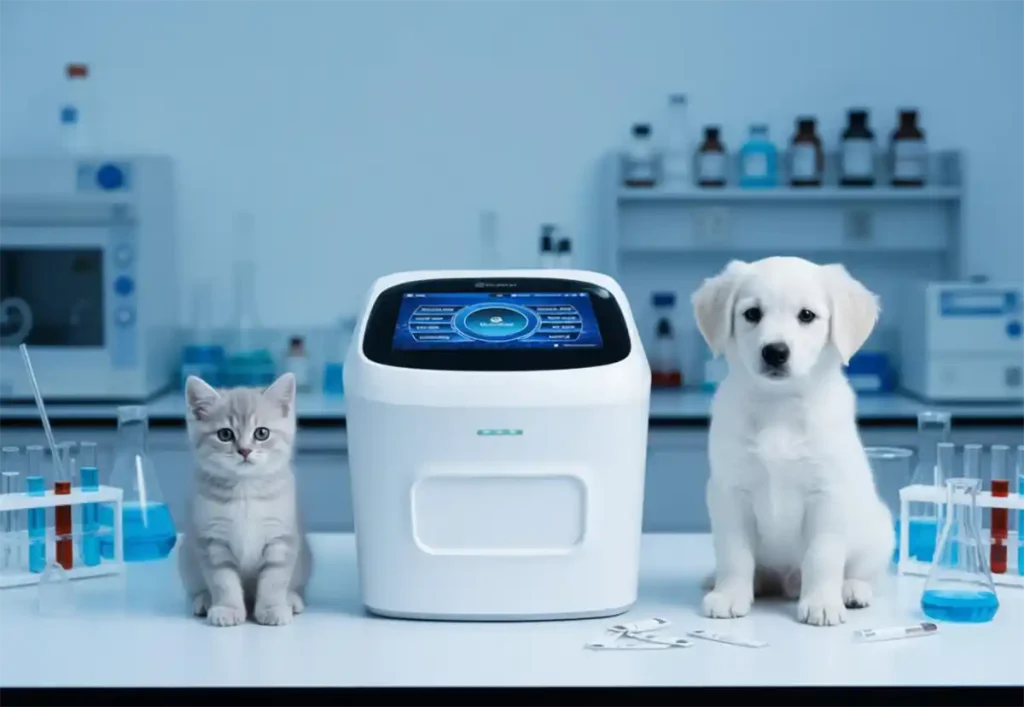
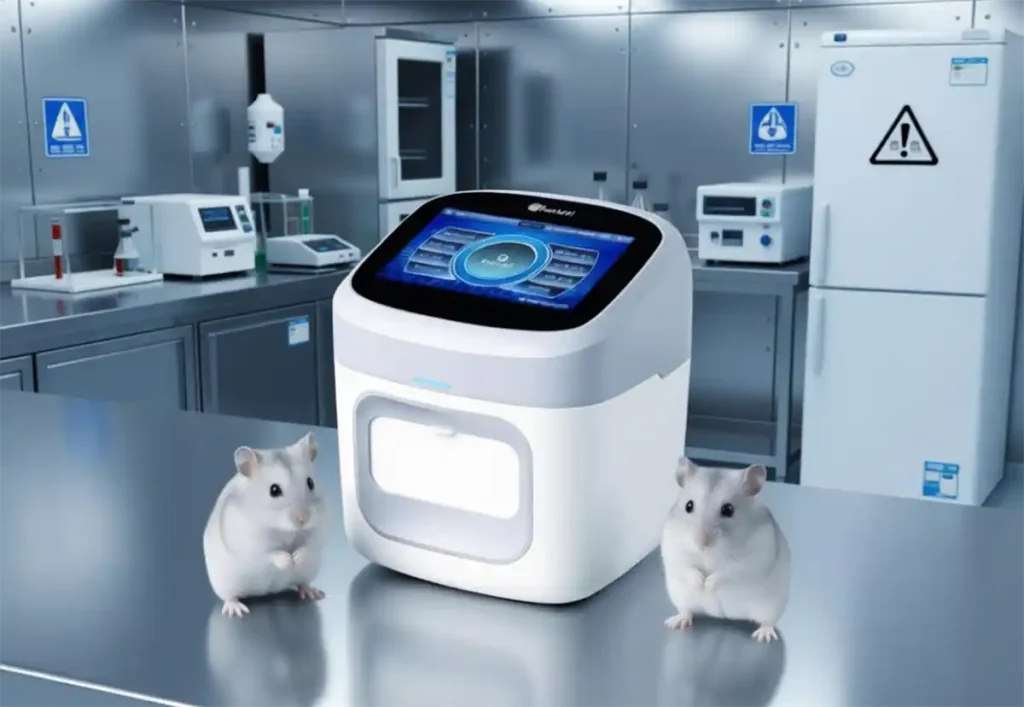
Fig. 1 — RunMei cost-effective blood analyzer in a rural clinic setting. Blood cell analyzer sickle cell screening ghana. | Alt: blood cell analyzer sickle cell screening Ghana
What the CBC Adds to Sickle Cell Care in a Rural Clinic
For a child with sickle cell disease, the hemoglobin number is the anchor of every clinical decision. In a crisis, it separates a mild event that can be managed at the health centre from a severe one that must reach a hospital. Between crises, serial CBCs catch the slow slide into chronic anemia that parents often normalize and ignore.
Results become evidence only when they are recorded. A register — patient, date, count, action taken — turns a stream of tests into a picture of the community’s health, and that picture is what justifies the program’s continuation. Clinics that keep the register find it writes their own case for support. That is the practical reality of compact blood analyzer in the field.
Infection Flags Before They Become Crises
Children with sickle cell disease are exquisitely vulnerable to infection, and infection is a leading trigger of crisis. A white cell count that is climbing is often the earliest warning — visible days before fever. A clinic that can run a CBC on demand can treat the infection early and, very often, prevent the crisis that would otherwise follow.
Practical Monitoring Protocols for Rural Facilities
A realistic protocol for a Ghanaian health centre: confirmed sickle cell patients receive a CBC at every scheduled visit (usually every one to three months), at every sick visit, and before any referral decision. The results are recorded in the child’s health book so that hospital clinicians see the trend, not just today’s number.
The pediatric reality shapes the equipment choice. Children need frequent tests but have little blood to give; a 5-part differential blood analyzer running on microsamples of 12–20 µL turns each check into a finger-prick event rather than an ordeal, which in turn means families actually come back for the next check.
The maintenance calendar is short, posted and owned: daily checks, weekly cleaning, quarterly deep service, with a name on every line. In facilities without a biomedical engineer, these routines are the entire maintenance system — and they are enough, when someone owns them. The machine that is cleaned on schedule is the machine that does not fail on the day it matters. And this is exactly where compact blood analyzer changes the decision.
Choosing the Right Instrument for a Sickle Cell Program
Look for an analyzer with accurate hemoglobin and RBC indices at low sample volumes, reliable WBC counts for infection monitoring, and low consumable cost — because a sickle cell child will be tested many times a year, and every test that is too expensive is a test that quietly stops happening.
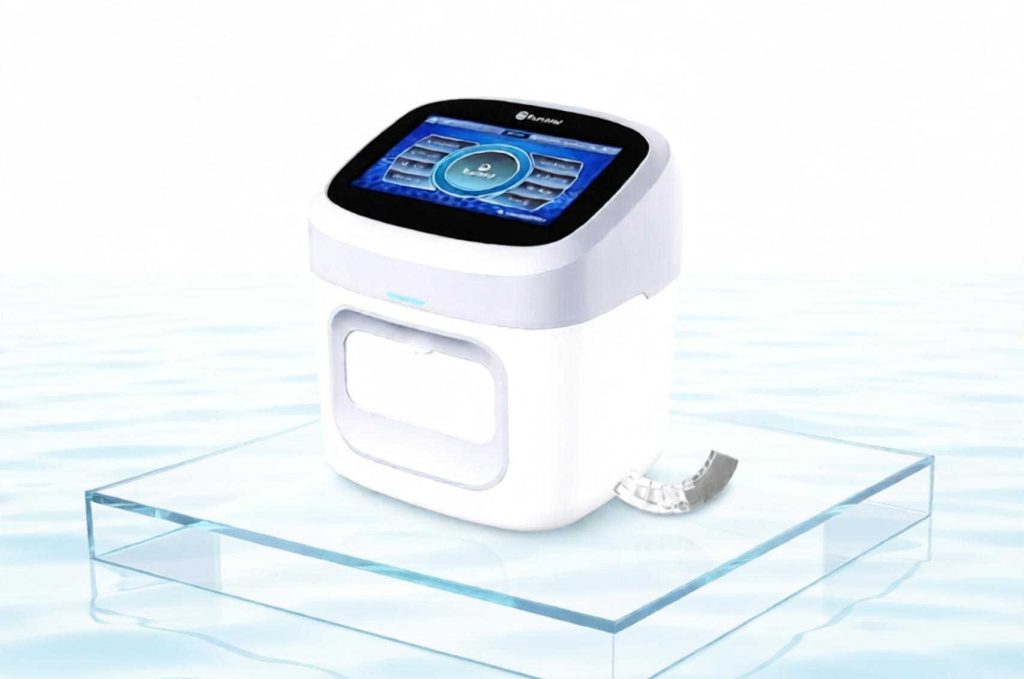
Fig. 2 — RunMei 5-part differential blood analyzer in a rural clinic setting. Blood analyzer pediatric sickle cell monitoring. | Alt: blood analyzer pediatric sickle cell monitoring
The Supply Plan
The supply plan answers one question: what does this clinic need, in what quantity, and how long does resupply take? Reagents, controls and consumables each have their own buffer, sized to the longest plausible interruption — the rainy season, the border delay, the transport strike. The plan is written in months, not in orders. Programs built around compact blood analyzer see the effect within the first month.
The Buffer Discipline
The rule of thumb that works in practice: hold enough stock to run the clinic’s normal volume for the resupply period plus one month. Facilities that follow the rule ride out the interruptions; facilities that run to empty stop testing at the worst possible moment.
The Open-Channel Option
Analyzers that accept qualified third-party reagents turn the supply plan into a competitive market instead of a single dependency. The option matters most where a locked reagent line would make the per-test cost unsustainable — which is most of rural primary care.
Programs that pair compact blood analyzer with sickle cell screening report the strongest results. The same logic applies to hemoglobinopathy monitoring, which clinics in the region often underestimate. For teams accountable for CBC in sickle cell, the practical effect shows up within the first month.
الأسئلة المتداولة
Q1. Can a blood analyzer diagnose sickle cell disease?
No. Sickle cell disease must be confirmed by hemoglobin electrophoresis or molecular testing. A blood analyzer is used after diagnosis for monitoring hemoglobin, infection signals and disease course.
Q2. How often should a child with sickle cell disease have a CBC?
In stable periods, many programs test every one to three months, plus at every sick visit and before referral decisions. Frequent, low-volume testing is exactly what compact analyzers are designed for.
Q3. Why is microsample volume important for sickle cell patients?
Sickle cell patients, especially children, need repeated testing throughout life. A 12–20 µL finger-prick sample is far more tolerable and practical than repeated venipuncture, improving follow-up rates.
Q4. Does health insurance cover CBC monitoring for sickle cell in Ghana?
Coverage varies by scheme and region. Clinics that run low-cost, open-channel CBCs can often offer monitoring at prices families can afford even where insurance gaps exist.
Sources & References
- World Health Organization data show that in lower-income countries a large share of the rural population still lives beyond the reach of a functioning laboratory; the WHO recommends primary care facilities be reachable within roughly 5 km, yet global estimates indicate about 3 billion people cannot reach a health facility within one hour on foot.
- Reviews published in the New England Journal of Medicine have repeatedly underlined that the single most reliable way to improve outcomes in low-resource settings is to shorten the interval between clinical presentation and a correct laboratory diagnosis.
About the Author & Reviewer
Author: Dr. Amara Okafor, MBBS, MSc Global Health Diagnostics. Dr. Okafor is a physician and diagnostics specialist who has supported laboratory capacity projects across East Africa for over a decade.
Reviewer: Dr. Michael Chen, PhD, Senior Laboratory Advisor. Dr. Chen advises public health laboratories on quality systems and point-of-care device deployment in low-resource settings.
Disclaimer
This article is for informational and marketing purposes only and does not constitute medical advice, a product claim, or a regulatory certification statement. Device availability, regulatory status and specifications vary by country and model; always verify current approvals with the manufacturer and consult local regulations before procurement or use.