Focus keyword: anemia classification MCV MCH MCHC analyzer
The hematologist leaned back and said something I still quote to trainees: “You don’t need to guess the anemia. The automated analyzer already spoke — you just weren’t listening.” Most of us nod at a low hemoglobin and reach for iron pills. But the true language of anemia is written in three tiny indices — mean corpuscular volume (MCV), mean corpuscular hemoglobin (MCH), and mean corpuscular hemoglobin concentration (MCHC). Read them together and a single CBC run hands you the differential diagnosis — which anemias are microcytic, which macrocytic, which normocytic, and which numbers are lying because the machine measured them badly.
What the Trio Actually Means
Think of a red cell as a delivery van. MCV tells you its size (femtoliters), MCH how much hemoglobin cargo it carries (picograms), and MCHC how densely that cargo is packed (g/dL). Typical adult references hover near MCV 80–100 fL, MCH 27–33 pg, and MCHC 32–36 g/dL — though every laboratory defines its own interval per CLSI EP09 and ISO 15189 verification. Once values fall outside those bands, classification begins.
Microcytic, Normocytic, or Macrocytic — the First Fork
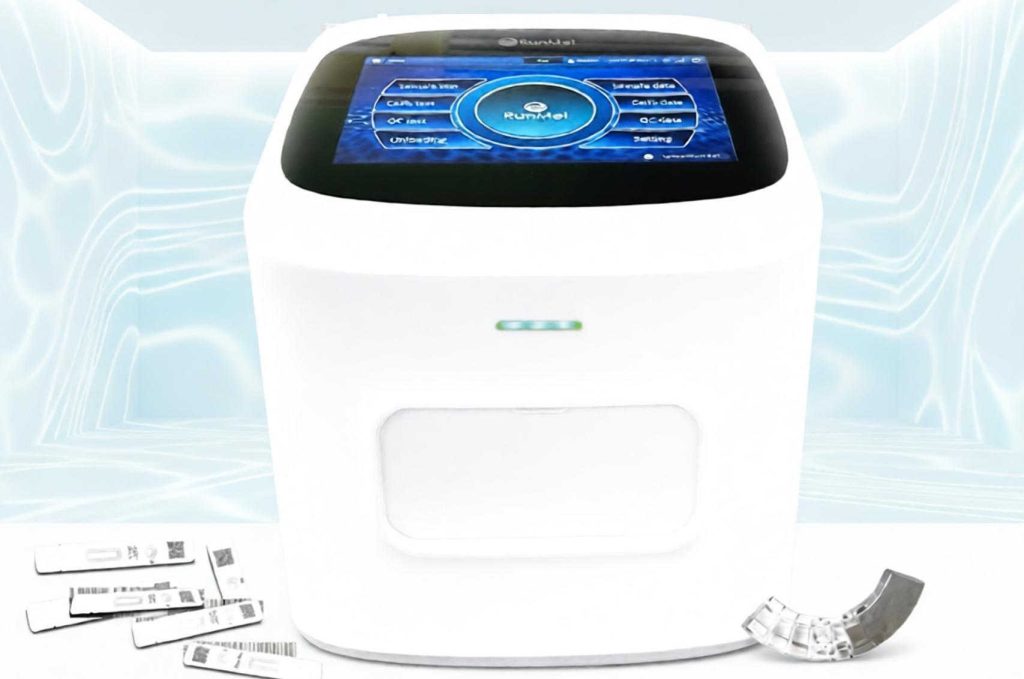
Low MCV with low MCH and MCHC points to microcytic anemia: iron deficiency, thalassemia, or anemia of chronic disease. Normal-size cells with a low hemoglobin hint at recent blood loss, hemolysis, or renal disease. High MCV steers toward macrocytic territory — B12 or folate deficiency, liver disease, or myelodysplasia. What many miss is that the pattern is only as trustworthy as the raw counts feeding it: a falsely low MCHC from a hemolyzed or clotted sample drags the whole interpretation off course. That is why the analyzer’s own quality matters — an accurate CBC instrument with robust hemoglobin optics keeps the indices clean enough to reason from. Labs serious about dependable indexing typically rest on a full CBC analyzer with verified impedance and hemoglobin channels so classification begins from sound measurement, not artifact.
Why Defective Red Cells Demand Better Optics
Ordinary impedance counters size red cells by electrical resistance. They work — until a cell is fragile, sickle-shaped, or heavily microcytic, when sizing blurs and MCV drifts. Laboratories running mixed populations where thalassemia and iron deficiency overlap are especially vulnerable: Brand A instruments report borderline MCV that no repeat run stabilizes. This is why a disciplined guide to choosing a hematology analyzer forces buyers to interrogate MCV linearity, hemoglobin response curves, and flagging logic before signing. An analyzer that cannot reproduce moderate microcytosis will quietly misclassify your iron-deficiency cohort week after week.
MCHC, the Underrated Guard Against Artifact
Of the three indices, MCHC is the least forgiving of pre-analytical error. A sample that sits too long, a membrane that lyses in transit, or lipemia can push MCHC to implausible highs or lows — values no living red cell can produce. Experienced reviewers use MCHC as an internal alarm: readings above ~37 g/dL or below ~28 g/dL should trigger a smear and recollect, not a diagnosis. Clinics that migrated from Brand B single-parameter counters report far fewer nonsense indices reaching the physician, and for routine sites an automatic 3-part hematology analyzer tuned for dependable MCV/MCHC frequently closes that gap without a flagship price tag.
The Classification Habit That Saves Patients
Here is the durable habit: never report “anemia” and stop. Report microcytic hypochromic versus macrocytic versus normocytic, then rank the differential by prevalence in your region. As the field eyes AI-assisted flagging and widening parameter sets, the fundamentals remain. Reading ahead on a 5-part differential blood cell analyzer selection guide keeps your laboratory’s decisions grounded in data rather than vendor noise. The indices were never meant to replace a smear; they were built to tell you faster and more accurately when a smear is non-negotiable.
أسئلة وأجوبة
**Why is anemia classified primarily by MCV?** MCV sorts red cells by size, the single fastest morphological separation between microcytic (iron deficiency, thalassemia), normocytic, and macrocytic (B12/folate deficiency) anemias — giving the physician an instant shortlist before further testing.
**Can a falsely low MCHC cause a wrong hypochromic classification?** Yes. Hemolysis, prolonged storage, clotted samples, and lipemia can lower MCHC artificially. Practical MCHC guards (impossible-high or impossible-low thresholds triggering a smear and recollection) prevent such samples from reaching a diagnosis.
**What does CLSI recommend for validating index accuracy?** Laboratories verify analyzer trueness and precision against CLSI EP09 (comparison and bias) and EP15 (precision and trueness), and under ISO 15189 quality-management expectations, keeping MCV/MCH/MCHC data defensible for clinical use.