Meta Title (≤60 chars): Closing Africa’s Diagnostics Gap With On-Site CBC Testing
Meta Description (≤155 chars): Only 19% of African patients get appropriate diagnostics at primary care level. Here is how blood analyzers close the gap where it hurts most.
Target Keywords: diagnostics gap Africa, CBC testing primary care, blood analyzer sub-Saharan Africa, point of care diagnostics access
By RunMei Health Team | Published: September 18, 2026 | Reading time: ~5 min
Here is the finding that should stop every health conference in its tracks: across Africa, only about 19% of patients have access to appropriate diagnostics at the primary-care level. The figure comes from “The diagnostics deficit,” a 2024 report by Impact Global Health that combed through investment and access data across the continent, and it explains an uncomfortable truth – most Africans are diagnosed without being diagnosed. This article looks at one practical, affordable way to move that number: putting a complete blood count within reach of the clinics where patients actually arrive first.
What the 19% actually means
The 19% figure is not about expensive genomics or MRI machines. It is about the basics: whether a clinic can run a blood count, a malaria test, a glucose reading. The report found that diagnostics remain underprioritized in health-security planning and investment relative to their importance, and that primary care – the level where most Africans first seek help – is precisely where laboratory capacity is weakest.
The consequences are measurable. Treating without testing wastes medicines, fuels antimicrobial resistance, and delays the detection of outbreaks. The WHO’s Essential Diagnostics List, now in its fourth edition, was created to push back on exactly this pattern, recommending that even the most basic facilities should be able to perform a defined set of tests – and the complete blood count sits on that list.
Choosing an automatic hematology analyzer is less about the brochure and more about reagent supply, power draw, and operator load — all covered on the product page.
Why the complete blood count is the right place to start
One test, many answers
A CBC answers more questions per drop of blood than almost any other test in primary care. Anemia, infection, malaria, dengue, bleeding risk, and chronic disease monitoring all leave fingerprints in the red cell, white cell, and platelet parameters. For a rural clinician with one device and no backup, that breadth is not a luxury – it is the point.
Single-purpose devices exist, and brand A’s hemoglobin meter does its one job well. But a facility that invests once in an automatic hematology analyzer gets the full panel: hemoglobin, red cell indices, three or five-part white cell differential, and platelets. The marginal cost of the extra parameters is negligible; the clinical value is not.
The rural-urban divide in one paragraph
In an African capital, a CBC costs a few dollars and takes an hour. Two hundred kilometers away, the same test may require a full day of travel, a night in town, and a result the patient may never collect. The rural-urban diagnostic divide is one of the best-documented inequalities in global health, and it is not shrinking by itself.
Decentralization is the standard answer – move the testing closer to the patient. That is what national laboratory roadmaps in several African countries are attempting: district-level laboratories supported by point-of-care devices at health posts, with the blood analyzer as the workhorse test at the primary level.
Our field guide, the rural-urban diagnostic divide, walks through the practical steps in more detail.
What a blood analyzer contributes to the fix
The device alone does not close the gap – reagents, training, electricity, and quality assurance all matter. But the device is the load-bearing wall. Without on-site analyzers, the other investments have nothing to work with; nurses cannot run tests on empty benches.
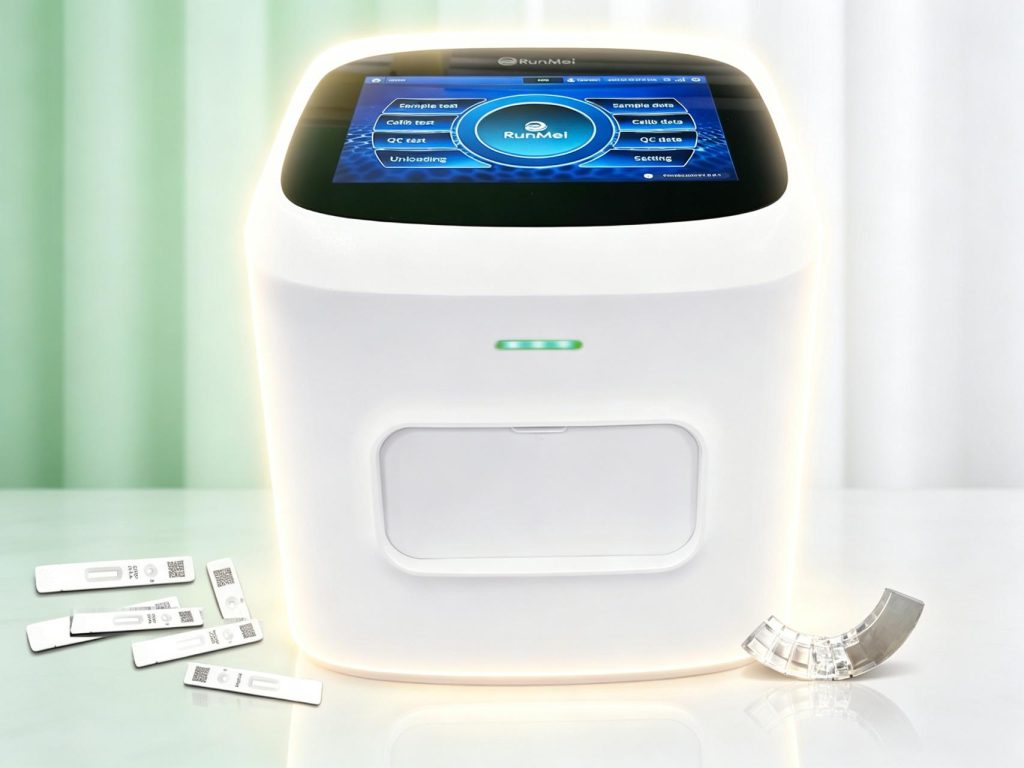
Compact automatic analyzers have matured to the point where they no longer demand a laboratory. A machine like the automatic hematology analyzer from RunMei needs a bench, a power source, reagents, and one trained operator – a package most health posts can actually assemble. The technology that used to fill a room now fits on a table, and that change is what makes the 19% number moveable.
A realistic sequencing for ministries and donors
Buying 10,000 analyzers at once is not the answer; building the system around them is. The sequence that works: pick the highest-volume tests (CBC first), equip one level of the system (health centers), train operators and biomedical technicians together, build a reagent supply chain, and measure quality with external quality assessment from day one.
Donors and governments that follow this sequence report the classic cascade Jani and Peter described in the New England Journal of Medicine: point-of-care testing increases testing rates, which exposes weaknesses, which pulls further investment in. The gap closes in layers, and the blood analyzer is the first layer.
For teams building a business case, a practical guide to CBC testing in rural clinics lays out the numbers.
The honest cost of an analyzer per test
Procurement officers ask the price of the machine; the number that matters is the cost per test over five years. Take the purchase price, add reagents, controls, service visits, training, and transport, then divide by the number of CBCs the facility will realistically run. For a health center doing 40-80 tests a week, compact analyzers land in a range that is competitive with, and often below, the full cost of outsourcing each test.
Outsourcing looks cheaper until you count the hidden legs: sample transport, the patient’s second and third visit, the lost results, and the clinician working without data in the meantime. Studies of referral economics keep finding the same thing – when transport and repeat visits are counted honestly, in-house point-of-care testing usually wins.
Donors and ministries should demand this per-test math from every vendor, RunMei included. A machine that produces ten thousand reliable results over its life at a low per-test cost is a bargain; a machine that produces three hundred results before failing is expensive at any price. The calculation is the discipline, and the discipline is what protects the investment.
The direction is set
The per-test math is not the only metric, but it is the honest one, and it is why the blood analyzer has become the flagship device of rural diagnostics programs rather than an afterthought. Every layer of the system – village, health center, district – can now own a piece of the CBC pathway, and the tiers reinforce each other.
None of this is easy, and none of it is quick. But the direction is unmistakable: the 19% figure moved because the technology finally fits the places where the other 81% live. The remaining distance is a matter of training, supply chains, and political will – all of which follow when the devices are already on the benches, producing numbers that save lives.
Program planners will find building a national rural diagnostics roadmap a useful reference when writing the proposal.
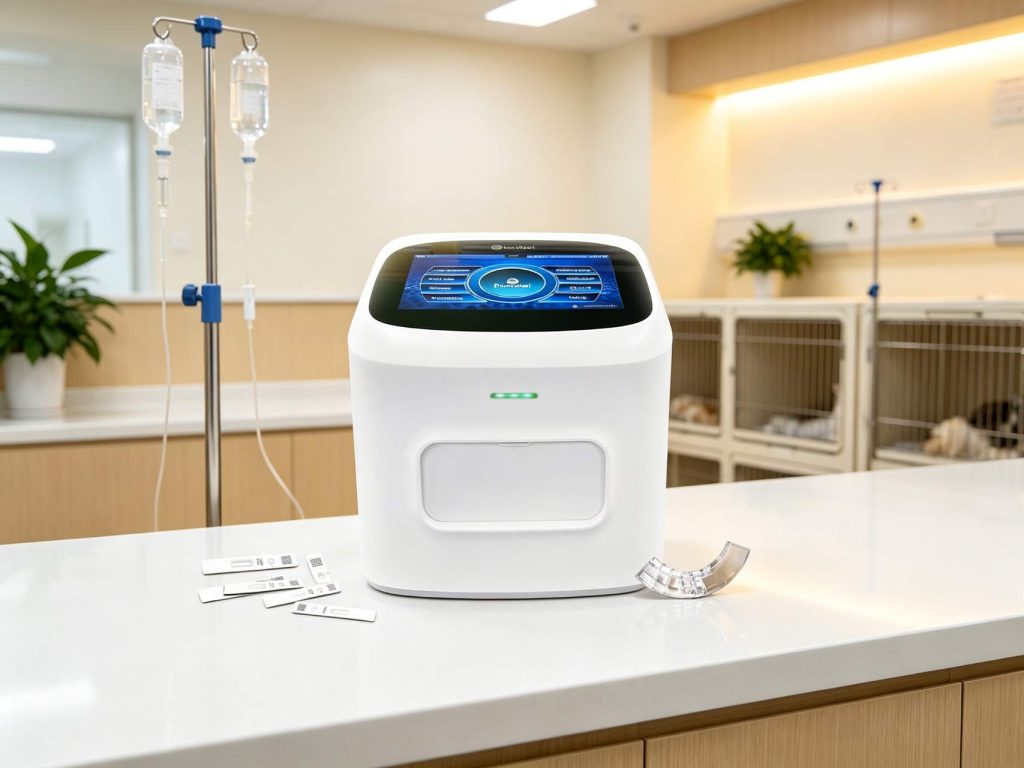
Figure 1: A bench-top automatic hematology analyzer brings complete blood count testing to primary health care facilities.
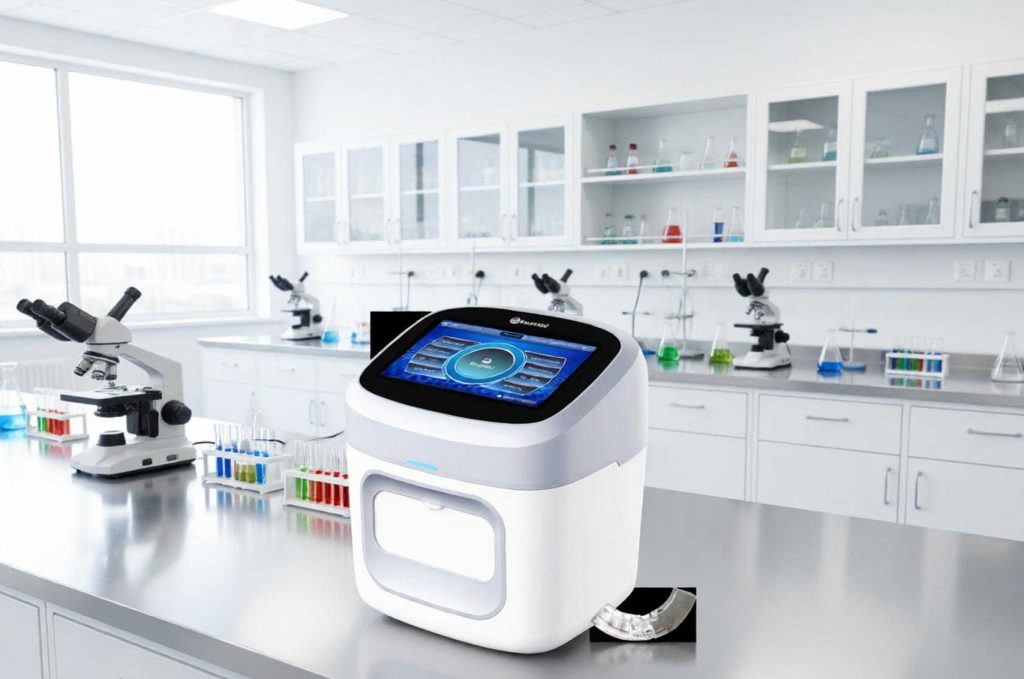
Figure 2: Portable blood analyzers extend CBC access to outreach and community testing sessions.
الأسئلة المتداولة
Why is the complete blood count in the WHO Essential Diagnostics List?
The CBC supports diagnosis and monitoring of anemia, infection, and bleeding disorders – conditions that dominate primary care – and the WHO recommends it be available at the most basic facility levels.
How many tests does a rural clinic need to justify a blood analyzer?
Most facilities justify the investment at 20-40 CBCs per week, and the economics improve as volumes grow. Transport savings and fewer repeat visits count in the calculation.
What else does a country need besides analyzers?
Trained operators, a reagent supply chain, quality assessment, and maintenance support. The device is necessary but not sufficient – the system around it determines long-term success.
References and Sources
Authoritative sources cited in this article:
- Impact Global Health, “The diagnostics deficit: funding, access, and preparedness gaps in African health systems” (2024)
- WHO, Fourth WHO Model List of Essential In Vitro Diagnostics (EDL 4), 2023
- Jani IV, Peter TF. How Point-of-Care Testing Could Drive Innovation in Global Health. N Engl J Med 2013;368:2319-2324.
- Wiley, Transforming Hematology Care in Africa: Strategies for Enhanced Diagnosis and Treatment (2026)
Related RunMei Health resources referenced in this article:
- [L1] automatic hematology analyzer — https://runmeihealth.com/product/automatic-hematology-analyzer/
- [L2] the rural-urban diagnostic divide — https://runmeihealth.com/the-rural-urban-diagnostic-divide-a-global-snapshot/
- [L3] a practical guide to CBC testing in rural clinics — https://runmeihealth.com/complete-blood-count-testing-in-rural-clinics-a-practical-guide-for-2026/
- [L4] building a national rural diagnostics roadmap — https://runmeihealth.com/the-national-rural-laboratory-roadmap-building-a-point-of-care-diagnostics-program-that-lasts/
Disclaimer
This article is provided for informational and educational purposes only and does not constitute medical advice, diagnosis, or treatment. Always consult a qualified health professional for clinical decisions. RunMei Health devices are intended for use by trained operators in accordance with local regulations and the manufacturer’s instructions for use; product availability, regulatory clearance, and configurations may vary by country. Figures cited from third-party sources reflect the publications referenced at the time of writing.