Meta description: National rural laboratory roadmap: six steps to decentralize blood diagnostics. Ministries build lasting point-of-care programs with blood analyzers.
The pilot that proved it
Every national program begins as a pilot that proves the obvious and the expensive: the obvious, that point-of-care testing works in the district; the expensive, that it works only if the system around it works. The pilots that succeeded share a structure, and the structure has become the roadmap that ministries follow when they scale. The roadmap has six steps, and skipping any of them produces the graveyard that the procurement guide describes.
The six steps
Step one is the needs assessment: the registers that show which districts cannot test, and the catchment arithmetic that sizes the deployment. Step two is the specification: the benchmarking guide for rural conditions as the verification standard, and the single-parameter vs. full CBC comparison as the instrument decision. Step three is the procurement package: the total solution vs. device-only comparison as the contract doctrine. Step four is the training system: two operators per facility, certified and refreshed. Step five is the quality loop: EQA enrollment, control logs, and the district review. Step six is the recurrent budget: reagents, maintenance, and refreshers funded as running costs, not project costs.
The instrument at the center
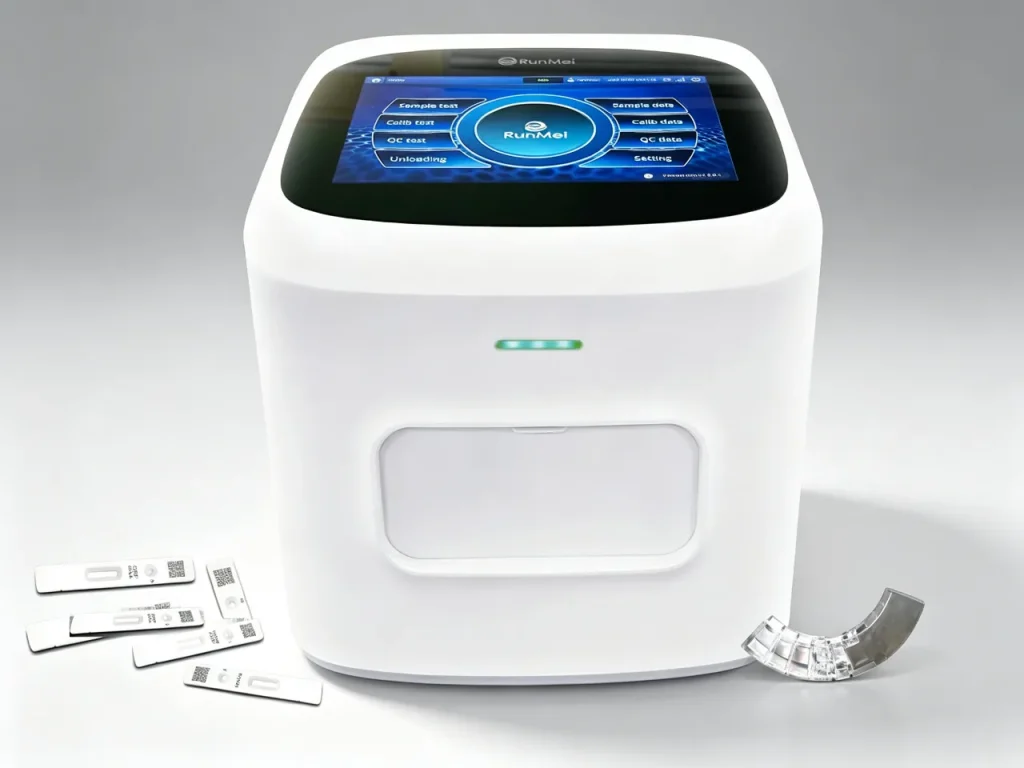
The roadmap’s instrument is the one the steps keep selecting: the automatic hematology analyzer that serves the district’s whole caseload and asks little of its operators. The instrument is not the roadmap; the roadmap is the system around it, and the instrument is the system’s most visible part.
The register as the roadmap’s proof
The roadmap’s success is written in the register: the tests per month, the referral curves, the EQA scores, and the utilization that the recurrent budget review reads. The ministries that publish the register’s numbers at the annual review are the ministries whose programs survive leadership changes, because the program’s case is in the data, not in the minister’s speech. The register is the roadmap’s evidence, and the evidence is what the next budget cycle reads.
The program that outlives its founders
The national rural laboratory program’s final test is the same as the pilot’s: does it outlive its founders? The programs that pass the test are the ones that built the six steps into standing institutions, the register into the annual review, and the recurrent budget into the ministry’s baseline. The roadmap is not a project plan; it is an institution-building sequence, and the institutions it builds are the ones that keep testing when the minister changes, the funding cycles, and the memory of the pilot fades. The districts that test in year ten are the proof that the roadmap worked, and the analyzers that are still running are its monuments.
The district that scaled first
The roadmap’s first full-scale district deployment reads like the pilot’s sequel: the same six steps, applied to a whole district at once, with the same register, the same EQA loop, and the same recurrent budget line. The district’s year-two report shows the curve the pilot promised: testing volumes up, referral quality up, and device uptime above ninety percent.
The district’s experience became the roadmap’s proof chapter, because it answered the question the pilot could not: does the sequence survive scale? The answer is in the district’s register, and the neighboring districts that read it have begun their own first steps. The roadmap is no longer a plan; it is a pattern, and the pattern is spreading through the region’s health offices one district at a time.
The neighboring ministry’s visit
The roadmap’s spread has a geography of its own: the neighboring ministry sends a delegation to the district that scaled first, reads the year-two report, and returns home with the six steps and the register template. The visit is the roadmap’s quietest distribution channel, and the ministries that hosted the delegations report the same lesson traveling outward: the sequence is portable, because it is built from registers and budgets, not personalities. The roadmap spreads the way the best public health ideas spread, by being shown, not argued.