Target keyword: “hematology analyzer for laboratory automation track system”
Connecting a hematology analyzer to a track/automation system unlocks true walkaway efficiency. Here is how track integration works, its benefits, and the buy-in you need.
A track system is the closest a laboratory gets to a production line — samples gliding from one instrument to the next with no human hands in between. Connect your hematology analyzer to it and the machine stops being a standalone box and becomes one station in a river of work that flows, routes, and reports itself. It is a different way of thinking about a lab, and it changes everything.
What Track Integration Involves
In a total laboratory automation (TLA) or modular track system, bar-coded tubes travel on conveyors between analysers — haematology, chemistry, immunoassay — and to and from storage. The hematology analyzer connects to the track via a dedicated interface and robotic arm that loads samples and returns them. The middleware orchestrates routing based on test orders and tube status.
The Benefits: Walkaway, Consistency, and Throughput
Track integration frees staff from loading, delivers consistent instrument utilisation, and smooths peak-hour surges by buffering samples. It routes STAT samples ahead, reduces handling errors and repeat work, and lets the lab run with fewer hands-on hours. For high-volume and consolidated labs, the throughput and staffing gains are the central business case — and they are real, not theoretical.
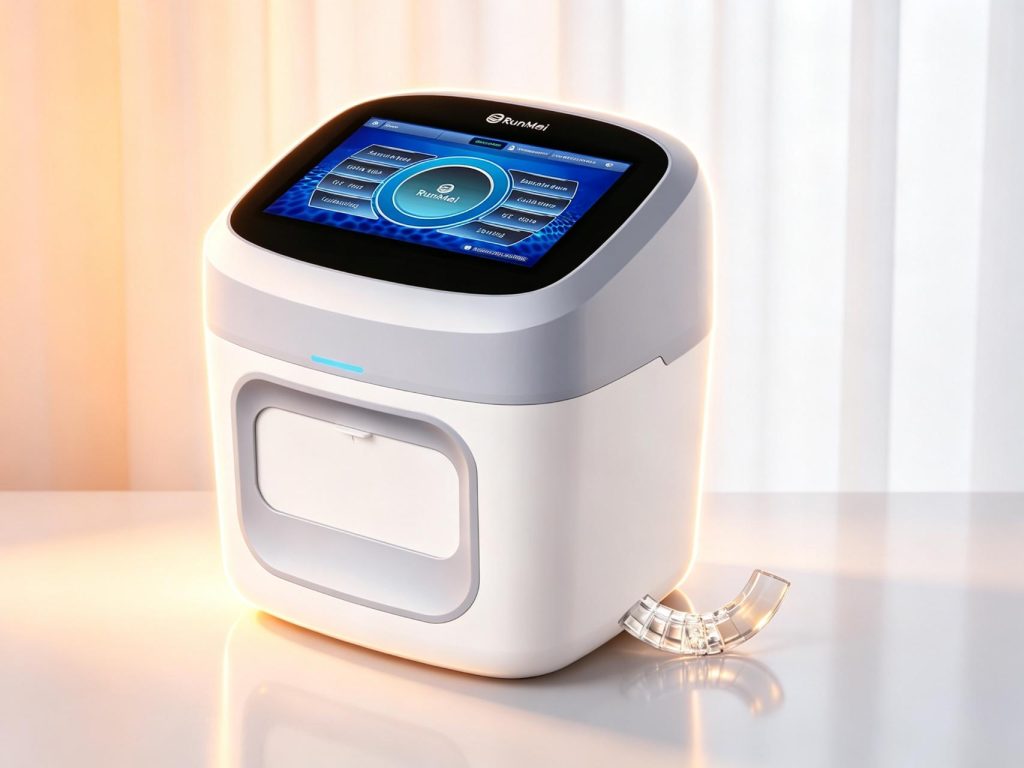
Looking for a reliable option? The 5-part differential hematology analyzer from RunMei Health is built for accurate, efficient blood analysis.
The Buy-In and Cost Reality
Track systems are a significant capital investment with floor-space, installation, and ongoing maintenance costs. They pay off when volume, consolidation, or staffing economics justify them. Assess your real throughput, the cost of downtime (a failed track segment can stall multiple instruments), and the training burden. For many mid-size labs, a well-organised semi-automated workflow beats a heavy track at far lower cost.
Planning a Smooth Rollout
Start with a clear routing map and middleware logic, validate the interface before go-live, and run parallel manual operation until staff confidence is high. Phase the rollout so a single failed module does not paralyse the lab. Document validation for accreditation and maintain a manual fallback. Done well, a track-integrated hematology analyzer becomes the reliable heart of a modern, efficient core lab.
Throughput Promise vs. Track Reality
The headline throughput of a track system assumes an uninterrupted flow, but real bottlenecks often live elsewhere: a slow centrifuge upstream, a mismatched pre-analytic module, or a flooded buffer lane. Model your full workflow, not just the analyzer, to find where samples actually queue. A track that outpaces its feeding steps simply parks tubes in buffer, delivering no faster than a well-run manual station. Validate the complete path with your own workload before you treat the conveyor as the solution.
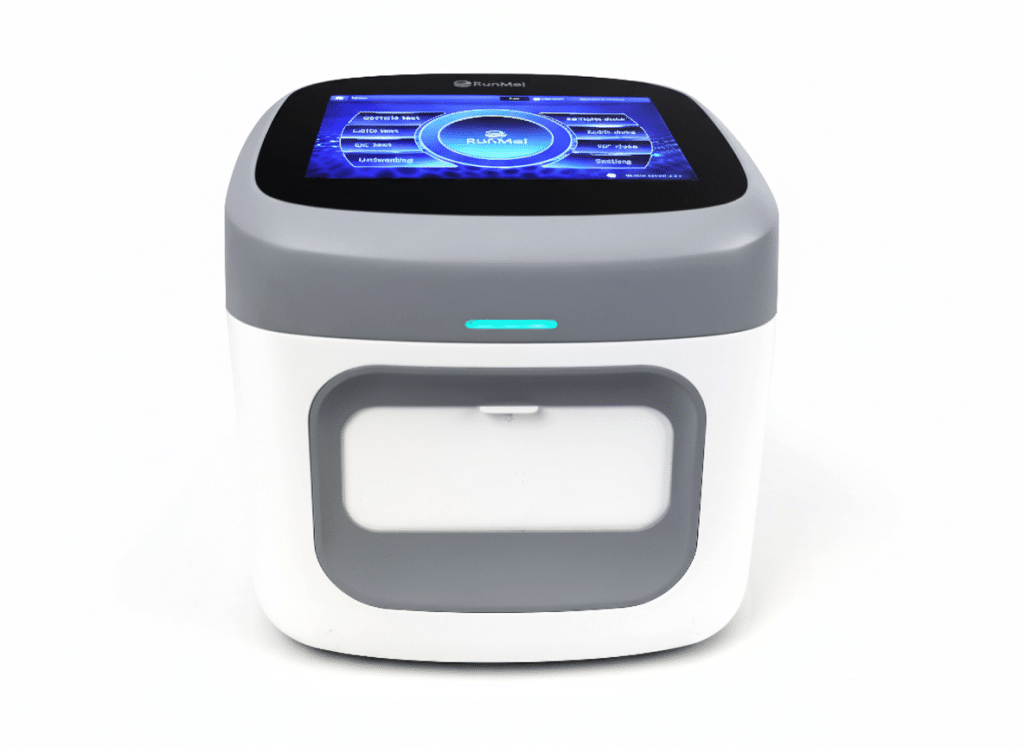
Looking for a reliable option? The portable multi-function blood analyzer from RunMei Health is built for accurate, efficient blood analysis.
Key Questions to Ask Before Committing
Walk into the decision with hard questions: What is the true cost of ownership including maintenance, consumables, and floor space? How long does downtime on one module take to recover, and what is your manual fallback? Does the vendor’s haematology interface have a proven record at sites like yours? Can the track route around a failed module, or does it take the whole line down? And crucially — what happens to samples mid-route when the system halts? Clear, written answers to these shape a rollout that is resilient rather than fragile.
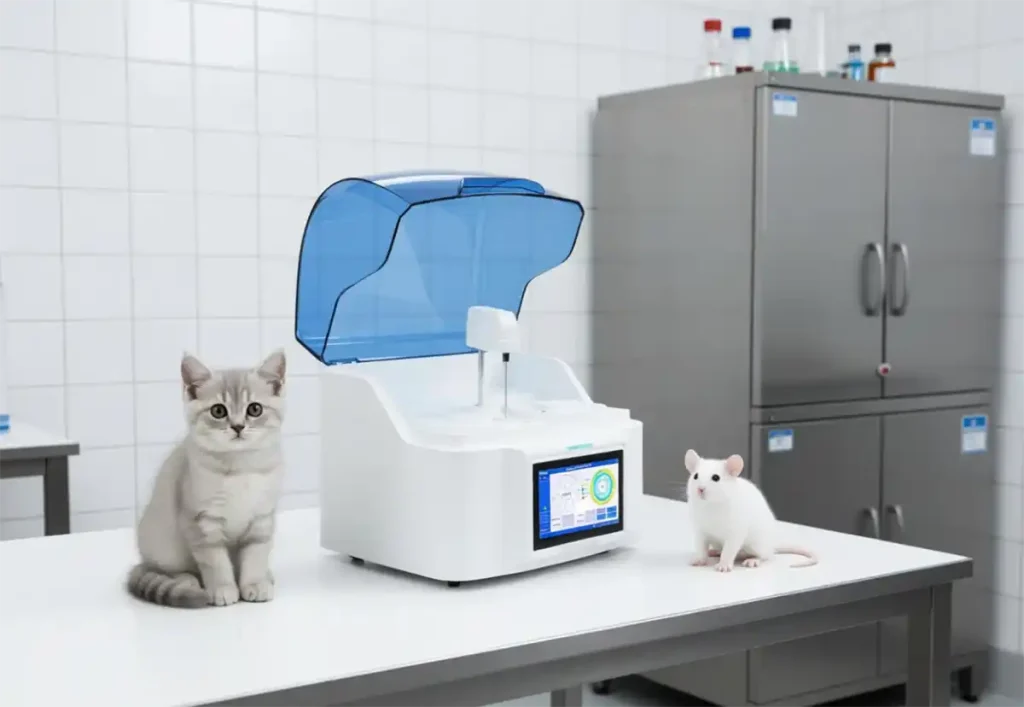
For a dependable solution, explore the 5-part veterinary blood analyzer from RunMei Health.
For a dependable solution, explore the RunMei diagnostic instruments from RunMei Health.
الأسئلة المتداولة
Q: Is track/automation worth it for a small lab?
A: Usually not. Track systems are most cost-effective in high-volume, consolidated laboratories where labour savings and throughput justify the large investment and footprint. For smaller labs, a standalone analyzer with efficient loading, barcoding, and LIS integration delivers most of the benefit at a fraction of the cost and complexity.