Meta Title: Blood Analyzer Data for Maternal Near-Miss Audits | RunMei
Meta Description: Blood analyzer data for maternal near-miss audits. Hemoglobin counts at booking, delivery and hemorrhage turn the review into a planning instrument.
By Dr. Elena Marchetti · MD, MPH, Rural Health Diagnostics | Reviewed by Prof. Daniel Mwangi (PhD, MSc, Laboratory Systems Advisor) | Published: 2026-09-26
The audit committee meets once a month to ask the hardest question a health system can ask: what killed this mother, and could the clinic have stopped it? The blood analyzer question — what it can do, what it costs to run and how a result earns trust — is answered in the pages that follow. The answer usually lives in the missing numbers. The hemoglobin that was never measured, the result that arrived after the decision, the register line that was never filled. The 5-part differential blood analyzer catalog covers the instruments rural programs order most often.
This article looks at blood analyzer through the lens of rural health care, where the stakes are ordinary and the constraints are real: budgets that do not stretch, staff who already wear several hats, and distances that punish delay. About 3 billion people worldwide still cannot reach a health facility within one hour on foot, a figure the WHO has used to argue for diagnostics that travel to patients instead of the other way around. The practical questions — which instrument, what training, how much per test, who maintains it — are answered in plain language, with the numbers a procurement committee can actually use. WHO . Facilities weighing the options can browse the محلل أمراض الدم range to compare configurations side by side.
Key Takeaways
- Maternal death and near-miss audits need laboratory data they usually do not have.
- A blood analyzer at the maternity unit produces the hemoglobin counts audits depend on.
- Serial counts during obstetric emergencies are documented, not remembered.
- Audit data turns a sad meeting into a planning instrument.
The Audit That Runs on Missing Numbers
A maternal death audit is a reconstruction of a sequence, and every gap in the laboratory record is a gap in the reconstruction. Was the hemoglobin low before delivery? Was the fall sudden or gradual? Was the count checked during the hemorrhage or after it? Without on-site testing, most of these questions are answered with shoulder shrugs.
The near-miss review faces the same gap in the opposite direction. The mother who survived is the lesson the system can afford to learn, and her laboratory record is the evidence.
the blood analyzer is the seed; the program is the tree. Training, supervision, registers, quality checks and a supply line that outlasts the donor — these are what turn a machine into a service that keeps running. Programs that design for sustainability from the first installation meeting are the ones still running at the five-year review. Programs built around blood analyzer see the effect within the first month. NEJM . Programs that want a deeper differential can read the affordable blood analyzer page for the trade-offs.
The Count That Was Never Taken
The audit findings converge on the same absence: a hemoglobin that should have been measured at the first antenatal visit, and serial counts that should have accompanied the hemorrhage. The analyzer is the difference between an audit that reconstructs and one that invents.
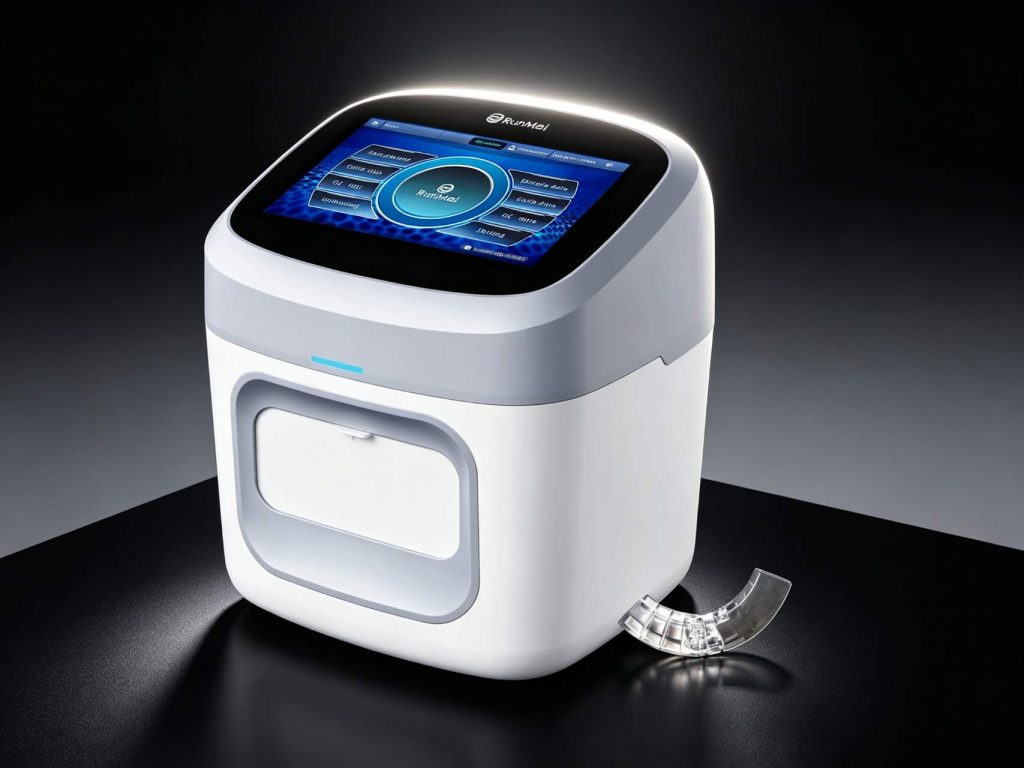
Fig. 1 — RunMei open channel CBC analyzer in a rural clinic setting. Blood analyzer maternal near miss audit hemoglobin data. | Alt: blood analyzer maternal near miss audit hemoglobin data
The Maternity Ward With Its Own Numbers
The maternity unit that runs its own blood counts changes what the audit can say. Antenatal hemoglobin is measured at booking, repeated at the third trimester, and available during delivery. The postpartum hemorrhage is monitored in real time, with each count documented in the register.
The numbers do not stay in the ward. They become the district’s obstetric dataset, the basis of the next training, and the evidence that a transfusion protocol is or is not working.
The community decides whether the blood analyzer lives or decorates. A machine that sits in a room patients do not enter is a machine without value; a machine that is explained, trusted and used is a service. Programs that involve community health workers, explain results in the local language and let the community see the benefit get the utilization that makes the whole investment real. The same principle holds for blood analyzer: measure, record, act. Budget teams should see the open channel CBC analyzer cost analysis before signing off on procurement.
The Hemorrhage That Is Measured, Not Estimated
Clinical estimates of blood loss are famously unreliable. The serial hemoglobin during and after a hemorrhage is a fact, and the audit committee builds its recommendations on facts: when to transfuse, when to transfer, when to call for help.
From Sad Meeting to Planning Instrument
The purpose of the audit is not blame; it is the next pregnancy. Each review produces a recommendation, and the recommendations are only as strong as the data behind them. The clinic with a blood analyzer and a filled-in register walks into the audit with evidence.
the blood analyzer also changes the culture of the ward. Staff who can measure a hemoglobin in minutes measure more often, and staff who measure more often prevent more.
The numbers have to close in the real world. Volume assumptions, fee structures, reagent costs and the hidden cost of the journey patients would otherwise make — each belongs in the model before the purchase, not after. Facilities that run the arithmetic honestly find the blood analyzer is not an expense; it is the cheaper way to do what they were already doing. blood analyzer is the instrument at the center of that workflow.
The Register That Answers the Next Audit
The register line written during the emergency is the line the committee reads three months later. The habit of recording the count and the time it was taken is the quiet discipline that makes audits honest.
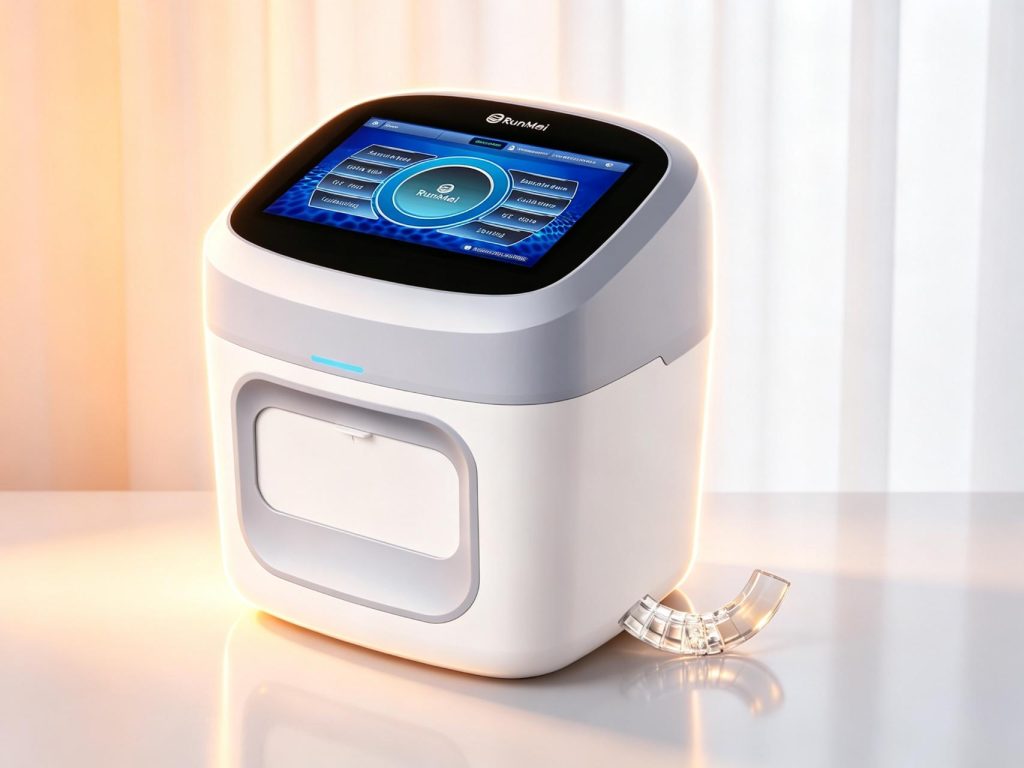
Fig. 2 — RunMei affordable blood analyzer during routine testing. Compact blood analyzer maternity ward serial hemoglobin testing. | Alt: compact blood analyzer maternity ward serial hemoglobin testing
The Implementation Checklist
blood analyzer pays off when the installation is treated as a project, not a delivery. The checklist has eight lines: site preparation (space, power, bench); operator selection and training dates; control materials ordered with the blood analyzer; a named maintenance owner; a register designed before the first test; a referral protocol agreed with the district; a reagent supply line with buffer stock; and a review date at 90 days. Each line is a name and a date, not a good intention.
The 90-Day Review
The first three months decide the trajectory. The 90-day review should read the register: how many tests, what findings, which problems, what was fixed. Facilities that review honestly adjust — retraining where errors show, reagent reordering where supply slipped, protocols tightened where referrals misfired. The review is where a good installation becomes a good service.
Scaling From One Machine
One working instrument is the argument for the next. When the first clinic’s register shows the volume and the outcomes, the case writes itself: the same training package, the same quality framework, the same supply line extended to the next facility. Programs scale on demonstrated results rather than meetings — and the demonstrated results start at the first bench.
Decisions about maternal near miss audit are usually made at district level — and the register feeds them. It also strengthens obstetric hemorrhage monitoring, a benefit that rarely appears in the budget line. None of this holds together without attention to maternal death review data.
الأسئلة المتداولة
Q1. Why do maternal death audits need laboratory data?
The audit reconstructs the sequence of care, and hemoglobin and platelet counts are essential evidence for the timing and severity of obstetric complications.
Q2. Which counts matter in obstetric care?
Hemoglobin at booking and in the third trimester, and serial counts during hemorrhage or suspected sepsis. The CBC covers these in one run.
Q3. Can a maternity unit run its own analyzer?
Yes. With one trained operator per shift and a simple protocol, the maternity unit can produce the counts the ward and the audit both need.
Q4. How does the data leave the ward?
Through the register, the referral notes and the monthly audit report. The numbers become the district’s obstetric dataset.
Sources & References
- World Health Organization data show that in lower-income countries a large share of the rural population still lives beyond the reach of a functioning laboratory; the WHO recommends primary care facilities be reachable within roughly 5 km, yet global estimates indicate about 3 billion people cannot reach a health facility within one hour on foot. Source: WHO — https://www.who.int/news-room/fact-sheets/detail/primary-health-care
- Reviews published in the New England Journal of Medicine have repeatedly underlined that the single most reliable way to improve outcomes in low-resource settings is to shorten the interval between clinical presentation and a correct laboratory diagnosis. Source: NEJM — https://www.nejm.org/
- WHO analyses indicate that anemia affects roughly one in four people worldwide, with the highest prevalence in preschool children and pregnant women in low- and middle-income regions. Source: WHO — https://www.who.int/news-room/fact-sheets/detail/anaemia
About the Author & Reviewer
Author: Dr. Elena Marchetti, MD, MPH, Rural Health Diagnostics. Dr. Marchetti is a physician and diagnostics specialist who has spent the past fifteen years designing point-of-care programs for district hospitals and rural clinics in lower-resource settings. Her field work focuses on how laboratory devices survive daily use outside the laboratory, from staff training to reagent logistics.
Reviewer: Prof. Daniel Mwangi, PhD, MSc, Laboratory Systems Advisor. Prof. Mwangi directs laboratory quality programs for a network of rural health facilities and teaches clinical laboratory science. He has reviewed point-of-care device deployments across Africa and Southeast Asia, with a particular interest in quality control and operator competency outside the main laboratory.
Disclaimer
This article is for informational and marketing purposes only and does not constitute medical advice, a product claim, or a regulatory certification statement. Device availability, regulatory status (FDA 510(k)/CE/ISO 13485) and specifications vary by country and model; always verify current approvals with the manufacturer and consult local regulations before procurement or use.