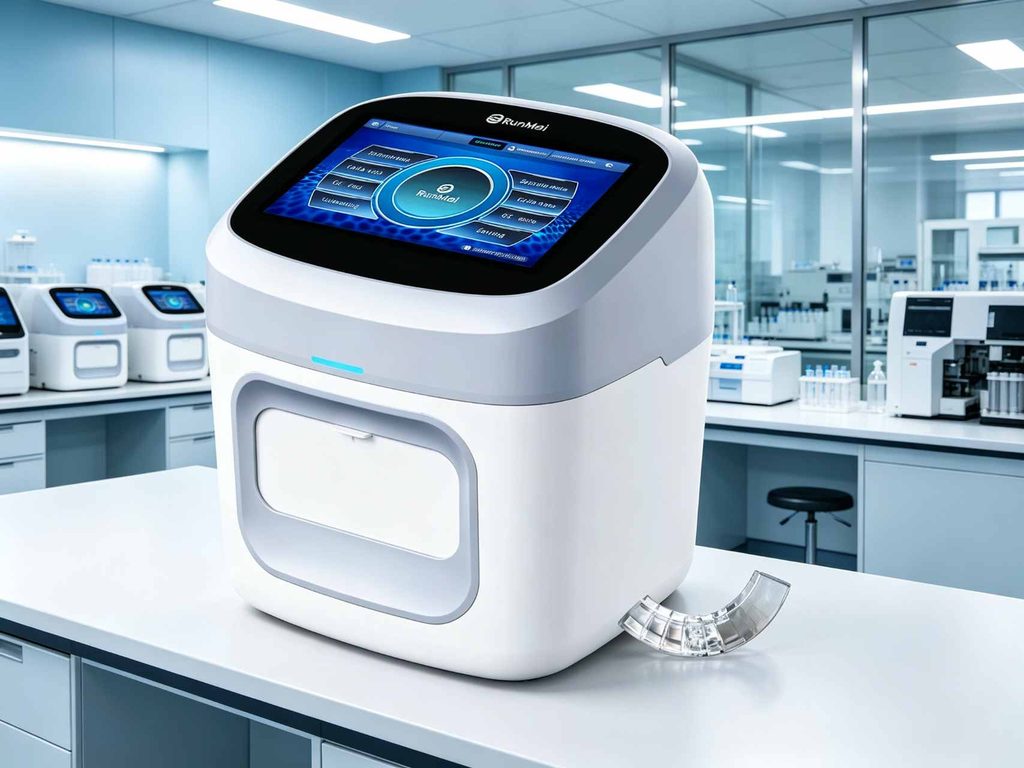
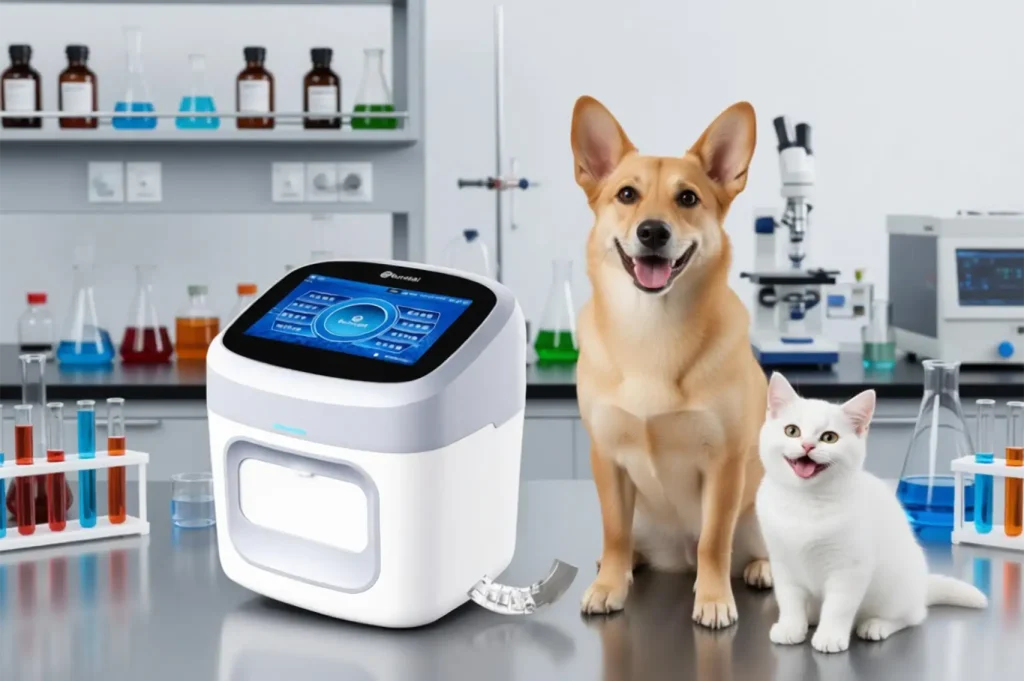
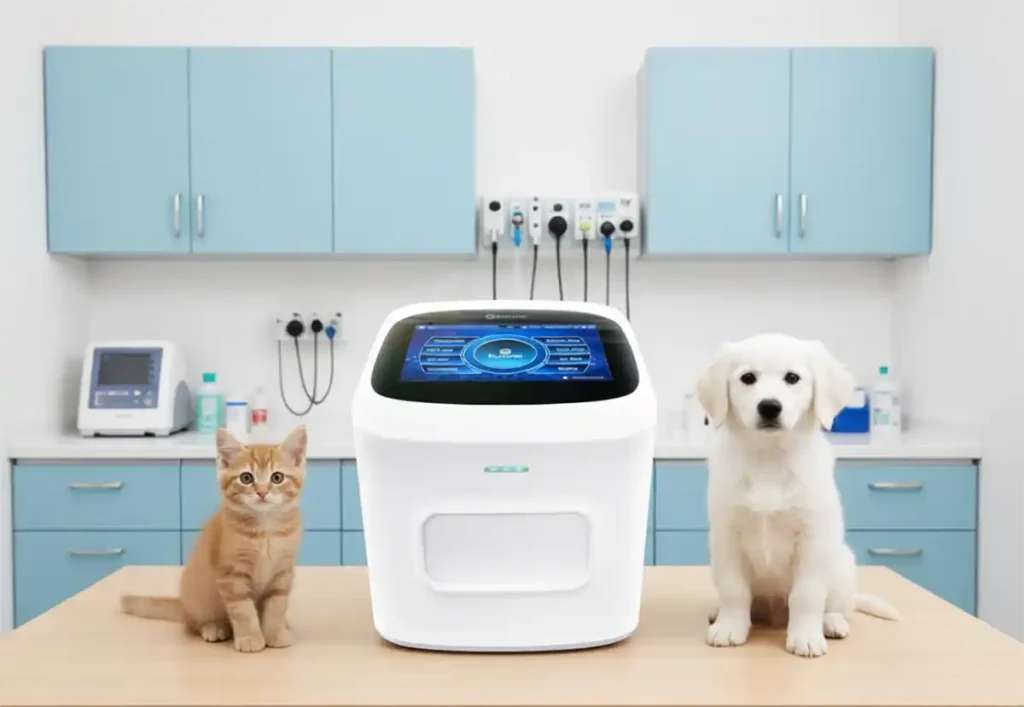
Telehealth can carry the specialist’s advice across hundreds of miles — but only if the data exists. On-site CBC makes the consultation real.
By Dr. Daniel Weiss, PhD (Biomedical Engineer) | Reviewed by Dr. Angela Reyes, MD, MPH (Infectious Disease Physician) | Published 2026-10-20 | Read time: ~7 minutes
A rural patient may travel three hours over rough roads to reach a specialist — yet in a typical telehealth visit, that same specialist is asked to decide treatment with no laboratory numbers at all. The implication is uncomfortable: telehealth CBC remote diagnostics programs have spent a decade perfecting the video link while neglecting the single most informative data stream a remote physician can receive. My opinion, as a biomedical engineer who has wired these systems, is that telehealth without on-site CBC testing is half a solution.
The hybrid model is the answer: a village clinic runs a CBC on the spot, sends the result to a distant specialist, and receives a real decision instead of a guess. This article explains why the blood count is the missing telemedicine laboratory data, how the hybrid model works, and what it requires from devices, networks and regulation.
The Consultation That Has No Numbers
Picture a video consultation: the specialist sees the patient, asks about symptoms, and reaches for a diagnosis guided only by history and appearance. Fever, fatigue, pallor, weight loss — each is ambiguous without the numbers that a CBC provides. Is the anemia iron deficiency, chronic inflammation, or something more serious? The remote specialist cannot begin to separate these without a hemoglobin and a cell count.
This is not a niche problem. WHO’s anaemia fact sheet documents that anemia affects a large share of populations in low-resource regions, and many of those patients present precisely to remote clinics. As a New England Journal of Medicine review of anemia of chronic disease explains, an apparently simple anemia depends on context that only a measured blood count can supply.
Why the CBC Is the Missing Telehealth Input
Of all the tests a clinic could run, the CBC is the one that travels best. It is fast, requires only a small sample, and produces a compact, highly structured result — a list of numbers that a remote physician can interpret instantly. Unlike imaging, it does not demand huge file transfers; unlike chemistry panels, it needs little sample preparation. It is, in short, the ideal digital diagnostics rural clinics can actually deliver.
A Result, Not a Snapshot Guess
My central argument is that attaching a CBC to a telehealth visit changes its nature. The remote specialist stops asking ‘what do you think?’ and starts asking ‘what does the count say?’ The local clinician becomes a competent extension of the specialist, running the test and entering the numbers. This is the model described in resources on telehealth and remote blood diagnostics.
Telehealth scales the specialist’s judgment. The on-site CBC is what that judgment is built on; without it, we are shipping expertise without evidence.
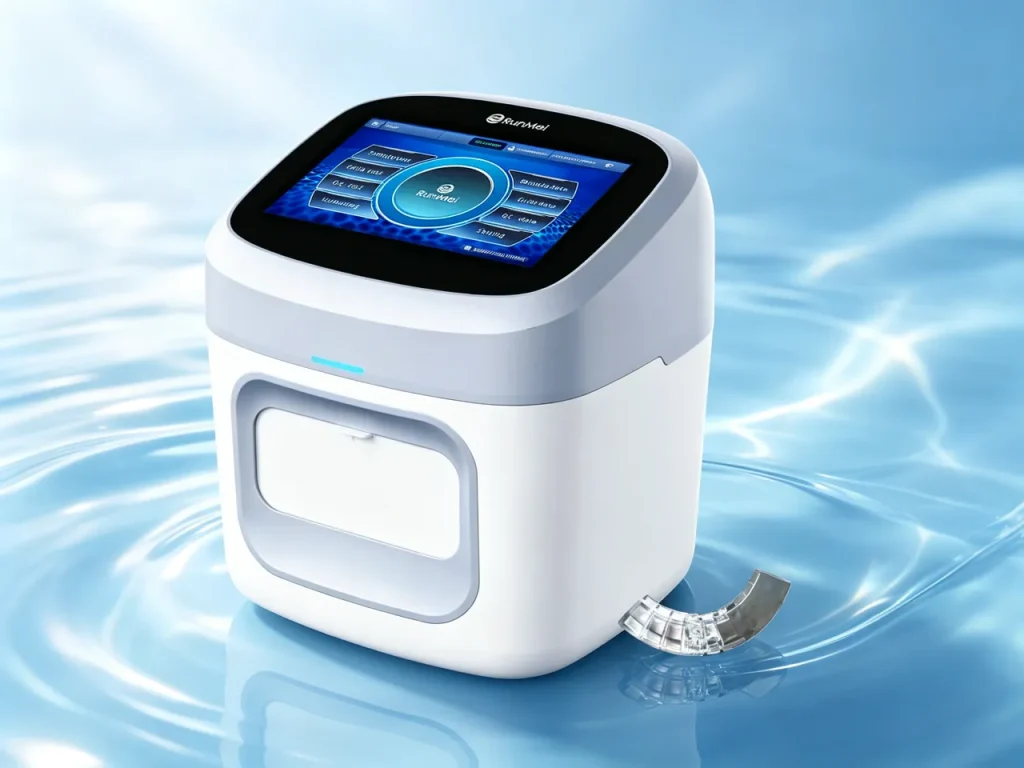
Figure 1: A connected analyzer exports the CBC result straight to the remote specialist during a video consultation.
Image title: Connected automatic hematology analyzer feeding CBC data into a rural telehealth record | Alt text (web): connected hematology analyzer for telehealth CBC remote diagnostics in a rural clinic
Structured data: ImageObject schema for this image is provided in the Technical SEO & GEO Package below.
How the Hybrid Model Works in Practice
The workflow is deliberately simple. A patient arrives at the village health post; the local clinician performs a finger-prick or venous CBC on a connected analyzer; the result appears in the telehealth record; the remote specialist reviews it during (or ahead of) the video visit. For outreach, taking CBC testing to the village with mobile analyzers extends the same model beyond fixed posts. Where the grid is unreliable, solar-powered blood analyzer designs keep the bench running on batteries and panels.
The data flow matters as much as the device. A connected blood analyzer that exports results into the clinic’s record — rather than printing a paper slip someone must type — eliminates transcription errors and gives the specialist a clean, timestamped number. Engineering-wise, this integration is the difference between a tool and a system.

Figure 2: A portable analyzer brings the same data stream to outreach posts where no fixed laboratory exists.
Image title: Portable multi-function analyzer for mobile and solar-backed telehealth diagnostics | Alt text (web): portable hematology analyzer for mobile telehealth and on-site CBC diagnostics
Structured data: ImageObject schema for this image is provided in the Technical SEO & GEO Package below.
What Remote Specialists Do With the Data
With a real CBC, a remote specialist can act. In an infectious-disease consultation, the platelet count and white-cell differential distinguish the febrile patient who needs admission from the one who can be observed — the same logic behind platelet monitoring during dengue outbreaks. For chronic disease, serial counts reveal whether anemia is stable, worsening, or responding to treatment. The specialist stops recommending ‘come back in a month’ and starts adjusting care now.
Patients benefit twice: they avoid the long referral journey, and when referral is genuinely needed, it arrives with data attached. The receiving hospital receives the CBC, the history and the specialist’s note — a handoff that saves days and reduces risk.
Engineering the Link: Devices, Flow and Regulation
For programs selecting equipment, the practical tests are connectivity, power tolerance and sample volume. A device that cannot export data is a dead end for telehealth; one that needs stable mains power will sit idle after dusk. Regulation should not be overlooked: in the United States, any device deployed clinically should be checked against the FDA’s 510(k) premarket notification database for clearance status. Globally, the WHO Model List of Essential In Vitro Diagnostics identifies the basic tests — including hematology — that belong at first-level care.
My closing argument is practical, not ideological. Telehealth already works when it has data; it flounders when it does not. Pairing a connected on-site CBC with a remote specialist consultation is the highest-leverage upgrade rural digital diagnostics can make — cheaper than building new hospitals, faster than training new specialists, and immediately useful.
الأسئلة المتداولة
Do we need a full hospital laboratory to support telehealth?
No. A compact, connected hematology analyzer that runs a CBC in minutes is enough for most remote consultations. The on-site clinic supplies the count; the remote specialist supplies the interpretation and decision-making.
How does the CBC result reach the remote specialist?
A connected analyzer exports the result directly into the clinic’s electronic record, which the remote specialist opens during or before the video visit. Direct export avoids typing a paper slip and prevents transcription errors.
Which patients benefit most from the hybrid telehealth CBC model?
Patients with anemia, chronic disease, fever or suspected infection benefit most, because these conditions hinge on blood-count trends. It also helps when a specialist must decide between treating locally and referring.
What if the clinic has unreliable electricity or internet?
Battery-compatible and solar-powered analyzers address the power gap, while results can be stored on the device and transmitted when connectivity returns. Networks should be designed for intermittent power and bandwidth.
Conclusion
Telehealth has done the hard part: it connected rural patients to distant specialists. The unfinished work is giving those specialists the numbers their decisions require. The on-site CBC is that missing input.
The hybrid model — local analyzer, connected record, remote specialist — is within reach for most rural systems. Build the data link, choose devices that export and tolerate real conditions, and telehealth finally becomes what it promised: specialist care that travels without the patient.
Disclaimer
This article is provided for general informational and educational purposes only and does not constitute medical advice, diagnosis, or treatment. Laboratory testing must be performed by trained personnel in accordance with applicable regulations, manufacturer instructions and local law. Always consult a qualified healthcare professional for clinical decisions. Product names and capabilities described may vary by market and regulatory clearance. RunMei Health does not warrant that any device is suitable for a specific facility or jurisdiction without professional evaluation.