Meta Title: Mobile Blood Analyzer: Taking CBC Testing to the Village | RunMei
Meta Description: Mobile blood analyzers take CBC testing to the village on battery power. How outreach programs deliver same-day results where roads end.
By Dr. Elena Marchetti · MD, MPH, Rural Health Diagnostics | Reviewed by Prof. Daniel Mwangi (PhD, MSc, Laboratory Systems Advisor) | Published: 2026-09-26
The road ends at the river. The practical questions around mobile blood analyzers — which machine, how much per test, how fast a result arrives — are the subject of this article. Beyond it, seven villages share one health post and a bicycle ambulance. The clinic will never reach those villages, so the testing must travel instead — in a bag, on a battery, over the same road the patients would have to walk. The blood biochemistry analyzer catalog covers the instruments rural programs order most often.
The pages that follow cover what the sales brochure does not: what mobile blood analyzers can and cannot deliver in rural health care, what it costs to run rather than to buy, and the mistakes that turn useful instruments into idle furniture. About 3 billion people worldwide still cannot reach a health facility within one hour on foot, a figure the WHO has used to argue for diagnostics that travel to patients instead of the other way around. The aim is to give clinic managers and program planners a field-tested basis for decisions, not a list of product claims. WHO . Facilities weighing the options can browse the differential blood analyzer range to compare configurations side by side.
Key Takeaways
- Outreach programs carry testing to patients who cannot reach a clinic.
- A battery-powered mobile blood analyzer runs a full CBC at the village health post.
- Structured outreach schedules keep the service regular and the data useful.
- The same analyzer serves the base clinic between outreach days.
When the Patients Cannot Come, the Test Goes
The arithmetic of outreach is simple: the cost of moving one analyzer to a village once a month is a fraction of the cost of moving a hundred patients to the clinic. Mobile testing does not replace the health post; it gives the health post the tool it was missing, on a schedule the community can learn to rely on.
The reliable schedule is the whole point. Outreach that happens ‘when possible’ trains the community to stop expecting it. Outreach that happens on the first Tuesday of every month becomes part of the village calendar, and the attendance follows the calendar.
the mobile blood analyzers is the seed; the program is the tree. Training, supervision, registers, quality checks and a supply line that outlasts the donor — these are what turn a machine into a service that keeps running. Programs that design for sustainability from the first installation meeting are the ones still running at the five-year review. Facilities that already run mobile blood analyzers report the same pattern. WHO . Programs that want a deeper differential can read the RUNMEI blood analyzer page for the trade-offs.
The Village Day
A village day runs on a fixed script: arrive early, set up the bench, run the control, announce the testing, see the referrals from the past month, collect the new samples, and leave a written result for every patient tested. The script is what makes the day repeatable and the data comparable.
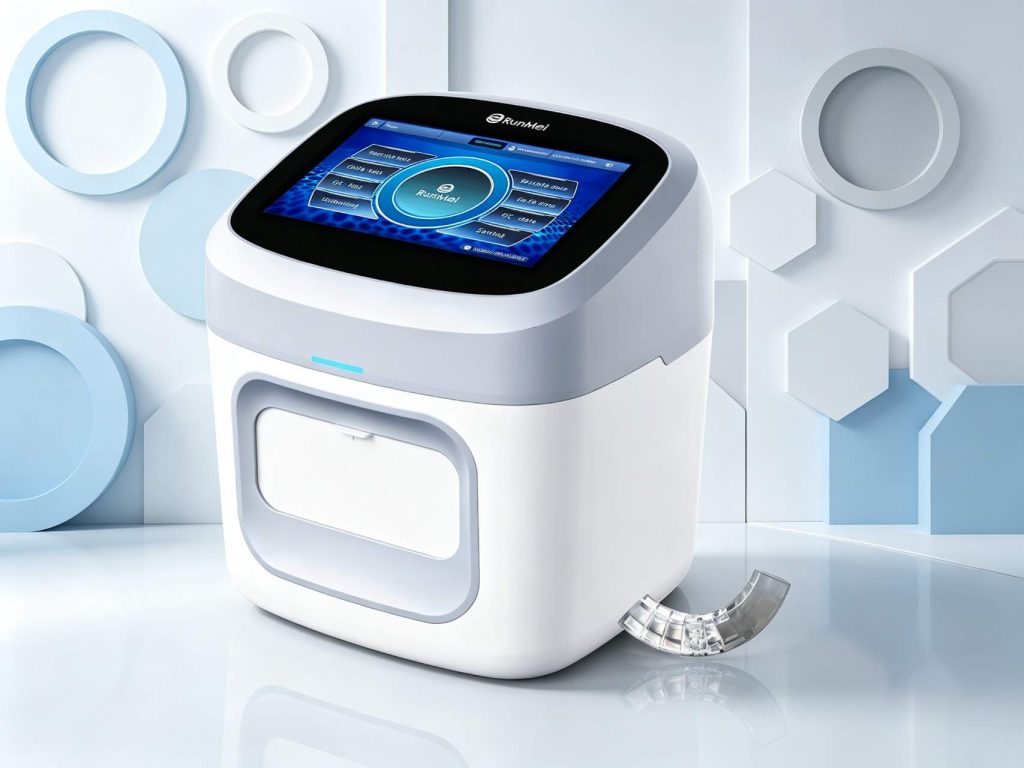
Fig. 1 — RunMei differential blood analyzer in a rural clinic setting. Mobile blood analyzer outreach village testing. | Alt: mobile blood analyzer outreach village testing
What a Mobile Analyzer Must Survive
A mobile instrument lives a harder life than a bench instrument. It is carried, jolted, run on battery, used in variable temperatures and dust, and packed up again the same afternoon. The design requirements follow from the life: light weight, battery tolerance, a case that protects it, and a startup that does not lose calibration after every journey.
The support package matters as much as the hardware. The outreach kit needs its own control vial, a spare battery or power bank, printed result slips, and a simple register that travels with the mobile blood analyzers. The team that packs the kit by checklist is the team whose outreach days never get cancelled for a missing part.
Results become evidence only when they are recorded. A register — patient, date, count, action taken — turns a stream of tests into a picture of the community’s health, and that picture is what justifies the program’s continuation. Clinics that keep the register find it writes their own case for support. That is the practical reality of mobile blood analyzers in the field. Budget teams should see the محلل أمراض الدم cost analysis before signing off on procurement.
The Field Kit Checklist
Analyzer, control, lancets, micro-sampling tubes, battery, result slips, register, gloves, waste bag, and the printed protocol for the day. Ten items, checked the night before, signed by the operator. The checklist is the outreach program’s real reliability system.
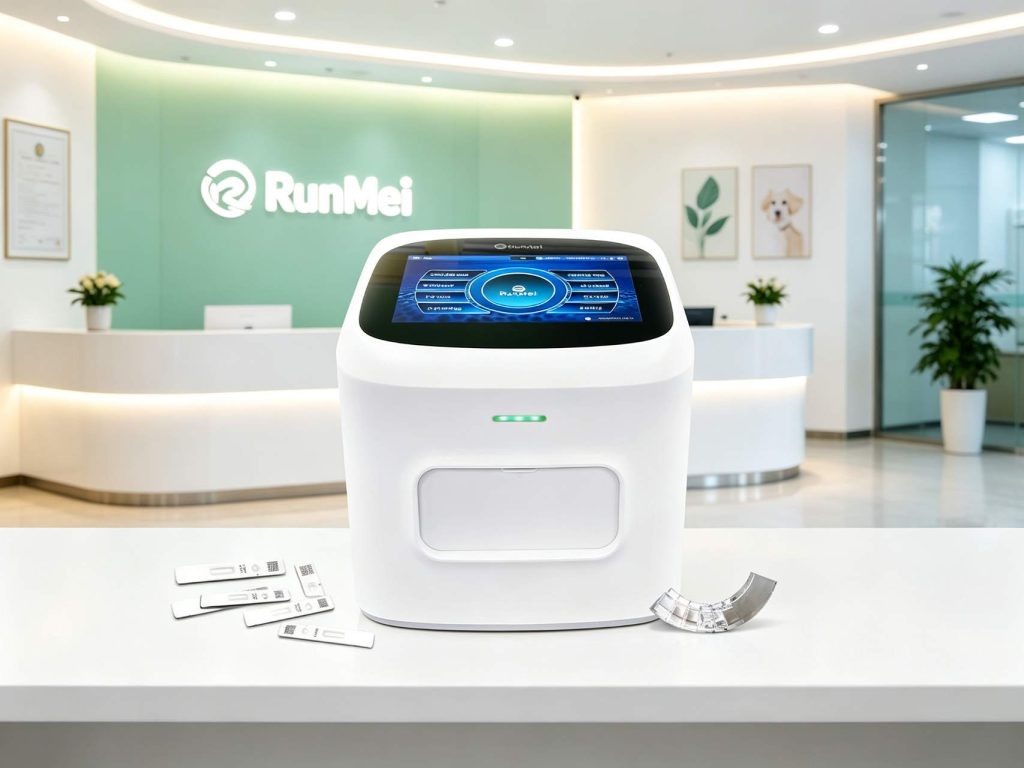
Fig. 2 — RunMei blood biochemistry analyzer during routine testing. Portable blood analyzer field kit battery powered. | Alt: portable blood analyzer field kit battery powered
Making Outreach Count as Data
A mobile testing day that produces results but no records produces nothing. The outreach register feeds the district picture: which villages have the highest anemia rates, where the fevers cluster, which referrals actually arrived. The data from the road is often the first real health data those villages have ever generated.
The feedback matters too. The village that sees its own results, compared across months and acted upon, keeps participating. Outreach is a relationship, and the mobile blood analyzers is the reason the relationship has something to say.
The maintenance calendar is short, posted and owned: daily checks, weekly cleaning, quarterly deep service, with a name on every line. In facilities without a biomedical engineer, these routines are the entire maintenance system — and they are enough, when someone owns them. the mobile blood analyzers that is cleaned on schedule is the machine that does not fail on the day it matters. And this is exactly where mobile blood analyzers changes the decision.
The Return Visit Protocol
Bring the previous month’s results when the team returns. Review the follow-ups, the referrals and the trends with the village health worker in front of the community. The visible record is what turns a testing day into a health program.
The Supply Plan
The supply plan answers one question: what does this clinic need, in what quantity, and how long does resupply take? Reagents, controls and consumables each have their own buffer, sized to the longest plausible interruption — the rainy season, the border delay, the transport strike. The plan is written in months, not in orders.
The Buffer Discipline
The rule of thumb that works in practice: hold enough stock to run the clinic’s normal volume for the resupply period plus one month. Facilities that follow the rule ride out the interruptions; facilities that run to empty stop testing at the worst possible moment.
The Open-Channel Option
Analyzers that accept qualified third-party reagents turn the supply plan into a competitive market instead of a single dependency. The option matters most where a locked reagent line would make the per-test cost unsustainable — which is most of rural primary care.
Programs that pair mobile blood analyzers with outreach testing report the strongest results. The same logic applies to village health post, which clinics in the region often underestimate. For teams accountable for community screening CBC, the practical effect shows up within the first month.
الأسئلة المتداولة
Q1. Can a blood analyzer really run on battery in a village?
Yes. Compact point-of-care analyzers draw little power and run comfortably on internal batteries or a portable power bank for a full day of outreach.
Q2. How many patients can an outreach day test?
A well-organized team with one analyzer typically completes 40 to 80 tests in a day, including the control run and result documentation.
Q3. Do mobile results match laboratory results?
When the analyzer is quality controlled daily and operated by trained staff, point-of-care results meet clinical accuracy requirements for primary care decisions.
Q4. What happens to the outreach data?
It is recorded in the outreach register and reported to the district, building the first evidence base for many villages and guiding where services are needed.
Sources & References
- World Health Organization data show that in lower-income countries a large share of the rural population still lives beyond the reach of a functioning laboratory; the WHO recommends primary care facilities be reachable within roughly 5 km, yet global estimates indicate about 3 billion people cannot reach a health facility within one hour on foot. Source: WHO — https://www.who.int/news-room/fact-sheets/detail/primary-health-care
- WHO analyses indicate that anemia affects roughly one in four people worldwide, with the highest prevalence in preschool children and pregnant women in low- and middle-income regions. Source: WHO — https://www.who.int/news-room/fact-sheets/detail/anaemia
About the Author & Reviewer
Author: Dr. Elena Marchetti, MD, MPH, Rural Health Diagnostics. Dr. Marchetti is a physician and diagnostics specialist who has spent the past fifteen years designing point-of-care programs for district hospitals and rural clinics in lower-resource settings. Her field work focuses on how laboratory devices survive daily use outside the laboratory, from staff training to reagent logistics.
Reviewer: Prof. Daniel Mwangi, PhD, MSc, Laboratory Systems Advisor. Prof. Mwangi directs laboratory quality programs for a network of rural health facilities and teaches clinical laboratory science. He has reviewed point-of-care device deployments across Africa and Southeast Asia, with a particular interest in quality control and operator competency outside the main laboratory.
Disclaimer
This article is for informational and marketing purposes only and does not constitute medical advice, a product claim, or a regulatory certification statement. Device availability, regulatory status (FDA 510(k)/CE/ISO 13485) and specifications vary by country and model; always verify current approvals with the manufacturer and consult local regulations before procurement or use.