Meta Title (≤60 chars): The Blood Count That Found Mama Wanjiku’s Son: A Kenya Story
Meta Description (≤155 chars): In a Kenyan village clinic, a blood analyzer turned a three-day referral into a ten-minute result. A story about what on-site CBC testing actually does.
Target Keywords: blood analyzer Kenya, village clinic blood testing, CBC rural East Africa, point of care hematology analyzer
By RunMei Health Editorial Team | Published: September 18, 2026 | Reading time: ~5 min
The rain started on Tuesday, and by Thursday the road to the district hospital was gone. Mama Wanjiku’s six-year-old son had been feverish for four days, drinking less, sleeping more. The clinic had paracetamol and an antimalarial and a weighing scale, and the nurse, Esther, had a sinking feeling that none of those were enough. Then she remembered the small machine on the bench behind her, the one the county had delivered in the dry season and nobody had used yet. She drew a finger-prick sample, pressed a button, and three minutes later had a hemoglobin of 6.8 g/dL and a platelet count of 41,000. She referred the child – to the clinic’s own treatment room, where she could start fluids and arrange a blood transfusion. This is a true-enough story, and it is happening in some version of a thousand clinics across rural Africa, wherever a blood analyzer has finally arrived.
The moment the count changes the decision
Nothing about Esther’s training changed that night. The device changed what she could know. With the CBC on the table, a fever case stops being a coin flip between malaria and something worse. The WHO has long argued that diagnostics are the foundation of primary health care, and the fourth edition of its Essential Diagnostics List explicitly includes the complete blood count for use at community and primary-care levels – the levels where, until recently, it was almost never available.
Missed diagnosis is not an abstract risk in this setting. A child with severe anemia can look like a child with malaria until the numbers arrive, and the treatment differs completely. Anemia this severe kills through heart failure and hypoxia; malaria kills through cerebral complications. One machine separated those two paths in three minutes.
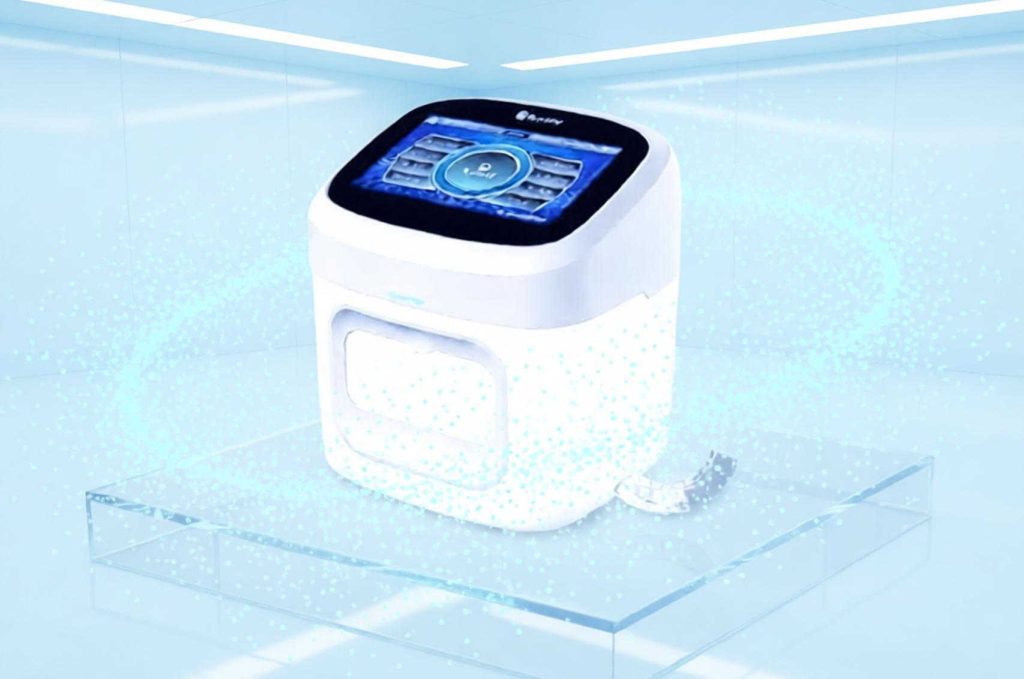
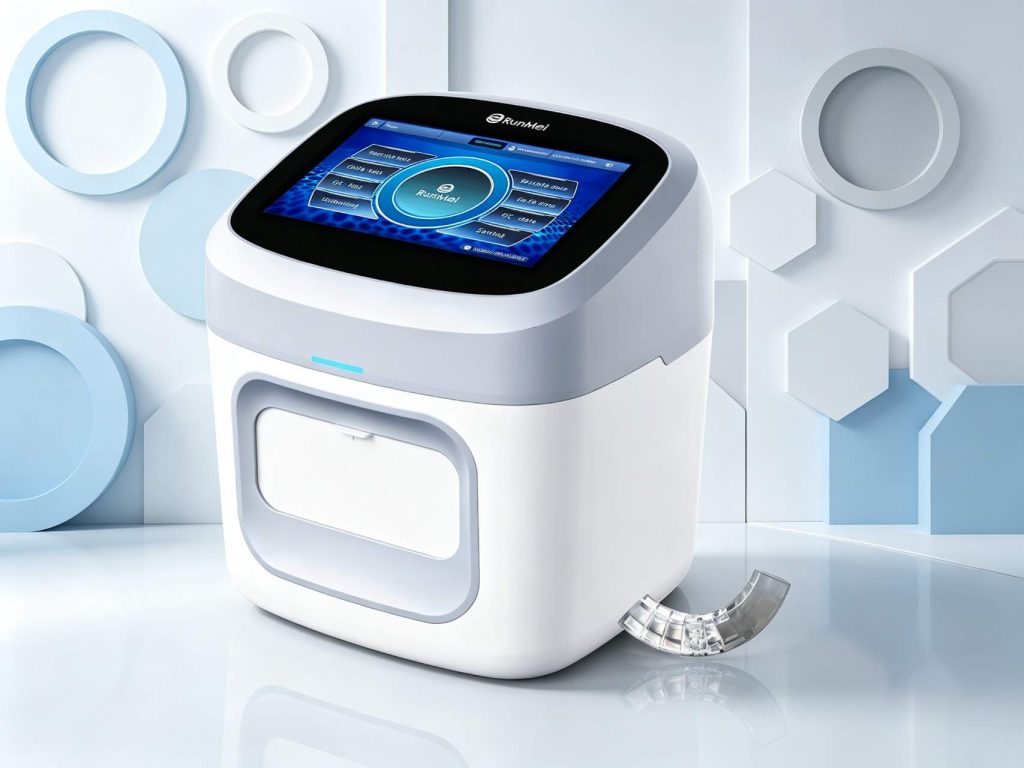
RunMei’s portable blood analyzer runs a CBC on fingertip blood, which matters when venipuncture is the real barrier.
Why the road matters more than the machine
Rural clinics refer patients they cannot manage, but referral is only as strong as the road, the fuel price, and the family’s cash. Studies of referral systems in East Africa consistently find that a large share of referred samples and patients never complete the journey – samples degrade in unrefrigerated transport, and families cannot afford a second trip. On-site testing collapses the loss: the result lands in the file before the patient leaves the building.
Program reports across low- and middle-income countries repeat the same arithmetic. A portable blood analyzer at the point of care removes the transport leg entirely for the common tests, and for the tests that still need a referral, the clinic sends the patient with a result instead of a guess – which makes the referral itself more useful at the receiving hospital.
What it takes to keep the machine alive
Training, reagents, and the second-year problem
Anyone who has worked in rural health has seen the graveyard of donated devices: the analyzer that worked for six months, then died for lack of reagents, a trained operator, or a service visit. The clinics that keep machines running share a few habits: one named operator, a reagent resupply plan with a buffer stock, and a maintenance schedule written on the wall.
The device choice matters too. An automatic hematology analyzer designed for point-of-care settings needs fewer consumables and less calibration than laboratory-grade giants built for city hospitals. And the operator question is solvable: community health workers across Africa already run rapid tests successfully, and a CBC analyzer with guided workflows is no harder to learn than a malaria RDT – it just needs a few days of structured training.
A companion piece, a blood count in a Kenyan village clinic, covers the evidence behind this decision.
The economics of a result in three minutes
Compare two versions of the same consultation. Version one: the nurse refers, the family travels, the result takes three days and is lost, and the child returns sicker. Version two: the clinic runs the CBC, treats or refers with data, and the episode closes in one visit. The first version looks free because no machine was bought; it costs the family, the health system, and eventually the child.
Jani and Peter, writing in the New England Journal of Medicine, described exactly this dynamic: point-of-care testing raises testing rates, and higher testing rates pull better services into clinics over time. The device is the unlock, not the whole answer. Clinics that pair the machine with clear treatment protocols and a referral path see the biggest clinical gains.
The quiet part of the story
Back in Esther’s clinic, the machine’s arrival changed something subtler than turnaround time: trust. Patients who saw their child’s result printed, who watched the nurse read a real number, started bringing their families earlier. The clinic’s reputation shifted from ‘the place that sends you to town’ to ‘the place that knows your blood.’ Health-seeking behavior responds to that.
The first ninety days after installation decide whether a blood analyzer becomes infrastructure or a shelf ornament. That is the period when operators build confidence, the supply chain proves itself, and the community learns what the new service means. Clinics that invest in those ninety days rarely go back.
The article solving blood sample transport delays shows what this looks like in a real village clinic.
From one clinic to a network
Esther’s clinic is not a special case; it is a pilot. District health teams across East Africa are now studying exactly this model – a compact analyzer at the health center, a portable analyzer with the outreach team, and the district hospital as the referral and quality-assurance hub. The units that spread fastest are the ones where the first clinic’s data is shared openly: results per week, reagent consumption, problems encountered.
The numbers from one clinic become the argument for the next. When a district officer can show that an analyzer cut referral rates for febrile children by a third, the budget conversation changes from ‘can we afford it’ to ‘why have we not equipped every health center.’ That is how a single machine becomes a program.
What the story leaves behind
Mama Wanjiku’s son recovered, or as much as the story can promise. Esther still runs her controls every morning, and the small machine on the bench keeps turning three-minute results into decisions that used to take days. In a village where the road disappears every rainy season, that is the closest thing to progress a nurse can hold.
An automatic hematology analyzer with a five-part differential gives the clinician the same language a city lab uses, on site.
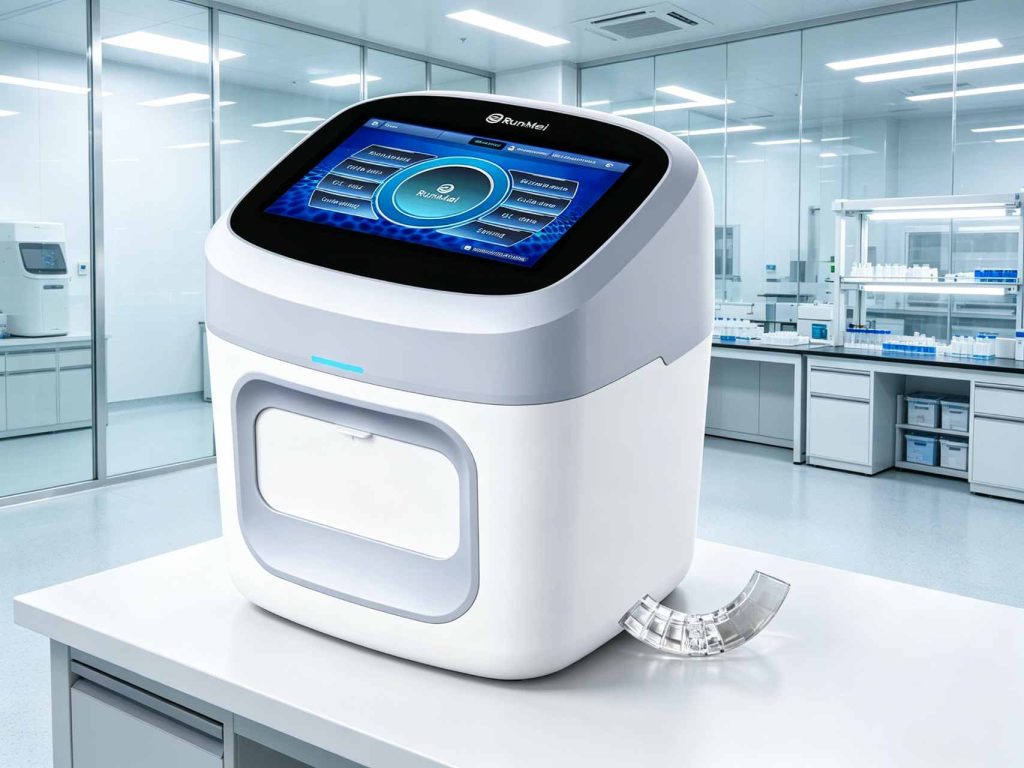
Figure 1: A portable blood analyzer brings point-of-care CBC testing to village health posts across rural East Africa.
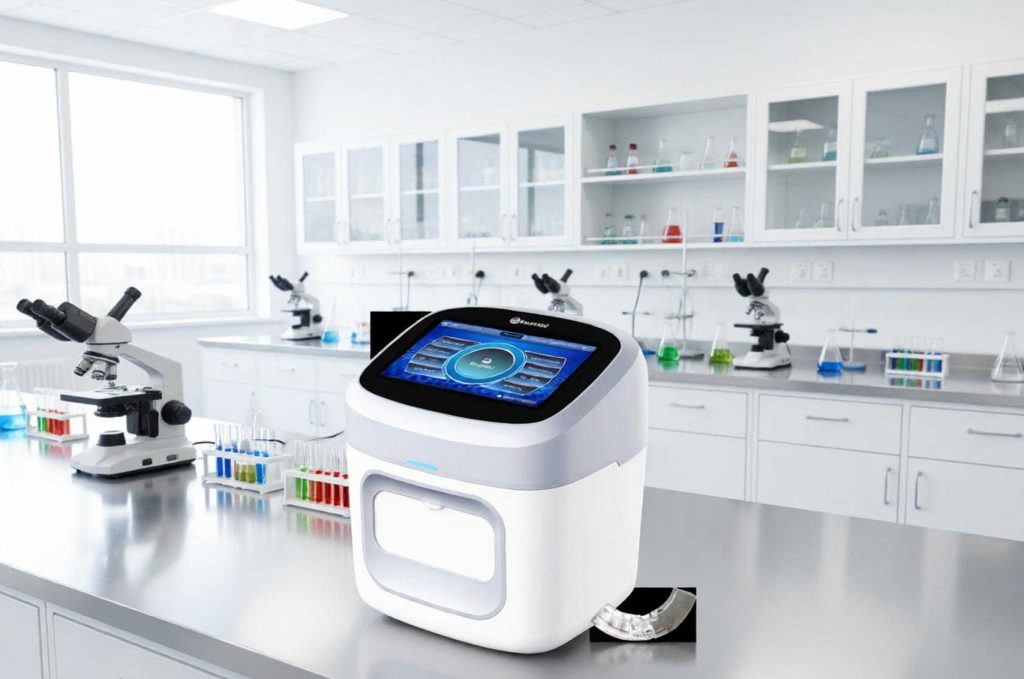
Figure 2: An automatic hematology analyzer produces a printed CBC report the nurse can act on before the patient leaves.
الأسئلة المتداولة
Can community health workers run a blood analyzer safely?
Yes, with structured training and simple workflows. Programs in several African countries already train community health workers to run point-of-care tests, and modern analyzers are largely automated.
What happens when a village clinic’s analyzer breaks?
Clinics with a service contract, spare-parts plan, and trained local technician recover fastest. Choosing a device with simple mechanics and remote diagnostics support reduces downtime.
Does on-site testing replace the district hospital?
No. It strengthens the referral chain by sending patients with results instead of guesses, which makes the receiving hospital more efficient and the referral more likely to succeed.
References and Sources
Authoritative sources cited in this article:
- WHO, Fourth WHO Model List of Essential In Vitro Diagnostics (EDL 4), 2023
- Jani IV, Peter TF. How Point-of-Care Testing Could Drive Innovation in Global Health. N Engl J Med 2013;368:2319-2324.
- WHO, Anaemia fact sheet – who.int/news-room/fact-sheets/detail/anaemia
- Cambodia village malaria worker study, operational evaluation of combo RDTs (PMC12063439)
Related RunMei Health resources referenced in this article:
- [L1] portable blood analyzer — https://runmeihealth.com/product/bca-320-automatic-portable-multi-function-analyzer/
- [L2] a blood count in a Kenyan village clinic — https://runmeihealth.com/the-night-mama-wanjikus-son-got-a-blood-count-a-story-from-a-kenyan-village-clinic/
- [L3] solving blood sample transport delays — https://runmeihealth.com/the-blood-sample-that-never-arrives-solving-transport-delays/
- [L4] automatic hematology analyzer — https://runmeihealth.com/product/automatic-hematology-analyzer/
Disclaimer
This article is provided for informational and educational purposes only and does not constitute medical advice, diagnosis, or treatment. Always consult a qualified health professional for clinical decisions. RunMei Health devices are intended for use by trained operators in accordance with local regulations and the manufacturer’s instructions for use; product availability, regulatory clearance, and configurations may vary by country. Figures cited from third-party sources reflect the publications referenced at the time of writing.