Meta Title (≤60 chars): Child Anemia in Africa: Hemoglobin Testing for Nutrition Programs
Meta Description (≤155 chars): 40% of the world’s young children are anemic. Nutrition programs that measure hemoglobin with blood analyzers actually prove their impact.
Target Keywords: child anemia Africa, hemoglobin testing children, blood analyzer nutrition programs, CBC pediatric rural clinic
By RunMei Health Team | Published: September 18, 2026 | Reading time: ~5 min
A nutrition program hands out fortified food, runs cooking demonstrations, and counts the children who attend. Everyone smiles and calls it progress. Then someone with a blood analyzer shows up, pricks a hundred fingers, and the real number arrives: the children are eating better, but a third of them are still anemic. The WHO estimates that 40% of children aged 6-59 months worldwide have anemia, and in sub-Saharan Africa the share is higher. Food programs cannot see that. A hemoglobin result can.
Why child anemia refuses to budge
Childhood anemia in Africa is a multi-cause problem wearing a single name. Iron deficiency leads, but malaria, hookworm, schistosomiasis, and inherited hemoglobin disorders each keep hemoglobin low through separate machinery. Nutrition programs that only address diet are therefore fighting one battle in a multi-front war – and they cannot even measure the front line without a test.
The consequences of untreated childhood anemia are lifelong: impaired cognitive development, stunted growth, fatigue that becomes school absenteeism, and vulnerability to infection. The WHO has repeatedly linked childhood anemia to the loss of human capital, which is why its elimination is embedded in global nutrition targets.
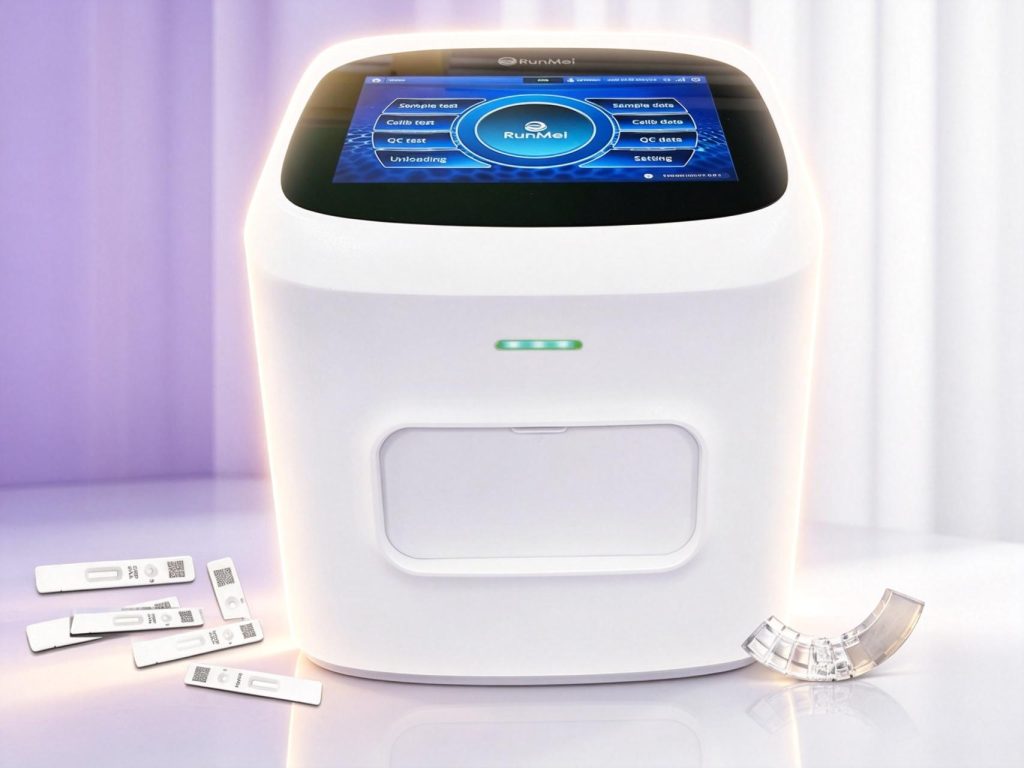
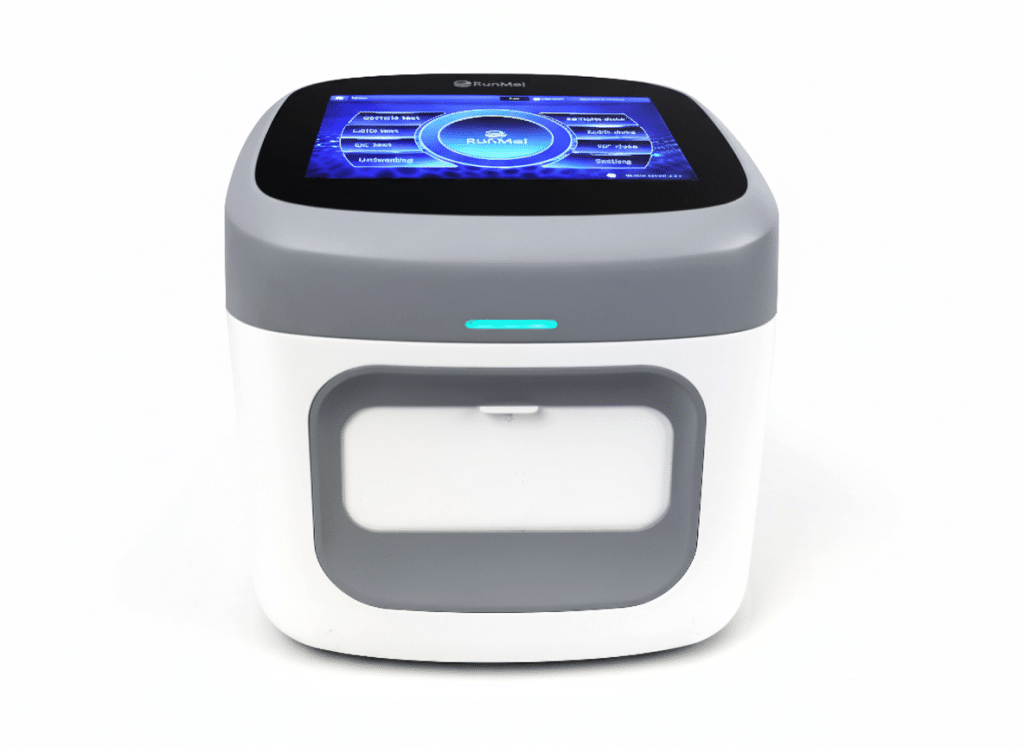
RunMei’s portable blood analyzer was built for exactly this kind of setting — no mains-dependent lab, no full-time technician, no long training curve.
What the growth-monitoring visit is missing
The growth-monitoring visit – weight, height, immunization – is the most reliable contact most African children have with the health system, and it is the natural home for anemia screening. Yet in most facilities the visit ends without a single blood test, and anemia is detected, if at all, when the child is visibly pale and severely compromised.
Adding a hemoglobin test to growth monitoring changes the visit’s value completely: the same trip that measures weight can now identify the anemic child, start treatment, and schedule a repeat count. A portable blood analyzer makes this practical even where the clinic has no laboratory room.
Measuring program impact honestly
The before-and-after that only a device can show
Every nutrition program needs an outcome measure, and hemoglobin is the honest one. A program that screens at baseline and re-screens after six months can show whether anemia prevalence actually fell – or whether the food improved diets while the real drivers (malaria, worms, iron absorption) went untouched.
Donors increasingly demand exactly this kind of evidence. Programs that cannot produce before-and-after hemoglobin data are losing funding to those that can, because a measured improvement is worth more than a photographed distribution day. The analyzer is the difference between a program that claims impact and one that proves it.
The clinic that starts with a single rural anemia screening with a portable hematology analyzer usually restructures its whole referral pathway around it.
The pediatric CBC: what to look for
For children, the CBC answers three questions at once: Is there anemia, and how severe? Does the red cell pattern suggest iron deficiency or something inherited? Is there an infection driving the picture? The WHO Essential Diagnostics List includes the CBC for pediatric care, and rural clinicians report that the differential – not just the hemoglobin – is what catches the cases they would otherwise miss.
Age-specific reference ranges matter here, and a good analyzer handles pediatric samples with small volumes – an important practical point for finger-prick collection in young children. Devices that need a full venipuncture tube are less useful in a clinic where the best you can get is a drop.
Sequencing a national child anemia program
The programs that work scale in layers: national surveys use high-throughput labs; district hospitals get automatic analyzers; health centers get compact analyzers; and outreach gets portables. Every layer reports the same metric – hemoglobin – so the data stacks up into a national picture instead of a patchwork of anecdotes.
Surveillance is the quiet payoff. When thousands of clinics run CBCs routinely, the health ministry gains a real-time anemia map that shows where prevalence is falling and where it is stubborn – and that map is what turns a donation program into a public-health strategy.
The national picture also needs the human element: a named officer at the ministry who owns the anemia data, a quarterly review meeting, and a feedback mechanism that tells clinics what the aggregated numbers show. Data that nobody reads is not surveillance; it is paperwork. Programs that close this loop report something unexpected – the clinics themselves start using the trend lines to plan outreach, ordering more reagents in the months when anemia prevalence climbs. Measurement, once it is real, becomes management.
Program planners will find why rural clinics need a CBC before referral a useful reference when writing the proposal.
The data that builds the case
A nutrition program with hemoglobin data stops arguing from anecdote. Clinic registers fill with prevalence numbers, district officers see which villages are improving, and the ministry’s annual report carries a real trend line instead of a page of photographs. Measurement transforms the program’s politics as much as its medicine.
The same data protects the program when funding shifts. When a donor asks for evidence of impact, the facility that pulls out two years of screening records has an answer; the facility that only has attendance lists has a problem. Analyzer-generated records are the cheapest insurance a program can buy.
The habit that makes this work is boring but essential: record every result, in a register or a simple spreadsheet, with the child’s age and the date. The device produces the number; the register produces the program. Teams that build the recording habit on day one are the teams whose data is believed in year five.
Children behind the numbers
The children behind the numbers deserve the reminder: this is not an administrative exercise. Each hemoglobin result is a child who was measured instead of assumed, and each recorded result is a child the program can find again when the data says something is wrong.
The tools are within reach. Portable analyzers for outreach, automatic analyzers for health centers, and a register habit that costs nothing – this is not a five-year plan or a donor’s white paper; it is the working equipment of nutrition programs that are actually changing prevalence. The question is not whether the approach works. The question is how many more children will be measured before the programs that feed them make the measurement routine. The register is the memory of that promise, and a child with a recorded result is a child the system cannot lose.
A companion piece, complete blood count testing in rural clinics, covers the evidence behind this decision.
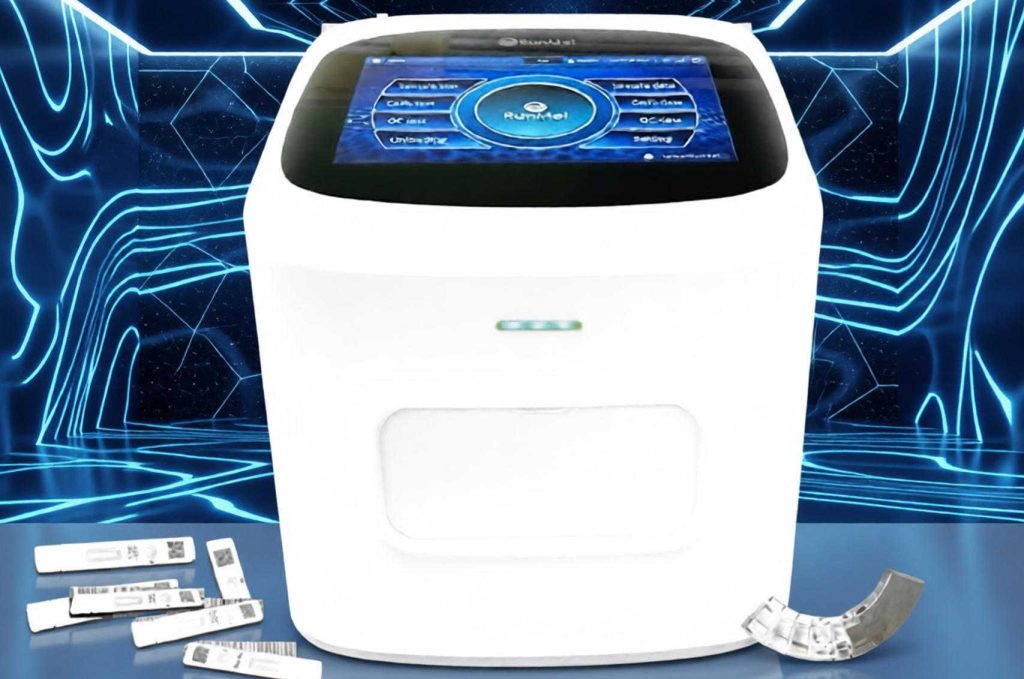
Figure 1: Portable blood analyzers bring hemoglobin screening to child nutrition and growth-monitoring outreach.
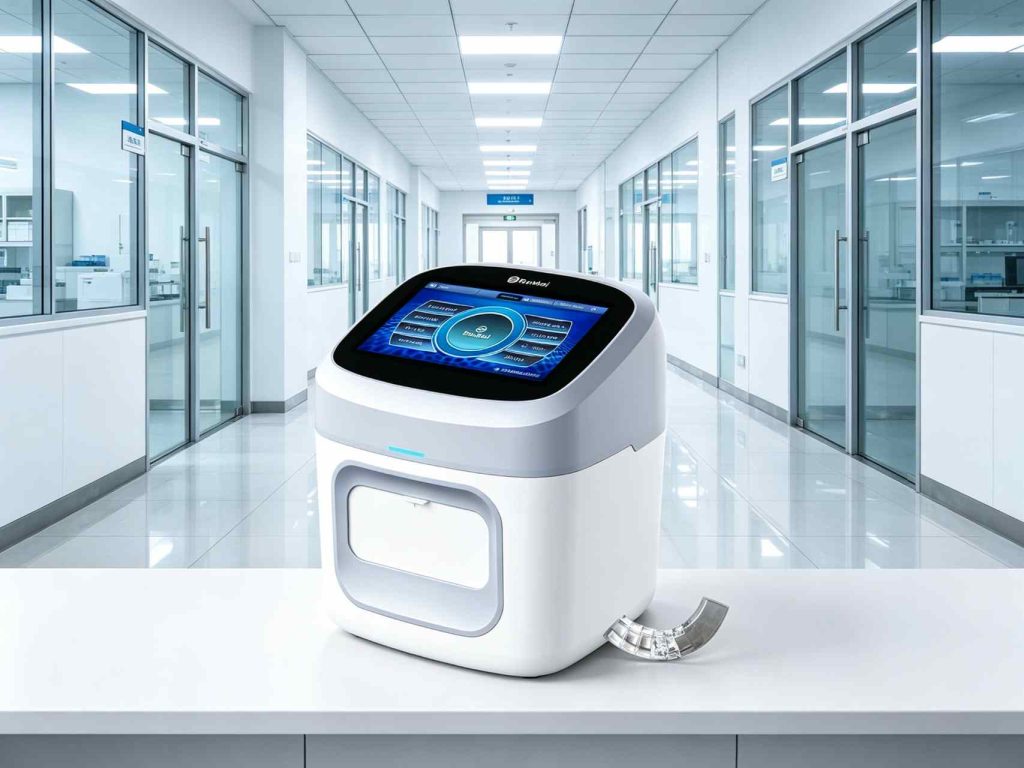
Figure 2: A finger-prick sample is all a portable blood analyzer needs to assess childhood anemia on site.
الأسئلة المتداولة
Why is anemia still common in children who receive fortified food?
Because diet is only one cause. Malaria, worms, and inherited hemoglobin disorders also drive anemia, so food alone rarely fixes prevalence – which is why measuring hemoglobin matters.
How small a blood sample does a pediatric test need?
Modern analyzers work with small sample volumes suitable for finger-prick collection, which is essential for young children in clinics without venipuncture capability.
What is the best anemia indicator for a nutrition program?
Hemoglobin prevalence measured at baseline and follow-up is the standard program indicator, ideally supported by red cell indices to distinguish iron deficiency from other causes.
References and Sources
Authoritative sources cited in this article:
- WHO, Global Anaemia Estimates and Anaemia fact sheet – who.int/news-room/fact-sheets/detail/anaemia
- WHO, Fourth WHO Model List of Essential In Vitro Diagnostics (EDL 4), 2023
- WHO, Guideline on haemoglobin concentrations for the diagnosis of anaemia (2024)
- Impact Global Health, “The diagnostics deficit” (2024)
Related RunMei Health resources referenced in this article:
- [L1] portable blood analyzer — https://runmeihealth.com/product/bca-320-automatic-portable-multi-function-analyzer/
- [L2] rural anemia screening with a portable hematology analyzer — https://runmeihealth.com/rural-anemia-screening-why-a-portable-hematology-analyzer-belongs-in-every-village-clinic/
- [L3] why rural clinics need a CBC before referral — https://runmeihealth.com/why-rural-clinics-need-a-cbc-before-referral-a-practical-guide-to-smarter-triage/
- [L4] complete blood count testing in rural clinics — https://runmeihealth.com/complete-blood-count-testing-in-rural-clinics-a-practical-guide-for-2026/
Disclaimer
This article is provided for informational and educational purposes only and does not constitute medical advice, diagnosis, or treatment. Always consult a qualified health professional for clinical decisions. RunMei Health devices are intended for use by trained operators in accordance with local regulations and the manufacturer’s instructions for use; product availability, regulatory clearance, and configurations may vary by country. Figures cited from third-party sources reflect the publications referenced at the time of writing.
Body word count: 1089 words (target range 1000–1500) | Total including FAQ: 1194 words